Top 6 Caves around Aubagne
Best caves around Aubagne are found within the Garlaban massif and nearby Calanques, offering diverse natural and historical sites. This region, known for its rugged terrain and scenic landscapes, provides opportunities for exploration along popular hiking trails. The caves here range from prehistoric sites to natural monuments, often integrated into challenging or family-friendly routes. These geological features contribute to the area's appeal for outdoor enthusiasts.
Best caves around Aubagne
- The most popular caves is Spanish Cave, a cave and…
Last updated: May 24, 2026
🔒 Trolib Presqu'île - ℹ️ Cosquer Cave
Highlight • Cave
⏳ 25,000 years ago, during the last ice age, the Calanques were not like they are today: the sea level was 120 meters …
Translated by Google •
Tip by

Spanish Cave
Highlight • Cave
Translated by Google •
Tip by

Sign up now to discover places like this
Get recommendations on the best single tracks, peaks, & plenty of other exciting outdoor places.
Sign up for free
Oule Cave
Highlight • Cave
Translated by Google •
Tip by

Aven des Quatre Trous
Highlight • Cave
Translated by Google •
Tip by

Figuier Cave
Highlight • Cave
Translated by Google •
Tip by

Start today with a free account
Your next adventure awaits.
Login or Signup

Tips from the Community

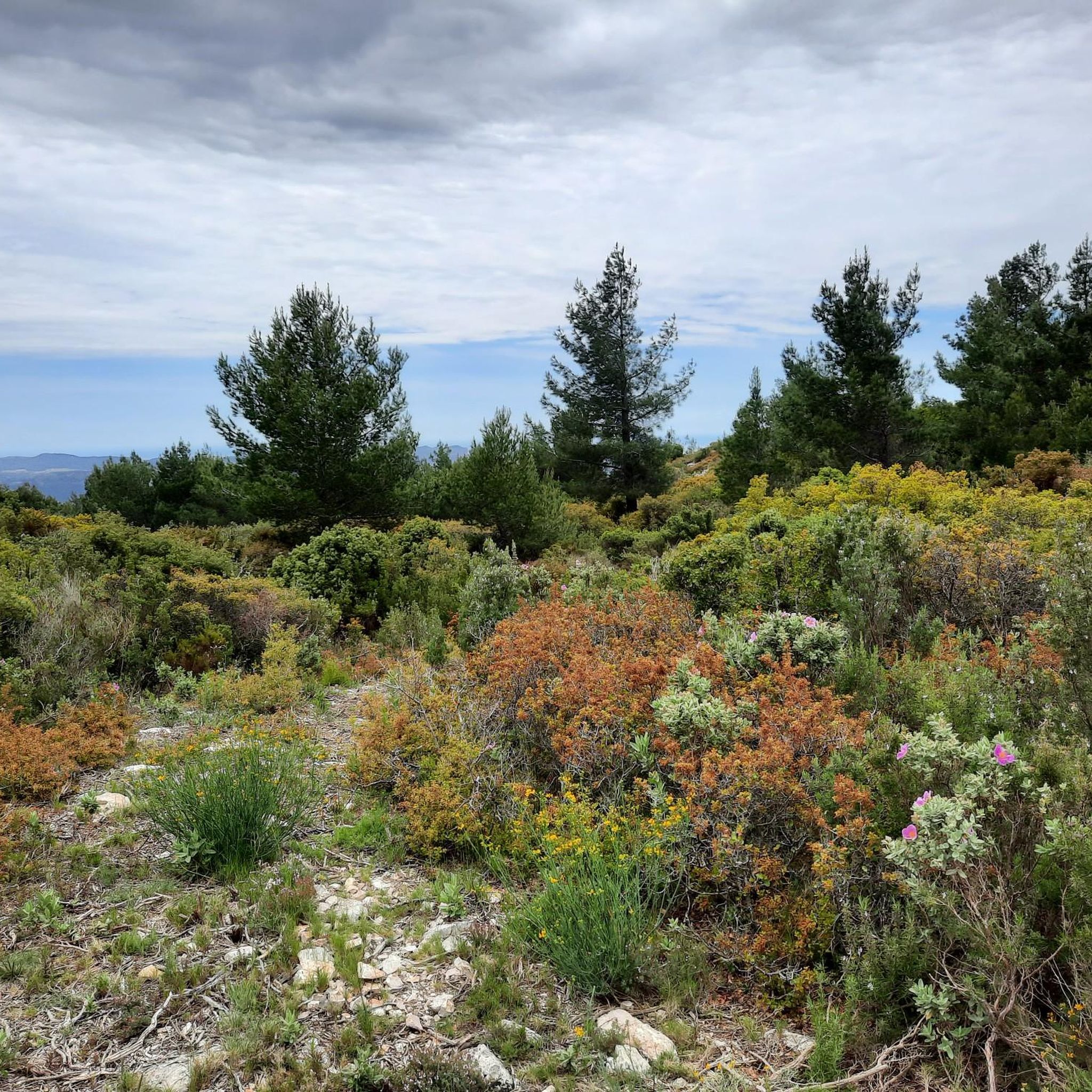
It is worth deviating (a little) from the Route des Crêtes.
0
0

A bit of climbing allows you to pass behind the large rocks, venture into the crack through the fig tree and climb to the summit.
1
0

The grotto is slightly above and on the eastern side of the path. The ceiling is blackened with soot. You can go in about 10m before the cave becomes too low.
0
0

🌊 Cosquer Cave: A Prehistoric Underwater Treasure ⏳ 25,000 years ago, during the last ice age, the Calanques were not like they are today: the sea level was 120 meters lower and the current land was vast, cold plains... frequented by aurochs, bison, ibex, but also penguins and seals! 🖼️ These animals form an incredible bestiary painted and engraved on the walls of Cosquer Cave, a prehistoric sanctuary submerged at a depth of 37 meters, near Cap Morgiou. 🤿 A Unique Discovery 🔎 In 1985, Henri Cosquer, a diver from Marseille, discovered the underwater entrance to a 175-meter tunnel leading to a decorated cave. Officially recognized in 1991, it remains the only known underwater Paleolithic cave in the world! 🧊 Inaccessible for around 9,000 years due to rising water levels, it reveals a little-known aspect of prehistory in the Calanques. 🎨 A 27,000-year-old art gallery 🐴 Nearly 500 depictions are recorded on the walls: 177 animals from 11 species: horses, deer, aurochs, seals, fish... Marine animals never seen elsewhere in cave art: penguins, jellyfish, cetaceans 👣 Children's and adults' hands, negative or positive 🔺 More than 200 geometric signs, some of which are still mysterious... 🧍♂️ There's even a man with a seal's head: proof of the sacred bond between man and the sea. ⚠️ A heritage in peril 🌊 The sea is rising slowly (about 2.5 mm per year), threatening this fragile site. To preserve it, a comprehensive 3D survey was launched in 2017. 🏛️ In 2022, the Cosquer Méditerranée replica opened in Marseille, offering an immersive visit to admire this masterpiece of humanity without risking damage. 🎟️ A journey back 35,000 years awaits you: grotte-cosquer.com ⁉️ Did you know? The Cosquer, Triperie, Figuier, and Renard caves and their networks, as well as the archaeological remains they contain, were listed as historical monuments by decree of September 2, 1992. Discover the mystery of the Cosquer cave: https://youtu.be/Plf_XRetCI0
0
0

From here begins a relatively simple gravel trailer down to Cassis. Attention, this is also a much-walked trail
2
0

Very deep, dark cave. Attention: entry many meters vertically downwards! Accessible only with equipment.
0
0
Frequently Asked Questions
What are some of the most popular caves around Aubagne?
The region offers a variety of popular caves. For a relatively simple gravel trail down to Cassis, the Spanish Cave is a much-walked trail. Families often enjoy the Calanques National Park Cave, which is suitable for children to explore. For those interested in history and nature, the Grotte de Baume Sourne in the Garlaban massif is a significant site, known for its bat habitat and historical refuge status.
Are there any caves with historical or archaeological significance near Aubagne?
Yes, several caves in the area hold significant historical and archaeological value. The Grotte du Tonneau, near La Bouilladisse, is notable for prehistoric vestiges, including flint tools and animal bones, indicating human presence during the Lower Paleolithic period. The Grotte Saint-Michel d'Eau Douce in the Marseilleveyre massif also shows evidence of Neolithic human occupation. Additionally, the Cosquer Cave, though submerged and accessible via a replica in Marseille, is an extraordinary prehistoric site with ancient cave art.
What kind of natural features can I expect to see in the caves around Aubagne?
The caves around Aubagne showcase diverse natural features. You might encounter vast, cool chambers, unique geological shapes like the 'barrel' form of the Grotte du Tonneau, and even small underground lakes in caves like Grotte Saint-Michel d'Eau Douce. Some caves, such as Baume Sourne, are important bat habitats, highlighting their ecological significance. While many once featured stalactites and stalagmites, their current state can vary.
Are there family-friendly caves to visit near Aubagne?
Yes, the Calanques National Park Cave is particularly suitable for children. It allows them to explore the grotto and even use a climbing rope to reach the next path, offering an engaging experience for younger visitors.
What hiking trails lead to caves around Aubagne?
Many caves in the region are accessible via hiking trails. The Grotte de Baume Sourne is reached through trails in the Garlaban massif, often starting from Chemin du Pin Vert in Aubagne. The Grotte du Tonneau requires a hike with a potentially steep descent, appealing to experienced hikers. The Grotte Saint-Michel d'Eau Douce is part of popular hiking routes in the Calanques, typically from Callelongue, offering stunning coastal views along the way.
What other outdoor activities can I do near the caves around Aubagne?
Beyond caving and hiking, the region around Aubagne offers a range of outdoor activities. You can explore various MTB trails, including loops around Le Garlaban and Col de l'Espigoulier. There are also challenging mountain hikes in areas like the Calanques, and numerous running trails, such as the Garlaban Engraved Rocks Circuit.
Are there any challenging caves for experienced explorers?
For experienced explorers seeking a challenge, the Aven des Quatre Trous is a very deep, dark cave with an entry many meters vertically downwards. It is only accessible with specialized equipment, making it suitable for those with caving experience.
What is the best time of year to visit the caves around Aubagne?
Visiting the caves can be enjoyable year-round, but some offer particular advantages depending on the season. Caves like Grotte de Baume Sourne are described as cool and refreshing, making them an excellent stop during hikes in warmer weather. For hiking-intensive cave visits, spring and autumn offer pleasant temperatures, while summer can be ideal for seeking cooler underground environments.
Are any caves accessible for visitors with limited mobility or wheelchairs?
Natural caves in the Aubagne region, due to their rugged terrain, narrow passages, and often steep access trails, are generally not accessible for visitors with limited mobility or wheelchairs. Exploration typically involves hiking and navigating uneven surfaces.
What should I wear for caving or cave-related hikes in the Aubagne area?
For caving or hikes leading to caves, it's advisable to wear sturdy hiking shoes with good grip, as cave floors can be slippery and trails uneven. Layers of clothing are recommended, as cave temperatures are consistently cool, even on warm days. For more challenging caves, specialized caving gear may be required.
Are there any caves known for their unique shapes or formations?
The Grotte du Tonneau is particularly known for its unique, oblong, barrel-like shape, which gives it its name. It consists of an oval corridor about twenty meters long. The Grotte Saint-Michel d'Eau Douce was once adorned with magnificent stalactites and stalagmites, and features a beautiful fossilized stalagmitic pillar in its 'Salle du Porche'.
What do visitors enjoy most about the caves around Aubagne?
Visitors appreciate the blend of natural beauty, historical intrigue, and outdoor adventure offered by the caves. Many enjoy the refreshing coolness of caves during a hike, the discovery of ancient human history, and the unique geological formations. The opportunity to combine cave exploration with scenic hikes through the Garlaban massif and the Calanques is also a major draw.
Most popular routes around Aubagne
Most popular attractions around Aubagne

Get inspired with the komoot mobile app


Explore more
Extend your search for the best caves by checking out these guides of the top ones around Aubagne:
