Top 7 Caves around Sant Pere De Ribes
Best caves around Sant Pere De Ribes are primarily found within the Garraf Natural Park, a distinctive mountain range characterized by its limestone formations and diverse geological features. This area offers a variety of natural underground formations, including chasms and small caves. The landscape surrounding Sant Pere De Ribes provides opportunities for exploring these geological features. The region's terrain contributes to the formation of unique cave systems.
Best caves around Sant Pere De Ribes
- The most popular caves is Cova de Cal Muntaner, a challenging cave located near the Torrent de la Llaureda. It is also known as the Cova del Trapper.
- Another must-see spot is Avenc del Llamp, a challenging natural monument. This chasm reaches a depth of 73 meters in the Pla de Querol.
- Visitors also love Esquerrà Cave, a challenging natural monument. This location is of interest for speleology.
- Sant Pere De Ribes is known for its variety of caves, chasms, and natural monuments. These include formations suitable for exploration and speleology.
- The caves around Sant Pere De Ribes are appreciated by the komoot community, with 12 upvotes and 5 photos shared by visitors.
Last updated: May 23, 2026
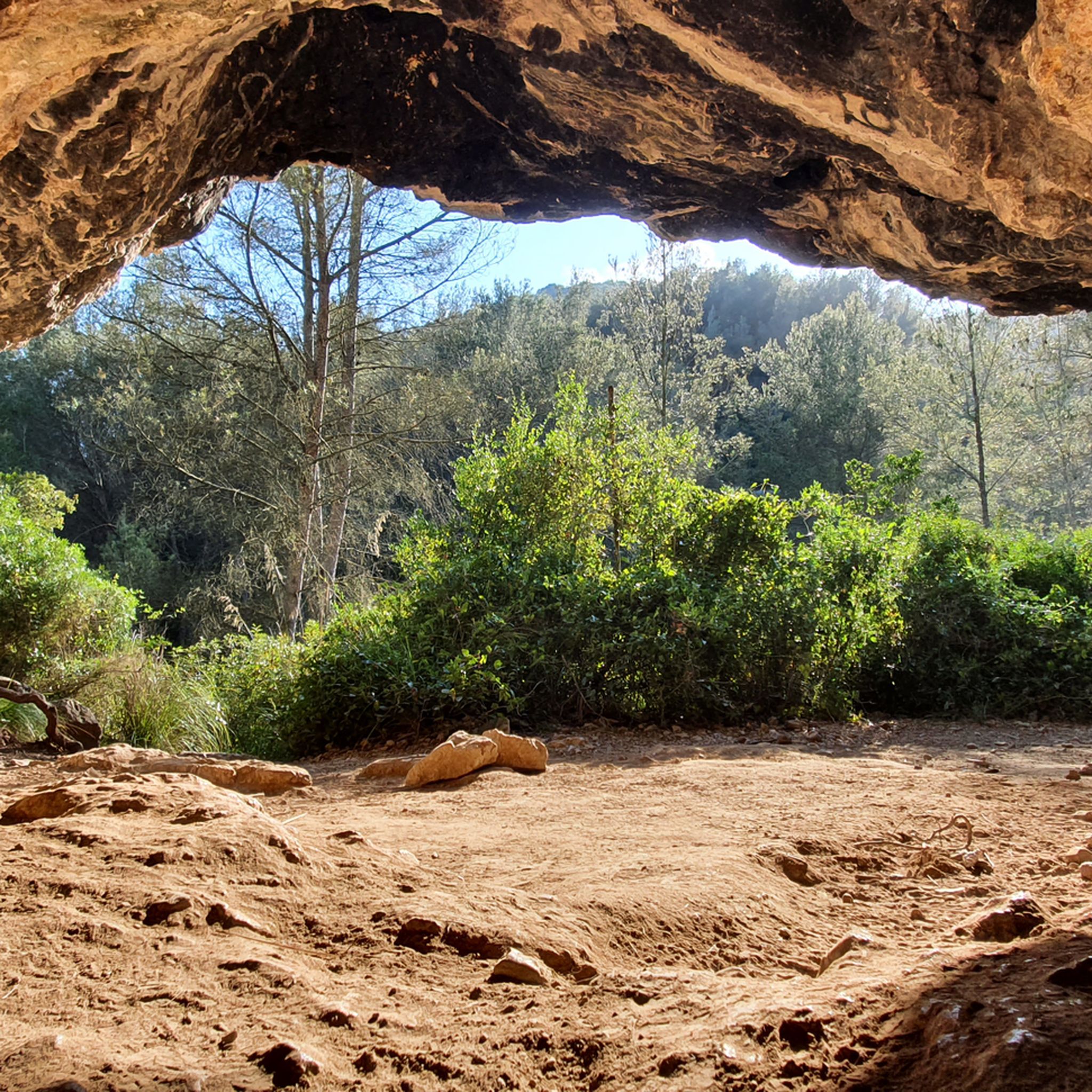
Cave of the Muntanyeta
Highlight • Cave
The cave can be divided into two parts, to the east, a sector seven and a half meters wide and four meters deep, with a large block that partially closes the front. The western sector is 15 meters wide and is also partially enclosed by an eight meter wall. If we continue inside, we will find a room 12 meters deep and eight meters wide.
Translated by Google •
Tip by

Cova de Cal Muntaner
Highlight • Cave
Translated by Google •
Tip by

Sign up now to discover places like this
Get recommendations on the best single tracks, peaks, & plenty of other exciting outdoor places.
Sign up for free
Avenc del Llamp
Highlight • Cave
Well-known chasm of 73 m. of depth in the Pla de Querol (Garraf)
After passing through the small mouth, it penetrates into a well of 40 meters vertical, with a diaclased appearance and smooth walls. At its bottom begin a series of vertical conduits affected by a very important clastic process where the blocks divide the original well into different lateral and parallel concavities, thus reaching the point of maximum penetration at elevation - 73. (CAUTION: Danger to hypoxia)
Translated by Google •
Tip by

Esquerrà Cave
Highlight • Cave
Translated by Google •
Tip by

Cassimanya Cave
Highlight • Cave
Translated by Google •
Tip by

Sign up for free to discover even more caves around Sant Pere De Ribes.
Sign up for free
Already have an account?
Start today with a free account
Your next adventure awaits.
Login or Signup
Popular around Sant Pere De Ribes

Other adventures around Sant Pere De Ribes

Tips from the Community

There is a caving cave here, be careful if you are going to look at it.
0
0

Place of interest for speleology
0
0

To the north of the Serra del Clos and close to the Puig de les Agulletes, this cave appears which is located on the ledge of the mountain itself, in an area of cliffs and you have to watch carefully where you put your feet when walking.
0
0
Beautiful cave that is located near the Torrent de la Llaureda and where it is also called the Cova del Trapper. You must be alert when entering the cave if you do not have the necessary material.
0
0

Be very careful with the landslides inside. I advise not to scream inside, not to go deeper than a few meters, it is dangerous.
0
0

This cave is also known by the name of the Black Cave, it is a small cave-shaped wall, and it is closed by a half-collapsed wall. It has its origin in a small quarry. The entrance is usually covered by thick vegetation. The cave can be divided into two parts, to the east, a sector seven and a half meters wide and four meters deep, with a large block that partially closes the front. The western sector is 15 meters wide and is also partially enclosed by an eight meter wall. If we continue inside, we will find a room 12 meters deep and eight meters wide.
0
0

Section only suitable for gravel. Unpaved track
2
0

Avenc del Llamp Well-known chasm of 73 m. of depth in the Pla de Querol (Garraf) After passing through the small mouth, it penetrates into a well of 40 meters vertical, with a diaclased appearance and smooth walls. At its bottom begin a series of vertical conduits affected by a very important clastic process where the blocks divide the original well into different lateral and parallel concavities, thus reaching the point of maximum penetration at elevation - 73. (CAUTION: Danger to hypoxia)
1
0
Frequently Asked Questions
What types of 'caves' can I explore in Sant Pere de Ribes?
In Sant Pere de Ribes, the term 'caves' can refer to two distinct experiences. Primarily, the region is famous for its 'cavas,' which are traditional wineries producing sparkling wine, offering tours and tastings. However, there are also natural geological caves, mainly located within the Garraf Natural Park, which are suitable for exploration and speleology.
Are there natural caves suitable for visitors in Sant Pere de Ribes?
Yes, the Garraf Natural Park, which surrounds Sant Pere de Ribes, features several natural geological formations. These include chasms and caves like the Cave of the Muntanyeta (also known as the Black Cave), Cova de Cal Muntaner, Avenc del Llamp, Esquerrà Cave, and Cassimanya Cave. Many of these are considered challenging and are of interest for speleology.
What are the most notable natural caves for exploration in the area?
Among the most notable natural caves are Cova de Cal Muntaner, located near the Torrent de la Llaureda, and Avenc del Llamp, a chasm reaching 73 meters deep in the Pla de Querol. The Esquerrà Cave is also a significant natural monument for speleology enthusiasts.
Are the natural caves in Sant Pere de Ribes family-friendly or easily accessible?
Most of the documented natural caves in the Sant Pere de Ribes area, such as Cova de Cal Muntaner, Avenc del Llamp, Esquerrà Cave, and Cassimanya Cave, are categorized as 'challenging' and are primarily suited for experienced speleologists. They often involve difficult terrain, potential for landslides, and require specialized equipment. Easy access for families or casual visitors is generally not available for these natural formations.
What should I wear or bring if I plan to explore the natural caves?
Given that many natural caves in the area are challenging, it's crucial to be prepared. You should wear appropriate gear for caving, including sturdy footwear, head protection, and headlamps. Some caves may require ropes and other speleological equipment. Always prioritize safety and consider going with experienced guides or groups, especially for deeper chasms like Avenc del Llamp.
What are the 'cavas' (wineries) in Sant Pere de Ribes, and can I visit them?
Sant Pere de Ribes is renowned for its Cava wineries, which are often referred to as 'caves' in a different context. Notable examples include Celler Vega de Ribes, Torre del Veguer, and Celler Puig Batet. These wineries are typically housed in historic estates and offer guided tours, wine tastings, and sometimes food pairings. They provide a rich cultural and enological experience, often set in picturesque natural surroundings.
Are there any historical or cultural connections to the 'cavas' (wineries) in the region?
Absolutely. Many Cava wineries in Sant Pere de Ribes boast significant historical and cultural heritage. For instance, Celler Vega de Ribes is situated in a masia dating back to the 12th century with documented winemaking traditions since 1540. Torre del Veguer, an estate from 1359, is recognized as a historical-artistic monument and even features drawings by Salvador Dalí in its cellars. Visiting these offers a journey through the region's past.
What outdoor activities can I do near the caves in Sant Pere de Ribes?
The area around Sant Pere de Ribes, particularly within the Garraf Natural Park, offers various outdoor activities. You can find numerous hiking trails, including routes like 'GR 92: Vilanova i la Geltrú Coastal Loop' or 'View of Vineyards and Hills loop'. There are also excellent road cycling routes and running trails that allow you to explore the diverse landscape.
Is the Garraf Natural Park dog-friendly for exploring natural features?
While the Garraf Natural Park is a natural area, specific regulations regarding dogs in caves or sensitive natural formations may apply. For general hiking and exploring the park's trails, dogs are often permitted but should be kept on a leash. It's always best to check local park guidelines for the most current information on pet policies, especially when near delicate natural sites.
What is the best time of year to visit the Sant Pere de Ribes area for cave exploration or winery tours?
The Sant Pere de Ribes region generally enjoys a Mediterranean climate. For natural cave exploration, spring and autumn offer milder temperatures, which are more comfortable for physical activity. Summer can be hot, while winter can be cooler and potentially wetter. For winery tours, most 'cavas' operate year-round, but booking in advance is recommended, especially during harvest season (late summer to early autumn) or holidays.
Are there any cafes or amenities near the natural caves in Garraf Natural Park?
The natural caves within Garraf Natural Park are generally in more remote, undeveloped areas. You are unlikely to find cafes or extensive amenities directly adjacent to the cave entrances. It is advisable to bring your own water and snacks. For cafes, restaurants, and other services, you would need to head back to the towns and villages surrounding the park, such as Sant Pere de Ribes itself.
Most popular routes around Sant Pere De Ribes
Most popular attractions around Sant Pere De Ribes

Get inspired with the komoot mobile app


Explore more
Extend your search for the best caves by checking out these guides of the top ones around Sant Pere De Ribes:
