Top 5 Gorges around La Coma I La Pedra
Best canyons around La Coma i la Pedra are found within the Solsonès region of Catalonia, Spain. This area is characterized by its mountainous terrain, including the Port del Comte and Verd mountain ranges, and significant water features. The municipality offers various natural landscapes, including barrancos and other water-carved formations. These features contribute to the region's appeal for exploring natural environments.
Best canyons around La Coma i la Pedra
- The most popular canyons include The Capolatell (Busa Prison), a natural monument featuring a plain surrounded by cliffs. This location was historically used as a prison during the French War of Independence and offers a viewpoint.
- Another must-see spot is Canal of Canalda, a gorge that is a narrow channel located on the way up to the Shrine of Lord. Visitors can expect a distinctive natural formation within the landscape.
- Visitors also love Gerdera Channel, a river that is a small tributary of the torrent de les Mulleres. It is located on the north face of the Sierra del Cadí, offering a specific natural watercourse.
- La Coma i la Pedra is known for its gorges, natural monuments, and river channels. The area provides a variety of natural formations to see and explore, from historical sites to narrow water passages.
- The canyons near La Coma i la Pedra are appreciated by the komoot community, with 16 upvotes and 13 photos shared by visitors.
Last updated: July 4, 2026
The Capolatell (Busa Prison)
Highlight • Natural Monument
Translated by Google •
Tip by

Gerdera Channel
Highlight • River
Translated by Google •
Tip by

Sign up now to discover places like this
Get recommendations on the best single tracks, peaks, & plenty of other exciting outdoor places.
Sign up for free
Grau de l'Escala
Highlight (Segment) • Trail
If you go uphill, in the first section you go up an iron staircase (10 m) and then, by means of wooden steps well fitted between the rock and some mechanical handrails, you pass a vertical and narrow rocky channel.
Perfectly signposted at both ends.
Translated by Google •
Tip by

Canal de Cristal
Highlight (Segment) • Gorge
Translated by Google •
Tip by

Start today with a free account
Your next adventure awaits.
Login or Signup
Popular around La Coma I La Pedra
Infinite MTB trails – Pedals del Pedraforca in Catalonia
Cycling around La Coma I La Pedra
Road Cycling Routes around La Coma I La Pedra
Hiking around La Coma I La Pedra
MTB Trails around La Coma I La Pedra
Running Trails around La Coma I La Pedra

Mountain Hikes around La Coma I La Pedra
Gravel biking around La Coma I La Pedra
Other adventures around La Coma I La Pedra

Tips from the Community

Worthwhile hike with very high difficulty - up and down. The path is very steep overall and largely goes over a scree field with boulders of various sizes. Rubble often comes loose, so please always watch out for hikers following behind. In poor conditions (regarding weather, visibility), we strongly advise against visiting.
0
0

I had never climbed a canal before and I loved it! The climb from Prat de Cadí is tough, but once you reach the Canal, it's perfect. It has everything, stone, quarries. It's a game of hands and feet 👌🏻
0
0

The jail or prison of Busa is located in El Capolatell, a plain surrounded by cliffs located in the municipality of Navès, in the Sierra de Busa. Being separated from the plane by a deep crack, it remains like a natural island, surrounded by cliffs. It was used as a prison during the French War of Independence. A place with a lot of history.
0
0

The natural prison of Busa is located in the Capotell. A plane surrounded by cliffs where it could only be accessed by a bridge that connected with this type of natural island that was placed and removed during the French War to enter prisoners.
1
0

The Gerdera channel is a small tributary of the torrent de les Mulleres. It is located on the north face of the Sierra del Cadí.
0
0

Very straight grade of about 50 m located on the access route to the Busa plain. If you go uphill, in the first section you go up an iron staircase (10 m) and then, by means of wooden steps well fitted between the rock and some mechanical handrails, you pass a vertical and narrow rocky channel. Perfectly signposted at both ends.
0
0
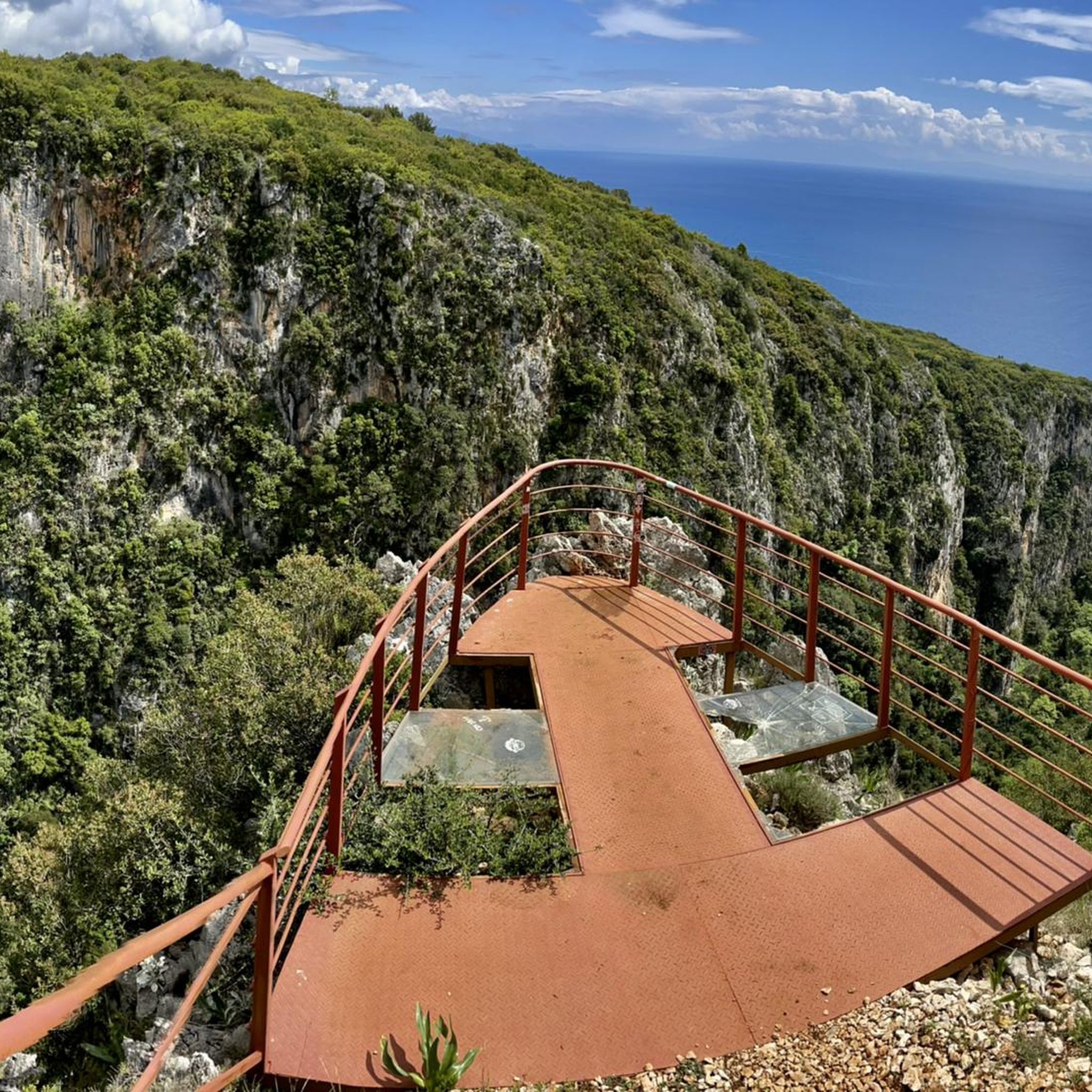
The peak is completely surrounded by nearly vertical cliffs of a hundred meters of difference except at its eastern end where it presents a narrow gorge through which it joins the Serra de Busa. At this point the cliff must not be much more than ten meters deep. Despite this, it is high enough to require a lever or bridge to access the grinding wheel. Until about fifteen years ago, it consisted of a pair of logs joined by horizontal wooden planks and had no railings. Due to its precarious state, it was replaced by a metal lever by the neighbors of Navès. The mill is made up of Montserrat conglomerates and is notched by numerous chasms. Of particular note is one located at the south-western end called the Capolatell chasm with a depth of 115 meters, which makes it the second deepest chasm in the region, surpassed only by the Montserrat Ubach chasm. This very particular morphology led to the fact that during the French war (1808-1814) the Capolatell was used as a prison for soldiers of Napoleon's army, which led to the fact that even today the Capolatell is also known by the name of the Busa Prison At its western end we find a viewpoint that takes your breath away.
0
0
Frequently Asked Questions
What are some unique geological features of the canyons in La Coma i la Pedra?
The canyons in La Coma i la Pedra, particularly those like the Rasa de Coll del Port, are often carved into limestone rock, creating beautiful and engaging descents. You can also find areas like The Capolatell (Busa Prison), which is a plain surrounded by cliffs made of Montserrat conglomerates, notched by numerous chasms, including the 115-meter deep Capolatell chasm.
Are there any historical sites or points of interest near the canyons?
Yes, The Capolatell (Busa Prison) is a significant historical site. This natural monument, a plain surrounded by cliffs, was famously used as a prison for Napoleon's army during the French War of Independence (1808-1814). It offers a unique blend of natural beauty and historical intrigue.
Which canyons are suitable for beginners or those new to canyoning?
The Rasa de les Pegueres o de la Pedra is an excellent choice for beginners. It's a straightforward canyon with low water levels, featuring two rappels, the longest being 20 meters. Its ease of access and manageable difficulty make it ideal for an introduction to the sport, with a descent typically lasting less than an hour.
What is the best time of year to visit the canyons in La Coma i la Pedra?
For technical canyoning routes like the Rasa de Coll del Port, spring and autumn are generally the most favorable seasons. During these times, water levels are more suitable, offering a better experience. The Fonts del Cardener, the sources of the Cardener river, are particularly majestic during the thaw season.
Are there any family-friendly canyoning options or natural water features to explore?
While technical canyoning often requires specific gear and experience, the Rasa de les Pegueres o de la Pedra is considered beginner-friendly due to its low water levels and manageable difficulty, which might suit families with older children and proper guidance. For scenic natural water features, the Fonts del Cardener offer a beautiful spot for mountain routes and picnics, and there are picturesque waterfalls near La Pedra that are more about enjoying serene natural beauty than technical descent.
What kind of rappels and descents can I expect in the technical canyons?
In the Rasa de les Pegueres o de la Pedra, you'll encounter two rappels, with the longest descent being 20 meters. The Rasa de Coll del Port offers a more engaging experience with seven rappels, the longest being 13 meters. Both canyons feature natural anchors or well-maintained equipment like parabolts.
What other outdoor activities can I do near the canyons in La Coma i la Pedra?
The region around La Coma i la Pedra offers a variety of outdoor activities. You can find numerous road cycling routes, such as the challenging Solsona – Coll de Jou Churro Shop loop. For runners, there are running trails like the difficult Cap del Verd – Bosc del Pascual loop. Additionally, there are general cycling routes, including the Clop Bridge – Coll de Jou loop.
What are some challenging canyoning or gorge experiences in the area?
For a more challenging experience, consider the Canal de Cristal, which involves a very steep path, largely over a scree field with boulders, requiring a 'game of hands and feet.' Another challenging route is the Grau de l'Escala, a steep grade with an iron staircase and wooden steps through a vertical and narrow rocky channel.
Are permits required for canyoning in the Solsonès region?
While the provided information doesn't specify permit requirements for individual canyons, it's always recommended to check with local authorities or a specialized canyoning guide service for the most up-to-date regulations regarding permits and access in the Solsonès region, especially for technical descents.
What is the duration of a typical canyoning descent in La Coma i la Pedra?
The duration can vary depending on the canyon and your experience level. For instance, the Rasa de les Pegueres o de la Pedra is a shorter descent, typically taking less than 1 hour. More involved canyons like the Rasa de Coll del Port, with more rappels, would naturally take longer.
Where can I find narrow water passages or channels to explore?
The region is known for its narrow water passages. The Canal of Canalda is a notable narrow channel located on the way up to the Shrine of Lord. Additionally, the Gerdera Channel is a small tributary that offers a specific natural watercourse experience.
What should I wear or bring for canyoning in this area?
For canyoning, appropriate gear is essential. This typically includes a wetsuit (especially in spring/autumn), a helmet, harness, ropes, and suitable footwear with good grip. For beginner routes, a local guide can provide necessary equipment and safety instructions. Always prioritize safety and be prepared for varying water conditions.
Most popular routes around La Coma I La Pedra
Most popular attractions around La Coma I La Pedra

Get inspired with the komoot mobile app


Explore more
Already discovered everything in this region? See additional gorges around La Coma I La Pedra for your next adventure:
