Top 6 Castles around Estopiñán Del Castillo
Best castles around Estopiñán Del Castillo offer a glimpse into the region's rich history and strategic importance. Estopiñán Del Castillo is primarily known for its significant historical fortress, the Castillo de Estopiñán, which gives the town its name. This fortress, of Andalusian origin, was strategically built on a rocky platform, serving as a crucial defensive point for the entry into Ribagorza. The area features a varied landscape with historical sites often perched on rocky platforms, providing commanding views.
Best castles…
Last updated: October 7, 2026
Chinese Wall of Finestres
Highlight • Natural Monument
Translated by Google •
Tip by

Torre de Viacamp and Hermitage of San Esteban
Highlight • Historical Site
The fortified complex is located on a plateau above the village of Viacamp and consists of the remains of the perimeter wall, a slender cylindrical tower and a hermitage of Romanesque origin, possibly the castle chapel.
Translated by Google •
Tip by

Sign up now to discover places like this
Get recommendations on the best single tracks, peaks, & plenty of other exciting outdoor places.
Benabarre
Highlight • Castle
Translated by Google •
Tip by

Castillo de Benabarre
Highlight • Castle
Numerous battles were fought in the castle of Benabarre and it was demolished at the beginning of the …
Translated by Google •
Tip by
Castillo de la Mora and Monmagastre Hermitage
Highlight • Castle
Of probable Roman origin (Magnum Castrum …
Translated by Google •
Tip by

Sign up for free to discover even more castles around Estopiñán Del Castillo.
Already have an account?
Start today with a free account
Your next adventure awaits.

Tips from the Community

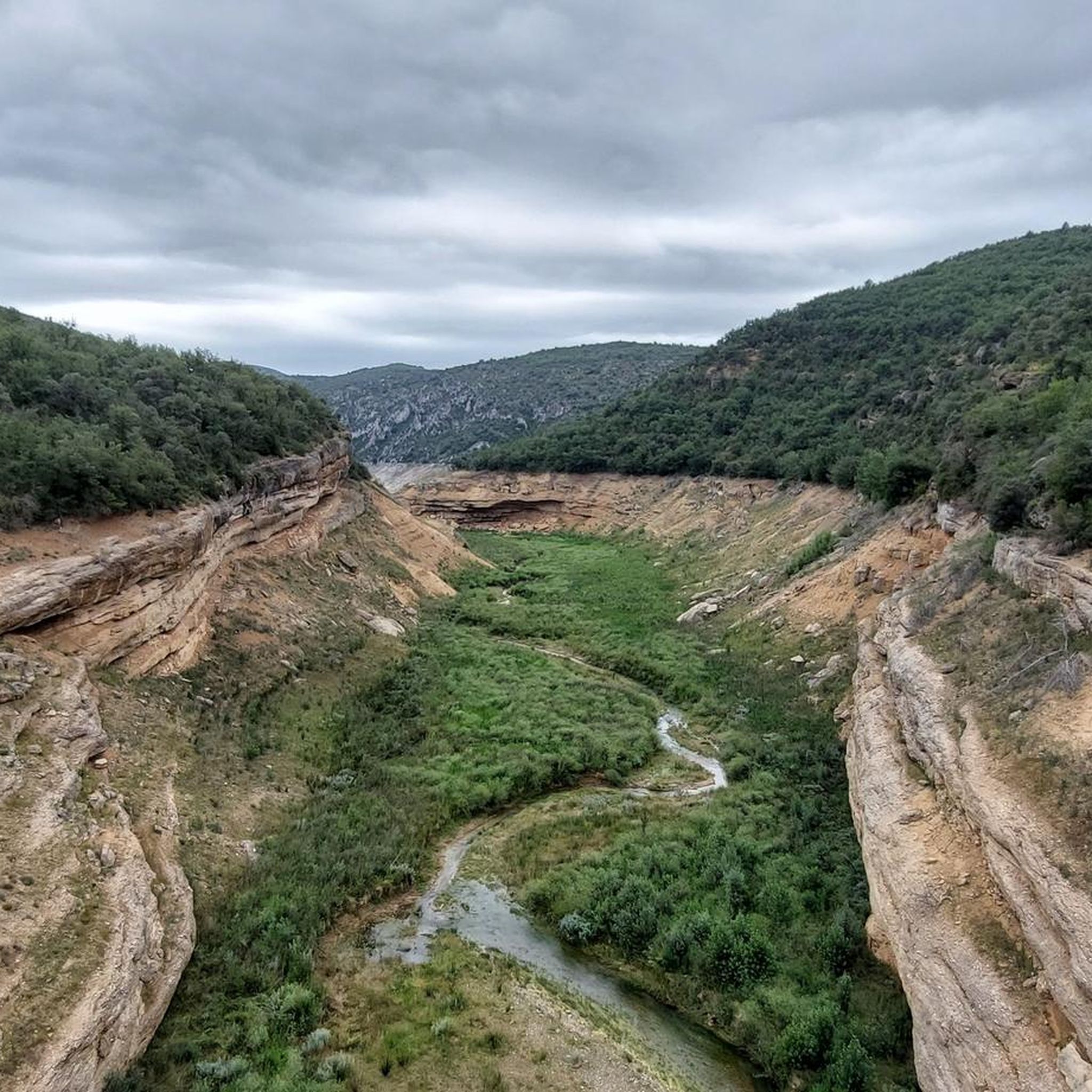
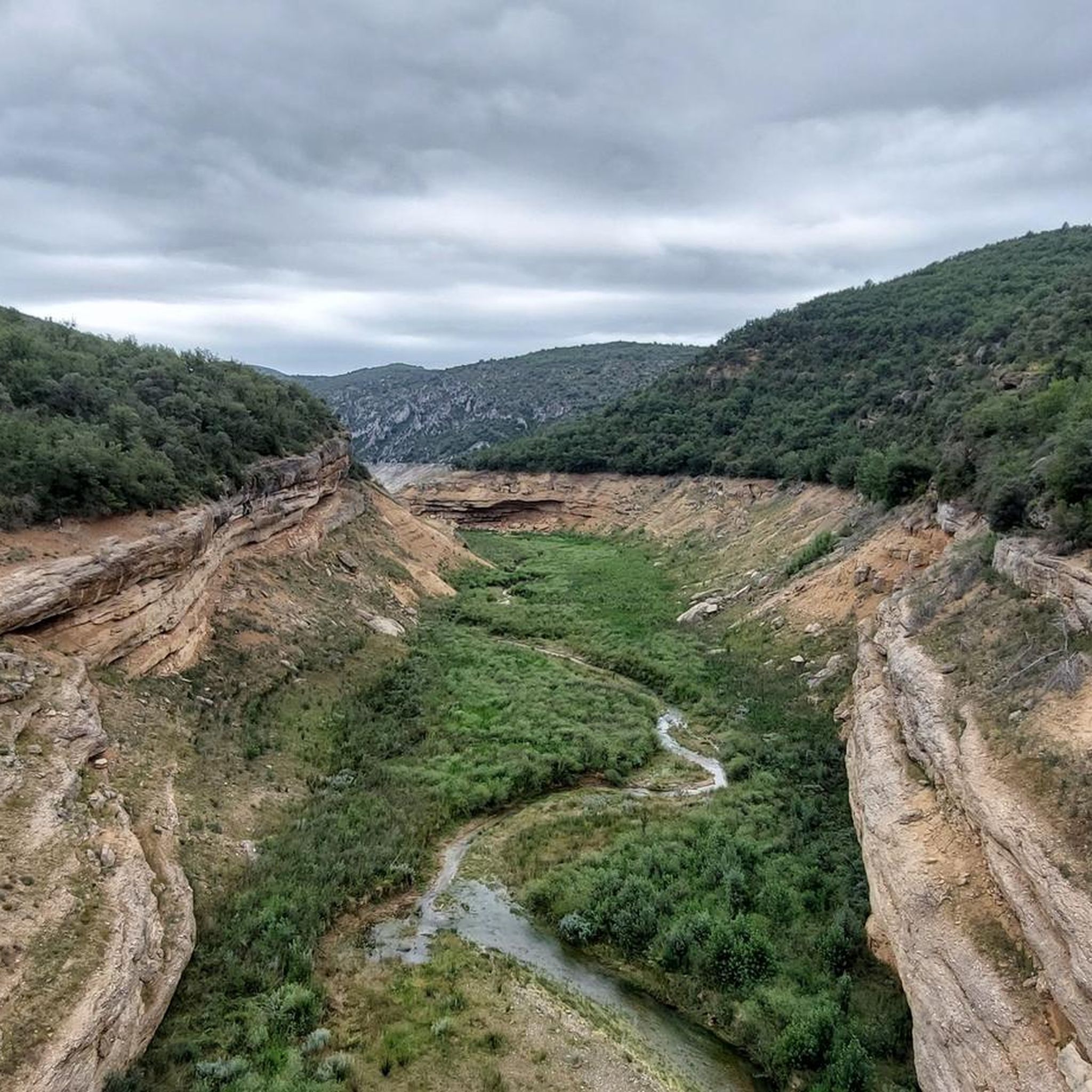
A medieval watchtower. It was part of the network of towers and castles that were built throughout the Ribagorza and Sobrarbe mountain ranges during this period of reconquest (Vicampa, Luzás, Benabarre Castle, La Mora, Monzón Castle, Samitier, Puebla de Fantova, Cajigar...among many others...)
0
0


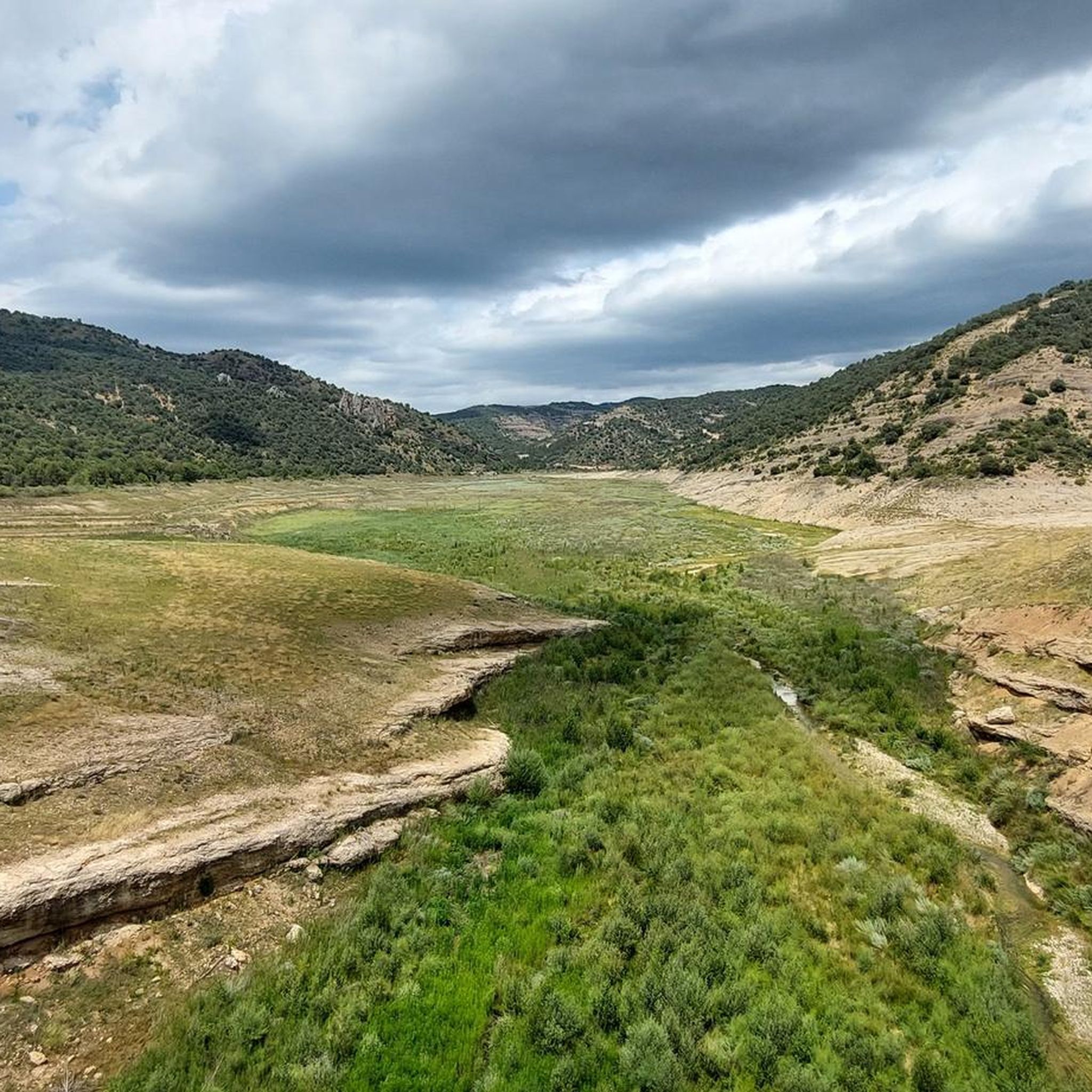
The route to the hermitage of Sant Vicente, the place where it is located and the views it offers of the reservoir.... these whims of nature 🏞️ are unforgettable 🤩
3
0

https://www.montsecdelestall.com/ruta/ficha/Torre_De_Viacamp The fortified complex is located on a plateau above the village of Viacamp and consists of the remains of the perimeter wall, a slender cylindrical tower and a hermitage of Romanesque origin, possibly the castle chapel. The tower has a circular plan, a diameter of about 11 meters and a height of 20 meters, with walls almost 3 meters thick. As it is built, it seems to have been built both inside and outside with the help of a double scaffold, which is due to the great thickness of the walls. Like most defensive structures of the period, the ground floor was walled, with a high, round-arched entrance facing south-east. The ground floor was used as a storage room and is not accessible from the outside. After the restoration work carried out in 2005 and 2006, it was found that the tower had five floors, although only four of them remain today. The upper part, which has now disappeared, could have been made up of small defensive openings in the form of battlements or a conical roof. Very close to the tower and within the walls is the church of San Esteban de Viacamp, of Romanesque origin, a classic among the fortresses of the Upper Ragon. Originally dedicated to the Archangel Michael, it was later dedicated to Saint Stephen. Next to the church is the old cemetery, which has not been abandoned. The remains of the external enclosure are in the areas bordering the plateau and are made of ashlar and masonry with some high-quality parts. Remains of walls and foundations or the beginnings of towers have been preserved, although they are not very high. (Wikipedia)
1
0

Castillo de la Mora or Castillo de Monmagastre is a castle located about 2 kilometers south of the town of Peralta de la Sal. Of probable Roman origin (Magnum Castrum or "Big Castle"), it was later reused by the Muslims (Mamacasra) for the line of defenses of Lleida against the county of Ribagorza, until it was conquered in 1083 by Ermengol IV of Urgel. The castle, which changed hands, was the nucleus of the town of Monmagastre, until it was depopulated at the end of the Middle Ages.2 In the 15th century it passed into the hands of the Lanuza family.
0
0

Benabarre, with its castle rising above the town, creates an unmistakable image in the Aragonese Pre-Pyrenees. Benabarre was the old capital of the Ribagorza county and its medieval fortress served as a border defense as well as a county residence. Although it ended up in a state of ruin, it has been restored in recent decades and is now a symbol of the historical legacy of this town that dates back to Roman times.
0
1

Access point to the Castle and Church (in the image) by stairs. Numerous battles were fought in the castle of Benabarre and it was demolished at the beginning of the 17th century and reused in the 19th century with new executions, remaining active in the Catalan and Carlist wars. Due to these war conflicts, it was rebuilt to transform it into a rifle fort. Today it looks more like a 19th century fort, although it retains older walls from when it was the castle-palace of the counts of Ribagorza. Thus, it is a monumental complex of a single enclosure where all the transformations of the property parallel to the historical ups and downs are integrated. It is located at the top of the town and is visible from several points in the area. It is made up of the Romanesque church and the fortress, dating from the 12th century. It consists of two enclosures, an upper one, older and with a Muslim layout, of which there are walls at the base of the rock on which it sits, as well as the base of a quadrangular tower.
3
0
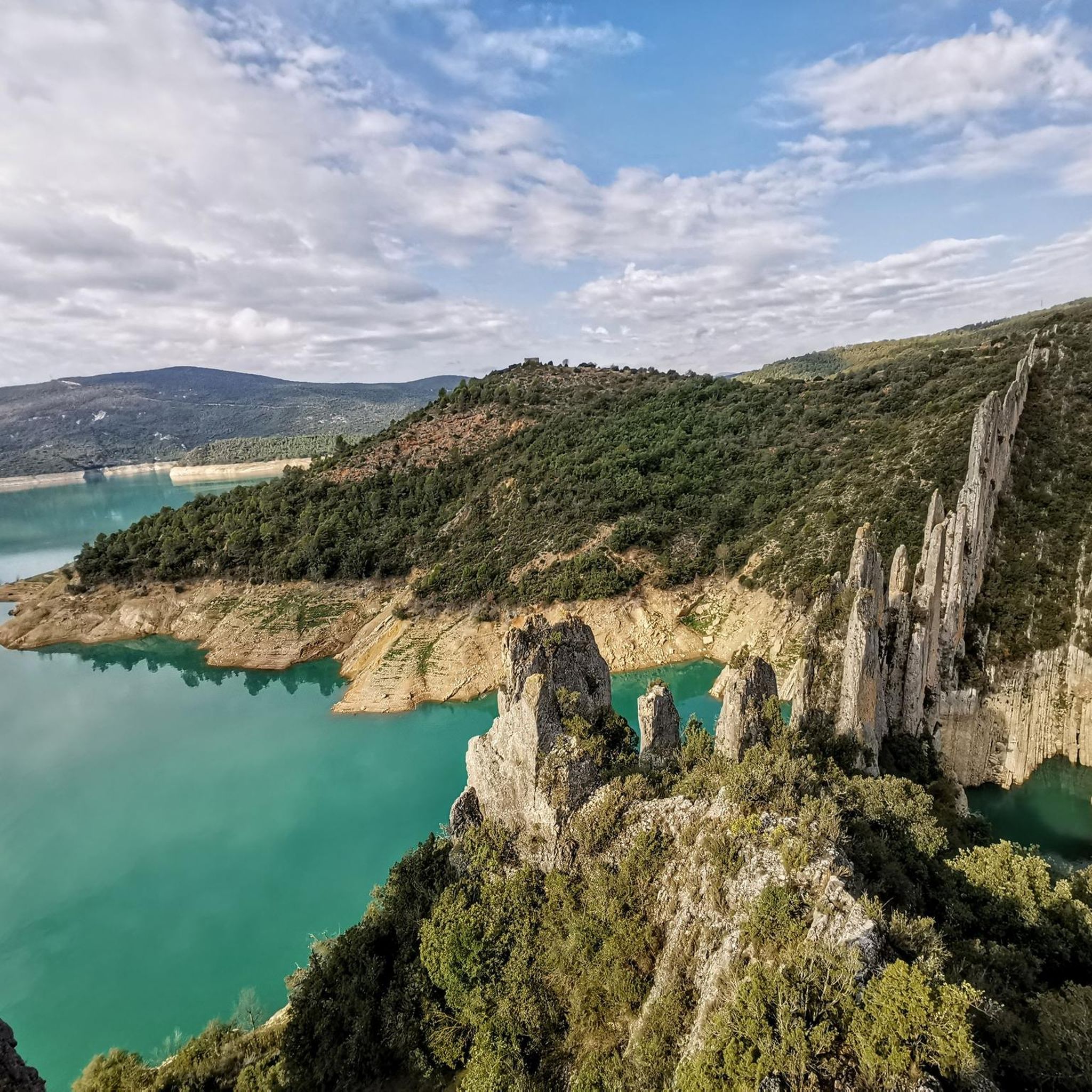
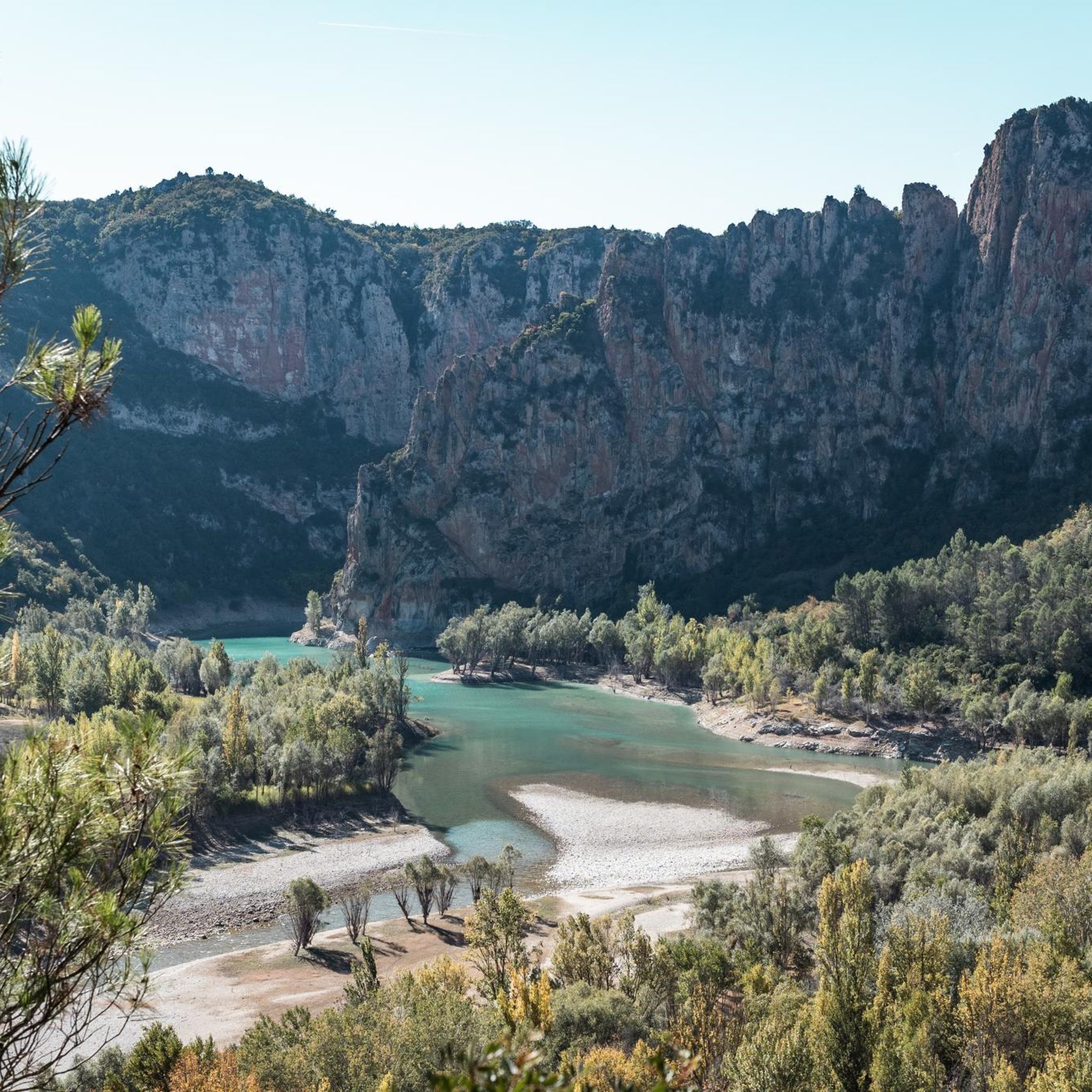
Traditionally known as "Roques de la Vila", this unique geological formation was renamed the Chinese Wall of Finestres to encourage tourism in the area. You can access the foot of it by boat through the Canelles reservoir.
5
0
Frequently Asked Questions
What is the main historical castle in Estopiñán Del Castillo?
The town is named after the Castillo de Estopiñán, a significant historical fortress. It's an elongated, narrow structure built on a rocky platform, offering commanding views and a glimpse into medieval military architecture. Despite being in ruins, remnants of its walls and an ancient cistern are still visible, reflecting its long history as a defensive stronghold.
What are some other notable castles to visit in the region?
Beyond the local fortress, you can explore Benabarre, a restored medieval fortress that was once a border defense and county residence. Another significant site is Castillo de la Mora and Monmagastre Hermitage, which has Roman origins and played a role in Muslim defenses.
What kind of history do the castles in this area represent?
The castles around Estopiñán Del Castillo, including the Castillo de Estopiñán itself, have a rich history as defensive structures. They originated as Andalusian fortresses, were conquered during the Reconquista, and served as crucial defensive entry points and bases for operations. They reflect centuries of strategic importance and transitions between various owners, from counts to kings.
Are there any viewpoints or scenic spots near the castles?
Yes, many castles in the region are perched on high ground, offering excellent viewpoints. The Castillo de Estopiñán provides commanding views from its rocky platform. Similarly, Castillo de Benabarre is known as a viewpoint, located at the top of its town and visible from various points in the area. The Torre de Viacamp and Hermitage of San Esteban also offers panoramic views from its plateau.
What outdoor activities can I do near these castles?
The region offers various outdoor activities. You can find numerous hiking trails, such as those around the 'Chinese Wall of Finestres,' which is a unique geological formation. For cycling enthusiasts, there are MTB trails and road cycling routes available. You can explore more options on the Hiking around Estopiñán Del Castillo or MTB Trails around Estopiñán Del Castillo guide pages.
Are there hiking trails that lead to or near these castles?
Yes, there are several hiking opportunities. For example, you can hike to the 'Chinese Wall of Finestres,' which is near some historical sites. While the Castillo de Estopiñán is accessible, its location on a rocky platform suggests a walk to reach it. For detailed hiking routes, refer to the Hiking around Estopiñán Del Castillo guide.
What is the best time of year to visit the castles around Estopiñán Del Castillo?
The region's climate suggests that spring and autumn would be ideal for visiting, offering pleasant temperatures for exploring the outdoor castle ruins and engaging in hiking or cycling activities. Summers can be hot, and winters might be chilly, especially on exposed castle sites.
What should I wear for castle walks in the Estopiñán Del Castillo area?
Given that many castles are in ruins and located on rocky or elevated terrain, comfortable walking shoes with good grip are essential. Layered clothing is advisable, as conditions can change, especially if you're exploring viewpoints. In cooler months, a jacket and perhaps a hat would be beneficial.
Are there any family-friendly options for visiting castles in the area?
While specific 'family-friendly' categorizations aren't provided for all castles, exploring the ruins of the Castillo de Estopiñán can be an engaging historical adventure for families. The commanding views and the opportunity to imagine medieval life can be captivating for children. Always consider the terrain and accessibility for younger visitors.
What do visitors enjoy most about the castles in Estopiñán Del Castillo?
Visitors appreciate the historical significance and the commanding views offered by these ancient structures. The community has shared 37 photos and given 20 upvotes, highlighting the visual appeal and historical depth of the sites. The opportunity to explore medieval architecture and understand the region's past as a contested frontier is a major draw.
Is there parking available when visiting the castles?
While specific parking details for each castle are not always provided, it's generally advisable to look for parking in the nearby towns or designated areas. For example, when visiting the Castillo de Estopiñán, you would likely park within Estopiñán del Castillo itself and walk to the fortress.
What kind of terrain can I expect when visiting these castles?
The castles in this region are often situated on varied terrain, including rocky platforms and elevated positions. The Castillo de Estopiñán, for instance, is built on a 6 to 10-meter high rocky platform. Expect some uneven surfaces and potentially steep paths, especially when accessing the ruins or viewpoints.
Most popular routes around Estopiñán Del Castillo
Most popular attractions around Estopiñán Del Castillo

Get inspired with the komoot mobile app


Explore more
Looking for the best castles somewhere else? Discover other guides around Estopiñán Del Castillo:
