Top 5 Caves around Santa Perpètua De Mogoda
Best caves around Santa Perpètua De Mogoda are found in the broader region of Catalonia, as the local topography is not conducive to extensive natural cave formation. Santa Perpètua De Mogoda is situated in a geological depression. Despite this, the surrounding areas offer several impressive and historically significant cave systems. These natural features provide opportunities for exploration and insight into geological and historical contexts.
Best caves around Santa Perpètua De Mogoda
- The most popular caves is Font de la Tosca…
Last updated: July 4, 2026
Cova d'en Genís Paradolmen
Highlight • Cave
Translated by Google •
Tip by

The Cave Near Can Coll
Highlight • Cave
Translated by Google •
Tip by

Sign up now to discover places like this
Get recommendations on the best single tracks, peaks, & plenty of other exciting outdoor places.
Sign up for free
Font de la Tosca and Degotalls
Highlight • Waterfall
Translated by Google •
Tip by

Can Nadal Cave
Highlight • Cave
Introduction
The Can Nadal cave is a large monolithic block with a hollow interior that is protected to the east and at the top by a natural rock wall …
Translated by Google •
Tip by

La Foradada of Sant Quirze del Vallès
Highlight • Natural Monument
Translated by Google •
Tip by

Start today with a free account
Your next adventure awaits.
Login or Signup
Popular around Santa Perpètua De Mogoda

Tips from the Community

A curious story circulates among the locals: during the post-war years, a man nicknamed "the Clockmaker" lived here for almost a decade, repairing clocks and small appliances in exchange for food. They say that at night a flickering light could be seen emerging from the cave, its ticking audible all the way to the Can Nadal road. Today, only the marks on the rock remain, along with a silence that seems to continue measuring time.
0
0

Lots of natural beauty and lush forest just a short distance from the city of Sabadell. Spectacular.
0
0

Genís Cave, also known as Genís Cave, is a paradolmen located in the municipality of Santa Coloma de Gramenet. It is located in the Serralada de Marina park, on the southwest side of the Pollo hill, near the hermitage of Sant Climent and 500 meters from the Puig Castellar archaeological site.
22
0

Natural environment to explore it with peace of mind.
1
0
[ENG] Introduction The Can Nadal cave is a large monolithic block with a hollow interior that is protected to the east and at the top by a natural rock wall that protrudes forming a visor. A sepulchral use is attributed to him. The first archaeological searches date from 1951 and were carried out by the Vilassar de Dalt Archaeological Group led by Jaume Ventura, and by the Provincial Archaeological Excavations Commission. The excavations were described by Pau Ubach in his Ethno-Archaeological Memoirs (L'Aixernador Edicions, 1994; p.149-154) where he comments on the discovery of stone axes, flint knives and Chalcolithic arrowheads. This prehistoric cavity was enlarged in medieval times and used as a hermitage (inhabited place where one or more people retire to lead a religious life). Later, in modern times, it was enabled as a vineyard hut and was also used by the coal miners of the area. Source: Vilanova del Vallès City Council [ESP] Introduction The cave of Can Nadal is a large monolithic block with an empty interior that is protected in the east and in the upper part by a natural rock wall that protrudes forming a visor. A sepulchral use is attributed to it. The first archaeological investigations date back to 1951 and were carried out by the Vilassar de Dalt Archaeological Group directed by Jaume Ventura, and by the Provincial Archaeological Excavations Commission. The excavations were described by Pau Ubach in his Memorias Ethno-Arqueológicas (El Aixernador Edicions, 1994; p.149-154) where he comments on the discovery of stone axes, flint knives and Chalcolithic arrowheads. This prehistoric cavity was enlarged in medieval times and used as a hermitage (inhabited place where one or more people retreat to lead a religious life). Later, in modern times it was enabled as a vineyard hut and was also used by the coal miners of the area. Source: Vilanova del Vallès Town Hall
3
0

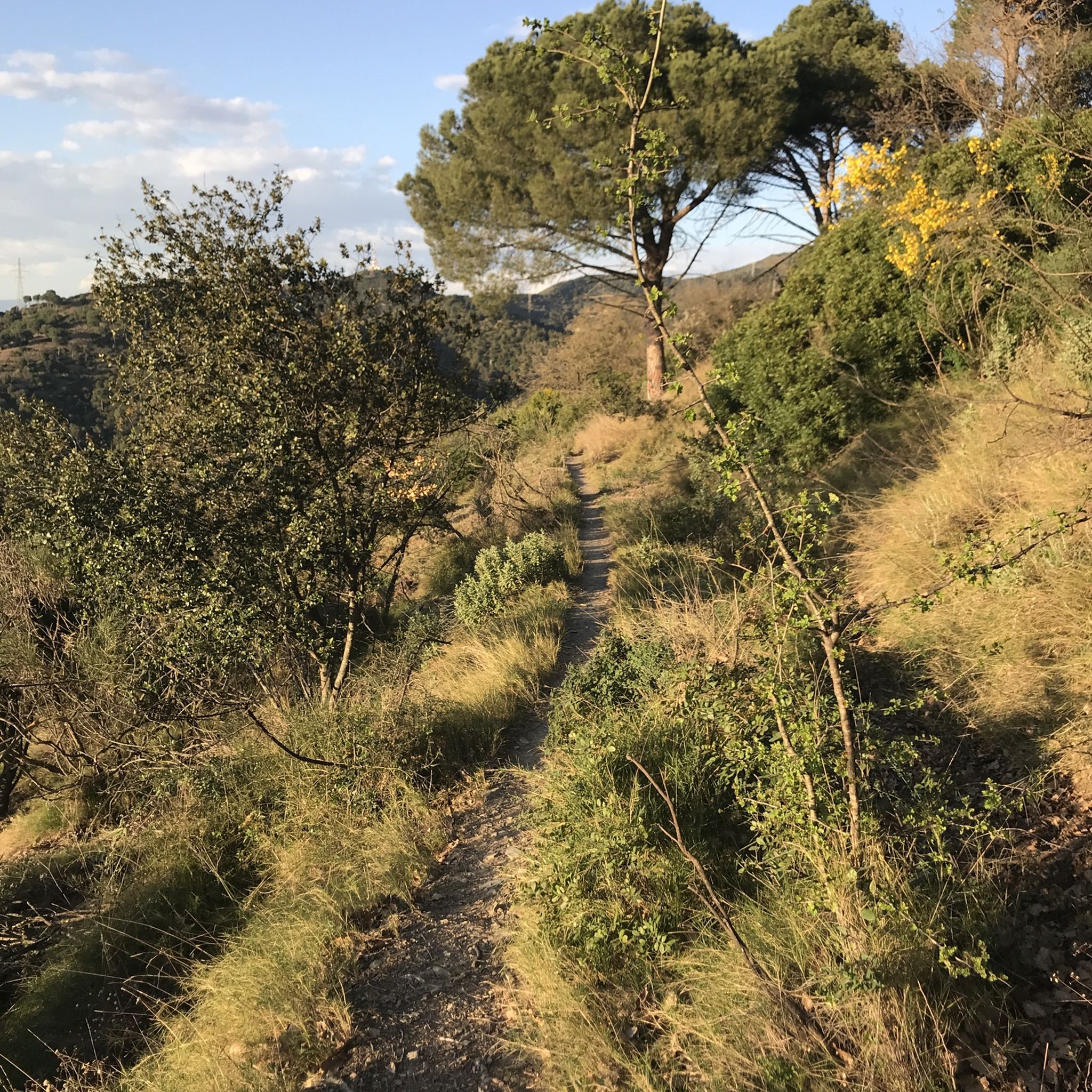
A strange cave in the side of the trail. It is a popular place for people to visit on a nice trail near Can Coll. I am not sure if the cave actually goes anywhere but the trail at the right time of the day gets beams of light that are magical.
5
1

A Dolmen with good views and hides if you can't find the way.
7
0

Spectacular hole caused by the erosion of the Colobrers torrent. Privileged natural environment but too crowded, apart there are many "domingueros" who do not respect the indications of where you can not go (riverbed, etc.), and who make stupid stone constructions (forbidden) as if they were dogs peeing and marking the territory.
2
0
Frequently Asked Questions
What types of caves can I explore near Santa Perpètua De Mogoda?
While Santa Perpètua De Mogoda itself is not known for extensive natural caves, the surrounding region of Catalonia offers diverse options. You can find limestone caves with stunning speleothems like the Salnitre Caves, archaeological and paleontological sites such as the Caves of El Toll, and even unique salt formations at the Salt Mountain Cultural Park. Locally, you can explore natural rock shelters and formations where water emerges, like Font de la Tosca and Degotalls, or the caves at Turó de Montcada i Reixac.
Are there family-friendly caves to visit near Santa Perpètua De Mogoda?
Yes, several options are suitable for families. The Caves of El Toll in Moià offer guided family tours and educational workshops focused on prehistoric times. Closer to Santa Perpètua De Mogoda, Turó de Montcada i Reixac and The Cave Near Can Coll are considered family-friendly and can be explored as part of a trail.
What historical or archaeological significance do the caves in the region hold?
The caves in the wider Catalonia region are rich in history. The Caves of El Toll in Moià are renowned for significant archaeological and paleontological remains, showing human presence since the Paleolithic. Cova d'en Genís Paradolmen, though a natural structure, yielded Bronze Age artifacts. Can Nadal Cave has a history of sepulchral use, archaeological finds from the Chalcolithic period, and was later used as a hermitage and vineyard hut.
What are the Salnitre Caves (Coves de Montserrat) like?
The Salnitre Caves, located in the Montserrat mountain near Collbató, are known for their stunning limestone formations, including stalactites, stalagmites, and columns. They offer an impressive underground journey with expert guides. Be prepared for a walk involving 244 steps to the entrance and another 500 steps inside, maintaining a constant temperature of 14 °C.
Can I visit a salt cave near Santa Perpètua De Mogoda?
Yes, the Salt Mountain Cultural Park in Cardona offers a unique experience. This former salt mine allows visitors to explore a network of 500 meters of galleries at a depth of 86 meters. You can marvel at diverse mineral formations and impressive stalactites and stalagmites made of salt, providing a distinct geological experience.
What outdoor activities can I combine with a visit to the caves?
The areas around the caves offer various outdoor activities. You can find numerous cycling routes, including challenging ones like the Cingles de Bertí loop, or moderate options like the Font de la Carrerada loop. For mountain biking, trails like the Cornice Viewpoint loop are available. Running enthusiasts can explore routes such as The solitary fig tree loop. You can find more details on these activities in the cycling, MTB, and running guides for Santa Perpètua De Mogoda.
What is special about <a href="https://www.komoot.com/highlight/3101798" target="_blank" rel="noopener">Font de la Tosca and Degotalls</a>?
Font de la Tosca and Degotalls is a spectacular natural spot where water emerges from a cave, forming a waterfall. It offers a serene natural environment to explore, with lush forest just a short distance from Sabadell.
Are there any caves that inspired famous artists?
Yes, the organic and undulating shapes within the Salnitre Caves (Coves de Montserrat) are said to have inspired the renowned architect Antoni Gaudí, known for his unique architectural style in Barcelona.
What should I expect when visiting <a href="https://www.komoot.com/highlight/2797075" target="_blank" rel="noopener">Turó de Montcada i Reixac</a>?
Turó de Montcada i Reixac is a mountain summit offering spectacular 360-degree panoramic views of the Vallès and Barcelonès plains. While exploring the top, you can find beautiful caves. It's considered an easy climb suitable for most visitors.
What is the L'Espluga de Francolí Cave Museum?
The L'Espluga de Francolí Cave Museum is located in natural cavities that were inhabited by humans since the Paleolithic era. The museum illustrates prehistoric life through projections on rock walls and includes a recreation of a Neolithic settlement, offering an educational journey into ancient human history.
What do visitors enjoy most about the caves around Santa Perpètua De Mogoda?
Visitors appreciate the diverse experiences offered by the regional caves, from the geological wonders of the Salnitre Caves and the unique salt formations of Cardona, to the rich archaeological history of El Toll. Locally, the natural beauty and opportunities for exploration at spots like Font de la Tosca and Degotalls and the panoramic views from Turó de Montcada i Reixac are highly valued.
Most popular routes around Santa Perpètua De Mogoda
Most popular attractions around Santa Perpètua De Mogoda

Get inspired with the komoot mobile app


Explore more
Extend your search for the best caves by checking out these guides of the top ones around Santa Perpètua De Mogoda:
