Top 7 Caves around Sargentes De La Lora
Best caves around Sargentes De La Lora are found within a region known for its geological and natural heritage. Sargentes De La Lora, located in northern Burgos, Spain, serves as a base for exploring the underground wonders of the Geoparque Las Loras. This area features diverse karstic systems, including significant cave networks and unique natural springs. The landscape offers a variety of underground experiences, from accessible show caves to extensive archaeological sites.
Best caves around Sargentes De La Lora
- The…
Last updated: May 23, 2026
Turquoise Pools and Waterfalls of Orbaneja del Castillo
Highlight • Waterfall
Translated by Google •
Tip by

Pozo Azul de Covanera
Highlight • Natural Monument
Translated by Google •
Tip by

Sign up now to discover places like this
Get recommendations on the best single tracks, peaks, & plenty of other exciting outdoor places.
Sign up for free
La Cucarada Cave
Highlight • Cave
Translated by Google •
Tip by
Rock Church of the Virgin of Carmen
Highlight • Religious Site
Translated by Google •
Tip by

Well of the Cueva de los Franceses
Highlight • Cave
Translated by Google •
Tip by

Sign up for free to discover even more caves around Sargentes De La Lora.
Sign up for free
Already have an account?
Start today with a free account
Your next adventure awaits.
Login or Signup
Tips from the Community

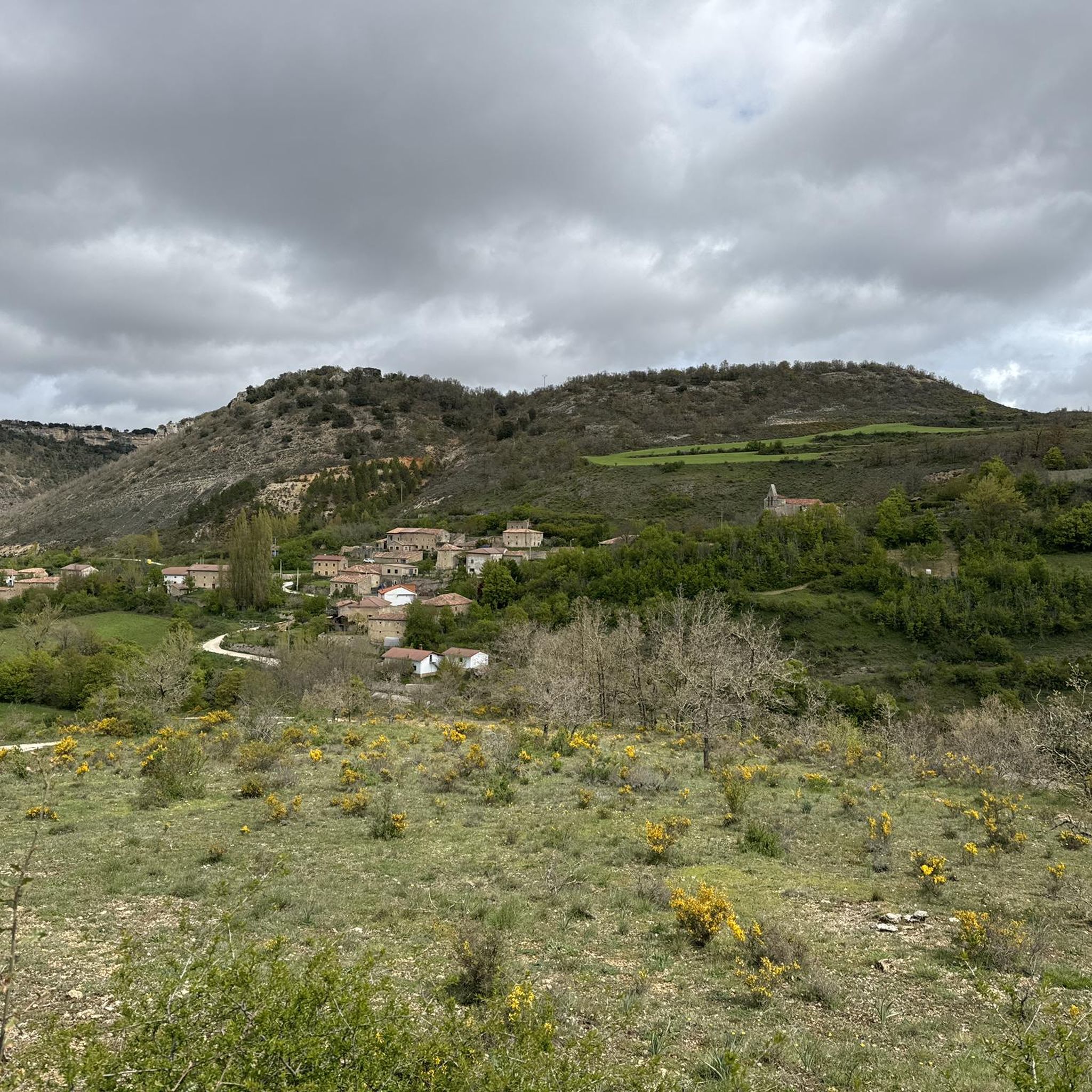
The waterfall springs from the Cueva del Agua from a height of over 20 meters, at the base of the rocky cirque that embraces the village, originating from an aquifer located in the subsoil of the Páramo de Bricia, and it leaps everywhere, dividing the village into two halves, the Villa and the Puebla, and descends among the stone houses, creating a most photogenic scene.
2
0

A spectacular area for hiking trails
0
0

From various shades of blue, ranging from turquoise to a dark ultramarine in the deepest part. To reach the well, there's a half-kilometer walk along a beautiful path that even has a cave entrance. When we arrived, it was a beautiful day, with people swimming and a caving group who had put on their diving suits and were exploring the depths of the underwater cave. A spectacle.
2
1

Natural wonder of the karst environment of Castilla León in the province of Burgos
3
0

It is beautiful on its own, but if we add the depths of the town from which it arises... visit it!
6
0

It is a natural sinkhole that leads to the cave with a protective wall on the surface.
2
0

The Orbaneja del Castillo waterfall is unique because it crosses the same town, dividing it into two parts: La Villa and La Puebla. The waterfall emerges from the Cueva del Agua and falls into the Ebro River in an impressive 25-meter drop, creating a most picturesque karst landscape.
4
2
The Rupestre Church of La Virgen Del Carmen is located in the city of Cadalso in the municipality of Valderredible. History The Rupestrian Church of La Virgen Del Carmen is a rectangular temple with a single nave. This has a barrel vault roof. The head is reached through a semicircular triumphal arch; This head has an almost rectangular plan which is covered by an irregular vault molded to the shape of the rock and with an opening in the head. The access door is located on the south wall, it has a semicircular arch. On the outside of the temple we can see two small windows, one circular and the other rectangular. In the rectangular opening we notice that it is decorated with a line that forms an arch engraved in the rock. The lighting windows are of recent manufacture, since at the time of their construction these temples were designed to be in darkness. On the south wall and on the façade we see some tapping that gives a very vertical appearance. In these marks you can see the possible existence of a semi-rupestrian room with the possibility of the existence of an exterior room as a porch. As a result of the renovations, the temple shows some modern details such as the belfry and the altar table, among others. Above the church we can see tombs excavated in the rock, which are typical of the early medieval period. Those that have an anthropomorphic outline and a rectangular shape stand out. The Rupestrian Church of La Virgen Del Carmen was declared an Asset of Cultural Interest in 1993. Information collected from: https://www.viajarporcantabria.com/?s=ermita+de+cadalso&x=0&y=0
1
0
Frequently Asked Questions
What are the most popular caves around Sargentes De La Lora?
The region around Sargentes De La Lora is known for several impressive cave systems. Among the most popular are the Cueva del Agua, which feeds the spectacular Turquoise Pools and Waterfalls of Orbaneja del Castillo, and the Cueva de los Franceses, a well-regarded show cave. The vast Ojo Guareña Karstic Complex is also a significant draw for its scale and archaeological importance.
Are there family-friendly caves to visit near Sargentes De La Lora?
Yes, the Cueva de los Franceses in Revilla de Pomar is particularly family-friendly. It offers guided tours along a ~500-meter accessible route, showcasing impressive geological formations. There's also a visitor reception building with an audiovisual exhibition, making it an educational experience for all ages.
What kind of geological formations can I expect to see in the caves?
The caves in this region, part of the Geoparque Las Loras, are primarily karstic formations. You can expect to see a variety of speleothems, including stalactites and stalagmites, formed by the action of water over millions of years. The Cueva del Agua also features natural pools with a distinctive turquoise hue, while Pozo Azul de Covanera is a deep spring known for its intense blue water.
Are there any caves with historical or archaeological significance?
Absolutely. The Cueva de los Franceses has historical significance as a natural burial site for French soldiers from the War of Independence in 1808. The Ojo Guareña Karstic Complex is an extremely important archaeological site, with evidence of human occupation from the Middle Paleolithic to the Middle Ages, including cave paintings and prehistoric human footprints. Additionally, the Rock Church of the Virgin of Carmen is a unique cave church carved into sandstone with early medieval tombs.
What is the best time of year to visit the caves?
Caves generally maintain a consistent temperature year-round, making them a good option in various seasons. For example, the Cueva de los Franceses maintains a temperature of 10-14 degrees Celsius. However, if you plan to combine your visit with other outdoor activities in the region, spring and autumn offer pleasant weather. During heavy rains, parts of the Cueva del Agua might be submerged, so checking local conditions is advisable.
What outdoor activities can I do near these caves?
The region around Sargentes De La Lora offers diverse outdoor activities. You can find numerous hiking trails, such as the 'Cascada del Tobazo – circular by the Ebro river' or 'Pozo Azul y la Cascada la Fuentona — circular desde Covanera'. For cycling enthusiasts, there are road cycling routes like the 'Hoces del Alto Ebro y Rudrón Park Loop' and touring bicycle options like the 'Ebro Canyon Trail'. You can explore more routes on the Hiking around Sargentes De La Lora, Road Cycling Routes around Sargentes De La Lora, and Cycling around Sargentes De La Lora guide pages.
Are there any unique natural features or 'hidden gems' among the caves?
Beyond the well-known caves, the region holds unique natural features. The Cueva del Agua is notable for its role in creating the stunning waterfall that flows directly through Orbaneja del Castillo. La Cucarada Cave is a grotto nestled within the scenic Rudrón Canyon, offering a cool exploration. The Ojo Guareña complex, with its vast network and unique Cave-Hermitage of San Bernabé carved into the rock, also stands out as a profound natural and cultural site.
How accessible are the caves for visitors?
Accessibility varies by cave. The Cueva de los Franceses is well-adapted for tourism with an accessible route and guided tours. The Cueva del Agua has a short path to its entrance, and guided visits are generally available, though some sections can be submerged. The Ojo Guareña complex offers guided tours for parts of its vast system, providing insights into its formation and history.
What kind of wildlife can be found in the caves?
The Ojo Guareña Karstic Complex is recognized as a biodiversity hotspot, home to an exceptional array of endemic invertebrate species. While specific details on other caves are less prominent, karstic systems often support unique cave-dwelling fauna adapted to their specific environments.
Do I need a permit for caving in the Sargentes De La Lora area?
For organized tourist visits to show caves like Cueva de los Franceses or guided sections of Ojo Guareña, you typically do not need a personal permit, but rather an entrance ticket or reservation for a guided tour. For more advanced speleology or exploring undeveloped sections of caves, specific permits or expert guidance may be required. It's always best to check with local authorities or specialized caving clubs for such activities.
What do visitors enjoy most about the caves in this region?
Visitors frequently appreciate the stunning natural beauty, such as the turquoise pools and waterfalls originating from the Cueva del Agua in Orbaneja del Castillo. The intense blue color of Pozo Azul de Covanera is also a highlight. Many are impressed by the geological formations and the unique blend of natural wonder with historical and archaeological significance found in sites like the Cueva de los Franceses and the Ojo Guareña complex.
Most popular routes around Sargentes De La Lora
Most popular attractions around Sargentes De La Lora

Get inspired with the komoot mobile app


Explore more
Extend your search for the best caves by checking out these guides of the top ones around Sargentes De La Lora:
