Top 4 Caves around La Llagosta
Best caves around La Llagosta are found within the surrounding region of Catalonia, which features a variety of interesting underground formations. These include historically significant archaeological sites and impressive geological wonders. The area offers diverse natural landscapes, providing opportunities to explore both natural caves and those with historical importance.
Best caves around La Llagosta
- The most popular caves is Turó de Montcada i Reixac, a summit that offers impressive 360-degree panoramic views. Exploring this 273-meter mountain reveals very beautiful…
Last updated: July 4, 2026
Cova d'en Genís Paradolmen
Highlight • Cave
Translated by Google •
Tip by

The Cave Near Can Coll
Highlight • Cave
Translated by Google •
Tip by

Sign up now to discover places like this
Get recommendations on the best single tracks, peaks, & plenty of other exciting outdoor places.
Sign up for free
Pedra Foradada
Highlight • Natural Monument
Tip by

Can Nadal Cave
Highlight • Cave
Introduction
The Can Nadal cave is a large monolithic block with a hollow interior that is protected to the east and at the top by a natural rock wall …
Translated by Google •
Tip by

Start today with a free account
Your next adventure awaits.
Login or Signup
Tips from the Community

A curious story circulates among the locals: during the post-war years, a man nicknamed "the Clockmaker" lived here for almost a decade, repairing clocks and small appliances in exchange for food. They say that at night a flickering light could be seen emerging from the cave, its ticking audible all the way to the Can Nadal road. Today, only the marks on the rock remain, along with a silence that seems to continue measuring time.
0
0
Another natural and magical gem of the area. Don't miss the prehistoric-style clay carvings by a contemporary street artist. Some say that ancient peoples used the stone in initiation rituals: young people who passed through the rock were "born again" as adults of the clan. It is said that if you passed through the hole, especially children or pregnant women, you were cured of illnesses or protected from spirits. It was like a kind of "magic door" between two worlds.
2
0

Genís Cave, also known as Genís Cave, is a paradolmen located in the municipality of Santa Coloma de Gramenet. It is located in the Serralada de Marina park, on the southwest side of the Pollo hill, near the hermitage of Sant Climent and 500 meters from the Puig Castellar archaeological site.
22
0

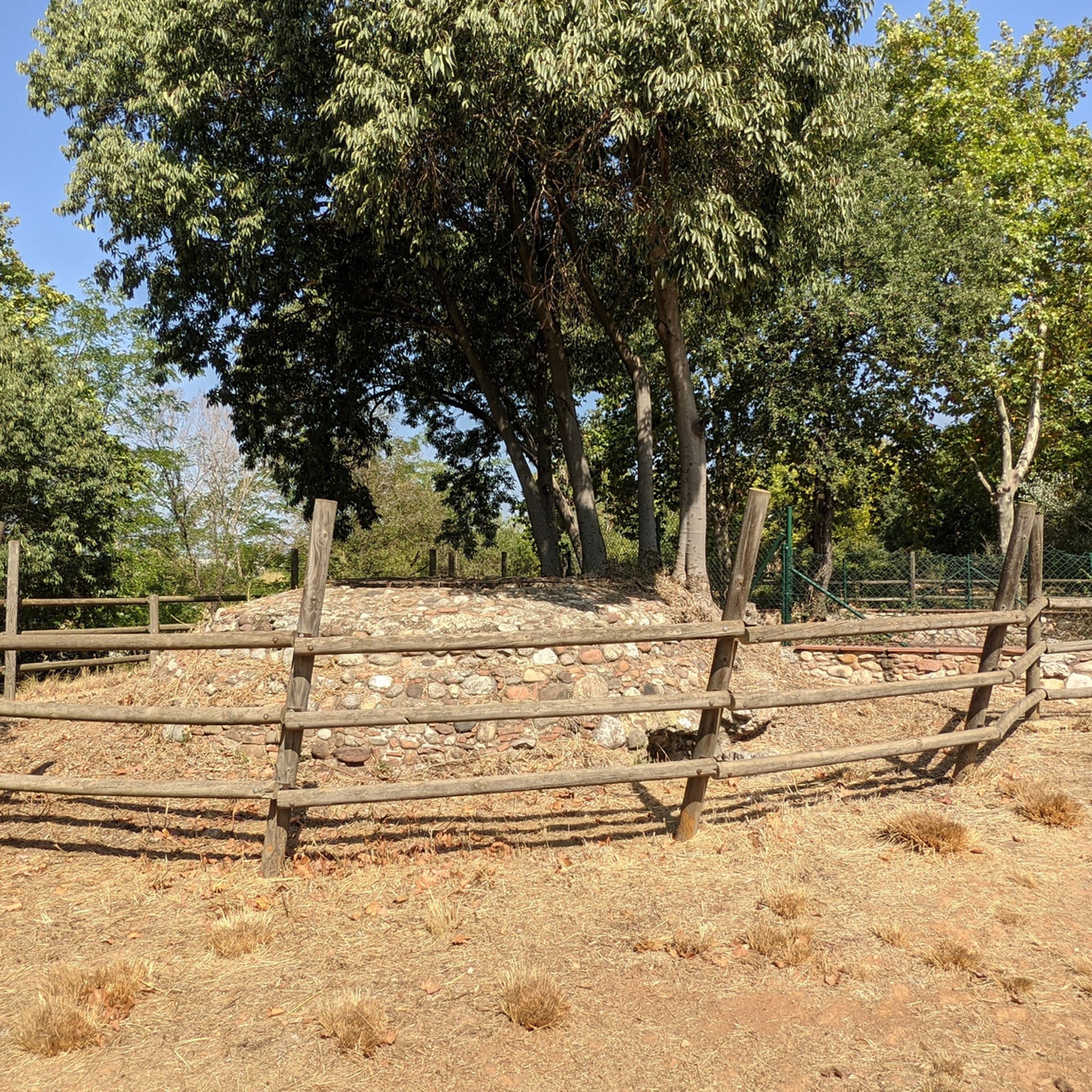
[ENG] Introduction The Can Nadal cave is a large monolithic block with a hollow interior that is protected to the east and at the top by a natural rock wall that protrudes forming a visor. A sepulchral use is attributed to him. The first archaeological searches date from 1951 and were carried out by the Vilassar de Dalt Archaeological Group led by Jaume Ventura, and by the Provincial Archaeological Excavations Commission. The excavations were described by Pau Ubach in his Ethno-Archaeological Memoirs (L'Aixernador Edicions, 1994; p.149-154) where he comments on the discovery of stone axes, flint knives and Chalcolithic arrowheads. This prehistoric cavity was enlarged in medieval times and used as a hermitage (inhabited place where one or more people retire to lead a religious life). Later, in modern times, it was enabled as a vineyard hut and was also used by the coal miners of the area. Source: Vilanova del Vallès City Council [ESP] Introduction The cave of Can Nadal is a large monolithic block with an empty interior that is protected in the east and in the upper part by a natural rock wall that protrudes forming a visor. A sepulchral use is attributed to it. The first archaeological investigations date back to 1951 and were carried out by the Vilassar de Dalt Archaeological Group directed by Jaume Ventura, and by the Provincial Archaeological Excavations Commission. The excavations were described by Pau Ubach in his Memorias Ethno-Arqueológicas (El Aixernador Edicions, 1994; p.149-154) where he comments on the discovery of stone axes, flint knives and Chalcolithic arrowheads. This prehistoric cavity was enlarged in medieval times and used as a hermitage (inhabited place where one or more people retreat to lead a religious life). Later, in modern times it was enabled as a vineyard hut and was also used by the coal miners of the area. Source: Vilanova del Vallès Town Hall
3
0

A strange cave in the side of the trail. It is a popular place for people to visit on a nice trail near Can Coll. I am not sure if the cave actually goes anywhere but the trail at the right time of the day gets beams of light that are magical.
5
1

A Dolmen with good views and hides if you can't find the way.
7
0

Discovered in 1955 by Genís Ibàñez, a member of the Puig Castellar hiking center. In the excavations, remains of bones and two ceramic vessels corresponding to the Bronze Age were found. It was initially believed to be a megalithic construction, but is now considered to be a natural structure.
7
0
A curious place that has entrance and exit the cave.
4
0
Frequently Asked Questions
What types of caves can I explore near La Llagosta?
The region around La Llagosta offers a diverse range of underground formations. You can find impressive geological wonders like the Turó de Montcada i Reixac, which features beautiful caves within a summit offering panoramic views. There are also historically significant archaeological sites such as Can Nadal Cave, known for its ancient artifacts and sepulchral use, and the Cova d'en Genís Paradolmen, a natural structure with folklore and Bronze Age remains.
Are there any family-friendly caves to visit?
Yes, several caves in the area are suitable for families. Turó de Montcada i Reixac offers an easy climb to its summit where caves can be explored. The Cave Near Can Coll is another popular spot on a pleasant trail, known for its unique entrance and exit, making it an enjoyable visit for all ages.
What are the most historically significant caves in the region?
The region boasts several caves with rich historical backgrounds. The Can Nadal Cave is an archaeological site where stone axes, flint knives, and Chalcolithic arrowheads have been found, indicating its use as a sepulchral site and later as a hermitage. The Cova d'en Genís Paradolmen also holds historical importance with Bronze Age findings and local folklore about initiation rituals. Additionally, the Coves de Montserrat (Saltpetre Caves of Collbató) are significant for revealing habitats of Montserrat's first settlers and their past as saltpeter mines.
What should I wear when visiting caves near La Llagosta?
For caves like the Coves de Montserrat, which maintain a constant temperature of 14°C and high humidity, warm clothing is recommended even in summer. Due to the presence of many steps and uneven terrain in some caves, wearing comfortable sports shoes with good grip is advisable for a safe and enjoyable experience.
Are there guided tours available for any of the caves?
Yes, the Coves de Montserrat (Saltpetre Caves of Collbató) offer guided tours. These tours cover an 800-meter route, explaining the geological processes and sharing stories and legends of the area. It's always best to check their official website for current tour availability and booking information.
What natural features can I expect to see inside the caves?
Many caves in the region, particularly the Coves de Montserrat, are rich in speleothems such as stalactites, stalagmites, and columns, formed over thousands of years. Other caves, like The Cave Near Can Coll, are noted for unique rock formations and the way light interacts with them, creating a magical atmosphere.
What outdoor activities can I do near these caves?
The area around La Llagosta offers various outdoor activities. You can find numerous running trails, such as the Plaça de la Sardana loop or routes through the Gallecs Rural Area. For cyclists, there are road cycling routes like the Parpers Pass loop, and gravel biking options along the Besòs River Promenade or through the Corredor Sanctuary.
Are there any caves with unique folklore or legends?
Absolutely. The Cova d'en Genís Paradolmen is associated with ancient initiation rituals, where passing through it was believed to signify being 'born again' as an adult. Similarly, Pedra Foradada also shares similar folklore, with beliefs that passing through its hole could cure illnesses or protect from spirits, acting as a 'magic door' between worlds.
What are the accessibility considerations for caves in the region?
Accessibility varies by cave. The Coves de Montserrat, for instance, involve an 800-meter route with approximately 500 steps, descending to nearly 20 meters deep, which may be challenging for some visitors. Other sites like Turó de Montcada i Reixac are described as having an easy climb, but exploring the caves within still requires careful navigation. It's always recommended to check specific site details for the most accurate accessibility information.
Can I find caves within natural parks near La Llagosta?
Yes, several caves are located within or near natural parks. The Cova d'en Genís Paradolmen is situated in the Serralada de Marina park. Additionally, Turó de Montcada i Reixac, a summit featuring caves, has been part of the Serra de Collserola Natural Park since 2013.
What do visitors enjoy most about the caves around La Llagosta?
Visitors frequently appreciate the impressive panoramic views from summits like Turó de Montcada i Reixac, which also hide beautiful caves. The unique experience of caves with both an entrance and exit, such as The Cave Near Can Coll, is also a highlight. Many are fascinated by the historical and archaeological significance of sites like Can Nadal Cave and the folklore surrounding places like Pedra Foradada.
Most popular routes around La Llagosta
Most popular attractions around La Llagosta

Get inspired with the komoot mobile app


Explore more
Extend your search for the best caves by checking out these guides of the top ones around La Llagosta:
