Top 9 Castles around Pallejà
Best castles around Pallejà are situated in a region characterized by its historical depth and natural landscapes, including the nearby Collserola mountain range and the Llobregat river valley. The area features significant historical sites, such as the Castell de Pallejà, a Renaissance-style building with origins dating back to before 1630. This castle, recognized as a cultural asset of national interest, currently serves as a community hub. The diverse historical structures reflect Catalonia's evolution over centuries.
Best castles around Pallejà
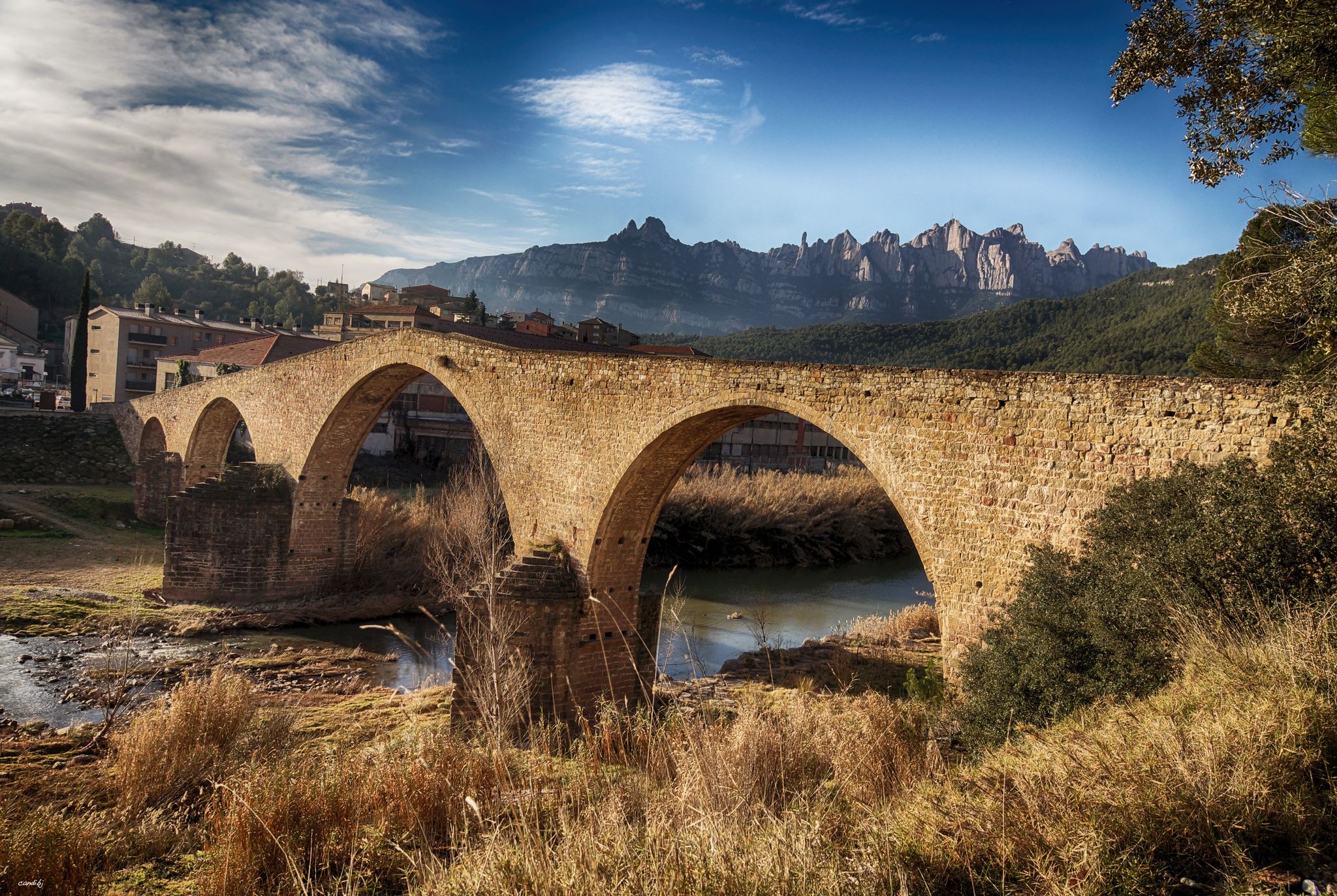
- The most popular castles is Fossada Tower (Castellbisbal), a historical site that offers views over Martorell and the Devil's Bridge. It is a watchtower with a moat, located strategically above the Pont del Diable.
- Another must-see spot is Castellciuró, a castle and historical site. Visitors can explore these ancient ruins near Molins de Rei, which provide views over the Baix Llobregat.
- Visitors also love Castellciuró Ruins, a castle that has been restored and serves as a viewpoint. Documented since 1066, its oldest parts may be of Visigothic or pre-Romanesque origin, offering a glimpse into early regional history.
- Pallejà is known for its variety of historical structures, including castle ruins, ancient towers, and semi-ruined castles. Visitors can explore sites ranging from medieval fortifications to Renaissance-era buildings.
- The castles around Pallejà are appreciated by the komoot community, with more than 70 upvotes and over 30 photos shared by explorers.
Last updated: May 22, 2026
Castellciuró Ruins
Highlight • Castle
Documented in 1066, the oldest part of the remains of this castle is a wall in opus spicatum (work of inclined stones, alternating the direction of the inclination in each course) very well built, which could be of Visigothic origin (8th century). or pre-Romanesque (10th century) and were destroyed around the year 985 by the Saracen hordes of Almanzor. Of its scarce remains, a couple of walls and a cistern embedded in the rock stand out.
Translated by Google •
Tip by

Fossada Tower (Castellbisbal)
Highlight • Historical Site
Translated by Google •
Tip by

Sign up now to discover places like this
Get recommendations on the best single tracks, peaks, & plenty of other exciting outdoor places.
Sign up for free
Castellciuró
Highlight • Castle
Translated by Google •
Tip by

Gelida Castle
Highlight • Castle
The set of buildings that are part of the castle is located on a hill with different heights (250-290 meters), sought by other mountains in the north of the Sierra del Ordal. This hill is delimited by the torrents of Cantillepa to the north and San Miguel to the south. The shape of the walled enclosure is from southeast to northwest, with the highest part to the south-west.
Translated by Google •
Tip by
La Torre Negra
Highlight • Castle
Since 1842 until today it is in private hands and belongs to the Rabadà family.
Some windows on the façade are geminated and the entrance door is formed by a semicircular arch.
Located in a natural setting between two streams, at the entrance to the Gausac valley on the border between the Collserola mountain range and the southern fields of the Vallés plain, with views over the entire horizon to the north.
Its origin dates back to the 12th century, in a castle named Ricanli or Ricard, built in the time of Abbot Ermengol and it seems that it was rebuilt between the 14th and 15th centuries. The Black Tower owes its current name to its dark-colored stone walls.
Its first known inhabitants were the Vilanova in the 12th century. Later it passed to the Palou family.
Throughout the Middle Ages it was the subject of disputes between the owners and the Sant Cugat monastery, which opposed its construction.
Translated by Google •
Tip by

Sign up for free to discover even more castles around Pallejà.
Sign up for free
Already have an account?
Start today with a free account
Your next adventure awaits.
Login or Signup

Other adventures around Pallejà

Tips from the Community

Last section is unpaved but can be climbed easily with a road bike.
0
0
climb from the train station, difficult stretch of + or - 2 km.
0
0
Go up from the train station.
0
0

good views from up there, it is better to go up through the area of the urbanization that is softer, on the river side the climbs are very strong.
0
0

On a small hill, above the town of Molins de Rei, are the ruins of the castle that was built in the 14th century on the remains of an old circular defensive tower, called Guadall or Guadallo, of Visigothic origin (8th century) , that is to say, pre-Romanesque. This is confirmed by the remains of a wall lock that used an opus spicatum facing characteristic of that period. On the west facade stands a three-tiered tower where the door and two openings are preserved, one of which is currently reconstructed. There are also remains of the trapezoidal plant, a small tower attached to the rock, the walls of the Guadall tower and the remains of a large cistern, partially drilled into the rock and protected by a barrel vault (10th and 12th centuries ).
2
0

The castle of Gelida stands on a cliff part of the Sierra de Ordal, next to the town of Gelida. It is a construction from the 10th century and is now in a state of semi-ruin. Part of a tower, several hundred and a pre-Romanesque church have been preserved.
2
0

Documented fortification from the year 945. The walls, the defense towers, a set of anthropomorphic tombs and the church of Sant Pere del Castell stand out. The visit to the castle is very interesting and highly recommended. In addition, there are many hiking and running trails that start from the area.
1
0

Its property passed through the Cervelló, Montcada, Arborea and Bertrán families. It is known that Pedro de Portugal lived in the year 1465. In 1780, the parish priest of San Pedro asked permission to take stone to build the bell tower. The Association of Friends of the Gelida Castle was founded in 1965 to manage and recover the heritage of the castle area, which in 1968 became the property of the Gelida City Council. The last intervention carried out was based on the construction of a space for the management and interpretation of the castle and, on the other hand, an action to settle and consolidate architectural elements, as well as the construction of walkways and railings.
2
1
Frequently Asked Questions
What is the historical significance of the Castell de Pallejà?
The Castell de Pallejà is a Renaissance-style building with origins dating back to before 1630, built on the site of an even older fortified house from 1179. It has served various purposes throughout history, including an inn and military barracks during the Napoleonic Wars. Today, it's a well-preserved cultural asset that houses municipal services and cultural activities, reflecting over 2000 years of Catalonia's evolution.
Are there other notable historical castles or ruins to explore near Pallejà?
Yes, beyond the main castle, you can explore several other significant sites. The Fossada Tower (Castellbisbal) is a historical watchtower offering views over Martorell and the Devil's Bridge. Additionally, the Castellciuró ruins near Molins de Rei provide ancient insights and views over the Baix Llobregat. The Castellciuró Ruins, documented since 1066, feature parts that may be of Visigothic or pre-Romanesque origin.
What kind of architectural styles can I expect to see in the castles around Pallejà?
The castles in the region showcase a range of architectural styles. The Castell de Pallejà itself is a prime example of Renaissance architecture from the 16th-17th centuries, featuring a square structure with corner turrets and a machicolation. Other sites like the La Torre Negra exhibit Romanesque military construction, while the Castellciuró Ruins contain elements that could date back to Visigothic or pre-Romanesque periods.
What outdoor activities can I combine with a visit to the castles near Pallejà?
The area around Pallejà is excellent for outdoor enthusiasts. You can find numerous hiking, mountain biking, and cycling routes. For hiking, explore trails like the 'Gorgs de la Mola and ascent to the colina de l'Àliga' or the 'Rovires Springs and Pallejà Quarry Loop'. Mountain bikers can tackle routes such as 'View from the Pallejá Antenna' or 'Fossada Tower'. Cyclists might enjoy the 'Footbridge over the Llobregat River – Collserola Tower loop'. You can find more details on these activities in the hiking, MTB, and cycling guides around Pallejà.
Are there any castles near Pallejà that offer panoramic views?
Yes, several castles and historical sites in the area double as excellent viewpoints. The Fossada Tower (Castellbisbal) provides beautiful views over Martorell and the Devil's Bridge. Similarly, the Castellciuró and Castellciuró Ruins offer great perspectives over the Baix Llobregat and even Montserrat. The Gelida Castle, though semi-ruined, is situated on a hill offering commanding views.
What is the current use of the Castell de Pallejà?
The Castell de Pallejà is no longer just a historical monument; it serves as a vibrant community hub. It houses various municipal services, including the municipal library, and is a venue for cultural activities. This blend of historical significance and modern community use makes it a unique and accessible attraction for visitors.
Is the Castell de Pallejà accessible to visitors?
Yes, the Castell de Pallejà is open to visitors, offering a chance to explore a well-preserved historical structure. Its current role as a community hub with municipal services also contributes to its accessibility for the public.
What can I expect to see at the Gelida Castle?
The Gelida Castle is a semi-ruined castle complex with an adjacent church dedicated to Saint Peter, which is the only building still standing. Located on a hill in the Sierra del Ordal, it offers historical insights and views. The site is managed by the Association of Friends of the Castle of Gelida and includes a museum space, with ongoing efforts for preservation and interpretation.
What do visitors appreciate most about the castles around Pallejà?
Visitors to the castles around Pallejà highly appreciate the rich historical depth and the stunning viewpoints they offer. Sites like the Fossada Tower and Castellciuró are frequently praised for their panoramic vistas. The blend of ancient ruins and well-preserved structures, along with the opportunity to immerse oneself in centuries of history, is a major draw for the komoot community.
Are there any castles that are particularly good for history enthusiasts?
For history enthusiasts, the Castell de Pallejà is a must-visit, with its origins dating back to 1179 and its Renaissance transformation. The Castellciuró Ruins are also highly recommended, as their oldest parts may be of Visigothic or pre-Romanesque origin, offering a glimpse into early regional history. The La Torre Negra, a well-preserved Romanesque military construction from the 12th century, also provides deep historical context.
What is the best time to visit the castles around Pallejà?
The region generally enjoys a Mediterranean climate, making spring and autumn ideal for visiting the castles. The weather is typically mild and pleasant, perfect for exploring historical sites and engaging in outdoor activities without the intense heat of summer or the cooler, potentially wetter conditions of winter. However, the Castell de Pallejà, as a community hub, is accessible year-round.
Most popular routes around Pallejà
Most popular attractions around Pallejà

Get inspired with the komoot mobile app


Explore more
Looking for the best castles somewhere else? Discover other guides around Pallejà:
