Top 20 Lakes around Haacht
Best lakes around Haacht are found in the Flemish Brabant province of Belgium, an area characterized by its natural landscapes and waterways. While Haacht itself may not feature large, prominent lakes, the surrounding region offers various water bodies within nature reserves and recreational domains. These areas provide opportunities for outdoor activities and nature appreciation. The local environment includes a mix of forests, meadows, and rivers, contributing to diverse ecosystems.
Best lakes around Haacht
- The most popular lakes is Vrijbroekpark Gardens…
Last updated: May 19, 2026
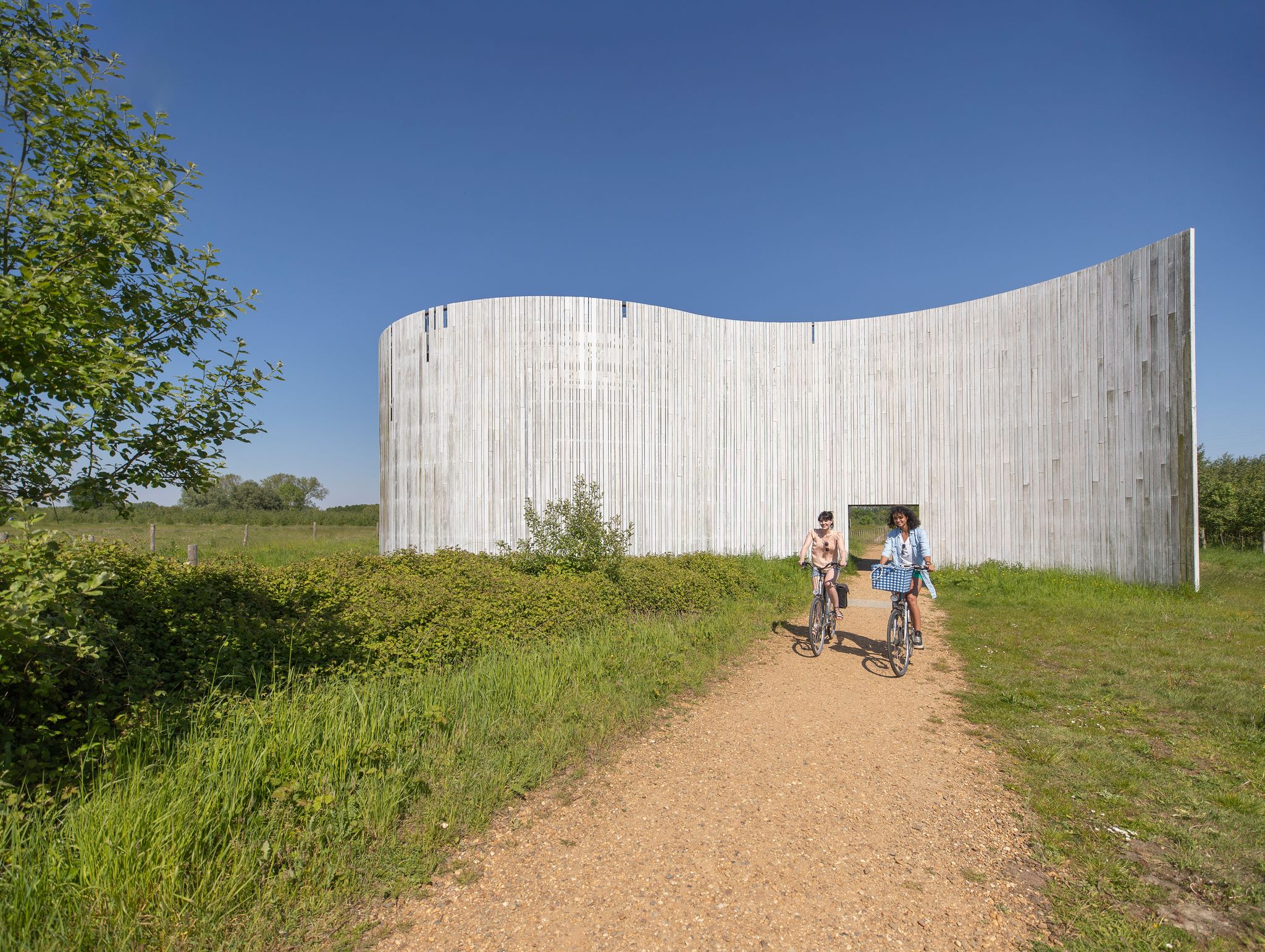
Mispeldonk Nature Reserve
Highlight • Natural
Translated by Google •
Tip by

Rotselaar Lake (Ter Heide)
Highlight • Lake
Translated by Google •
Tip by

Sign up now to discover places like this
Get recommendations on the best single tracks, peaks, & plenty of other exciting outdoor places.
Sign up for free
Vrijbroekpark Gardens
Highlight • Natural
Translated by Google •
Tip by
Great route
Highlight • Trail
Translated by Google •
Tip by

Kortenberg Abbey Park
Highlight • Historical Site
Translated by Google •
Tip by

Sign up for free to discover even more lakes around Haacht.
Sign up for free
Already have an account?
Start today with a free account
Your next adventure awaits.
Login or Signup

Other adventures around Haacht

Tips from the Community

Summer Gardens Don't be misled by the names of these three gardens. With a diverse selection of perennials, various ornamental shrubs, heirloom apple trees, and a collection of peonies... they're worth a visit in any season! But it's during (late) summer that the garden truly explodes with color, thanks to the abundant blooms of dahlias and cannas.
0
0


The Eglegem Pond, located between Hombeek and Zemst, is a beautiful nature reserve of over 40 hectares. Originally created as a sand extraction pit for the construction of the E19 motorway, the area has grown into a valuable quiet area with great ecological value. Today, it is managed by Natuur en Bos (Nature and Forests) and a magnet for hikers, nature lovers, and fishermen. The area is especially known as a wintering ground for waterfowl such as tufted ducks, grebes, and shelducks. Beavers have also recently taken up residence there. A 3-km walking path, recently renovated, runs around the pond. Dogs are welcome on a leash, and an off-leash area is provided. Fishing, stand-up paddleboarding, and sailing are permitted through recognized associations, but swimming and motorized water sports are prohibited. Thanks to targeted nature management and good water quality, this area remains a safe and peaceful place for both people and animals. An absolute must for those who want to unwind in nature.
2
0
The Vrijbroekpark, officially the Provincial Green Domain Vrijbroekpark, is a park in the Belgian city of Mechelen. It is located on the edge of the city and is 65 hectares in size. The province of Antwerp is the owner and it is freely accessible every day. It organizes walks, events and exhibitions, among other things.
2
0

The Vrijbroekpark, officially the Provincial Green Domain Vrijbroekpark, is a park in the Belgian city of Mechelen. It is located on the edge of the city and is 65 hectares in size. The province of Antwerp is the owner and it is freely accessible every day. Among other things, walks and exhibitions are organised there. In 2018 it is known that the park will be significantly expanded by the purchase of land by the provincial government. The park contains: a rose garden with more than 100 rose species, which received the Award of Garden Excellence in 2003 a dahlia garden a canna garden an ecotope garden, on a former city dump water features a playground a brasserie and a cafeteria with an outdoor terrace playing fields for football, basketball, cricket, tennis, petanque and hockey, and a fish pond a salicetum or willow arboretum: a living collection of different willow species and/or varieties. a ghost hotel: the foundations of a failed hotel project from the 1970s, overgrown by nature. The Vrijbroekpark is home to one of the largest European populations of creeping marsh warbler, a rare plant that benefits from keeping the grass lawns very short. In 2018, several hundred thousand specimens were counted. The park is part of the Natura 2000 area Forests of the southeast of the Zandleemstreek.
3
0

Of the actual monastery buildings that were demolished shortly after the public sale and certainly before 1813, only the abbess' residence dating from around 1779 remains, represented on Nivoy's plan from 1796 as a partly detached and rectangular wing, perpendicular to the square structure of the other monastery wings. According to the cadastral registers and sketches, this abbey wing, which had been converted into a "country estate", was first enlarged in 1845 with a low extension on the right and a detached service wing - possibly a carriage house with horse stable - at the back. Later, the extension with a kitchen perpendicular to the rear facade followed. The sales poster of 14 May 1897 of "the magnificent castle of the abbey called the castle of Cortenbergh" gives a plan of the ground floor and an overview of the layout: "two cellars with provision, vestibule with escalier, two kitchens, laundry, dining room, two salons, cabinet, escalier de service, onze chambres, three rooms for subjects on the mezzanine and two large greniers dont un avec monte charge" - a disposition that has largely been maintained to this day. Postcards from around 1900 show a white-painted and plastered volume flanked by a lower extension with a round-arched door window that has since disappeared. In the context of the transformation into a retreat house, the former abbess' residence was expanded on the south side around 1934, under the impetus of canon Misonne, with a chapel and a knight's hall, alluding to the signing of the charter of Kortenberg that took place there in 1312. With the construction of a second chapel, a connecting gallery and the construction of a terrace, the current configuration was created in the 1960s. Inventory of Immovable Heritage: Abbey site of Kortenberg, https://id.erfgoed.net/erfgoedobjecten/43354
0
0
The abbey of Kortenberg was founded on the 'Curtenberch', a steep hill of approximately 75 metres high, also known as the Eikelenberg, south of the village centre where the villa 'La Chênaie' (1841) of J.P. Cluysenaer is now located. Generally, 1095, the date on which Bishop Gualcherus of Cambrai, in the presence of Godfried I, Duke of Brabant, signed the deed in which the "altar" of the church on the "Curtenberch" was transferred to the local reclusae - a group of pious women who led a hermit's existence there - is considered the date of foundation. This church was dedicated to God, the Holy Virgin and Saint Amandus and would function as a parish church until 1771. Perhaps the dilapidated buildings, the difficult accessibility and the lack of water played a role in the relocation of the religious community, in 1222 or 1229, to the valley of the Aderbeek (or Harebeek) 750 metres further north, near the current village centre. The rule of Saint Benedict was adopted and the first confirmation bull of Pope Gregory VIII of January 1233 indicates that the abbey was installed as such at that time. The further expansion in the course of the 13th century into an important religious, economic and social centre was made possible by additional donations from the Dukes of Brabant and other pious benefactors. The acquisition of noval tithes indicates the development of new areas, while there was already mention of a guesthouse for the care of the poor, the sick and travellers from 1246. Due to its strategic location near the old Leuven-Brussels road and the Waalsebaan, halfway between the ducal residences in Leuven and Brussels, the abbey of Kortenberg was given an important role in politics. On 27 September 1312, the famous Charter of Kortenberg was signed, in which Duke Jan II recognised and guaranteed the rights of the nobility and bourgeoisie. The supervisory Council of Kortenberg would meet there every three weeks until 1375. Inventory of Immovable Heritage: Abbey site of Kortenberg, https://id.erfgoed.net/erfgoedobjecten/43354
0
0
The mound with the wooden, hexagonal pavilion, furnished as a chapel, to the southeast of the current building complex is possibly a relic of an ‘English garden’ from the late 18th century. The thickest tree in the park – a brown beech (Fagus sylvatica ‘Atropunicea’) with a trunk circumference of 471 centimetres next to the mound with the cellars is the only relic of planting from the early 19th century. The silver maple (Acer saccharinum) on the other side of the ‘cellar mound’ and this one in the northeast corner of the park – are probably of a later date, despite their trunk circumference of more than 4 metres. The majority of the tree population is not older than 1900. The flora of the abbey park, especially around the pond, not only contains various species that occur in the woods along the Aderbeek and the central Brabant stream-accompanying forests in general – including the rough bellflower (Campanula trachelium) and the beetle orchid (Listera ovata) – but also at least one species whose presence could be explained by the abbey's past, namely the Italian arum (Arum italicum). Inventory of Immovable Heritage: Kortenberg Abbey Site, https://id.erfgoed.net/erfgoedobjecten/43354
10
0
Frequently Asked Questions
What types of water bodies can I find around Haacht?
While Haacht itself doesn't feature large, prominent lakes, the surrounding Flemish Brabant province offers various water bodies within nature reserves and recreational domains. These include smaller lakes, rivers, and ponds, providing diverse natural settings for outdoor activities.
Are there family-friendly lakes or water areas near Haacht?
Yes, several areas are suitable for families. Rotselaar Lake (Ter Heide) is a recreational domain with a beach and a range of activities, including a large, covered picnic area. Vrijbroekpark Gardens also offers a playground and green spaces for children to enjoy.
Where can I go for a refreshing walk or bike ride near water around Haacht?
For a refreshing walk or bike ride, consider Vrijbroekpark Gardens on the edge of Mechelen. It's a green lung offering pleasant paths. The Eglegemvijver also features a recently renovated 3-km walking path around the pond.
Are there nature reserves with water features for hiking near Haacht?
Absolutely. Mispeldonk Nature Reserve is a particularly varied area with lakes and rivers, offering signposted routes for nature lovers and hikers. It's known for its unique ecosystems and rich biodiversity. You can also find hiking routes in the broader area, such as the 'Antitank canal walk' or 'Long Boardwalk – Haacht Marsh loop', which are part of the hiking guide around Haacht.
What kind of wildlife can I observe near the water bodies around Haacht?
The nature reserves around Haacht are rich in biodiversity. At Mispeldonk Nature Reserve, you might spot kingfishers along the Boeimeerbeek, and it's an important habitat for various plant and animal species, including butterflies and dragonflies. The Eglegemvijver is known as a wintering ground for waterfowl like tufted ducks and grebes, and beavers have also taken up residence there.
Can I swim in any of the lakes near Haacht?
Rotselaar Lake (Ter Heide) is a recreational lake with a beach where swimming is permitted. For other water bodies like the Eglegemvijver, swimming is generally prohibited to protect the natural environment and for safety reasons.
Are there opportunities for water sports near Haacht?
While Haacht itself doesn't have large lakes for extensive water sports, the Eglegemvijver is an ideal place for surfers and sailing ship 'learners', with fishing, stand-up paddleboarding, and sailing permitted through recognized associations. For a wider range of water sports, you would need to venture further to larger complexes like the Eau d'Heure Lakes in southern Belgium, which offer activities like kayaking, diving, and wakeboarding.
Are dogs allowed on trails around the lakes near Haacht?
Yes, at the Eglegemvijver, dogs are welcome on a leash, and there is even an off-leash area provided for them to roam freely.
What historical sites with water features can be found near Haacht?
The Kortenberg Abbey Park features a pond and is part of the historic Kortenberg Abbey site. This area has a rich history dating back to the 11th century and offers a blend of natural beauty and historical significance.
What do visitors appreciate most about the water areas around Haacht?
Visitors particularly enjoy the peaceful natural settings, the opportunities for refreshing walks and bike rides, and the rich biodiversity found in areas like Mispeldonk Nature Reserve. The recreational facilities and family-friendly atmosphere at places like Rotselaar Lake (Ter Heide) are also highly valued.
Are there cycling routes that pass by water bodies near Haacht?
Yes, there are several cycling routes. For example, the 'Leuven–Dijle Canal Cycle Path – Leuven–Dijle Canal loop from Haacht' is an easy route that follows waterways. You can find more options in the road cycling guide around Haacht.
Where can I find picnic areas near lakes around Haacht?
At Rotselaar Lake (Ter Heide), there is a large, covered picnic area with views overlooking the lake, making it an ideal spot for a meal outdoors.
Most popular attractions around Haacht

Get inspired with the komoot mobile app


Explore more
Still not found your perfect lake around Haacht? Check out the guides of these regions to see even more beautiful places.
