Top 17 Castles around Denderleeuw
Best castles around Denderleeuw include historical buildings and architectural landmarks that reflect the region's past. While Denderleeuw itself features Het Kasteeltje, a neoclassical building significant for its architectural heritage, the broader area offers a range of historical sites. These structures provide insight into the architectural trends and historical events of East Flanders and Flemish Brabant. The area's castles contribute to its cultural landscape, offering points of interest for those exploring the region.
Best castles around Denderleeuw
- The most popular castles…
Last updated: May 19, 2026
Belfry and District House
Highlight • Historical Site
Translated by Google •
Tip by

Kruikenburg Castle
Highlight • Castle
Translated by Google •
Tip by
Sign up now to discover places like this
Get recommendations on the best single tracks, peaks, & plenty of other exciting outdoor places.
Sign up for free
Moorsel Water Castle
Highlight (Segment) • Castle
Translated by Google •
Tip by
Overhamme Castle and Icehouse
Highlight • Castle
Translated by Google •
Tip by
The Castelhof
Highlight • Castle
Translated by Google •
Tip by

Sign up for free to discover even more castles around Denderleeuw.
Sign up for free
Already have an account?
Start today with a free account
Your next adventure awaits.
Login or Signup
Tips from the Community

The eye-catcher of the Grote Markt is undoubtedly the belfry, which includes the old town hall and the district house. Together, they form a unique historical ensemble. The old town hall, dating from 1225, is the oldest preserved town hall in the Netherlands, recognizable by its high gable roof and round corner towers. The belfry was added in 1407 and is notable for its elegant octagonal tower with an open gallery. Inside, one of the oldest working carillons in the Netherlands hangs, which still resounds through the city every fifteen minutes. The tower has been a UNESCO World Heritage Site since 1999. On the facade, you can see the motto "Nec spe nec metu" ("without hope, nor fear"), and the statues of the Counts of Flanders and Aalst. The clock face, dating from 1964, earned the tower the nickname "den Tettentoeren" (the Tette Towers) because of its striking shape. The district house, a late Gothic extension, was for centuries the place where the bailiff promulgated laws to the people. Five statues adorn the facade, including Justitia, Emperor Charles V, and Pieter Coecke, court painter and Aalst resident. Today, the city council still meets there monthly.
1
0

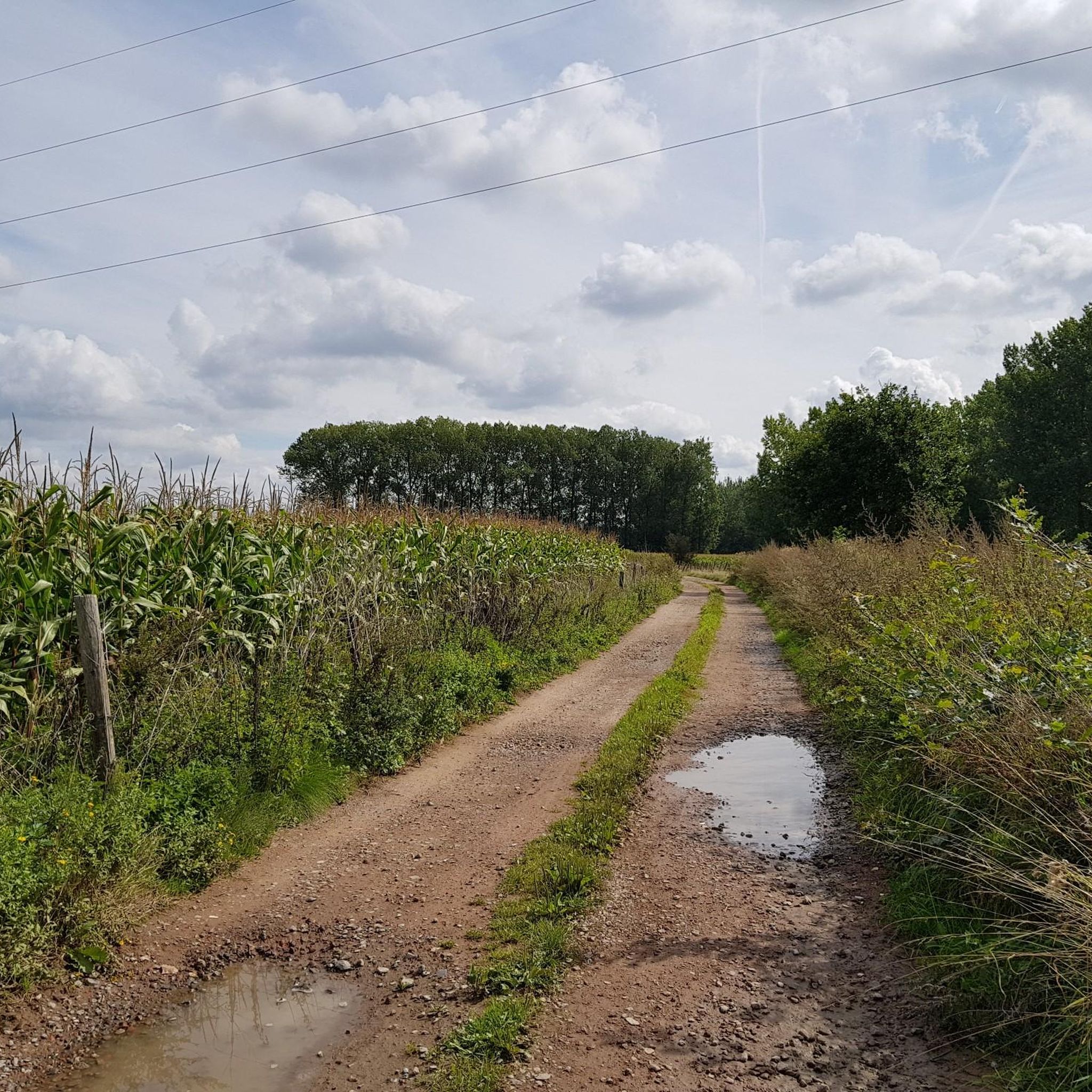
The Castelhof: the F2 cycle highway passes right by.
0
0

Overhamme Castle, located in Aalst, has a rich history and interesting architecture. The castle was first mentioned in the 15th century as a possession of the de Bosch family. In the 16th century, the castle was destroyed and then restored. In 1663, the castle was issued as a fief. The castle was depicted in an engraving by Antonius Sanderus in 1644. This engraving shows that the castle had a U-shaped configuration with wings around the forecourt. During the second half of the 18th century, the castle was expanded and the service buildings were given their current shape. In 1796, the castle was used as a hiding place for the monks of the Abbey of Affligem. In 1946, the castle was demolished, but some service buildings from the 18th century were preserved. These buildings have now been converted into homes and a garage. The castle domain also includes a park with a pond and an ice cellar. It is an important heritage in East Flanders and is considered established architectural heritage.
12
0
One of the largest landowners of the lordship of Moorsel was the abbey of Affligem. On one of the abbey domains, Karel van Croy, cardinal-abbot of Affligem, and later bishop of Tournai, had a moated castle built as a country house and pleasure garden in the period from 1521 to 1526. He was, said, not very strict about keeping his vows. The castle of Moorsel is a large four-sided moated castle, built in Renaissance style and flanked by four corner towers with numerous loopholes; it is located in a beautiful park south of the Eksterberg. In 1564 it came into the hands of the counts of Hoorne, who sold it to Don Cayro in 1636 and it was elevated to barony. During that period, the castle was thoroughly restored, but the general layout was largely preserved. At the end of the 18th century, the building came into the hands of the de Meer family and later of the Van der Noot family. Through family ties with the Van der Noot family, the castle was donated to Mr. and Mrs. De Meulenaire–Dessin, who lived in it for a few years and then sold it to the current owners: Willy Michiels and his wife Lisette De Rijck. The castle was expertly restored by them and thus saved from ruin.
2
0
History: Kruikenburg used to be a manor and later a county in Brabant. The manor consisted of the current municipality of Ternat together with the sub-municipalities of Wambeek and Lombeek. At the beginning of the 12th century, the lords of Wezemaal, whether or not on behalf of the duke in Leuven, tried to seize the forests and lands of Wambeek. Architecture: Kruikenburg is an imposing classicist castle that originally dates from the 12th century. The castle, like many other medieval defensive castles, has a U-shape. This U is formed by three wings surrounding a courtyard. There are round towers on the corners. Only the entrance tower is square. Name: The peculiar name 'Kruikenburg' is because there used to be a rough stone-cut jar with a weather bar on the top of the square entrance tower and the three round towers.
6
0

Fragment from Brochure city walk "Aalst very hard occupied 1914 - 1918. "Center of German Power Even in wartime, the Markt van Aalst is the center of power in the city. At the bottom of the belfry, food and goods are distributed for the needy population. The place is soon nicknamed the 'American store', after the origin of many of the products. The Urban Food Committee succeeds in providing the population with soap, rice, grain, milk, clothing or chocolate from all over the world for four years. Since 1916, the hated German 'Meldeamt' has also been established here. All men from the age of 16 are required to register here. Many of them will be requisitioned for compulsory employment in the German war industry." Triggered: 'Aalst very hard occupied' can be downloaded at the attached link: https://www.langsvlaamsewegen.be/wandelen-in-het-scheldeland-deel-1-aalst/
6
0
The Schepenhuis of Aalst, as it exists today, is a building from the 15th century and is also known as the Belfry of Aalst or the Old Ship's House. It is located on the Grote Markt and consists of three parts, namely the aldermen's house itself, the belfry and the district house. Source: https://nl.wikipedia.org/wiki/Belfort_van_Aalst
6
0

The eye-catcher on the Grote Markt is the old aldermen's house with belfry tower and district house, popularly called the belfry. The belfry is therefore not 1 large building, but consists of 3 different buildings: The old alderman's house was built in 1225 and is the oldest preserved alderman's house in the Netherlands. The high gable roof and the four round corner towers are characteristic of the town halls in the late Middle Ages. The belfry from 1407 owes its elegance to the octagonal tower with openwork gallery. The facade contains two statues representing the Counts of Flanders and the Counts of Aalst and the inscription 'NEC SPE NEC METU' (without hope, nor fear), the motto of Philip II, who was overtaken as Count of Aalst in 1555. The graceful belfry tower was included in the UNESCO World Heritage List in 1999 and houses one of the oldest carillons in our country. The carillon, which is still working, reminds you every fifteen minutes of the ancient presence of the belfry on the Grote Markt. The neo-Gothic dial on the tower was replaced in 1964 by a half-sphere one. From then on, the inhabitants of Aalst called the belfry 'den tettentoeren', referring to the resemblance between the clock and women's breasts. The district house, the projecting late-Gothic building, was the place from which the bailiff or stadtholder promulgated the laws for the people who gathered on the Grote Markt. Five statues adorn the facade: Lady Justice, Dirk van Aalst (the last count, died in 1166), Pieter Coecke (court painter), Emperor Charles V and Cornelius De Schrijver (humanist and Latin poet). Every month, all councilors gather here on the 1st floor for the council meeting. Source: https://www.visit-aalst.be/nl/beziensworthheden/belfort
8
0
Frequently Asked Questions
What types of castles can I find near Denderleeuw?
The Denderleeuw area offers a variety of historical buildings, from medieval origins to neoclassical designs. You'll find classicist castles, water castles, and significant historical sites that reflect the region's past in both East Flanders and Flemish Brabant.
What is Het Kasteeltje Denderleeuw and can I visit it?
Het Kasteeltje Denderleeuw is a notable neoclassical building from 1906, significant for its architectural heritage. While not a fortified medieval castle, it's a key landmark. It currently houses the local leisure services ('dienst Vrije Tijd') and its spaces are used for associations and cultural events, making it accessible to the public for certain activities.
What is special about the Belfry and District House?
The Belfry and District House is a UNESCO World Heritage site in Aalst. It features the oldest preserved aldermen's house in the Netherlands, dating back to 1225, and a belfry from 1407 with an octagonal tower and a working carillon that chimes every fifteen minutes. The district house, built in 1544, was where new laws were proclaimed.
What can I expect at Kruikenburg Castle?
Kruikenburg Castle in Ternat is an imposing classicist castle with origins in the 12th century. It has a distinctive U-shape formed by three wings surrounding a courtyard, with round towers at the corners. Today, it serves as a primary school and is home to the Brothers of Christian schools.
What are the features of Overhamme Castle and Icehouse?
Overhamme Castle and Icehouse, first mentioned in the 15th century, is located in Aalst. While the main castle was demolished in 1946, preserved 18th-century service buildings remain, now converted into homes. The domain includes a park with a pond and an ice cellar, offering a glimpse into its rich history and architectural heritage.
What is the history of Moorsel Water Castle?
The Moorsel Water Castle, dating from 1520, was commissioned by Karel van Croÿ, the Cardinal Abbot of Affligem. This large, four-sided moated castle in Renaissance style is flanked by four corner towers. It was protected in 1944 and has since been restored. The castle is set within a beautiful landscape-style park.
What is The Castelhof and its current use?
The Castelhof in Sint-Martens-Bodegem has a history dating back to 1266. While it has undergone several renovations, including in 1642, it now houses the municipal youth service and its domain is used for many community activities. The F2 cycle highway passes right by it.
Are there family-friendly castles around Denderleeuw?
Yes, several castles and historical sites in the region are considered family-friendly. For example, the Belfry and District House, Kruikenburg Castle, Overhamme Castle and Icehouse, and The Castelhof are all noted as suitable for families.
What outdoor activities can I do near these castles?
The area around Denderleeuw offers various outdoor activities. You can find numerous MTB trails, cycling routes, and running trails. Many routes incorporate natural features and pass by historical sites, offering a blend of nature and culture.
Are there hiking trails near these castles?
Yes, there are several running and walking trails that can be enjoyed near the castles. For instance, you can explore routes like the 'Het Kasteeltje Denderleeuw loop' or the 'Dender River in Erembodegem – Wooden Bridge at Wellemeersen loop'. You can find more details on these and other trails in the running guide for Denderleeuw.
When is the best time to visit castles around Denderleeuw?
The castles and historical sites around Denderleeuw can be visited year-round. However, for enjoying the surrounding parks and outdoor activities like cycling or hiking, spring and autumn offer pleasant temperatures and beautiful scenery. Summer is also popular, while winter visits can provide a unique, quieter experience.
Are there cafes or pubs near the castles in Denderleeuw?
While specific cafes directly adjacent to every castle are not listed, Denderleeuw and the surrounding towns where these castles are located offer local cafes, pubs, and accommodation options. You'll generally find places to refresh and dine within a reasonable distance of the main attractions.
Most popular routes around Denderleeuw
Most popular attractions around Denderleeuw

Get inspired with the komoot mobile app


Explore more
Looking for the best castles somewhere else? Discover other guides around Denderleeuw:
