Top 10 Castles around Ardooie
Best castles around Ardooie, located in West Flanders, Belgium, offer historical sites and accessible natural areas. The region features several castles, some with private grounds, and others with surrounding public domains. Ardooie Castle, a classical-style castle from the late 18th century, is privately owned but its grounds are part of the publicly accessible Provincial Domain 't Veld. This domain provides walking paths, nature trails, and recreational activities.
Best castles around Ardooie
- The most popular castles is Rumbeke Castle, a…
Last updated: August 10, 2026
Rumbeke Castle
Highlight • Castle
Translated by Google •
Tip by

Ingelmunster Castle
Highlight • Castle
The castle was built on the ruins of a seventh-century monastery.
In 740, the monastery …
Translated by Google •
Tip by

Sign up now to discover places like this
Get recommendations on the best single tracks, peaks, & plenty of other exciting outdoor places.
Sign up for free
Pecsteen Castle Ruddervoorde
Highlight • Castle
Tip by

Ter Borcht Castle
Highlight (Segment) • Castle
Translated by Google •
Tip by
Blauwhuis Castle
Highlight • Castle
There are three entrances: the main entrance on Gentseheerweg, an entrance via Kasteelstraat, and …
Translated by Google •
Tip by
Sign up for free to discover even more castles around Ardooie.
Sign up for free
Already have an account?
Start today with a free account
Your next adventure awaits.
Login or Signup

Tips from the Community

A miniature version of the castle to give visually impaired people a tangible image of the castle. Equipped with Braille.
0
0


Today, parts of the castle are rented out as a venue for corporate events, seminars, parties, and more. Extensive work has been carried out for this purpose over the past quarter century. Mr. Marc Van Honsebrouck, who died last year at the age of 89, had lived in the castle with his family since 1986, and had already commissioned renovations around the turn of the century. But disaster struck shortly afterward. On September 20, 2001, at 1:45 a.m., a fire broke out. Fortunately, Mr. Marc and his family managed to escape, but the entire left wing, both the ground floor and the upper floor, was completely destroyed. Although the fire department arrived very quickly, many priceless works of art were lost in the fire. The building itself suffered greatly, but the skill of the firefighters managed to stop the all-consuming flames. The grief over this terrible event was palpable far beyond the castle grounds. In 2012, Mr. Marc Van Honsebrouk decided to take over the castle's entire care and bought out his brother, who had been co-owner until then. His plan was to breathe new life into the castle, which had only been made wind- and watertight after the fire. The result of the past few years is the magnificent halls that shine again. Sources: https://kasteelvaningelmunster.be/ https://www.nieuwsblad.be/cnt/dmf20230824_96366895
5
1
The origin of the name "Ingelmunster" most likely lies in the history of this castle. The castle was built on the ruins of a seventh-century monastery. In 740, the monastery was reportedly inhabited by English monks, who gave it their name: Anglo Monaterum, Engelmunster, or Ingelmunster, meaning "Monastery of the Angels." In 855, the monastery fell prey to the Normans, the feared rulers of the sea. They plundered and burned the monastery. Little more than a ruin remained of the "Monastery of the Angels." The first Flemish ruler to establish a political presence in West Flanders was Robert I the Frisian, the tenth Count of Flanders. His reign lasted from 1071 to 1093, and he had the fortified castle built on the site of the ruins. Ingelmunster's location, on the doorstep of West Flanders and along the waterway that crossed the military route between Kortrijk and Bruges, was of such strategic importance that it was called the "Key to Flanders." Ingelmunster Castle, which at that time was still a veritable "lock," offered the key to unlocking a tactical advantage. Source: https://kasteelvaningelmunster.be/historiek-kasteel/
5
1
Ter Borcht Castle has a long and eventful history and is deeply intertwined with Meulebeke. The house is the resting place of the lords of Meulebeke. For them, it is more of a summer residence, as they usually find their permanent, comfortable abode in a number of Flemish fortified cities such as Bruges and Ghent. The De Beer family owned this piece of Meulebeke territory for almost 250 years, until 1819. Throughout the nineteenth and twentieth centuries, Ter Borcht was continuously inhabited by members of the upper middle class. The current castle dates from the seventeenth century and was built around an older core. The building consists of two nearly identical wings. The second wing was completed before 1654. In 1859, the Thienpont family began a major renovation of the castle, and the facades were given a classical look. The original brick and natural stone finish disappeared under a thick plaster. Only the early seventeenth-century gate towers still retain their original appearance today. The park, built in the English landscape style (1850-1875), features several old viewpoints: towards the church, the (now vanished) Borchtmolen, and the Chapel of Our Lady of Perpetual Help. In this way, the village and surrounding area do not escape the all-seeing eye of the lord of the castle. Over time, these viewpoints almost completely disappeared. Source: information board on site
6
0
The 10-hectare English-style park surrounding the neoclassical Blauwhuis Castle is open daily from sunrise to sunset. There are three entrances: the main entrance on Gentseheerweg, an entrance via Kasteelstraat, and one via the walking and cycling path between the fire station and Emelgem Bridge. Source: https://www.toerisme-leiestreek.be/nl/kasteel-blauwhuis-0
3
0


According to a former resident, the castle has recently become uninhabited and is for sale.
2
0
Frequently Asked Questions
Are the castles around Ardooie generally open to the public?
Many castles in the Ardooie region are privately owned, such as the Kasteel van Ardooie and Kasteel De Woesten, and are not directly accessible to the public. However, some, like Rumbeke Castle, are located within provincial domains that are publicly accessible, allowing visitors to enjoy the surrounding parks and often view the castle exteriors.
Which castles near Ardooie offer public access to their grounds or interiors?
Rumbeke Castle is situated within the provincial domain Sterrebos, which is open to the public. Ravenhof Castle houses a tourist information desk and a museum on its ground floor, making parts of it publicly accessible. While the Kasteel van Ardooie is private, its original park was sold to the Province of West Flanders and is now the public domain "'t Veld," offering views of the castle.
Are there family-friendly activities near the castles around Ardooie?
Yes, the provincial domain "'t Veld," which surrounds the private Kasteel van Ardooie, is very family-friendly. It features walking paths, a nature learning path, fishing ponds, and a playground called "Keunepupe." Rumbeke Castle and Ravenhof Castle are also categorized as family-friendly highlights.
What kind of historical significance do the castles around Ardooie have?
The castles in this region boast rich histories. For example, Rumbeke Castle has a history dating back to the 9th century and has been damaged and renovated through various wars. Ingelmunster Castle is believed to be built on the ruins of a 7th-century monastery and was strategically important as the "Key to Flanders." Many castles, like the Kasteel van Ardooie, have undergone significant architectural changes, reflecting classical and Neoclassical styles over centuries.
Are there walking or hiking trails around the castles?
Absolutely. The provincial domain "'t Veld" near the Kasteel van Ardooie offers beautiful walking paths, a nature learning path, and a marked tree path. The Sterrebos provincial domain, home to Rumbeke Castle, also provides varied walking routes. You can find more options for running and hiking in the area by exploring the Running Trails around Ardooie guide.
Can I cycle near the castles in Ardooie?
Yes, the area around Ardooie is popular with cyclists. The domain "'t Veld" is part of various local cycling routes. You can discover numerous cycling opportunities, including gravel biking and mountain biking, by checking out the Gravel biking around Ardooie and MTB Trails around Ardooie guides.
What natural features can I see around the castles?
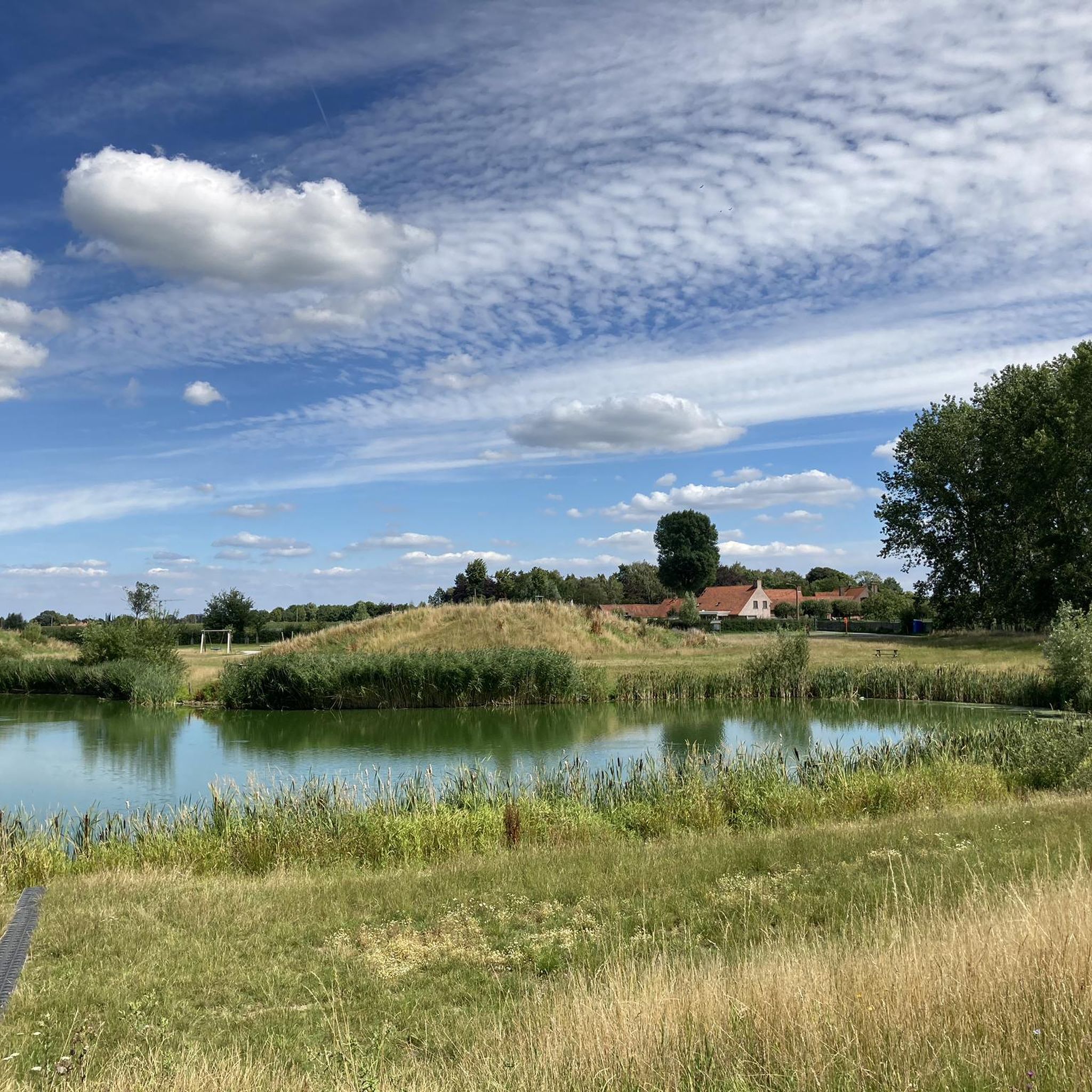
The provincial domain "'t Veld" near the Kasteel van Ardooie features two fishing ponds, a nature reserve around a third pond, and retains elements of its 19th-century landscaping with a rectangular reflective pond and impressive chestnut tree avenues. Pecsteen Castle Ruddervoorde is surrounded by a modest park that serves as a green lung, offering opportunities to observe local wildlife and birds.
What is the best time of year to visit the castles around Ardooie?
The best time to visit is generally during spring, summer, and early autumn (April to October) when the weather is mild and the castle parks and surrounding natural domains are in full bloom. This allows for comfortable walking, cycling, and enjoying the outdoor facilities.
Are there dog-friendly walks around Ardooie castles?
Many of the public provincial domains, such as 't Veld and Sterrebos, typically allow dogs on leash, making them suitable for dog-friendly walks. It's always advisable to check specific park regulations before your visit.
Where can I find a castle with a museum or tourist information?
Ravenhof Castle, located in Torhout, has been renovated and its ground floor now functions as a tourist information desk, while the upper floor houses a museum dedicated to "Torhouts Aardewerk" (Torhout Pottery).
What do visitors enjoy most about the castles around Ardooie?
Visitors appreciate the blend of historical architecture with accessible natural areas. The quiet, picturesque routes through castle domains, opportunities to observe local wildlife, and the variety of walking and cycling paths in the surrounding parks are frequently highlighted. The historical context and the peaceful atmosphere of places like the Sterrebos domain are also highly valued.
Most popular routes around Ardooie
Most popular attractions around Ardooie

Get inspired with the komoot mobile app


Explore more
Looking for the best castles somewhere else? Discover other guides around Ardooie:
