Top 6 Castles around Cusano Milanino
Best castles around Cusano Milanino, while not featuring traditional castles within its immediate vicinity, offers access to several significant historical palaces, villas, and fortified structures in the surrounding area. This region is known for its rich architectural heritage, showcasing various historical periods and styles. Visitors can explore examples of 17th-century Baroque architecture and neoclassical palaces. The area provides a glimpse into the aristocratic past and the "garden city" architectural style for which Cusano Milanino is known.
Best castles around Cusano…
Last updated: June 30, 2026
Royal Villa of Monza
Highlight • Castle
Translated by Google •
Tip by

Sforza Castle
Highlight • Castle
Translated by Google •
Tip by

Sign up now to discover places like this
Get recommendations on the best single tracks, peaks, & plenty of other exciting outdoor places.
Sign up for free
Villa Arconati
Highlight • Historical Site
Translated by Google •
Tip by

Sforza Castle
Highlight • Castle
Translated by Google •
Tip by
Rivellino of Porta Vercellina
Highlight • Historical Site
Translated by Google •
Tip by

Sign up for free to discover even more castles around Cusano Milanino.
Sign up for free
Already have an account?
Start today with a free account
Your next adventure awaits.
Login or Signup

Tips from the Community

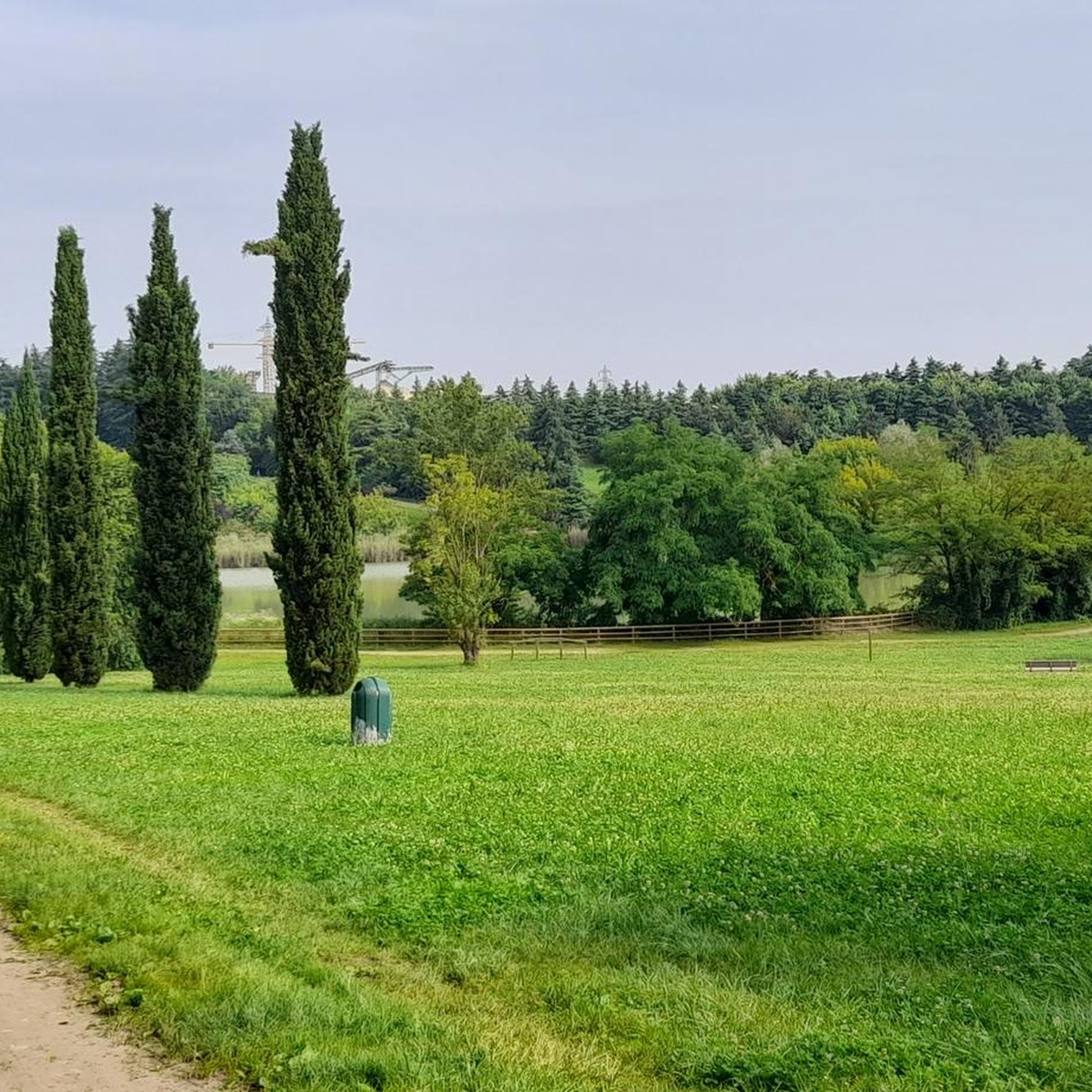
Castellazzo (Castellasc in Milanese dialect), is a hamlet of the municipality of Bollate, in the province of Milan. The hamlet is surrounded by the Groane Park and is located on the municipal border with Garbagnate Milanese.
1
0

route for children and tourists
1
0
With its seven centuries of history, the Sforza Castle is an extraordinary testimony to Milan's glorious times and dramatic moments. A fortress built by Galeazzo II Visconti between 1360 and 1370, the Castle became a ducal residence during the Visconti era, undergoing partial demolition during the Ambrosian Republic (1447-1450). Rebuilt by the new lord of the city, Francesco Sforza, it became the elegant setting for one of the most sumptuous European courts during the time of Galeazzo Maria Sforza and Ludovico il Moro, in an era that saw artists such as Leonardo da Vinci and Bramante in Milan. Having lost its appearance as a noble residence, the Castle was used as a barracks during the foreign dominations of the State of Milan: Spanish (1535-1706), Austrian (1706-1796), French (1796-1814), and Austrian again (1814-1859). Only at the end of the 19th century, during a unified Italy, was the historic building rebuilt, restored, and transformed into a museum by Luca Beltrami. Today, the Castle, with its museums and cultural institutions, is one of Milan's most significant monuments and attracts visitors from around the world.
0
0


Villa Arconati (also called Palazzo Arconati), popularly known as the Castellazzo, is one of the historic villas of the Groane Park, located in Bollate, in the Castellazzo di Bollate hamlet which takes its name from it. It is an example of eighteenth-century Lombard baroque and has been declared a national monument. Due to its size and grandiose style, in eighteenth-century guides it was defined as the petite Versailles italienne ("small Italian Versailles").
1
0

The construction, perhaps on Visconti remains, of the ravelins, projections placed to protect the gates, began with the renovation of the Castle by Francesco Sforza. Of the Sforza ravelins, two bases remain on the east side of the Castle, one to defend the Porta del Carmine, the other where the medieval walls of the city were grafted and to the west, the Rivellino di Porta Vercellina. The latter, built in correspondence with the Porta di Santo Spirito, is the only one to have maintained the visible Sforza quadrangular plan, even if the current appearance is the result of the restoration by the architect Luca Beltrami. In fact, between 1911 and 1914, Beltrami restored part of the battlements, demolished at the time of the Spanish, the walls and the vaults of the passages and internal rooms. To defend the main gate of the Castle, Leonardo designed, commissioned by Ludovico il Moro, a more modern, pentagonal ravelin, which was built during the French domination of Louis XII, between 1499 and the beginning of 1500. Few traces of this bastion remain hidden in the moat.
5
0

Viewed from the cathedral, the mighty city palace is located as an extension of Via Dante, Largo Cairoli in Piazza Castello.
9
0

The Royal Villa of Monza is a neoclassical style palace, designed by Giuseppe Piermarini, which has nothing to envy of the more noble palaces of Caserta and Versailles. Once a private residence of the Habsburgs and then of the Savoys, today it hosts exhibitions and exhibitions. A jewel of neoclassical architecture not to be missed during a visit to Monza.
6
0
Frequently Asked Questions
What kind of historical sites can I visit around Cusano Milanino?
While Cusano Milanino itself features historical palaces and villas rather than traditional castles, the surrounding area offers a rich architectural heritage. You can explore significant sites like the neoclassical Royal Villa of Monza, the fortified complex of Sforza Castle in Milan, and Villa Arconati, also known as "Il Castellazzo".
Are there any family-friendly historical sites near Cusano Milanino?
Yes, several historical sites in the vicinity are suitable for families. The Royal Villa of Monza offers extensive grounds and a grand palace to explore. Sforza Castle in Milan is another great option, providing a large fortified complex with museums and courtyards that can engage visitors of all ages. Villa Arconati is also recognized as family-friendly.
What is the Royal Villa of Monza and why is it worth visiting?
The Royal Villa of Monza is a neoclassical palace designed by Giuseppe Piermarini. It served as an imperial residence for the Habsburgs and later the Savoys. Visitors can explore its grand architecture and the vast 688-hectare park, which is larger than New York's Central Park. It's a significant example of neoclassical architecture and a popular retreat.
Can I visit Sforza Castle from Cusano Milanino?
Yes, Sforza Castle is a large fortified complex located in Milan, easily accessible from Cusano Milanino. It was built in the 15th century and offers a glimpse into Milan's medieval and Renaissance history, housing several museums and art collections.
What is Villa Arconati?
Villa Arconati, also known as "Il Castellazzo," is a historical site recognized for its architectural and artistic interest. It represents an important example of period architecture in the region, offering insights into historical villas and their estates.
Are there any historical palaces within Cusano Milanino itself?
Yes, Cusano Milanino is home to several historical palaces and villas. Notable examples include Palazzo Manriquez, Omodei (also known as Palazzo Carones), which dates back to the 17th century and features Baroque architecture, and Villa Alemanni, a protected historical artistic site undergoing restoration. Villa Poliz is another elegant villa, part of the area's unique "garden city" architectural style.
What outdoor activities can I do near these historical sites?
The area around Cusano Milanino offers various outdoor activities. You can find numerous routes for cycling, including loops around the Royal Groves of Monza or along the Villoresi Canal. There are also running trails in places like Parco Nord Milano, and MTB trails that explore areas like Villoresi Park and the Lambro Riverside.
Is there parking available at the Royal Villa of Monza?
Yes, the Royal Villa of Monza is listed as having parking facilities, making it convenient for visitors arriving by car.
What is the Rivellino of Porta Vercellina?
The Rivellino of Porta Vercellina is a historical site that represents a projection placed to protect the gates of a larger fortified complex, specifically related to the Sforza Castle in Milan. It maintains a visible Sforza quadrangular plan, reflecting its historical military significance.
What do visitors enjoy most about the historical sites around Cusano Milanino?
Visitors particularly appreciate the diverse architectural styles, from 17th-century Baroque palaces to neoclassical villas and fortified complexes. The extensive parks, like the one at the Royal Villa of Monza, are also highly valued for their beauty and size. The historical depth and the opportunity to explore significant landmarks like Sforza Castle are frequently highlighted.
Are there any historical statues or monuments within the Sforza Castle complex?
Yes, within the Sforza Castle complex, you can find monuments such as the Statue of Saint John of Nepomuk. This statue stands in one of the courtyards and commemorates the patron saint of Bohemia.
Most popular routes around Cusano Milanino
Most popular attractions around Cusano Milanino

Get inspired with the komoot mobile app


Explore more
Looking for the best castles somewhere else? Discover other guides around Cusano Milanino:
