Top 13 Caves around Agerola
Best caves around Agerola are located in a region defined by the Lattari Mountains, providing panoramic views above the Amalfi Coast. The area features natural limestone cavities, often holding historical and religious significance. These caves are typically integrated into the landscape, offering both natural beauty and cultural insights. Many are accessible via hiking trails, connecting visitors to the broader network of paths in the region.
Best caves around Agerola
- The most popular caves is Cave of the Madonna della Pace…
Last updated: August 24, 2026
Cave of the Madonna della Pace of Pietrapiana
Highlight • Cave
Translated by Google •
Tip by

Statue of Christ of Pietrapiana
Highlight • Monument
Translated by Google •
Tip by
Sign up now to discover places like this
Get recommendations on the best single tracks, peaks, & plenty of other exciting outdoor places.
Sign up for free
Grotta dell'Avvocata
Highlight • Cave
It is said …
Translated by Google •
Tip by

Capo d'Orso Caves
Highlight • Cave
Translated by Google •
Tip by
Grotta degli Dei from Gino
Highlight • Cave
Translated by Google •
Tip by

Sign up for free to discover even more caves around Agerola.
Sign up for free
Already have an account?
Start today with a free account
Your next adventure awaits.
Login or Signup
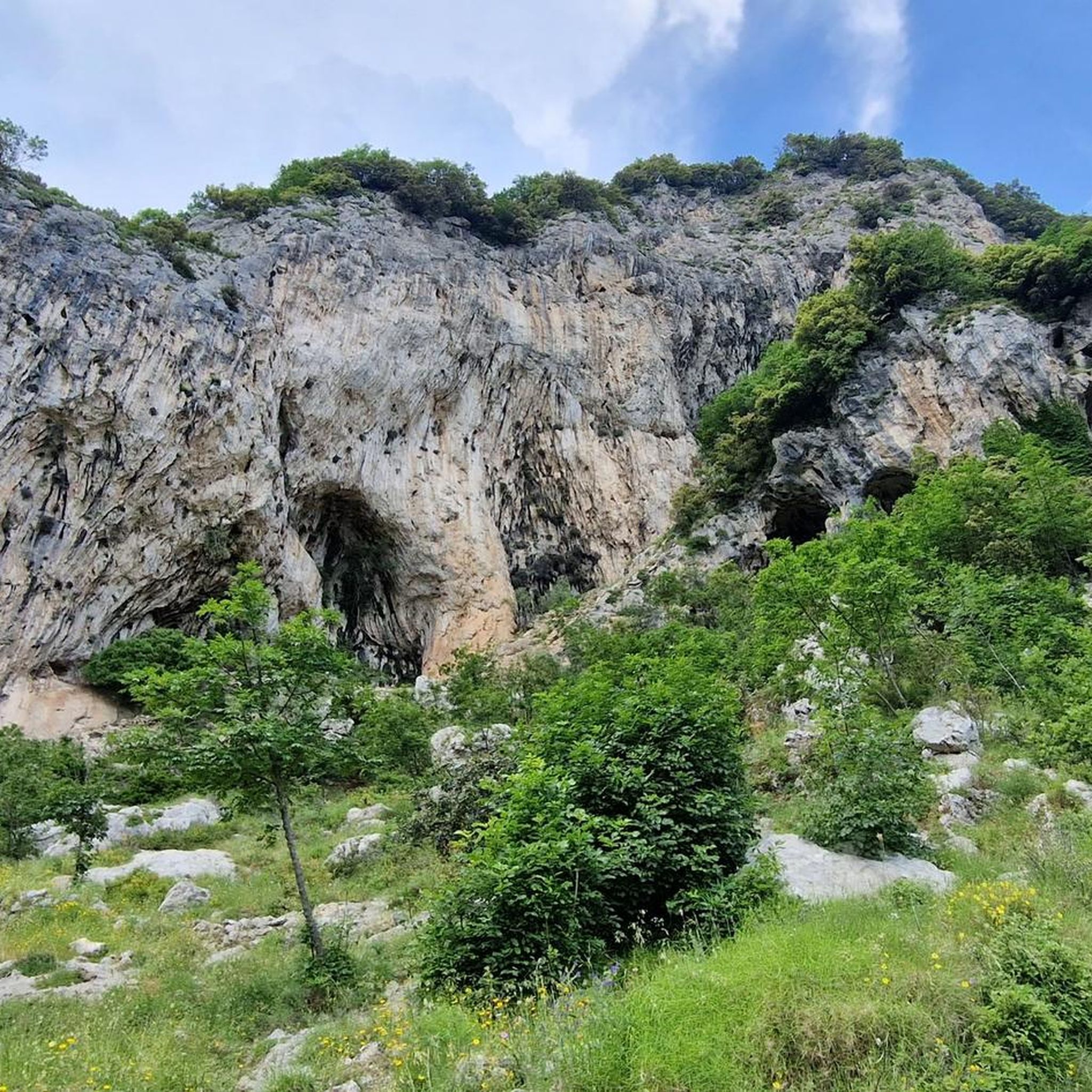
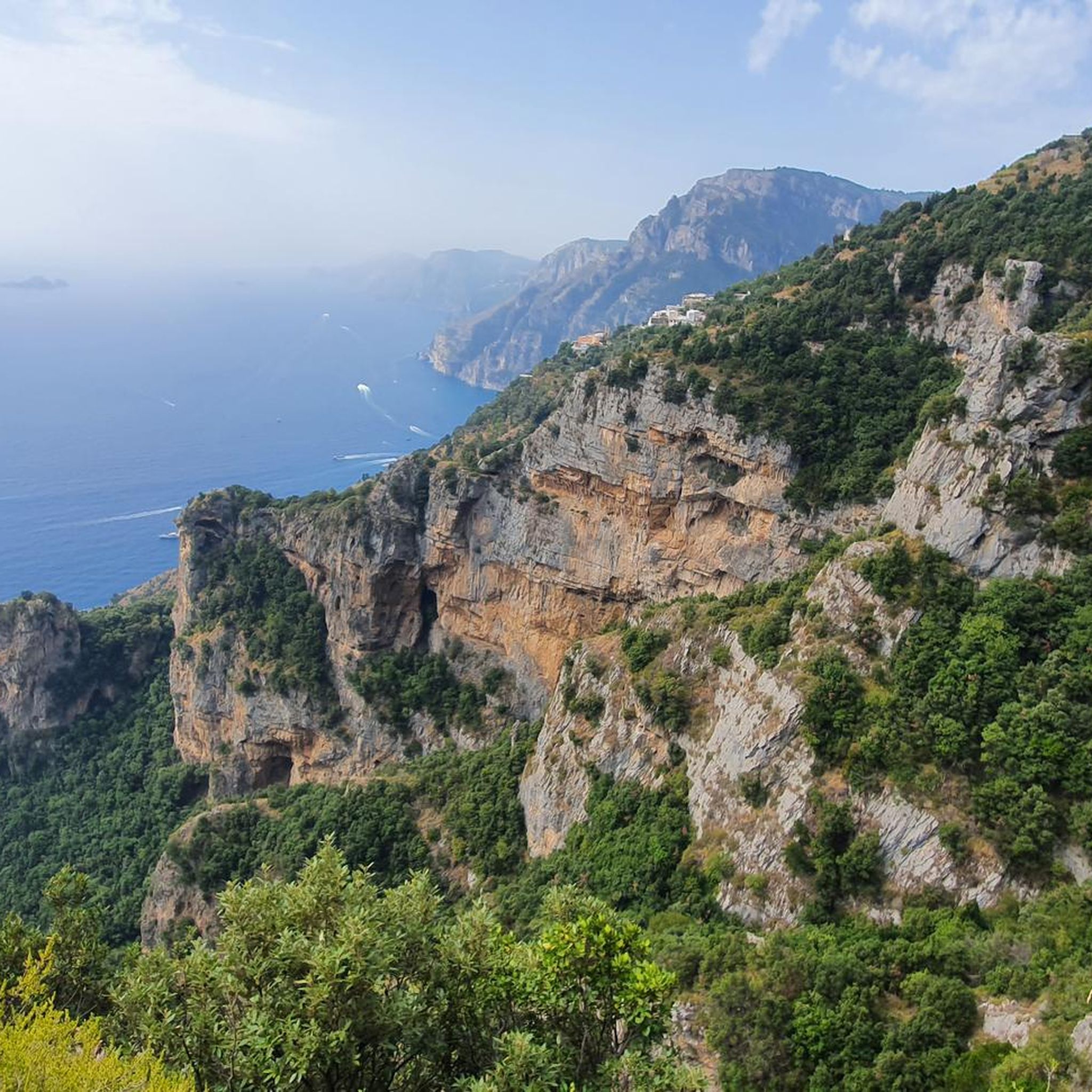
Other adventures around Agerola

Tips from the Community

The hike on the Sentiero degli Dei from Bomerano to Positano is a highlight on the Amalfi Coast. Breathtaking views accompany the path, which does not require a guide, but does require good shoes and plenty of water. After about 30 minutes, the path splits into a higher and a lower route, which later merge again. The destination is Nocelle, where you can fortify yourself with a refreshing lemon slush. From there, two paths lead down to Positano, either via Montepertuso or directly over hundreds of steps. Setting off early in the morning is recommended.
0
0

Stop by Gino and tell him that Corrado sent you, he will give you a smile, an incredible guy
2
0

At the top of Mount Falerzio stands a religious complex dedicated to the Blessed Virgin Lawyer, of which the oldest part is made up of the cave. It is said that in 1485 the Virgin appeared to a shepherd from Maiori in this cave and asked him to build a place of prayer right there where she had appeared to him, introducing herself with the title of Lawyer. The shepherd built a chapel in the cave, which was later enlarged by the Camaldolese Fathers who in 1682 took custody of the convent that had arisen there. Cinnamo, in addition to the cave, made various buildings that he himself had erected a place of worship. https://www.unescoamalficoast.it/locations/grotta-dell-avvocata/ Sturdy shoes and good physical shape!
3
0
Going up Mount Finestra from Contropone (Cava de' Tirreni) you arrive at the caves of Pietrapiana where, in addition to the statue of the "Madonna della Pace", the statue of San Michele Arcangelo has also been placed.
2
0

The statue of Archangel Michael "San MICHELE Arcangelo" stands in this grotto with colorful wings spread wide. He is shown in a very classic way with a lance, with which he defeats the dragon, who is already lying on the ground, and who personifies evil.
3
0
At this point, an extremely fascinating grotto invites hikers to take a little spiritual rest. In his text, Gennaro dell'Aglio vividly described the construction of this local sanctuary 35 years ago. In the rear, elevated part (which can be reached via a small ladder on the rock) there is a cross with a body. Further ahead there is a statue of the Mother of God Mary, which welcomes visitors. It has been invoked under countless titles throughout the history of the church, but especially in popular piety. Here it is the “Madonna della Pace”, or Mary as Queen of Peace.
3
0

Unique emotion in a sacred and beautiful place. On 8 May 1988 the first liturgy was celebrated by my uncle "Padre Vittorio Dell'Aglio" a Franciscan friar as a foretelling during the homily that the Grotta di Pietrapiana would be the destination of many devotees and visitors to pray to Our Lady of Peace. With my close friend Antonio Marra we set off from Nocera Inferiore to arrive in Pietrapiana bringing to the Madonna della Pace a small picture in memory of my uncle who unfortunately left his earthly life on 10 April 2002 with 50 years of priesthood. For me it was a beautiful particular tour but above all exciting in knowing and knowing the story of my uncle. I highly recommend visiting this spectacular place full of joy and peace.
4
0
Unique emotions absolute tranquility to make a prayer
2
0
Frequently Asked Questions
What types of caves can I explore around Agerola?
The caves around Agerola are primarily natural limestone formations, often holding significant historical and religious importance. Many served as hermitages or places of worship, blending natural beauty with cultural heritage. For example, the Cave of the Madonna della Pace of Pietrapiana features an altar, while the Grotta dell'Avvocata is the oldest part of a religious complex.
Are there any historically significant caves in the Agerola area?
Yes, the Hermitage of Saint Barbara caves, located beneath the Corona Plateau, are historically significant. Dating back to around the year 1000, these natural caves served as dwellings for hermits, refuges for brigands, and even a cemetery. They offer a rich narrative of the region's past. Additionally, the Grotta dell'Avvocata is notable for its tradition of a Marian apparition in 1485.
What natural features can I expect to see in the caves around Agerola?
The caves are natural limestone cavities, likely shaped by underground water flows. Beyond the formations themselves, many offer breathtaking panoramic views. For instance, the Cave of the Madonna della Pace of Pietrapiana provides sweeping vistas over the Amalfi Coast, Cava, and the Gulf of Salerno, with Mount Vesuvius in the background.
Are there family-friendly caves or activities suitable for children near Agerola?
While specific 'family-friendly' cave tours are not highlighted, the historical and scenic aspects of many caves can be engaging for families. The journey to sites like the Hermitage of Saint Barbara via the 'Raven's Nest Path' offers a scenic hike. For a unique experience, the 'shepherd's cave restaurant' along the Path of the Gods provides a rustic culinary stop that families might enjoy.
What is the best time of year to visit the caves around Agerola?
The region generally enjoys pleasant weather for outdoor activities for much of the year. Spring and autumn are often ideal for hiking to the caves, as temperatures are milder. Summer can be warm, but the caves themselves offer a cool respite. Always check local weather conditions before your visit.
What outdoor activities can I combine with a visit to the caves?
Agerola is renowned for its hiking trails. Many caves, like the Hermitage of Saint Barbara, are accessible via scenic paths such as the 'Raven's Nest Path' or are connected to the broader network of the famous Path of the Gods. You can find various hiking routes around the area on the Hiking around Agerola guide. The area also offers running trails and road cycling routes.
Are there any caves that offer panoramic viewpoints?
Yes, several caves in the Agerola area are also notable viewpoints. The Cave of the Madonna della Pace of Pietrapiana offers extensive views across the Amalfi Coast, Cava, and the Gulf of Salerno. Similarly, the Pietrapiana Cave – Madonna of Peace is known for its extraordinary visible panorama.
What should I wear when visiting caves in Agerola?
Given that many caves are reached via hiking trails and can involve uneven terrain, sturdy shoes with good grip are highly recommended. Layers of clothing are advisable as temperatures inside caves can be cooler than outside, and weather conditions on the trails can change. For more challenging caves like Capo d'Orso Caves, speleological safety devices are recommended.
Are permits required to visit the caves around Agerola?
Generally, permits are not required for visiting the publicly accessible natural caves and historical sites in the Agerola area. However, for more challenging or specialized cave explorations, such as those in Capo d'Orso Caves, it is advised to be accompanied and equipped with necessary safety devices, which might imply organized tours or specific permissions for advanced caving.
What is the difficulty level for exploring caves in Agerola?
The difficulty varies. Many caves, especially those integrated into religious sites or accessible via well-known hiking paths like the Hermitage of Saint Barbara, are moderately accessible. However, some, like Capo d'Orso Caves, are classified as challenging and require proper equipment and experience for exploration. Always check the specific details for each cave you plan to visit.
Are there any cafes or amenities near the caves?
While direct amenities at every cave entrance are rare, Agerola itself offers cafes, restaurants, and accommodation. For hikers on the Path of the Gods, a unique 'shepherd's cave restaurant' provides a rustic stop with local produce. It's advisable to carry water and snacks, especially for longer hikes to more secluded cave sites.
What is the difference between a 'grotto' and a 'cave' in the Agerola context?
In common usage, 'grotto' and 'cave' are often used interchangeably to refer to natural underground cavities. In the Agerola region, both terms describe the natural limestone formations, some of which have been adapted for religious or historical purposes. There isn't a distinct geological difference implied by the terms in this context; they both refer to the natural hollows in the rock.
Most popular attractions around Agerola

Get inspired with the komoot mobile app


Explore more
Extend your search for the best caves by checking out these guides of the top ones around Agerola:
