Top 16 Waterfalls around Asiago
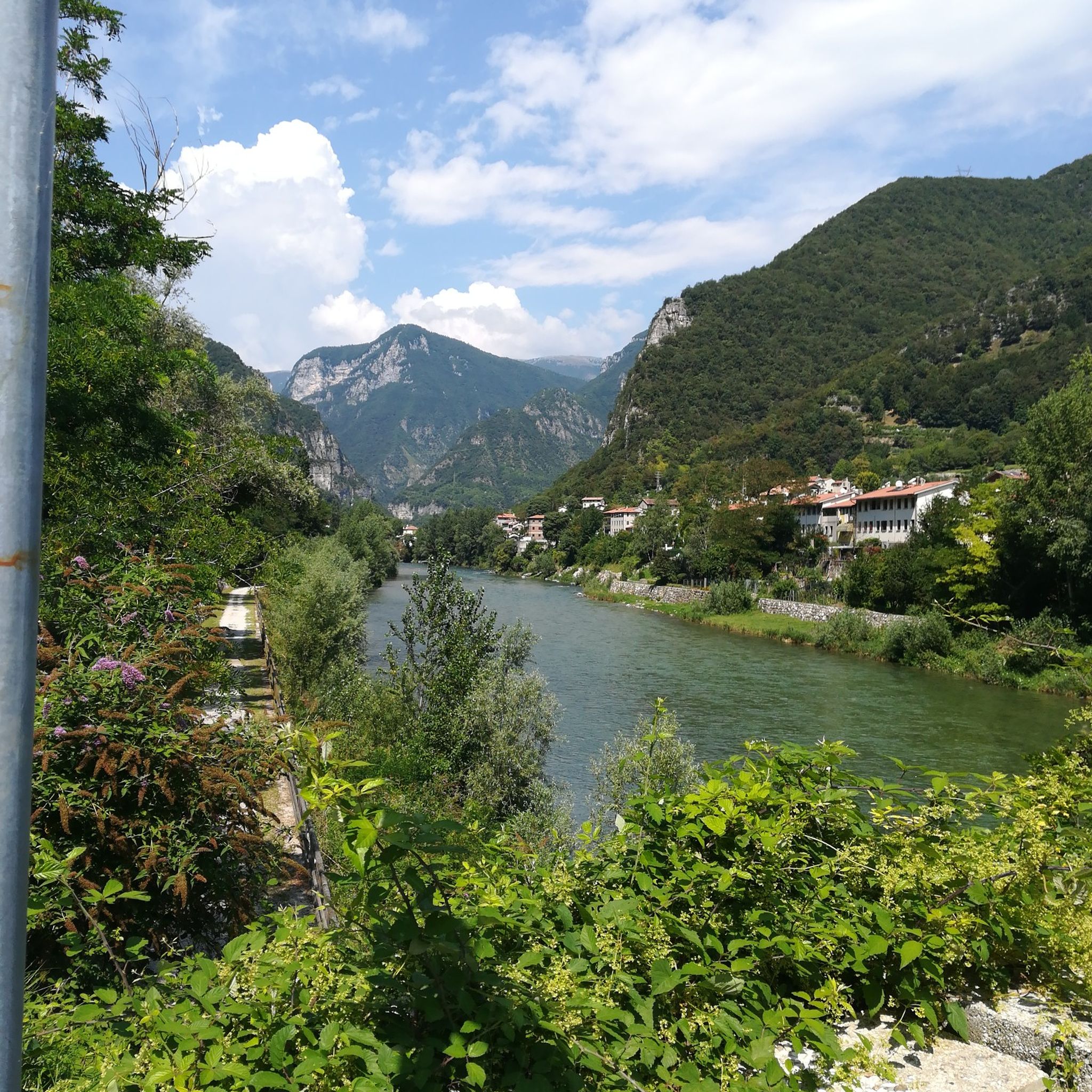
Best waterfalls around Asiago are found within the Asiago Plateau, a region known for its natural landscapes and historical significance. The plateau features diverse terrain, including the Val d'Assa, which is home to several natural waterways and gorges. This area provides opportunities for exploring natural features like streams, cascades, and unique geological formations. The region's karst composition also contributes to interesting hydrological phenomena.
Best waterfalls around Asiago
- The most popular waterfalls is Gorghi Scuri, a gorge that features a…
Last updated: June 30, 2026
Pach waterfall
Highlight • Waterfall
Translated by Google •
Tip by

Former Italy–Austria Border Monument
Highlight • Monument
Translated by Google •
Tip by

Sign up now to discover places like this
Get recommendations on the best single tracks, peaks, & plenty of other exciting outdoor places.
Sign up for free
Gorgo Santo
Highlight • Cave
Rainwater and snow water are not retained by the Luserna Plateau due to the karst composition of the …
Translated by Google •
Tip by
Gorghi Scuri
Highlight (Segment) • Gorge
Translated by Google •
Tip by
Small Waterfall and Wooden Bridge
Highlight (Segment) • Waterfall
Translated by Google •
Tip by

Sign up for free to discover even more waterfalls around Asiago.
Sign up for free
Already have an account?
Start today with a free account
Your next adventure awaits.
Login or Signup
Other adventures around Asiago

Tips from the Community

This route is absolutely a very challenging one! We started hiking from Rotzo with children aged 5 to 10. It's just manageable up to the waterfalls and a very beautiful hike. At the waterfall itself, there's a pleasant flat section but with dangerously deep drops. The return route is downright dangerous from the start and not recommended. We explored the route a bit further, and there it's even risky for adults. Many other hikers turned back as well.
0
0

behind the small monument dedicated to the old border there is a place called IL GORGO it is an enchanting place with waterfalls and turquoise water
2
0

A foaming and thunderous waterfall cascades from the spring known as 'Gorgo Santo' (which can be visited a little further along, climbing the trail —> see related highlight). The small bridge actually spans two waterfalls, one upstream and one downstream. I recommend descending to the paved road below, on the border between the hamlets of Scalzeri and Longhi, for a spectacular view of the stream cascading through a series of rapid drops before flowing into the Astico River. I also recommend visiting this site after days of rain or when the snow has melted in the mountains, to see the water swollen and rushing!
0
0
Commemorative stone marking the former border between the Kingdom of Italy and the Austro-Hungarian Empire until the end of World War I. The border between the two states in the upper Astico Valley had a curious layout: from the hamlet of Busatti, upstream, to the village of Casotto, downstream, the territory to the left of the river was Austrian, while that to the right was Italian. Each citizen had its own route to travel this stretch of the valley, without having to cross the border: the Austrians had the current internal road, while the Italians had the current and parallel state road 350, which connects the Vicenza area to Trentino. At this point, just outside Casotto, the Torra stream marked the demarcation between the two states; the Braidi Bridge, guarded by a garrison, was an important passage for goods and people. With Italy's victory and the annexation of the unredeemed lands, it became the border between Trentino and Veneto. But in 1929, against the will of the inhabitants, a fascist decree imposed that Pedemonte and Casotto pass from the Province of Trento to that of Vicenza: the border between the two regions was moved further upstream, above the village of Lastebasse. An old photo illustrates a moment of conviviality and respect between Austrian customs officers and Italian Carabinieri, sitting at the same table. The original memorial stone is located in the Valdastico cemetery. https://www.freeforumzone.com/mobile/d/11171728/Valle-dell-Astico-e-le-due-strade-sul-confine-parallelo/discussione.aspx
0
0

A beautiful place in the Assa Gorge.
0
0
The Gorgo Santo is a spring that features a very rare phenomenon... Rainwater and snow water are not retained by the Luserna Plateau due to the karst composition of the terrain; instead, it flows down the valley through tortuous underground passages. Under normal conditions, it flows from the lower Gorgo Santo cave; however, in heavy rain or snow, the cave may be unable to handle the full flow, so the water is also released from the upper Gorgo Santo cave... a sort of safety valve. Pope Boniface IV (7th century) happened to pass through these parts during a trip and blessed the whirlpool: hence the name "santo." But there is another, more evocative and legendary, theory behind the name: it is said that here, Saint George defeated the Great Dragon that dwelt in the cave and dominated the valley! The presence or absence of water depends on rainfall or snowfall: to find a good flow of water, you should visit on days after it has rained; otherwise, you'll visit the whirlpool in its "dry" state.
0
0
The Valle dei Gorghi Scuri is a fascinating and narrow impluvium full of waterfalls, natural pools, whirlpools and lively waterways formed by the Valletta stream, which originates right here. As a frame, a florid and lush vegetation of ferns and moss. The path starts from the hamlet of Capo di Sopra, along a dirt road that runs along the rising gorge carved out by the stream from above, where the first water features can be glimpsed; from here you reach the upper part, the most evocative and fairy-tale-like, where you can venture off-track, as far as the water and rocks allow depending on the season. I recommend the route after the rains, even if the path can be slippery (EE), and in spring/summer, when very green and lush vegetation frames the water.
1
0
Here, the Pach stream (which in the Cimbrian language actually means "stream") cascades over a thirty-meter (?) drop, forming a waterfall amidst lush vegetation. It's a charming spot, hidden in the heart of the forest, beneath the Rotzo basin, between the sheer cliffs of the Val d'Assa. Unfortunately, it's a stroke of luck to find an active waterfall instead of a trickle of water, due to the Pach's torrential nature and the increasingly dry seasons. The ideal time to visit is after heavy rains, but this makes the trail treacherous and slippery.
0
0
Frequently Asked Questions
What is the best time to visit the waterfalls around Asiago?
The ideal time to visit waterfalls like the Pach waterfall is during spring, when melting snow contributes to a more active water flow. Summer and early autumn also offer pleasant hiking conditions. For waterfalls like Gorghi Scuri and Gorgo Santo, visiting after heavy rains or snowmelt ensures a more impressive water flow, though trails might be slippery.
How challenging are the hikes to the waterfalls in the Asiago Plateau?
The difficulty varies. The hike to Pach waterfall, for instance, is described as steep but rewarding, with a total elevation gain of nearly 300 meters for a round trip. Some sections, especially the return route, can be challenging and even dangerous, particularly after rain. Gorghi Scuri is also considered challenging, especially when wet. Always check conditions and be prepared for slippery paths.
Are there family-friendly options for visiting waterfalls in the Asiago region?
While some trails can be challenging, certain spots offer a blend of natural beauty and easier access. The area around the Former Italy–Austria Border Monument, which features 'IL GORGO' with waterfalls and turquoise water, is categorized as family-friendly. For other waterfalls, it's important to assess the trail difficulty and conditions, especially with younger children.
What unique natural features can I expect to see at the waterfalls around Asiago?
The Asiago Plateau, with its karst composition, offers diverse natural features. You can find gorges like Gorghi Scuri, which features narrow impluviums, natural pools, and whirlpools. The Gorgo Santo is a spring with a rare phenomenon where water flows from different caves depending on rainfall. You'll also encounter lush vegetation, forests, and picturesque views of valleys like Val d'Assa.
What is special about the Gorghi Scuri?
Gorghi Scuri is a fascinating and narrow impluvium full of waterfalls, natural pools, whirlpools, and lively waterways formed by the Valletta stream. It's framed by florid and lush vegetation of ferns and moss, creating a fairy-tale-like atmosphere. The path starts from Capo di Sopra, leading to an evocative upper section where you can explore off-track.
Can I find historical sites near the waterfalls?
Yes, the Asiago Plateau has a rich history. For example, behind the Former Italy–Austria Border Monument lies 'IL GORGO,' an enchanting place with waterfalls and turquoise water. This site offers a blend of natural beauty and historical context, commemorating a past border and moments of conviviality between former adversaries.
What is the Gorgo Santo and when should I visit it?
The Gorgo Santo is a unique spring where rainwater and snowmelt flow through underground passages due to the karst terrain. It features a rare phenomenon where water can emerge from both lower and upper caves, acting as a natural safety valve during heavy flows. To witness a good flow of water, it's best to visit after days of rain or when snow has melted in the mountains.
What outdoor activities can I do near the waterfalls around Asiago?
The Asiago Plateau offers a wide range of outdoor activities. You can explore numerous hiking trails, including challenging routes like Cima Portule or moderate ones like Monte Ortigara. There are also extensive cycling routes, such as the Gallery of the Bridges loop, and mountain hiking opportunities like Cima Dodici Summit. The region's diverse terrain is perfect for exploring on foot or by bike.
What can I expect at the Small Waterfall and Wooden Bridge?
The Small Waterfall and Wooden Bridge offers a picturesque natural setting. You'll find a small flowing stream and a waterfall formed by a single large stone smoothed by water. The area is surrounded by lush forest, providing a serene environment and beautiful views from above, where you can appreciate the waterfall and the greenery.
Are there any specific tips for hiking to the Pach waterfall?
The hike to Pach waterfall is known for its steep sections and the unique 'Stigale' stone staircase. While the area around the waterfall has a pleasant flat section, there are dangerously deep drops. The return route can be particularly challenging and is not recommended for everyone, especially after rain when trails become treacherous and slippery. It's advisable to wear appropriate footwear and exercise caution.
Where can I find more information about hiking on the Asiago Plateau?
For more details on hiking and exploring the natural beauty of the Asiago Plateau, you can visit the official tourism website for the area. They often provide information on trails, attractions, and local tips. You can find more information at visitaltopianoasiago.com.
Most popular routes around Asiago
Most popular attractions around Asiago

Get inspired with the komoot mobile app


Explore more
Happy to travel a little further afield? Then browse these guides for the best waterfalls around Asiago:
