Top 6 Caves around Giarre
Caves around Giarre, Sicily, offer access to the unique volcanic landscape of the Mount Etna region. These caves are primarily formed by ancient lava flows, providing insights into the area's geological history. Giarre serves as a base for exploring these natural formations, which include lava tubes and historical snow storage sites. The region's caves showcase the powerful geological activity of Mount Etna.
Best caves around Giarre
- The most popular caves is Serracozzo Cave, a lava tube that features openings…
Last updated: June 30, 2026
Serracozzo Cave
Highlight • Cave
Translated by Google •
Tip by

Snow Grotto
Highlight • Cave
Translated by Google •
Tip by

Sign up now to discover places like this
Get recommendations on the best single tracks, peaks, & plenty of other exciting outdoor places.
Sign up for free
Case del Vescovo Caves
Highlight • Cave
Translated by Google •
Tip by

Grotta dei Rotoli
Highlight • Cave
Tip by

Grotta Arcimis
Highlight • Cave
Translated by Google •
Tip by

Start today with a free account
Your next adventure awaits.
Login or Signup
Tips from the Community

One of the most beautiful lava tunnels on the north side of Mount Etna is the Serracozzo Grotto (surely often visited, but not signposted). A lava tunnel is not a cave, but rather one formed during an eruption, when a crust forms on the surface of the slowly flowing lava in flatter terrain. This "tunnel" is easy to enter (assuming there's no threat of a thunderstorm (flooding!) or ice and snow making entry dangerous). Don't forget your flashlight; two cave-ins in the ceiling provide sufficient light until halfway through the tunnel, after which it becomes very shallow and pitch-dark in places. It's worth exploring!
0
0

This cave was formed from a lava flow that cooled and solidified on the outside, but continued to flow inside, leaving a hollow space behind. The Grotta Serracozzo is particularly impressive because it has collapsed in two places, allowing daylight to enter.
0
0

"It is a sliding tunnel divided into several branches with some sections interrupted by collapses of the vault. Only the southern branch can be traveled comfortably, the others are narrow and the harshness of the lava rock makes proceeding painful" from Mongibeddu.it
0
0

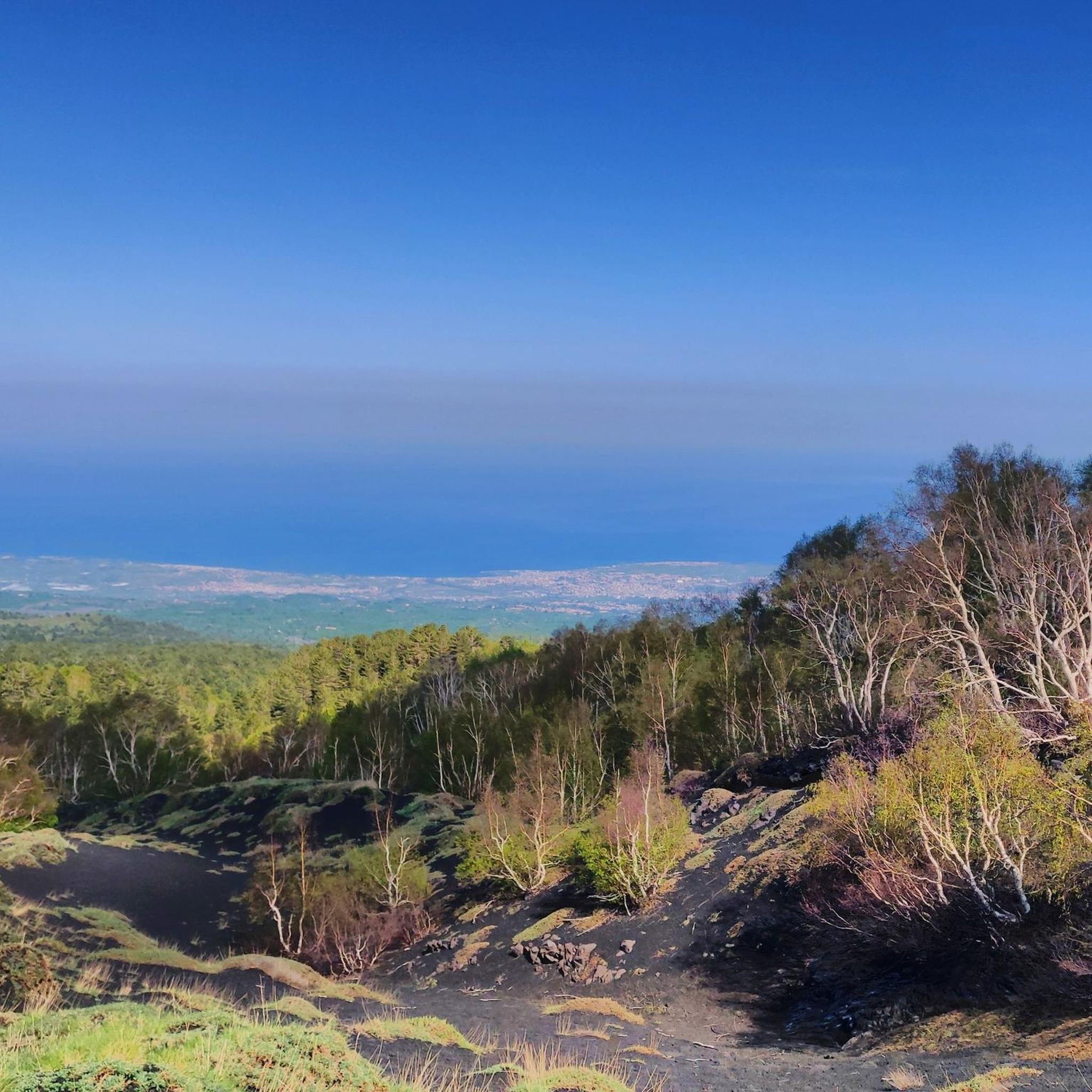
This cave, formed from the solidified lava rock of past eruptions, is a fascinating testament to volcanic activity and offers a rare insight into Sicily's geological history. When visiting this highlight, which is located in the protected area of the Parco dell'Etna, it is important to respect local regulations. The park was established to protect the unique landscape surrounding the volcano and to preserve the natural flora and fauna. Visitors are encouraged to respect the paths and leave no trace in order to preserve this extraordinary place for future generations. The hike continues uphill and eventually reaches the edge of the upper valley, where there are impressive views of the surrounding volcanic landscape. The classic route includes a descent down a volcanic sand gully on the way back, an experience that will be remembered not only for the spectacular scenery but also for the unique way of getting around. Discovering a cave in lava rock is not only an adventure, but also a lesson in geology and volcanology. It makes it possible to feel the forces that shape the earth and admire the quiet beauty that can arise from destruction. For anyone who wants to explore the wonder of Etna and its hidden treasures, this hike offers an incomparable experience that impressively illustrates the fascination of the volcano.
1
0


Etna is a magical place and this route with the two caves is wonderful
0
0

The Grotta della Neve is also known as Grotta dei Ladroni due to a legend that tells of a group of bandits who made this cave their hiding place in the second half of the 18th century.
1
0

continuing to climb you arrive at the edge of the bove valley. The classic route includes a nice downhill run in a volcanic sand gully on the way back
1
1
Frequently Asked Questions
What kind of caves can I expect to find around Giarre?
The caves around Giarre are primarily formed by ancient lava flows from Mount Etna. You'll find unique lava tubes and tunnels, some of which have historical uses like snow storage. These formations offer a direct experience of the volcano's eruptive history.
What are some unique geological features of the caves near Giarre?
Many caves are lava tubes, formed by molten rock. For example, Serracozzo Cave features openings at the top that allow light to enter, creating a unique atmosphere. The Grotta dei Tre Livelli, though not listed in the guide data, is known for its breathtaking stalactites and stalagmites, showcasing millennia of geological processes.
Are there any caves with historical significance near Giarre?
Yes, several caves have historical importance. The Snow Grotto, also known as Grotta dei Ladroni, was historically used by Etna's inhabitants to store snow for resale. It's also associated with a legend of bandits. Similarly, Case del Vescovo Caves were formerly used as a summer deposit for snow.
What should I wear or bring when exploring caves near Giarre?
It's highly recommended to wear sturdy shoes due to uneven terrain. Many tours and explorations, especially into darker lava tubes like Snow Grotto, suggest bringing a flashlight or headlamp, as some sections can be pitch-black. Helmets are often provided or recommended for safety.
Are the caves around Giarre suitable for families?
Many caves, like the Grotta dei Tre Livelli, are considered suitable for visitors of all ages due to their accessibility. However, some caves, such as Case del Vescovo Caves, might require a small wooden ladder for access, and the basal part of some caves like Grotta Arcimis may require speleological equipment, making them less suitable for young children or beginners.
What is special about <a href="https://www.komoot.com/highlight/2923438" target="_blank" rel="noopener">Snow Grotto</a>, also known as Grotta dei Ladroni?
The Snow Grotto is a lava flow tunnel historically used for snow storage, with an engraved date of 1776 at its entrance. It's also known as Grotta dei Ladroni due to a legend of bandits using it as a hiding place. Visitors are advised to bring a flashlight as the cave is pitch-black inside, and the walls can be sharp.
Can you tell me more about <a href="https://www.komoot.com/highlight/1006257" target="_blank" rel="noopener">Serracozzo Cave</a>?
Serracozzo Cave is a popular lava tube known for its magical atmosphere, with openings at the top that allow light to penetrate. You can explore this cave for several hundred meters, experiencing its unique geological formations. It's easily reachable from the Citelli refuge in less than an hour.
What can I expect when visiting <a href="https://www.komoot.com/highlight/4262806" target="_blank" rel="noopener">Case del Vescovo Caves</a>?
Case del Vescovo Caves are cool lava caves with multiple openings, making them an excellent resting point on hot days. Historically, they served as a summer deposit for snow. The main part can be visited via a small wooden ladder, but reaching the basal section requires speleological equipment.
Are there hiking trails near the caves around Giarre?
Yes, the Giarre area offers various hiking opportunities. You can find numerous trails, including easy routes like the Rifugio Rotondo – Carrinu Holm Oak loop from Milo, or more moderate options such as the Mount Fontane – Cerro di Monte Fontane loop. For more details, explore the Hiking around Giarre guide.
What other outdoor activities can I do near the caves around Giarre?
Beyond caving and hiking, the region around Giarre is excellent for road cycling and mountain biking. You can find challenging road cycling routes like the Sapienza Hut – Etna - South Side loop, or moderate MTB trails such as the View of Isola Bella – Messina Gate loop. Check out the Road Cycling Routes around Giarre and MTB Trails around Giarre guides for more options.
What is the best time to visit the caves around Giarre?
The caves maintain a cool temperature year-round, offering a pleasant retreat during warmer months. This makes them an attractive destination even when the weather outside is hot. For specific tours or guided explorations, it's always good to check availability, especially during peak tourist seasons.
Is <a href="https://www.komoot.com/highlight/6443754" target="_blank" rel="noopener">Grotta Arcimis</a> suitable for beginners?
Grotta Arcimis is described as a challenging cave. It's a sliding tunnel with several branches, some interrupted by collapses. Only the southern branch is comfortably traversable, while others are narrow and feature harsh lava rock, making progress difficult. It is generally not recommended for beginners without proper equipment and experience.
Most popular attractions around Giarre

Get inspired with the komoot mobile app


Explore more
Extend your search for the best caves by checking out these guides of the top ones around Giarre:
