Top 7 Gorges around Zugliano
Canyons around Zugliano offer diverse natural areas for exploration. This region features various geographical formations, including deep gorges, rock labyrinths, and valleys carved by waterways. These natural features provide opportunities for hiking in Zugliano natural areas, showcasing the landscape of the Vicenza province. The area is characterized by its rugged terrain and lush vegetation, making it a notable destination for outdoor activities.
Best canyons around Zugliano
- The most popular canyons is Gorghi Scuri, a gorge that features a narrow…
Last updated: June 30, 2026
Monte Corno Rock Labyrinth
Highlight • Gorge
Translated by Google •
Tip by

Gorghi Scuri
Highlight (Segment) • Gorge
Translated by Google •
Tip by
Sign up now to discover places like this
Get recommendations on the best single tracks, peaks, & plenty of other exciting outdoor places.
Sign up for free
Val Grande, also known as 'Val Grossa'
Highlight • Gorge
Translated by Google •
Tip by

Gorgo Nero
Highlight • Gorge
Translated by Google •
Tip by
Sant'Andrea Valley of Grumolo
Highlight (Segment) • Gorge
Translated by Google •
Tip by
Sign up for free to discover even more gorges around Zugliano.
Sign up for free
Already have an account?
Start today with a free account
Your next adventure awaits.
Login or Signup

Tips from the Community

*Update February 2025: the main path has been cleared and widened, and the valley is no longer so difficult and adventurous; only the final part remains wild, with numerous fallen trees.
2
0
The Sant'Andrea Valley in Grumolo di Pedemonte is a wild, chaotic, intricate, humid, and gloomy environment. The adventurous trail is often interrupted by a stream that must be forded and large fallen trees that must be climbed over or circumnavigated; you'll need to be resourceful to continue. Furthermore, some sections and variants may be interrupted by a wall of brambles and nettles. Nature reigns supreme: the deep green moss contrasts with the black, shiny basalt—a sign of the Bregonze's volcanic origins—that emerges from the ground and characterizes the riverbed. The Valley is named after Sant'Andrea because in centuries past there stood a small rustic church dedicated to the saint, accessible by a path descending from the "Bosco del Prete" (Priest's Woods). A cross has been placed on the site of the former church, a small clearing surrounded by dense forest. https://www.altovicentinonline.it/rubriche/itinerari/da-grumolo-alla-valle-di-santandrea-e-al-rivon/
3
0

Path that connects the Lorenza cave to the fire road, a gully full of stones recommended for people with a little practice and not recommended when wet as it is really slippery, once on the fire road you can continue straight to almost get to the top of the mountain
0
0
Very small rock labyrinth, but nice to do, be careful in winter that between fallen trees that do not allow passage and the frozen snow you risk getting hurt.
0
1
Eyes slipping guys, hold tight to the rope!
0
0
The Gorgo Nero is the last and most spectacular 'bojo' of the five along the Anguane Valley, right at the upper end of the valley itself. To reach it, you climb a rocky slide (aided by a rubber garden hose fixed in place to prevent it from being worn down by the water) and reach the dark natural pool at the foot of another slide. 'Bojo', in Venetian dialect, refers to a pool of water or a whirlpool, even a deep one, at the base of a waterfall: hence the expression 'de bojo', meaning boiling, likely referring to the effect of the bubbles that form when the water cascades into the pool.
1
0
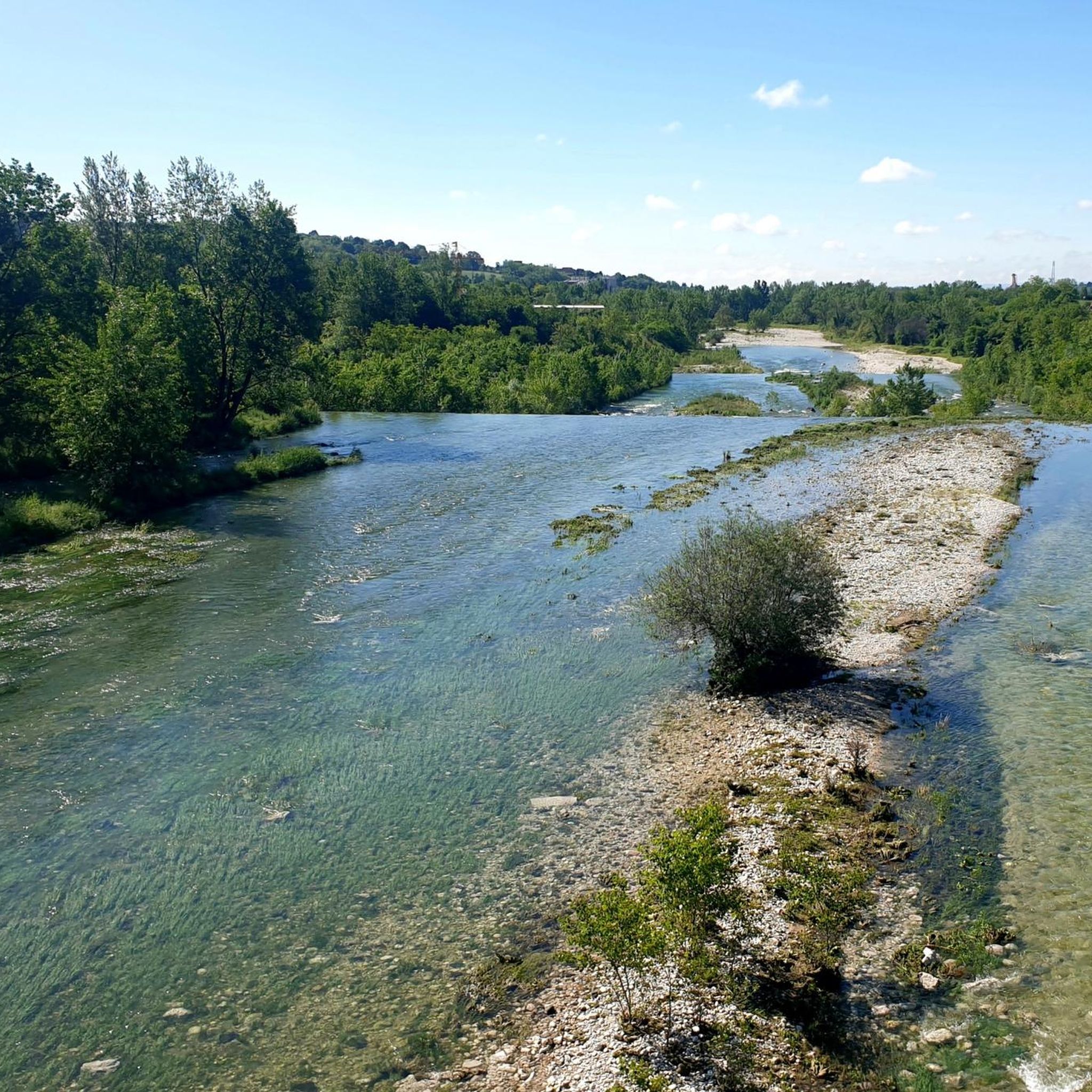
The Valle dei Gorghi Scuri is a fascinating and narrow impluvium full of waterfalls, natural pools, whirlpools and lively waterways formed by the Valletta stream, which originates right here. As a frame, a florid and lush vegetation of ferns and moss. The path starts from the hamlet of Capo di Sopra, along a dirt road that runs along the rising gorge carved out by the stream from above, where the first water features can be glimpsed; from here you reach the upper part, the most evocative and fairy-tale-like, where you can venture off-track, as far as the water and rocks allow depending on the season. I recommend the route after the rains, even if the path can be slippery (EE), and in spring/summer, when very green and lush vegetation frames the water.
1
0
A small but evocative geological labyrinth: nature has carved deep furrows into the hard Rosso Ammonitico limestone, forming corridors that pass through square blocks of rock. Rosso Ammonitico is a pinkish rock from the Jurassic period, generally characterized by a notable abundance of ammonite fossils, hence its name. Within the labyrinth, you'll also find the Cima del Monte Corno (1,383 m): the highest point is here, not where the Monument to the Unknown Soldier overlooks the plain. Along the perimeter of the rocky agglomeration are two Italian artillery emplacements from the First World War, dug directly into rock turrets to defend the Piana di Granezza below, which was an important logistics base. The trail is enjoyable, but not clean: some secondary branches are blocked by fallen trees; in winter, there is ice; in summer, nettles infest some passages.
0
0
Frequently Asked Questions
What are the main types of natural features found in the canyons around Zugliano?
The canyons around Zugliano are characterized by diverse geographical formations. You'll find deep gorges, intricate rock labyrinths like the Monte Corno Rock Labyrinth, and valleys carved by waterways. These areas often feature waterfalls, natural pools, and whirlpools, especially in places like Gorghi Scuri and Valle dell'Orco.
Which canyons offer a challenging experience for experienced hikers?
For those seeking a challenge, Gorghi Scuri is a narrow impluvium with waterfalls and natural pools, allowing for off-track exploration. Val Grande, also known as 'Val Grossa', is a gully full of stones recommended for those with some practice, especially when wet. The Valle dell'Orco is wild and lush, with sections that can be muddy, slippery, and require crossing the stream.
Are there any historical sites within the canyons near Zugliano?
Yes, the Monte Corno Rock Labyrinth is not only a geological wonder but also holds historical significance. Within the labyrinth, you can find two Italian artillery emplacements from the First World War, dug directly into rock turrets to defend the Piana di Granezza below.
What is the best time of year to visit the canyons around Zugliano?
Spring and summer are generally recommended for visiting the canyons around Zugliano. During these seasons, the vegetation is lush and green, and the waterways are lively. After rains, the paths can be slippery, but the water features are at their most spectacular. Always check local conditions before heading out.
What should I wear or bring for canyoning and hiking in the Zugliano area?
Given the challenging and often wet terrain, wear sturdy, waterproof hiking boots with good grip. Layers of clothing are advisable, as conditions can change. For areas with water crossings or slippery sections, consider bringing trekking poles for stability. Always carry enough water, snacks, and a map or GPS device.
What other outdoor activities can I do near the canyons around Zugliano?
Beyond canyon exploration, the Zugliano area offers a variety of outdoor activities. You can find numerous hiking trails, such as the moderate Bregonze Hills Trail or the easy Santa Maria di Vivaro Park loop. For runners, there are several running loops, including options around Thiene and Zanè. More challenging mountain hikes are also available, like those around Cima Summano. You can find more details on these activities in the Hiking around Zugliano, Running Trails around Zugliano, and Mountain Hikes around Zugliano guides.
Are there any less-known or 'hidden gem' canyons worth exploring?
While popular spots like Gorghi Scuri are well-loved, the Valle dell'Orco offers a wild, lush, and adverse experience that feels off the beaten path. It's deeply dug by the torrent, creating spectacular ravines, whirlpools, and waterfalls, and features historical artificial works for water exploitation. Similarly, Gorgo Nero, the most spectacular 'bojo' (pool of water) along the Anguane Valley, offers an adventurous climb to a dark natural pool.
What do visitors enjoy the most about the canyons in Zugliano?
Visitors appreciate the diverse natural beauty and the sense of adventure. The geological formations, like the rock labyrinth at Monte Corno, and the dynamic waterways with waterfalls and pools in places like Gorghi Scuri, are frequently highlighted. The opportunity for off-track exploration and the lush vegetation also contribute to a memorable experience.
Can I visit the canyons around Zugliano during winter?
Visiting in winter is possible, but requires extra caution. Some paths, especially in areas like Monte Corno Rock Labyrinth, can have ice and fallen trees, making passage difficult and potentially dangerous. The terrain can be very slippery, and some sections might be impassable. It's best to check local conditions and be prepared for challenging winter hiking.
Are dogs allowed in the canyons around Zugliano?
While specific regulations for each canyon may vary, many natural areas in Italy are dog-friendly, especially on trails. However, given the challenging and potentially slippery terrain, and sections that might require stream crossings or climbing, it's important to assess if the specific canyon is suitable for your dog's abilities and safety. Always keep dogs on a leash and clean up after them.
Are there any places to eat or drink near the canyon trails?
The guide data does not specifically mention cafes directly adjacent to the canyon trails. However, Zugliano and nearby towns in the Vicenza province offer various dining options. It's advisable to plan your meals before or after your canyon exploration, or bring packed food and drinks for your trip.
Most popular routes around Zugliano
Most popular attractions around Zugliano

Get inspired with the komoot mobile app


Explore more
Already discovered everything in this region? See additional gorges around Zugliano for your next adventure:
