Top 7 Castles around San Giovanni D'Asso
Castles around San Giovanni D'Asso are primarily centered around the medieval village of San Giovanni D'Asso in Tuscany's Crete Senesi. The San Giovanni D'Asso Castle, dating back to the 13th and 14th centuries, is a significant fortified structure built of brick, featuring both defensive and palatial architectural elements. It houses the first Truffle Museum in Italy, celebrating the region's renowned white truffles. Perched on a hilltop, the castle offers views of the surrounding Sienese countryside.
Best castles around San Giovanni D'Asso
- The most popular castles is Tower of Vignoni Alto, a castle that is part of a small aggregate of buildings belonging to an ancient castle. Its origins date back to the 11th century, and it offers views of Castiglione d'Orcia and the Val d'Orcia.
- Another must-see spot is Bibbiano Castle, a historical site with a boundary wall, moat, drawbridge, battlements, and tower. Visitors can experience a leap into the Middle Ages at this Lombard-period fortress.
- Visitors also love Montalcino Fortress, a castle built in 1361. The panorama from its ramparts extends over Monte Amiata, the Crete, Siena, and the Val d'Orcia.
- San Giovanni D'Asso is known for historical fortresses, medieval village castles, and fortified structures. Visitors can explore a variety of castles, from ancient ruins to well-preserved strongholds.
- The castles around San Giovanni D'Asso are appreciated by the komoot community, with more than 250 upvotes and over 100 photos shared.
Last updated: June 30, 2026
Tower of Vignoni Alto
Highlight • Castle
Translated by Google •
Tip by

Montalcino Fortress
Highlight • Castle
Source, discovertuscany.com
Translated by Google •
Tip by

Sign up now to discover places like this
Get recommendations on the best single tracks, peaks, & plenty of other exciting outdoor places.
Sign up for free
Bibbiano Castle
Highlight • Castle
castellitoscani.com/bibbiano
Translated by Google •
Tip by

San Giovanni d'Asso Historic Village
Highlight • Settlement
Translated by Google •
Tip by
Castello Tricerchi
Highlight • Castle
Località Altesi, 53024 Montalcino SI
linktr.ee/castellotricerchi_
05771912361
Translated by Google •
Tip by

Sign up for free to discover even more castles around San Giovanni D'Asso.
Sign up for free
Already have an account?
Start today with a free account
Your next adventure awaits.
Login or Signup
Popular around San Giovanni D'Asso
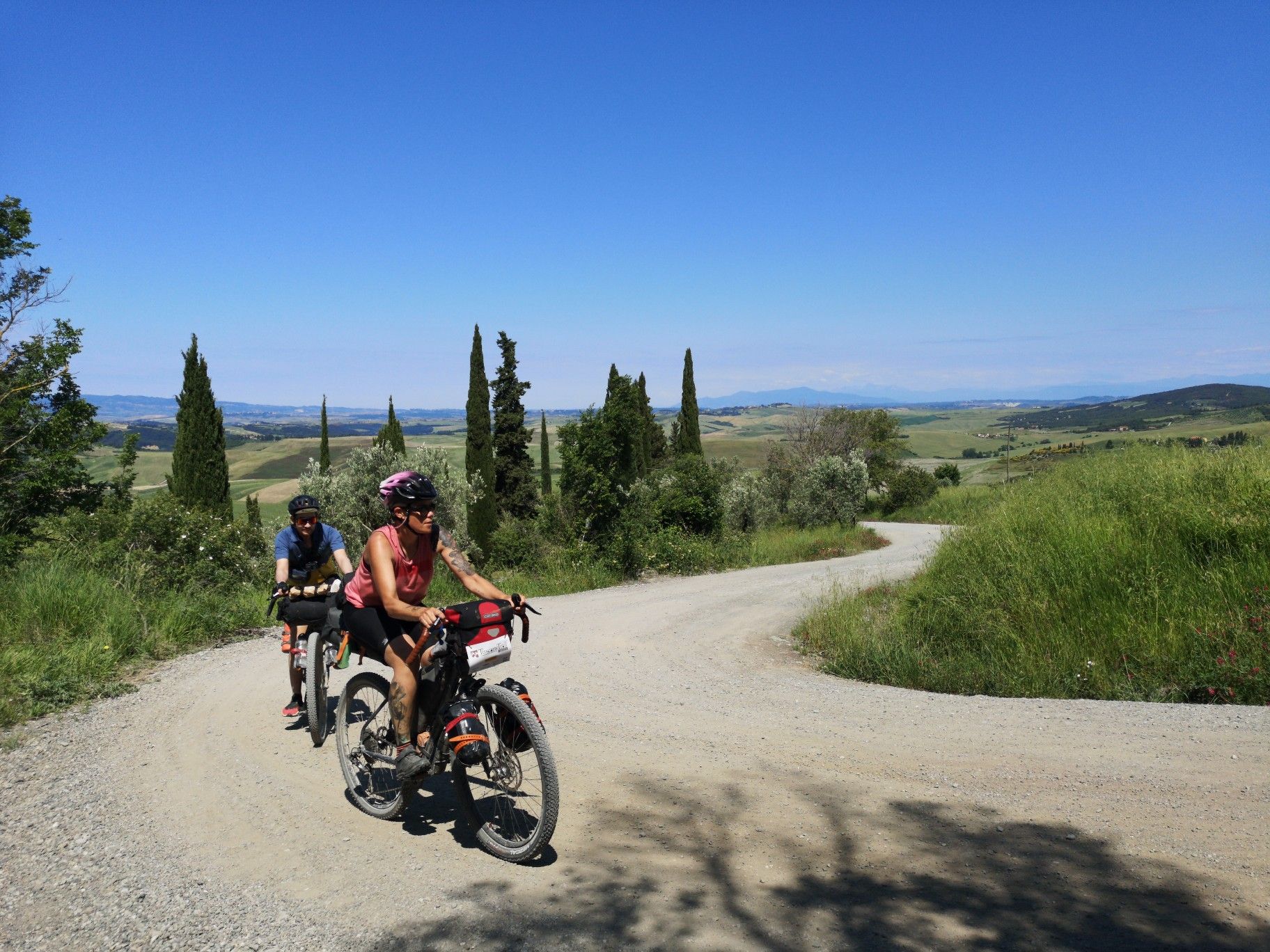
The Tuscany Trail – bikepacking in the heart of Italy
Bike ride through the Elysian Fields – Eroica Montalcino
Cycling around San Giovanni D'Asso
Road Cycling Routes around San Giovanni D'Asso
MTB Trails around San Giovanni D'Asso
Hiking around San Giovanni D'Asso

Gravel biking around San Giovanni D'Asso
Running Trails around San Giovanni D'Asso


Tips from the Community

Castello Tricerchi extends over 400 hectares on the northern slopes of Montalcino , 13 of which are dedicated to Sangiovese Grosso , and suited to the production of Brunello and Rosso di Montalcino . At the center of the property stands the Castle, completed in 1441 by the Tricerchi family , and today the home and company headquarters of their direct descendants, the Squarcia family. – 1290 – The Tricerchi family was part of the Sienese oligarchy and a member of the Government of the Nine: the council of nine noble families who governed the city of Siena. – 1330 – The Tricerchi family became supervisors of the Biccherne, a magistracy of Siena that dealt with the finances of the Republic, and was headed by the Monks of San Galgano. – 1441 – The Tricerchi family completes Castello Tricerchi in Montalcino, on the Via Francigena. – 1569 – Under the Grand Duchy of Tuscany, by appointment of the Medici family of Florence, the Tricerchi family were elevated to the rank of nobility, carrying out important public functions in the city of Siena and obtaining the administration of Montalcino. – 1600 – Spanish domination, Tricerchi Castle a point of reference for pilgrims travelling to Rome. – 1700 – Construction of the chapel dedicated to the Virgin of the Veil, which houses a fragment of the Virgin's Veil and the accompanying Papal Bull. In the same year, the family received a plenary indulgence. – 1800 – the castle and its properties passed from Maddalena (Nena) to her firstborn Julio Squarcia, founder of the current family. Tricerchi Castle was built in the 13th century on the Via Francigena in Montalcino by the Altesi family and completed in 1441 by the Tricerchi family. The 6,000-square-meter structure is a typical example of medieval fortified keep architecture, featuring numerous decorative motifs attributed to Baldassarre Peruzzi, a well-known artist of the period. Over the centuries, the castle served as a refuge and protection for those who, along the Via Francigena, made their pilgrimage to Rome. In the 17th century, the chapel, originally located within the fortified walls, was moved to the end of the avenue and dedicated to the Virgin of the Veil. A fragment of the Veil, certified by papal bull, is still kept inside. With Ministerial Decree 1982, Tricerchi Castle was declared part of Italy's historical and artistic heritage.
0
0

Very cool place for water refilling. Nice artwork.
0
0

zero tourists and peace of mind, to get there a very challenging climb with peaks of 21%
1
0

In the current village is still visible a tall tower, formerly the keep, reduced in height with a high chamfered base and topped by a 'redondone' (dripstone) to delimit its vertical feature and a small window on each side. Within the walled circuit is the church of San Biagio, of Romanesque origin.
1
0
Vignoni Alto, a picturesque medieval village perched on a hill, offers breathtaking views of Castiglione d'Orcia and the Val d'Orcia. With its rich history dating back to the eleventh century, the village is a living monument of feudal times, with remains such as a high tower and the Romanesque church of San Biagio. Despite its small population of only 28 inhabitants, Vignoni Alto retains its unique charm and character. The spectacular views of the Orcia Valley below complete the visit to this well-preserved Tuscan fortified hill town.
2
1
The Castello Tricerchi extends over 400 hectares on the northern slopes of Montalcino. 13 hectares are dedicated to the cultivation of Sangiovese Grosso, the vines that produce Brunello and Rosso di Montalcino. In the historic cellars of Castello Tricerchi, Brunello di Montalcino and Rosso di Montalcino are aged in oak barrels.
1
0
The Castello Tricerchi is one of the oldest and most historic wine-producing castles in Tuscany. The castle was built in the thirteenth century on the Via Francigena near Montalcino by the Altesi and completed in 1441 by the Tricerchi. It covers 6000 m² and is a typical example of a medieval castle with a fortified keep, decorated with motifs attributed to Baldassarre Peruzzi, a famous artist of the period.
1
0

Frequently Asked Questions
What are the most historically significant castles to visit around San Giovanni D'Asso?
The primary historical site is the San Giovanni D'Asso Castle, a 13th-14th century fortified structure known for its blend of defensive and palatial architecture. Other notable historical castles include the ancient Tower of Vignoni Alto, the Lombard-period Bibbiano Castle with its moat and battlements, and the imposing Montalcino Fortress built in 1361.
Are there any family-friendly castles or historical sites in the area?
Yes, several sites are suitable for families. The Montalcino Fortress is listed as family-friendly, offering a chance to explore its ramparts. The Bibbiano Castle, with its drawbridge and battlements, can also spark imagination. Additionally, the San Giovanni d'Asso Historic Village itself is family-friendly and offers facilities and a playground.
Which castles offer the best panoramic views of the Tuscan countryside?
For breathtaking views, visit the Montalcino Fortress, where the panorama from its ramparts extends over Monte Amiata, the Crete Senesi, Siena, and the Val d'Orcia. The Tower of Vignoni Alto also provides picturesque views of Castiglione d'Orcia and the Val d'Orcia. The San Giovanni D'Asso Castle, perched on a hilltop, offers scenic views of the surrounding Sienese countryside.
What unique attractions are housed within the San Giovanni D'Asso Castle?
The San Giovanni D'Asso Castle is home to the first Truffle Museum in Italy (Museo del Tartufo). Located in the castle's underground vaults, the museum explores the history, legends, harvesting techniques, and culinary uses of truffles, making it a unique attraction for food enthusiasts.
When is the best time to visit the castles around San Giovanni D'Asso?
The region is beautiful year-round. However, visiting in autumn, particularly November, offers a unique experience as the San Giovanni D'Asso Castle hosts the annual White Truffle Market Exhibit. Spring and early autumn generally provide pleasant weather for exploring the outdoor sites and enjoying the scenic views.
Are there any castles that are wheelchair accessible?
While many historic castles may have limited accessibility due to their age and structure, the San Giovanni d'Asso Historic Village, which encompasses the castle, is noted as being wheelchair accessible in parts, allowing visitors to enjoy the village and its views.
What outdoor activities can I combine with a castle visit in this region?
The area around San Giovanni D'Asso is excellent for outdoor activities. You can find numerous routes for running and cycling. For example, explore running trails like the 'Country Lane – Enchanted Forest loop' or 'Cemetery of Pieve a Salti – Enchanted Forest loop'. Cyclists can enjoy cycling routes such as the 'Buonconvento – Via Francigena Gravel Route loop' or 'View of the Crete Senesi – Beautiful scenic viewpoint loop'.
Can I find cafes or restaurants near the castles?
The San Giovanni d'Asso Historic Village itself offers facilities, including places to eat. For other castles, it's advisable to check the nearby towns or villages for dining options. Montalcino, for instance, offers various cafes and restaurants near its fortress.
What is the architectural style of the San Giovanni D'Asso Castle?
The San Giovanni D'Asso Castle showcases a unique blend of architectural styles from the 13th and 14th centuries. It features an older fortress-like section with bastioned walls and turrets, alongside a section resembling an urban palace with Gothic arches and a vast courtyard, all constructed primarily of brick.
Are there any lesser-known or 'hidden gem' castles worth exploring?
While the San Giovanni D'Asso Castle is the most prominent, the region has other historical sites. Castiglion del Bosco, an ancient village with a medieval castle, now functions as a luxury hotel but is set in a beautiful natural area. The Bibbiano Castle, though unmaintained in parts, offers a genuine glimpse into a Lombard-period fortress.
What do visitors particularly enjoy about the castles around San Giovanni D'Asso?
Visitors frequently appreciate the rich history and the stunning panoramic views offered by these ancient structures. The blend of defensive architecture with palatial elements, as seen in the San Giovanni D'Asso Castle, is often highlighted. The unique experience of the Truffle Museum and the opportunity to step back into the Middle Ages at places like Bibbiano Castle are also popular.
Most popular routes around San Giovanni D'Asso
Most popular attractions around San Giovanni D'Asso

Get inspired with the komoot mobile app


Explore more
Looking for the best castles somewhere else? Discover other guides around San Giovanni D'Asso:
