Top 5 Caves around Susa
Best caves around Susa, Italy, are primarily found within the Susa Valley and the broader Metropolitan City of Turin. This region is known for its blend of natural landscapes and historical significance, offering diverse cave systems. The area features both natural cavities formed by erosion and historical sites adapted from ancient quarries or tunnels. These locations provide opportunities for exploration and insights into the region's past.
Best caves around Susa
- The most popular caves is Decauville Tunnel, an other…
Last updated: August 9, 2026
Pera Furà Millstone Cave
Highlight • Cave
Translated by Google •
Tip by

The Pertus (Colombano Romean Tunnel)
Highlight • Structure
You have waterproof shoes as you walk on the surface of the water of a …
Translated by Google •
Tip by

Sign up now to discover places like this
Get recommendations on the best single tracks, peaks, & plenty of other exciting outdoor places.
Sign up for free
Decauville Tunnel
Highlight (Segment) • Structure
Translated by Google •
Tip by

Antica Cava di Rocaforte
Highlight • Cave
Translated by Google •
Tip by

Le Voute Caves
Highlight • Cave
Source: parchialpicozie.it/page/view/sentiero-delle-voute
Translated by Google •
Tip by

Start today with a free account
Your next adventure awaits.
Login or Signup
Popular around Susa
GTA Central Piedmont – Dense forests, lakes and impressive waterfalls
Western trans-alpine crossing – pure adventure on your mountain bike
Via Francigena in Valle di Susa – complete route and 'for all' section
Between valleys and peaks – Ultra Gravel Tour des Alpes
Chris Froome's feat – the epic Finestre hill of the 2018 Giro
High altitude military roads – gravel routes on the Assietta road
The great passes of the Giro d'Italia – 10 historic climbs
Cycle three great passes between Italy and France
Hiking around Susa
Road Cycling Routes around Susa


Tips from the Community


A few minutes' detour from the main path leads to an ancient millstone quarry. There are some iron steps planted in the rock to overcome and after a short climb over rubble you enter the quarry where you can see some millstones carved into the rock, but no longer finished.
0
0

Ancient stone quarry, cliff with some climbing routes
0
0

The Pertus is a tunnel that can be walked on a hiking level, provided that: You have waterproof shoes as you walk on the surface of the water of a countercurrent stream that flows inside. You do not suffer from claustrophobia and have a torch as it is completely dark and narrow in places. Be fairly covered as the temperature inside drops considerably. The Pertus can be walked in about 40 minutes, or simply look at it from the outside and then climb to the 4-teeth peak.
3
0

The path runs along the Decauville, which is the stretch where the gauge railway ran in the early twentieth century. The mountain railway line connected Lake Dietro la Torre and Lake Malciaussia. There are fixed ropes to facilitate progression. Obviously it is essential to have a flashlight with you.
3
0

It is certainly an interesting and varied tour with a wide view over the valley and upstream
0
0

characteristic and "adventurous", at least for the little ones. Remember to take a flashlight with you.
0
0

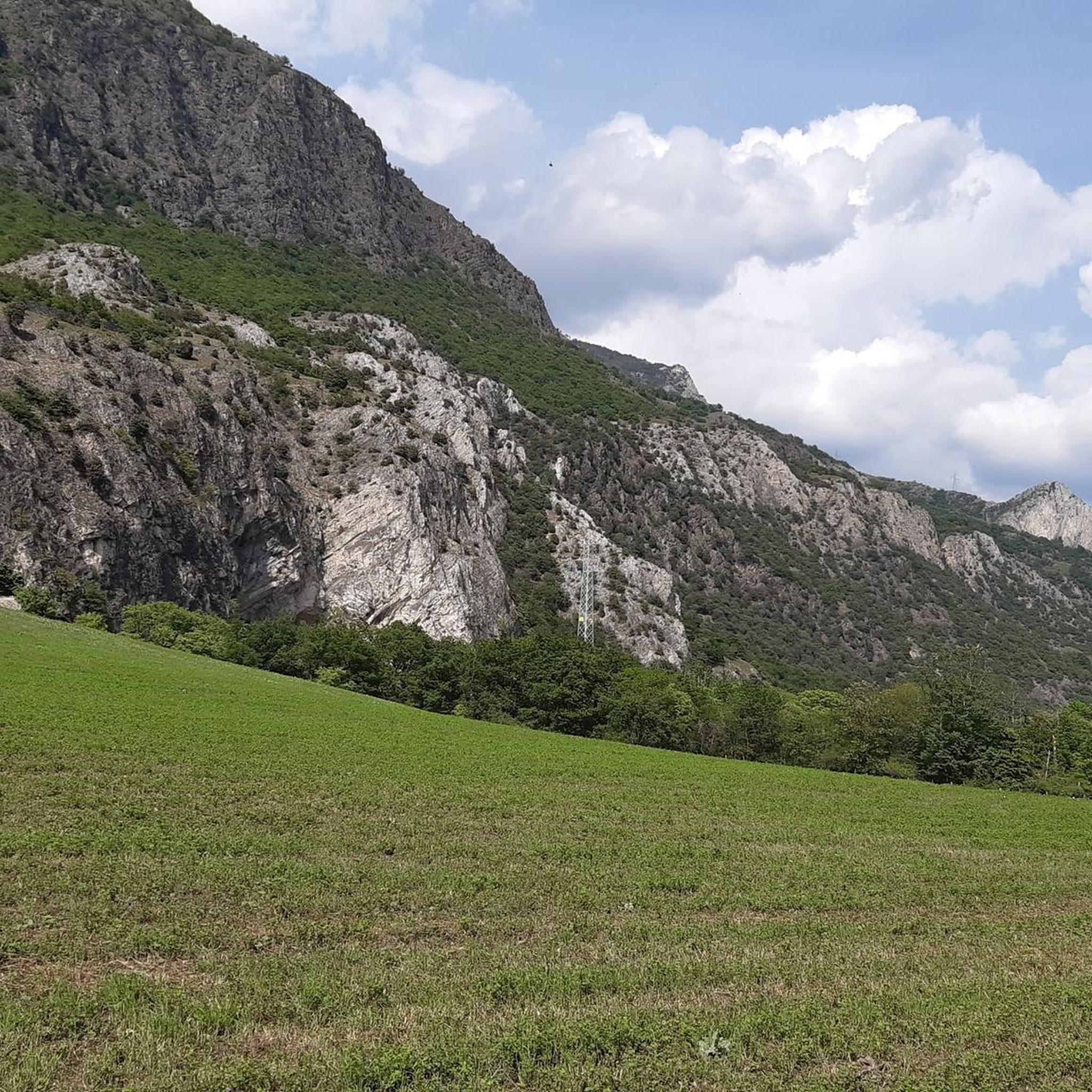
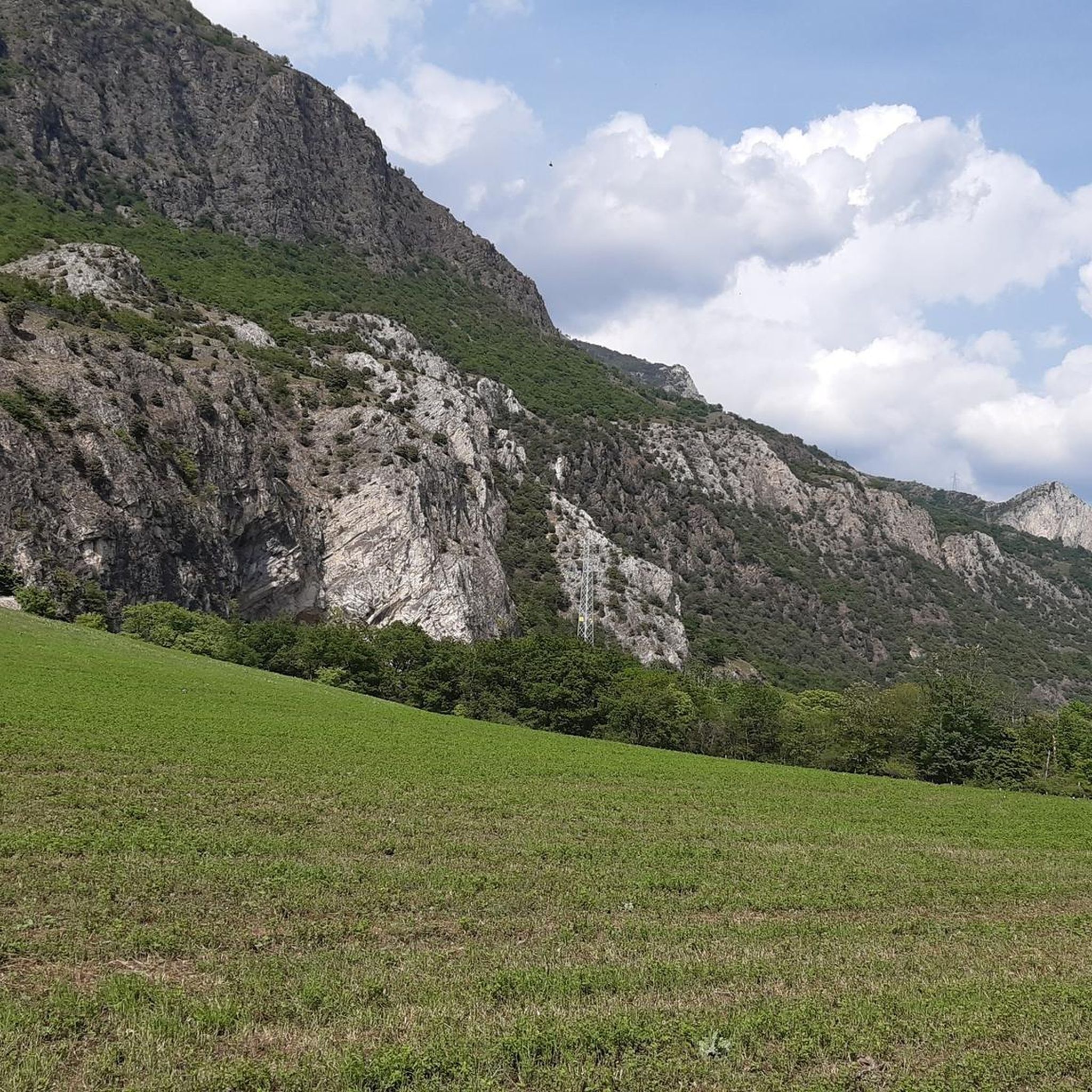
The "pera furà" is an ancient quarry of millstones, obtained in a rocky wall clearly visible from the locality Chiampano, which in turn rises just above another even more evident granite formation overlooking Borgone, where for years there has been a cliff of climbing. To reach the quarry, starting from the car park of the climbing wall, one follows the two existing paths on either side of the cliff, with both of them reaching Chiampano, while with the path on the right access is direct, with the one on the left it is necessary, once in the hamlet, turn right onto the main street thus reaching the signs for pera furà. Access to the quarry is carried out with a short stretch of aided path (metal pegs driven into the rock) and a stretch of path where you need to be careful not to slip. In five minutes you arrive at the cave, on the walls of which the marks left by the quarrymen and some millstones, well hewn, still set in the rock and never completed again, are clearly visible. continuing the climb towards Roccabruna (or Pietrabruna) you arrive, after a steep stretch of path, on the top of the "pear", with an exceptional view over the Susa valley. The hamlet, not far away, is abandoned. In the basements are found old vats, remains of barrels and some presses, witnesses of an ancient exploitation of the surrounding land as vineyards, where the remains of dry stone wall terraces are found (the toponym "vigne del rocco" is not chosen at random .. ..)
0
0
Frequently Asked Questions
What types of caves can I explore in the Susa Valley?
The Susa Valley and the broader Metropolitan City of Turin offer a diverse range of cave systems. You'll find natural cavities formed by erosion, historical quarries like Antica Cava di Rocaforte where millstones were carved, and even man-made tunnels such as the Decauville Tunnel, which follows an old mountain railway line.
Are there any caves with historical significance in the Susa Valley?
Yes, several caves in the Susa Valley have rich historical significance. Le Voute Caves are believed to have hosted seasonal settlements of Neolithic shepherds. The Pera Furà Millstone Cave is an ancient quarry where you can still see marks left by quarrymen and unfinished millstones. Additionally, the Gheisa d'la Tana Cave in Val d'Angrogna served as a clandestine place of worship for the Waldensian community during religious persecution.
What are some of the most popular caves for visitors around Susa?
Among the most popular are the Decauville Tunnel, known for its adventurous trail along an early 20th-century railway line, and Antica Cava di Rocaforte, an ancient stone quarry with visible millstone carvings. Le Voute Caves, a natural monument with archaeological interest, are also highly appreciated.
Are there any family-friendly cave experiences in the Susa Valley?
While specific 'family-friendly cave tours' are not detailed, the Gheisa d'la Tana Cave is accessible via a short, marked hiking trail suitable for all, making it a good option for families. The Decauville Tunnel can also be an adventurous experience for children, especially with a flashlight, though it does involve fixed ropes for progression.
What should I know before visiting The Pertus (Colombano Romean Tunnel)?
The Pertus is a unique historical tunnel that offers a challenging hiking experience. You will need waterproof shoes as you walk through a countercurrent stream, a torch because it's completely dark, and you should be prepared for narrow passages. The temperature inside drops considerably, so dress warmly. It takes about 40 minutes to walk through.
What kind of outdoor activities can I combine with a visit to the Susa Valley caves?
The Susa Valley offers numerous outdoor activities. You can find various hiking trails, including challenging routes like the GTA and Sentiero Italia. For those seeking more adventure, there are mountain hikes and even gravel biking routes in the area, such as the Assietta gravel ring.
Do I need any special equipment or permits for caving in the Susa Valley?
For some cave experiences, like The Pertus or the Decauville Tunnel, a flashlight is essential due to complete darkness. Waterproof shoes are highly recommended for The Pertus. For more extensive cave systems like the Pugnetto Caves, guided visits by the Italian Alpine Club (CAI) are required, and they are only open from April to October. Always check specific access requirements for each cave.
What is the best time of year to visit the caves around Susa?
The best time to visit depends on the specific cave. For natural caves and those requiring hiking access, spring and autumn generally offer pleasant weather conditions. The Pugnetto Caves, for instance, are open for guided visits from April to October. Always check local conditions and specific cave opening times before planning your trip.
Are there any caves around Susa that are suitable for beginners or offer easy access?
The Gheisa d'la Tana Cave in Val d'Angrogna is accessible via a short, marked hiking trail suitable for all, making it a good option for beginners. While some caves involve aided paths or require specific gear, many offer a chance to experience the region's unique geology and history without extensive caving experience.
What unique geological features can be found in the Susa Valley caves?
The Susa Valley caves showcase various geological formations. Le Voute Caves are notable for being the result of erosive phenomena. The Pera Furà Millstone Cave and Antica Cava di Rocaforte highlight the region's historical use of natural rock for millstone quarrying, demonstrating how human activity has interacted with geological features.
Can I bring my dog to the caves or on nearby trails in the Susa Valley?
While specific dog-friendly policies for individual caves are not always explicitly stated, many outdoor trails in the Susa Valley are suitable for dogs. When visiting caves, especially those with narrow passages or requiring special equipment, it's advisable to check ahead. For general hiking in the region, dogs are often welcome on trails, but always keep them on a leash and clean up after them.
Where can I find viewpoints with good views of the Susa Valley near the caves?
When climbing towards Roccabruna from the Pera Furà Millstone Cave, you can reach the top of the 'pear' with an exceptional view over the Susa Valley. Many of the hiking trails in the region also offer panoramic vistas of the valley and surrounding mountains.
Most popular routes around Susa
Most popular attractions around Susa

Get inspired with the komoot mobile app


Explore more
Extend your search for the best caves by checking out these guides of the top ones around Susa:
