Top 13 Caves around Monte Di Malo
Best caves around Monte Di Malo are found in the province of Vicenza, Veneto, Italy, a region characterized by its karstic plateau and significant geological formations. The area features an extensive underground network, including the largest cave in the Veneto region. These caves are notable for their geological features, paleontological significance, and historical uses, ranging from ancient industrial stations to World War I defensive positions. The landscape offers a unique blend of natural history and cultural heritage for explorers.
Best…
Last updated: June 30, 2026
Buso della Rana Cave
Highlight • Cave
Translated by Google •
Tip by

Bocca Lorenza (cave)
Highlight • Cave
Translated by Google •
Tip by

Sign up now to discover places like this
Get recommendations on the best single tracks, peaks, & plenty of other exciting outdoor places.
Sign up for free
Sentinello Trail (WWI)
Highlight (Segment) • Trail
Translated by Google •
Tip by
Sass de la Poja Observation Post
Highlight • Historical Site
Translated by Google •
Tip by


Sign up for free to discover even more caves around Monte Di Malo.
Sign up for free
Already have an account?
Start today with a free account
Your next adventure awaits.
Login or Signup

Tips from the Community

The Buso della Rana is the largest cave in the Veneto region and one of the most extensive in Italy, with a network of caves stretching almost 30 km in total (40 km including the Pissatèla complex above, to which it is connected). Located beneath the Faedo-Casaròn Plateau, it is an intricate karst system that collects and channels the plateau's waters into the Rio Rana, which flows at the entrance. It was formed when rainwater seeps into the permeable limestone surface layer and, encountering the underlying impermeable basalt (volcanic rock), flows laterally, eroding the rock. Over millions of years, this has created a complex labyrinth of horizontal tunnels, chambers, chimneys, siphons, and small lakes traversed by underground streams. Because it drains the plateau's waters, the cave is subject to flash floods, making exploration treacherous. Inside, the temperature remains constant between 10 and 12°C year-round. It is freely accessible through the monumental entrance and by proceeding along the Main Branch for about fifty meters, until reaching the first flooded corridor or Siphon, a horizontal constriction that requires crawling. From there, it is the preserve of speleologists or exciting and adventurous guided tours organized by associations like Biosphera (see link). The internal branches are not marked, and one must know the way. The name of the cave has nothing to do with the amphibian, but is an Italianized term from the Cimbrian word "roan," meaning "rocky wall," referring to the cliff at the entrance. https://www.busodellarana.it https://esplora.biosphaera.it/luoghi/buso-della-rana/
0
0

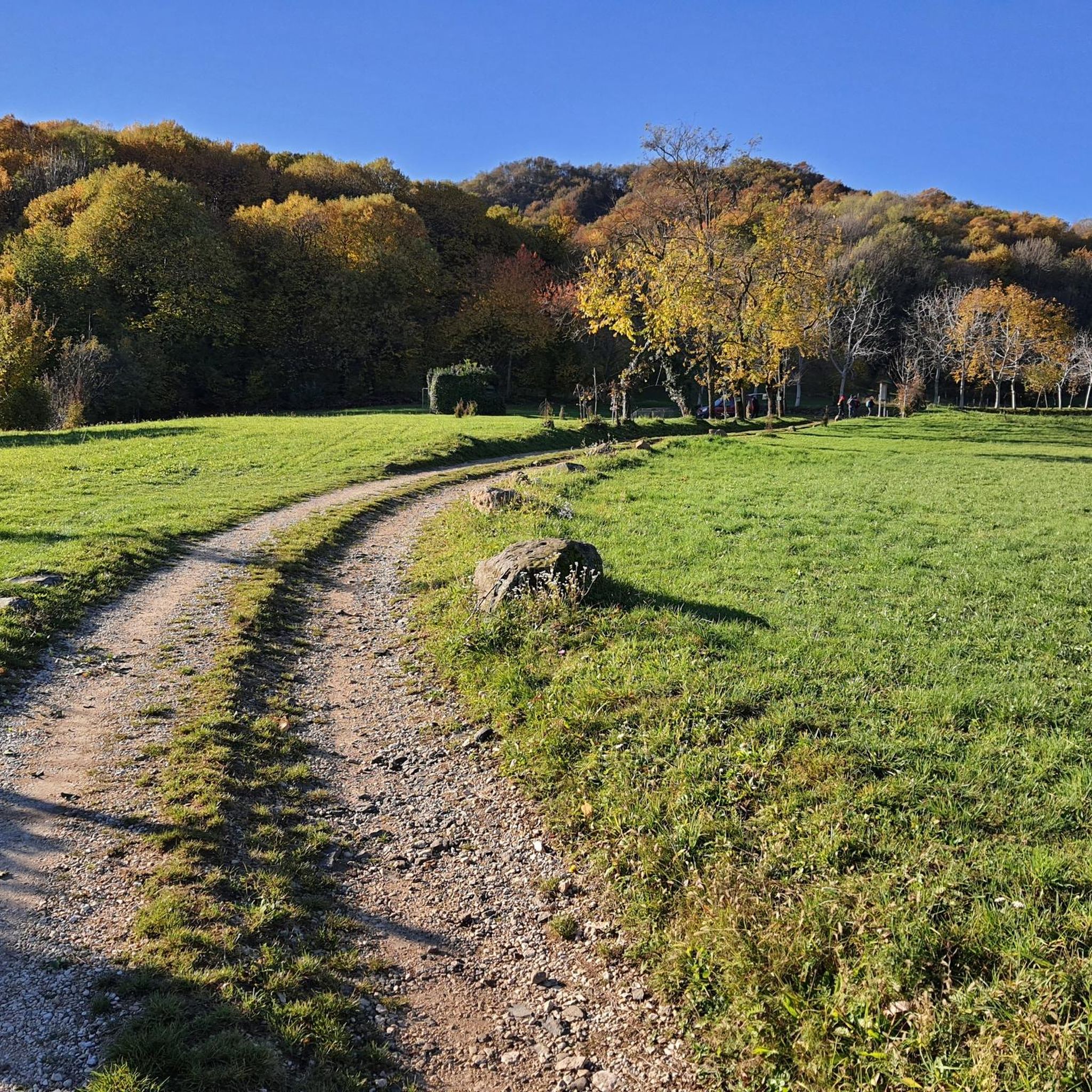
This path runs along a long and steep edge of the Civillina, but the climb is greatly eased by a large number of hairpin bends (42) and therefore is never difficult or too tiring. It is called the Sentinello because it is nothing more than a mule track that connected all the firing positions of the Great War along its entire length.
0
0

beautiful waterfall of the Rana stream
0
0

To admire this curious phenomenon, a detour from the main road is necessary. Once you reach the place, just look out into the well (with a diameter of about 50 cm) from which what is sometimes called "dragon's breath" seems to emerge from. It is nothing more than a karst cavity (characteristic of the Faedo-Casaron plateau) from which fresh air comes out (which varies between 7 and 13 degrees). Especially in the summer period, the typical rustle of the exchange of hot and cold air masses at the mouth of the cave is clearly audible. The cavity, commonly called "Buso del Lucio", was discovered by the Maladense speleologist Lucio Zanini. The valley that you travel along following the Campipiani-Faedo path is called “Valle dei Vischi”. The origin of this name is not known but it probably refers to the sound effects (breathing, hissing, moaning) that the blowing caves produce in particular climatic conditions.
0
0

The Bocca Lorenza is nothing more than a cave (which if I'm not mistaken is also used for speleology) be careful not to go too far because you risk slipping
0
0
The Bocca Lorenza cave is a natural cavity that enters the bowels of the Summano and descends into a series of rooms located at increasing depths. Since the early years of the twentieth century, excavations have been carried out which have brought to light numerous finds dating back mainly to prehistoric times, which testify to its use as a domestic shelter, tomb and place of worship. The interior of the cave can be freely visited and equipped with cables (perpetually wet due to humidity), but experience and adequate equipment are still required: a headlamp and helmet are essential. For everyone else, it's best to stop at the lobby. The cave is very humid and dark, with a slippery bottom and a constant temperature of around 13 degrees. https://it.wikipedia.org/wiki/Bocca_Lorenza https://mostre.cab.unipd.it/schio/it/63/i-reperti-di-bocca-lorenza
0
0
Sass de la Poja ('Sasso della Buzzard', the bird of prey, in Venetian dialect) is a large boulder that stands alone on the south-eastern side of Summano. During the Great War, the Italian army dug an observatory there to monitor the Vicenza Plain. Further down, another rock strut with another observatory. However, the entire short path is fortified with short trenches and reinforcement walls, a couple of cave shelters and walkways: a suggestive and interesting passage through the woods.
1
0

Small rock pillar (with a short ferraratina to get to the top) overlooking a First World War stronghold carved into the same rock
1
0
Frequently Asked Questions
What makes the caves around Monte Di Malo unique?
The Monte Di Malo region is known for its extensive karstic cave systems, significant geological formations, and historical uses. These caves range from vast underground networks like the Buso della Rana Cave, the largest in the Veneto region, to historical cavities used as shelters or defensive positions during World War I.
Which caves are most significant for their natural features?
The Buso della Rana Cave is the most prominent, featuring nearly 40 kilometers of passages, active waterways, subterranean lakes, and unique geological formations like the "Pasa" Hall. Another notable site is Lucio's Hole, a karst cavity known for the fresh air that emerges, sometimes called "dragon's breath," especially noticeable in summer.
Are there caves with historical significance in Monte Di Malo?
Yes, several caves hold historical importance. The Bocca Lorenza (cave) has yielded numerous prehistoric artifacts, indicating its use as a shelter, tomb, and place of worship. The Buco del Soglio, while not as extensively detailed, was adapted for defensive purposes during World War I. Additionally, sites like the Sentinello Trail (WWI) and Sass de la Poja Observation Post feature cave shelters and military artifacts carved into the rock from the Great War.
What is the best time of year to visit the caves in Monte Di Malo?
Many caves, such as the Buso della Rana, maintain a constant temperature of around 10-12°C (50-53.6°F) year-round, making them accessible in any season. However, some sections of the Buso della Rana are prone to rapid flooding during heavy rainfall, so it's advisable to check weather conditions, especially if planning to explore beyond the main entrance.
Are guided tours available for any of the caves?
Yes, guided tours are available for the Buso della Rana Cave. These tours typically cover the main branch and up to the Cameron dei Massi, offering an immersive experience. Beyond these sections, access is generally recommended only for expert speleologists or with accompanying guides due to the cave's complex nature. You can find more information about tours on the official Monte di Malo tourism website: visitmontedimalo.it.
What equipment is recommended for visiting caves like Bocca Lorenza?
For caves like Bocca Lorenza (cave), which can be freely visited but are equipped with cables, experience and adequate equipment are essential. A headlamp and helmet are crucial, as the cave is very humid, dark, and has a slippery bottom. For those without proper equipment or experience, it's best to stay in the lobby area.
Are there family-friendly options for exploring caves in the Monte Di Malo area?
While many caves in the region require specialized equipment or expertise, the initial section of the Buso della Rana Cave is freely accessible for about fifty meters. This allows families to experience the monumental entrance and the beginning of the cave system. For deeper exploration, guided tours are recommended, which can be suitable for older children and adventurous families.
What kind of fossils and geological formations can be found in the Monte Di Malo caves?
The caves, particularly the Buso della Rana Cave, are rich in paleontological significance. Numerous artifacts, including shark teeth and fossils of crabs, have been discovered, helping to reconstruct the ancient marine environment of the Priabonian stratotype (34-37 million years ago). Geologically, the caves feature extensive karst systems with subterranean lakes, chimneys, siphons, and unique formations like the nearly flat ceilings in the "Pasa" Hall and "Sala dei Massi".
What outdoor activities can I do near the caves in Monte Di Malo?
The Monte Di Malo area offers various outdoor activities, especially hiking and cycling. You can find numerous routes, such as the "Buso della Rana Cave Loop from Monte di Malo" for hiking, or cycling routes like "Scurtolo Panoramico – Molo 517 loop from Malo." For more details on these and other routes, explore the Hiking around Monte Di Malo or Cycling around Monte Di Malo guides.
Are there hiking trails that incorporate cave visits or historical sites?
Yes, several hiking trails in the region combine natural beauty with historical elements. The Sentinello Trail (WWI), for instance, runs along an Italian defensive line from the Great War, featuring military artifacts, observatories, and cave shelters dug into the rock. Another option is the "Faedo Village Center – Croce del Sojo (Monte Soglio) loop from Monte di Malo" which explores the area around the Buco del Soglio.
What do visitors enjoy most about the caves around Monte Di Malo?
Visitors appreciate the immersive experience of exploring vast underground networks and the rich historical context of the region's caves. The geological formations, paleontological discoveries, and the unique natural phenomena, such as the 'dragon's breath' at Lucio's Hole, are frequently highlighted. The blend of natural wonder and cultural heritage makes the area a compelling destination for explorers and history enthusiasts.
Most popular routes around Monte Di Malo
Most popular attractions around Monte Di Malo

Get inspired with the komoot mobile app


Explore more
Extend your search for the best caves by checking out these guides of the top ones around Monte Di Malo:
