Top 20 Caves around Laghi
Best caves around Laghi are found within a region characterized by significant karst formations and historical military installations. The Valle dei Laghi in Trentino and the Lombardy Lakes area feature a rich subterranean landscape shaped by glaciations and geological activity. This geological makeup has created numerous natural caves, sinkholes, and gorges. Additionally, the area contains many man-made tunnels and fortifications from historical conflicts.
Best caves around Laghi
- The most popular caves is Gun Emplacement Tunnel of Monte Cengio, a…
Last updated: October 3, 2026
Street of Heroes
Highlight (Segment) • Trail
Translated by Google •
Tip by

Gun Emplacement Tunnel of Monte Cengio
Highlight • Historical Site
Translated by Google •
Tip by

Sign up now to discover places like this
Get recommendations on the best single tracks, peaks, & plenty of other exciting outdoor places.
WW1 Command Gallery
Highlight • Historical Site
Translated by Google •
Tip by
Corno Battisti
Highlight • Summit
Showing Translation
Tip by
Command Saddle
Highlight • Historical Site
Translated by Google •
Tip by

Sign up for free to discover even more caves around Laghi.
Already have an account?
Start today with a free account
Your next adventure awaits.

Tips from the Community

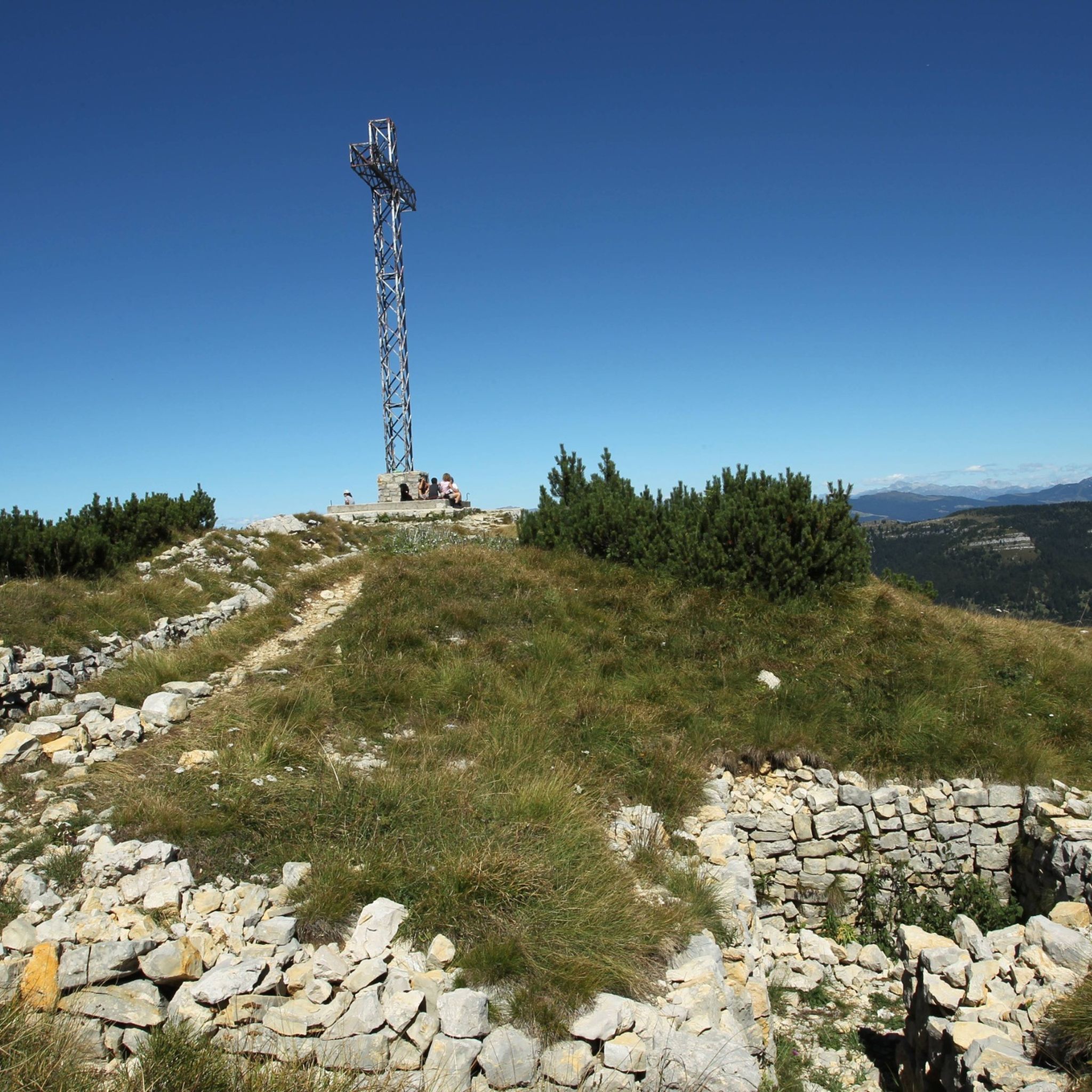
During the First World War, the Selletta Comando was a particularly critical and delicate point of the Italian defense line: its collapse could have allowed the Austro-Hungarian army to break through the Italian defenses. The area was subjected to incessant bombardments by imperial artillery, to the point that it was impossible to keep it stably occupied by troops: the soldiers took shelter in the numerous caves or in the masonry barracks built in more sheltered positions. On the Italian side, just behind the Selletta, was the Sector Command, housed in a large cave reinforced with reinforced concrete. A long trench came from Cima Palon and continued along the ridge towards Corno del Pasubio and Nodo d’Aquila, forming a frontline barrier. The position was also effectively defended by the crossfire of light artillery and machine guns positioned on both the Palon and the Corno.
0
0

When you pass by and observe this place, try to imagine the work done by young people in their early twenties in prohibitive conditions.
0
0

The strategic position of Corno Battisti was the source of bloody battles for its possession during the Great War. To this end, it was equipped with numerous tunnels dug into the rock, with three separate entrances and numerous firing positions. The tunnels can be accessed with great caution, with a torch and preferably a via ferrata kit. Currently (2025), the upper entrance is closed.
0
0

It is very useful to bring a headlamp with you.
0
0

Bring a flashlight and go dark.
0
1


74 meter long tunnel with no exit and 4 final outlets where the artillery was positioned. A light was needed.
0
0
Frequently Asked Questions
What types of caves can I explore around Laghi?
The Laghi region offers a diverse range of subterranean experiences. You can explore natural karst formations with stalactites and stalagmites, such as the Remeron Cave near Varese or the Caves of the Dream of San Pellegrino Terme. Additionally, the area is rich in historical military tunnels and fortifications from World War I, including sites like the Gun Emplacement Tunnel of Monte Cengio and the WW1 Command Gallery.
Are there any family-friendly caves in the Laghi region?
Yes, several caves are suitable for families. The Remeron Cave near Varese offers guided tours and an educational path for younger visitors. The Caves of the Dream of San Pellegrino Terme are also easily accessible, even for children, featuring illuminated galleries and aerial trails to observe unique karst sculptures.
What historical significance do the caves around Laghi hold?
Many caves in the Laghi region played a crucial role during World War I. Sites like the Corno Battisti, known as 'the eye of Pasubio,' were fiercely contested due to their strategic position. The Neutral Elevation Tunnel (Cimone) served as an Italian frontline stronghold, featuring an impressive spiraling tunnel. Other caves, like Cùel Zanzanù, have historical connections to 17th-century bandits.
What natural geological features can I expect to see in the caves?
The Laghi region, particularly the Valle dei Laghi, is characterized by significant fractured and dissolvable limestone, leading to numerous karst areas. In caves like Remeron Cave and the Caves of the Dream of San Pellegrino Terme, you can admire natural concretions, including stalactites, stalagmites, and various other karst sculptures formed over millennia.
Are there guided tours available for any of the caves?
Yes, guided tours are available for some caves. For instance, the Remeron Cave in Comerio offers guided tours that allow visitors to explore up to 50 meters deep, witnessing its natural formations. The Europa Cave in Valle Imagna is also mentioned as a precious underground treasure, often explored with guidance.
What should I wear or bring when visiting caves in Laghi?
Given that many tunnels and natural caves can be dark and damp, especially historical sites like Corno Battisti or the Neutral Elevation Tunnel (Cimone), a flashlight or headlamp is essential. Comfortable, sturdy footwear with good grip is recommended, and layers of clothing are advisable to adapt to cooler underground temperatures.
What outdoor activities can I do near the caves around Laghi?
The area around Laghi offers numerous outdoor activities. You can find challenging running trails, including the 'Road of 52 Tunnels' loop. For cycling enthusiasts, there are gravel biking routes like the 'Generale D'Havet Tunnel' loop. Additionally, the region is popular for mountain hikes, with routes such as the 'Achille Papa Hut' loop.
Are there any lesser-known or 'hidden gem' caves worth exploring?
Beyond the more prominent sites, the Laghi region holds several intriguing, perhaps lesser-known, caves. The Bus of Tacoi in Val Seriana and the Bear's Cave near Como are significant underground destinations in Lombardy that offer unique exploration opportunities for those looking to venture beyond the main attractions.
What is the geological origin of the caves in the Laghi region?
The caves in the Laghi region are primarily a result of the area's geological makeup, characterized by fractured and dissolvable limestone. This landscape was significantly shaped by glaciations that occurred between 80,000 and 12,000 years ago, which carved deep incisions and created features like glacial wells, gorges, and the conditions for karst cave formation. Some, like the Caves of the Dream of San Pellegrino Terme, are of tectonic origin, formed millions of years ago.
What do visitors appreciate most about exploring the caves around Laghi?
Visitors often highlight the unique blend of natural beauty and historical significance. The 'great thrill of discovering an unknown and wonderful world' below the surface, coupled with the tangible history of WWI fortifications and command posts, makes for a compelling experience. The impressive scale of tunnels, like the WWI Fort, and the natural formations are frequently praised.
Most popular attractions around Laghi

Get inspired with the komoot mobile app


Explore more
Extend your search for the best caves by checking out these guides of the top ones around Laghi:
