Top 10 Castles around Gallicano
Best castles around Gallicano are situated in a historically significant region within the Mid Serchio Valley, positioned between the Tuscan-Emilian Apennines and the Apuan Alps. This area is characterized by its strategic hilltop locations and medieval settlements. The landscape offers diverse exploration opportunities, from river valleys to fortified villages.
Best castles around Gallicano
- The most popular castles is Bargiglio Tower, a historical site that served as a crucial defense tower for the Lucca Republic. It offers panoramic views from…
Last updated: July 13, 2026
Castelnuovo di Garfagnana
Highlight • Settlement
Translated by Google •
Tip by

Bargiglio Tower
Highlight • Historical Site
Translated by Google •
Tip by

Sign up now to discover places like this
Get recommendations on the best single tracks, peaks, & plenty of other exciting outdoor places.
Sign up for free
Ariostesca Fortress
Highlight • Castle
Translated by Google •
Tip by

Fortezza di Mont'Alfonso
Highlight • Castle
Translated by Google •
Tip by

Rocca di Camporgiano
Highlight • Castle
Translated by Google •
Tip by

Sign up for free to discover even more castles around Gallicano.
Sign up for free
Already have an account?
Start today with a free account
Your next adventure awaits.
Login or Signup


Tips from the Community

The Rocca Ariostesca is a medieval fortified military structure located in Castelnuovo di Garfagnana. The rocca is the symbol of the city and overlooks the central Piazza Umberto I. It owes its name to having been the seat of the Este government and to having hosted, from 1522 to 1525, as governor of the Garfagnana of the Este, the poet Ludovico Ariosto, who was succeeded in the following century by Fulvio Testi. A small outpost already existed on the site in the 10th century, but it can be said that the original structure of the Rocca as we know it today dates back to the 12th century; modified throughout the 13th century, it was significantly enlarged in the early 14th century by Castruccio Castracani, who determined an enlargement of the entire village walls. It was then Paolo Guinigi who ordered the construction of the imposing tower located in the center of the Rocca, adorned with the civic clock, which over time was also used as a prison. The terrace overlooking the square was erected in 1675, coinciding with the opening of the monumental arch of access to the city center. The internal furnishings have been lost, among which the tapestries that adorned the "Sala dei Principi" (Hall of the Princes) are known. The Rocca was damaged during the Second World War and subsequently restored. As a venue for exhibitions and cultural events, it houses the Archaeological Museum in its halls, which preserves numerous artifacts and testimonies from the prehistoric, Ligurian-Apuan, and Etruscan periods in Garfagnana.
0
0

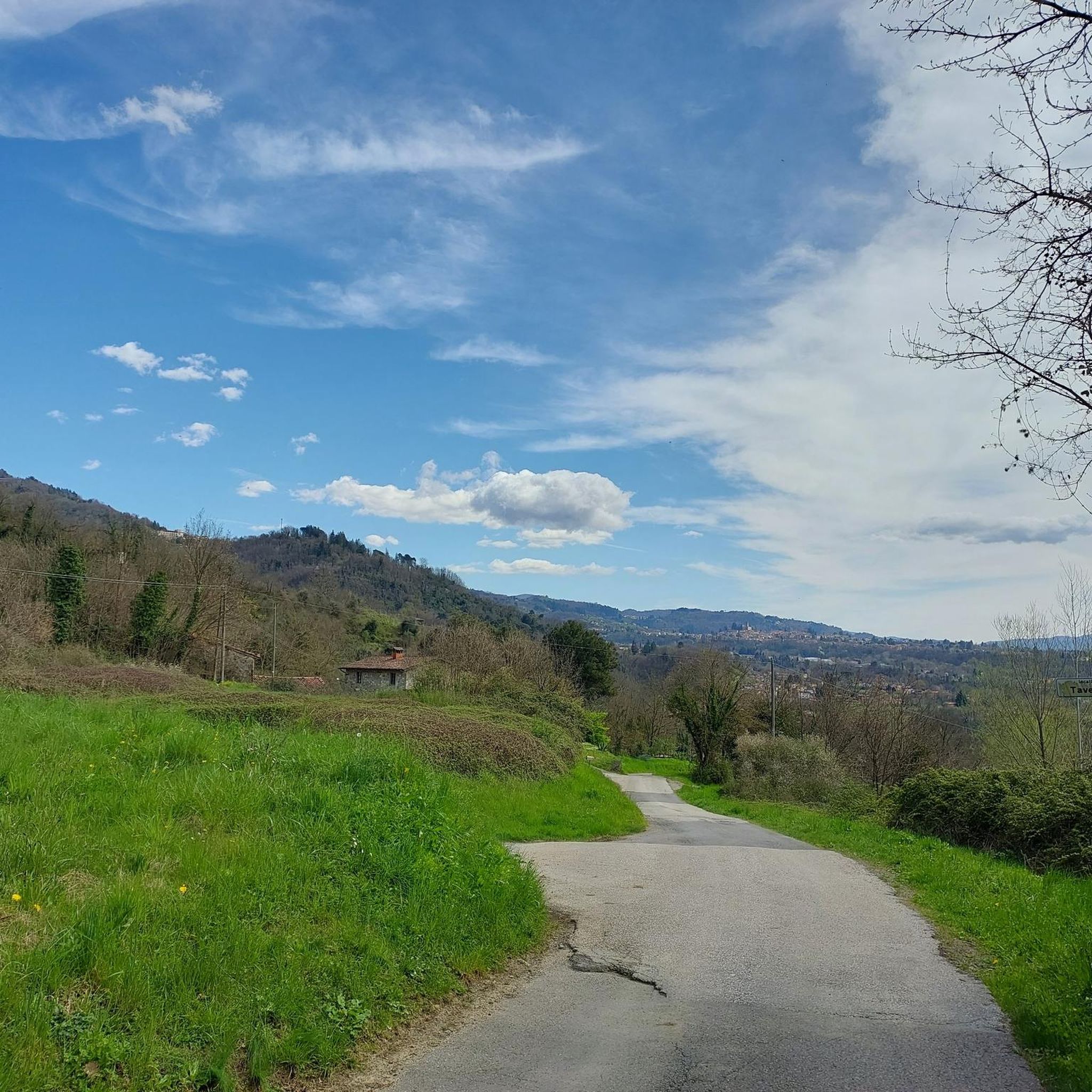
A beautiful hike. Some trails are a bit abandoned and lack signage, but following the trail is fine. From the top of the tower, there would be a beautiful view, but we missed it due to fog and a myriad of flying ants.
0
0

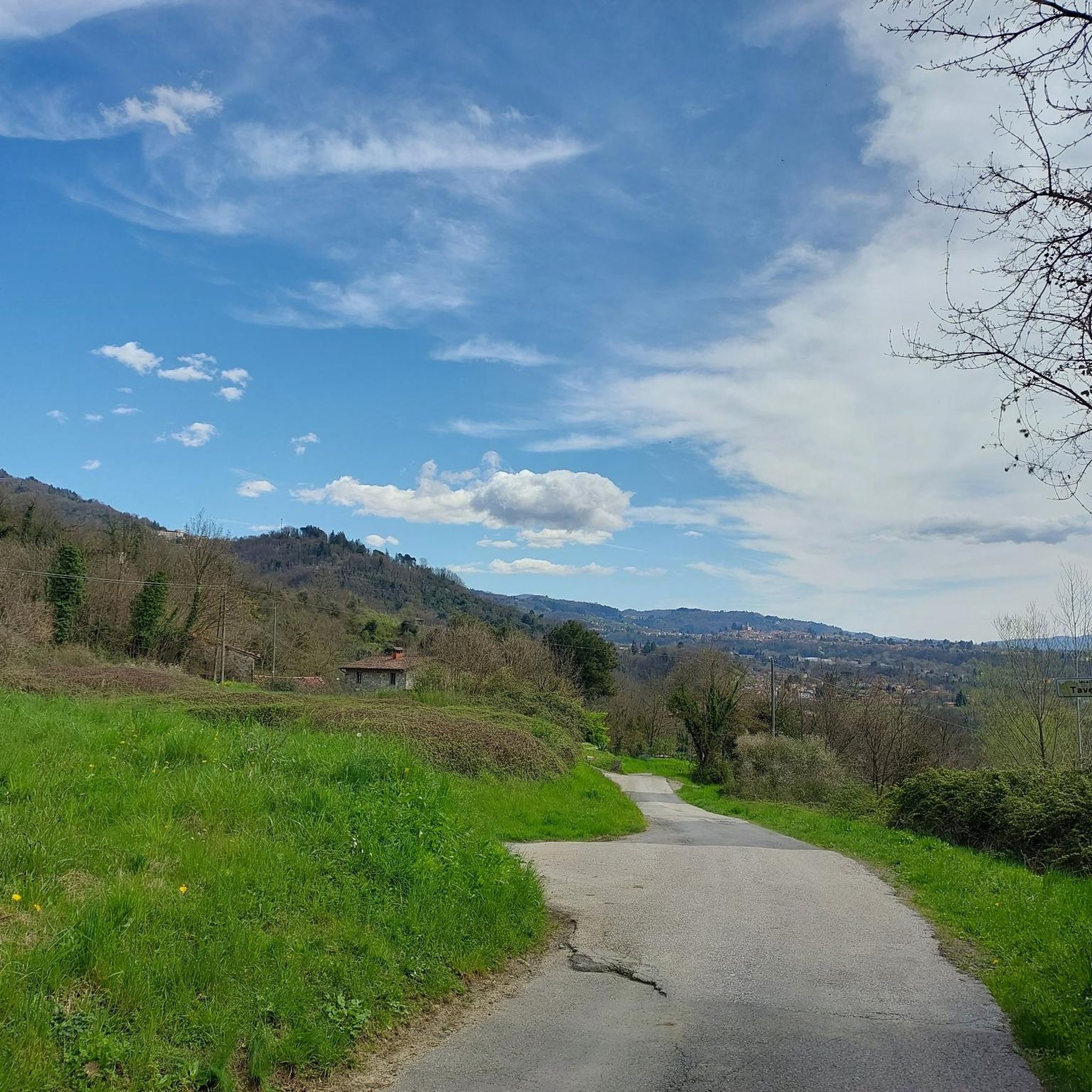
The ruins of the Tower, or Rocca, of Bargiglio stand on the top of the mountain of the same name at 866 meters above sea level at the gates of Garfagnana and the Media Valle del Serchio. Once you arrive at the Tower, it is clear why it has always been called the "Eye of Lucca": the view is panoramic at 360 degrees and offers a perfect view from the peaks of the Apuan Alps, with the Pania di Corfino clearly visible, to the numerous castles and fortresses of Garfagnana, such as the Castiglione Castle and the Mont'Alfonso Fortress. From here you can also dominate the entire Serchio Valley below, from the walls of Barga and Coreglia Antelminelli to Bagni di Lucca, up to the many towns in the Municipality of Pescaglia. And finally, in the distance to the south, the Lucca plain and then the Tyrrhenian coast. The origin of the fortification dates back to an unknown era, probably built by the Suffredinghi, one of the three potentates of Lombard origin who controlled the Serchio Valley who distinguished themselves for their tenacious resistance to the expansionism of the Municipality of Lucca, being bordered by the Este dominions of Garfagnana. It consisted of only one tower, used as an observation and control point of the vast territory, of the road that passed a little further down and of the small community that lived in the farmhouses surrounding the fortification and the ancient Hermitage of S. Bartolomeo.
0
0

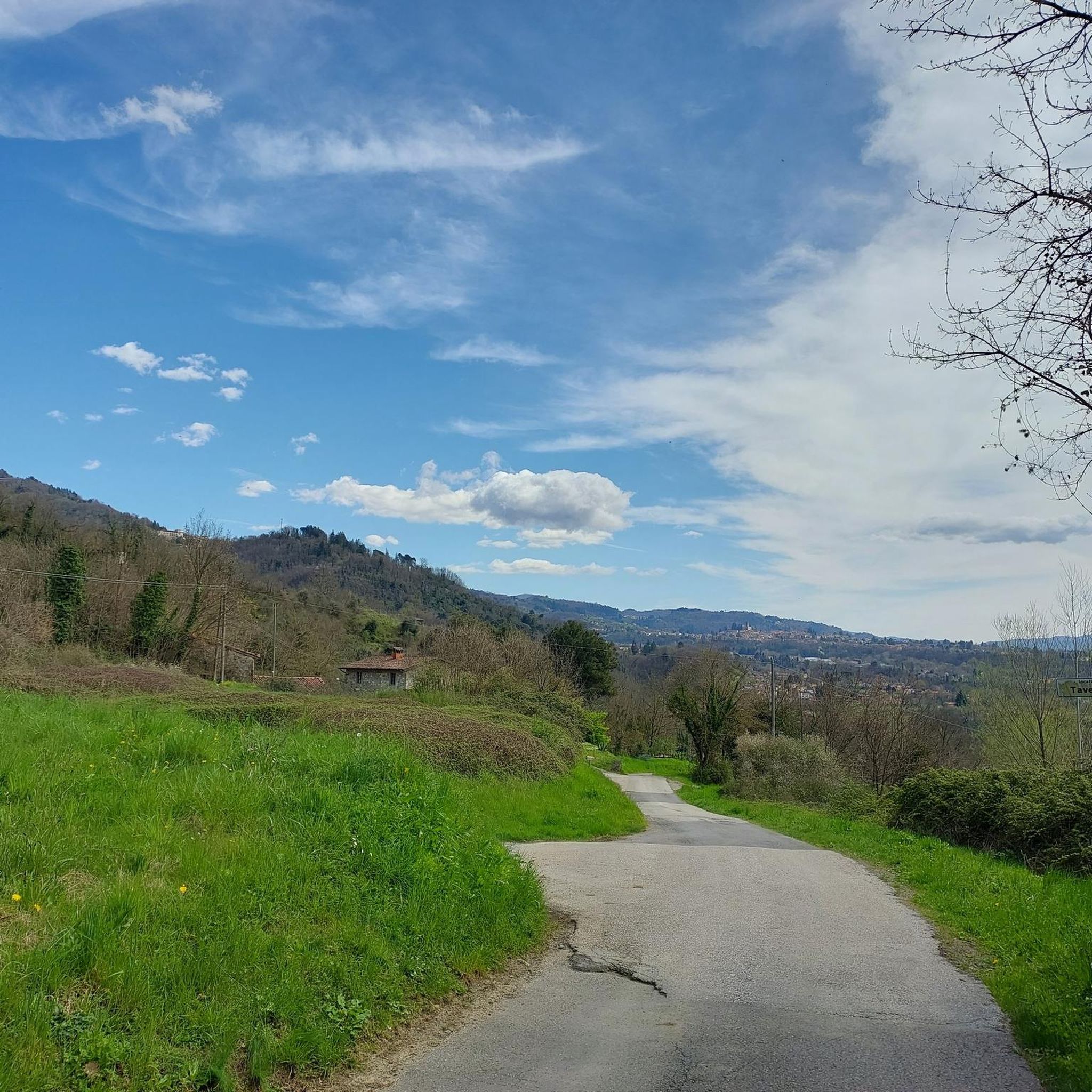
Castelnuovo di Garfagnana - Tea Time Sunday, the locals in the new castle are also enjoying the peace. The apostles Peter and Paul invite us into the shade of their modest prayer house (Parrocchia Abbaziale dei SS. Apostoli Pietro e Paolo). The holy water is bubbling… The tea ceremony is a feast for the eyes when the tea bag changes the water in color and scent. After a short toast we bring comfort to Don Quixote. Seated on his horse Rocinate at Rocca Ariostesca, (old city gate) he continues his battle alone… Wandering further through the empty alleys and streets, students in Teatro Alfieri manage to entertain us with a matinée. Students put their best foot forward while fellow students, with crossed fingers, encourage the main character. Exam passed It was nice to be in the new castle during our tea time. Read more experiences? Click through to https://www.komoot.com/en-gb/collection/2195535/-visit-italy-2023-regio-massa-carrara-lucca
2
0

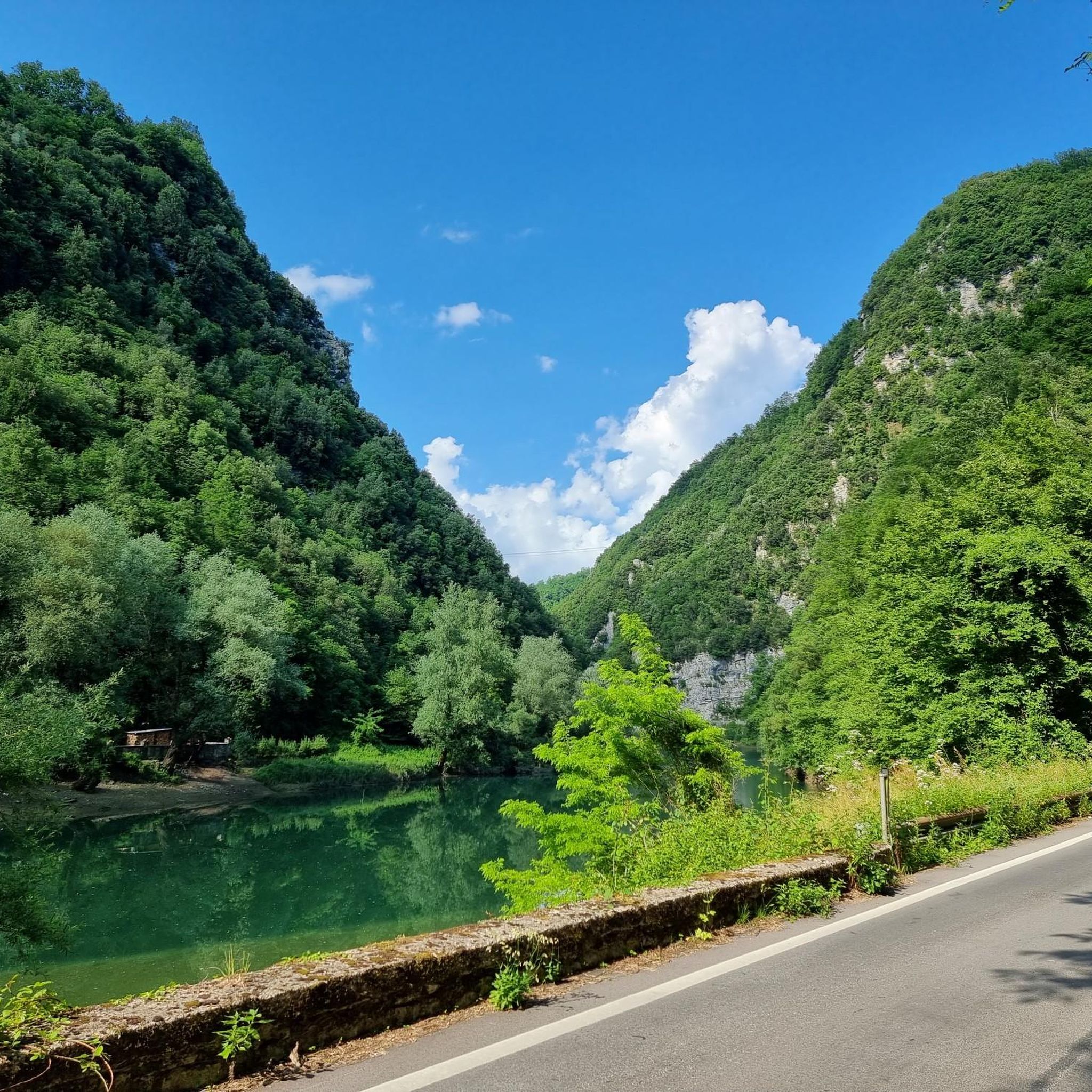
Camporgiano is located on the right bank of the Serchio River, in a verdant valley that divides the mountain ranges of the Apuan Alps and the Apennines. Of Roman origin, the town was contested by numerous families and lordships since the Middle Ages; in 1446 it became part of the dominions of the Este family, until the Unification of Italy. The undisputed “star” of Camporgiano is the Rocca Estense, built on a rocky spur, and whose bulk dominates the main square of the town. At the top of the Rocca there is a sort of hanging garden in which some conifers stand out, giving the fortress an unmistakable character, dialoguing from afar with the fir trees that cover the heights of the surrounding reliefs. The fortress was built for defensive purposes in the 15th century and is an emblematic example of Este military architecture of the 15th century, with its trapezoidal wall and truncated conical corner towers protruding from the plan profile. Once the medieval center of the city, today the fortress does not retain much of its original structure due to the earthquake that struck the entire area in 1920. At the foot of the fortress you can also admire a stone fountain traditionally called the pilon. The main tower of the fortress houses the Civic Collection of Renaissance Ceramics, which brings together ceramics from a period ranging from the early fifteenth century to the second half of the seventeenth century, mostly found in the wells of the fortification during restoration work.
0
0
fantastic views of the mountains and the valley. Ideal picnic area with beautiful grass squares. Very quiet area.
0
0

Fortezza mont'Alfonso: Unusually large fortress of the Este family from the 16th century. From here you have a really fantastic view of the surrounding mountains and plains. Open-air concerts are regularly held here in summer. Entry to the fortress and parking in front of it are free. However, it is also advisable to park the car in Castelnuovo Garfagnana and take the "Ariosto" hiking trail.
0
0
Contains a small museum in which works by contemporary painters and photographers are displayed in temporary exhibitions. Entry is free.
1
1
Frequently Asked Questions
What are some of the most historically significant castles or fortifications to visit near Gallicano?
The region around Gallicano is rich in historical fortifications. Key sites include the Rocca Estense di Trassilico, known for its strategic position and Este family history, and the Walled Village of Perpoli, which features unique double concentric walls. Within Gallicano itself, remnants of the Rocca of Gallicano (Castellaccio) highlight the town's defensive past. Further afield, you can explore the Ariostesca Fortress in Castelnuovo di Garfagnana, a symbolic monument with a long history, and the Rocca di Camporgiano, an emblematic example of 15th-century Este military architecture.
Which castles near Gallicano offer the best panoramic views?
For breathtaking vistas, the Rocca Estense di Trassilico is highly recommended, offering spectacular views of the Tuscan-Emilian Apennines and the Apuan Alps. The Bargiglio Tower, once known as the 'Eye of Lucca,' provides extensive panoramic views from its summit. Additionally, the Fortezza di Mont'Alfonso offers fantastic views of the surrounding mountains and plains.
Are there family-friendly castles or historical sites to visit near Gallicano?
Yes, several sites are suitable for families. The Ariostesca Fortress in Castelnuovo di Garfagnana is considered family-friendly and houses a small museum with temporary exhibitions. The Fortezza di Mont'Alfonso is also a great option for families, offering open spaces and views. Exploring the well-preserved Walled Village of Perpoli can also be an engaging experience for all ages, allowing a glimpse into medieval life.
What kind of outdoor activities can I do near these castles?
The area around Gallicano is ideal for various outdoor activities. You can find numerous routes for gravel biking, mountain biking, and cycling. For example, explore the Gravel biking around Gallicano guide, the MTB Trails around Gallicano, or the Cycling around Gallicano guide for detailed routes. Specific paths like 'Zappello' and 'Chieva' lead to the Rocca Estense di Trassilico, offering scenic hiking opportunities.
What is the best time of year to visit the castles around Gallicano?
The best time to visit is generally during the spring (April-June) and autumn (September-October) months. During these periods, the weather is pleasant for exploring, and the natural scenery is particularly beautiful. Summer (July-August) can be warm, but many sites are at higher elevations, offering cooler temperatures and often host open-air events, such as concerts at the Fortezza di Mont'Alfonso.
Are there hiking trails that lead to or connect these historical sites?
Yes, there are several trails. The Rocca Estense di Trassilico can be reached from Gallicano via fascinating paths like 'Zappello' and 'Chieva.' For a longer adventure, the marked 'Ariosto' route connects Castelnuovo di Garfagnana to the Fortezza di Mont'Alfonso, offering a scenic hike. You can find more hiking and cycling routes in the guides for the Gallicano region.
What unique features can I find at the Walled Village of Perpoli?
The Walled Village of Perpoli is unique for its two concentric circles of walls. The older, medieval wall is found within the highest part of the village, while a more recent Renaissance-era outer wall includes a monumental stone entrance gate. Its concentric urban fabric is indicative of its medieval origins, offering an authentic glimpse into a well-preserved historical settlement.
Is there a museum or exhibitions related to the history of these castles?
Yes, the Ariostesca Fortress in Castelnuovo di Garfagnana houses a small museum with temporary exhibitions, often featuring works by contemporary painters and photographers. Additionally, the main tower of the Rocca di Camporgiano hosts the Civic Collection of Renaissance Ceramics, showcasing pieces from the 15th to 17th centuries found during restoration work.
What is the significance of the Rocca Estense di Trassilico?
The Rocca Estense di Trassilico holds significant historical importance as a vital outpost for the Duchy of Este. It served as a seat for the chief magistrate and controlled the Mid Serchio Valley. Its origins date back to at least the 8th century, with significant development under the Este family, making it a key site for understanding the region's medieval power struggles.
Can I visit the town of Castelnuovo di Garfagnana when exploring castles in the area?
Absolutely. Castelnuovo di Garfagnana is a central hub in the Garfagnana region and is home to the Ariostesca Fortress. The town itself has historical significance, dating back to the High Middle Ages. It also hosts a monthly Farmer's Market where you can taste local specialties, making it a great stop for both history and local culture.
What should I know about parking when visiting castles near Gallicano?
Parking availability varies by location. For the Fortezza di Mont'Alfonso, parking in front of the fortress is free. Alternatively, you can park in Castelnuovo di Garfagnana and take the 'Ariosto' hiking trail to reach it. For other smaller villages like Trassilico and Perpoli, parking might be available at the village entrance, requiring a short walk to the historical sites.
Are there any castles that are particularly well-preserved or offer a strong sense of medieval atmosphere?
The Walled Village of Perpoli is an excellent example of a well-preserved medieval borgo. Its concentric layout and double wall system provide an authentic atmosphere, allowing visitors to experience the ambiance of a historical settlement. While not a complete standing castle, its structure offers a deep dive into medieval fortification.
Most popular routes around Gallicano
Most popular attractions around Gallicano

Get inspired with the komoot mobile app


Explore more
Looking for the best castles somewhere else? Discover other guides around Gallicano:
