Top 19 Caves around Rovereto
Caves around Rovereto offer a diverse range of underground experiences, from natural karstic systems to historical military tunnels. The region, situated near the Valsugana and Lake Garda, features geological formations shaped by water erosion and glaciation. These sites provide insights into both natural processes and significant historical events. The landscape around Rovereto is characterized by mountains and valleys, contributing to the formation of various cave types.
Best caves around Rovereto
- The most popular caves is The Statuary Stone Quarries of…
Last updated: October 3, 2026
Street of Heroes
Highlight (Segment) • Trail
Translated by Google •
Tip by

The Statuary Stone Quarries of Vastrè
Highlight • Cave
Translated by Google •
Tip by

Sign up now to discover places like this
Get recommendations on the best single tracks, peaks, & plenty of other exciting outdoor places.
Corno Battisti
Highlight • Summit
Showing Translation
Tip by

Command Saddle
Highlight • Historical Site
Translated by Google •
Tip by

Tunnel of the Riflemen
Highlight • Historical Site
Translated by Google •
Tip by

Sign up for free to discover even more caves around Rovereto.
Already have an account?
Start today with a free account
Your next adventure awaits.
Popular around Rovereto

NorthCape4000 – 12 days from Lake Garda to the North Cape
Adige Valley Cycle Path – Through South Tyrol
The Path of Peace – journey into Trentino's history
Florence to Bolzano – from the heart of Italy to the foot of the Dolomites
Road Cycling Routes around Rovereto
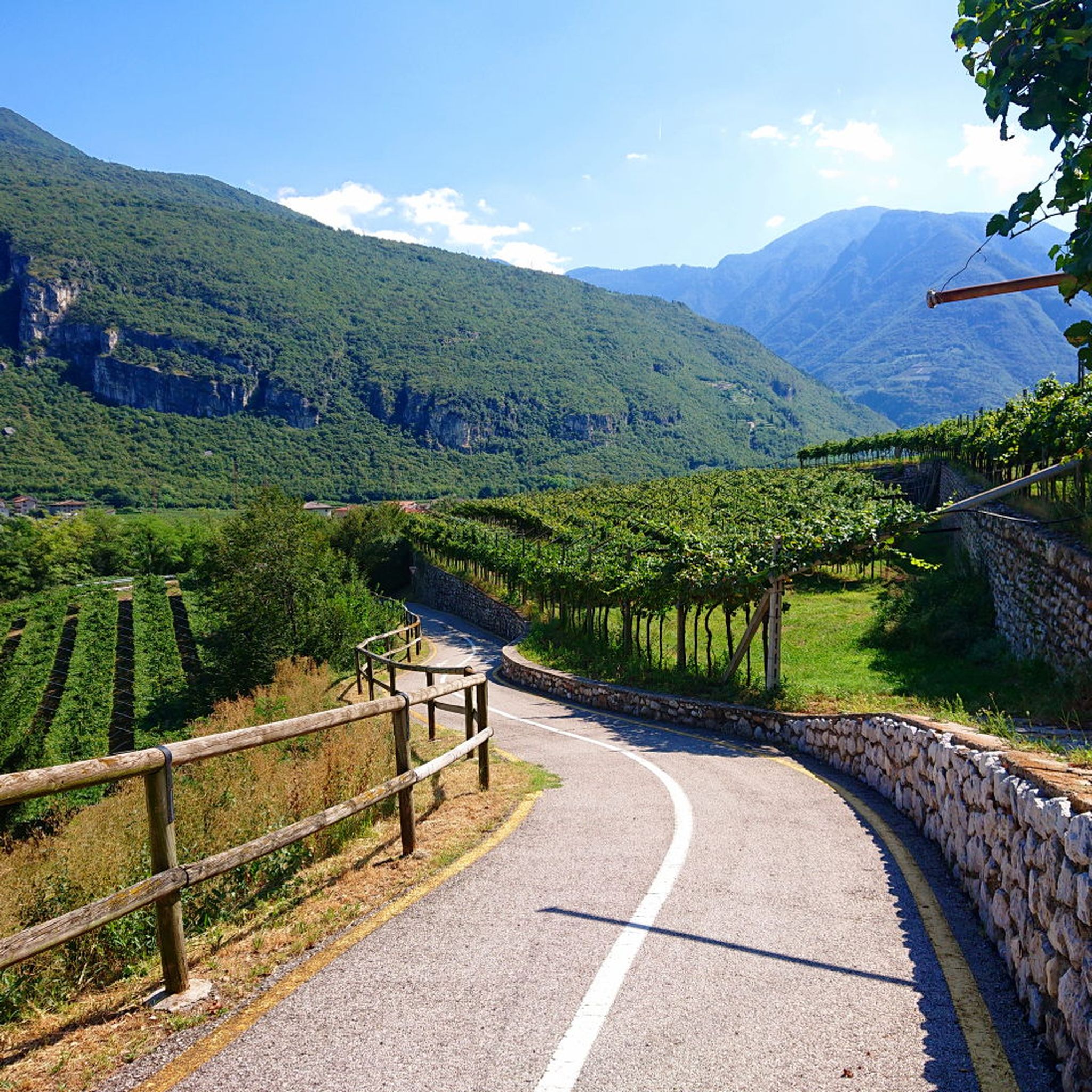
Cycling around Rovereto
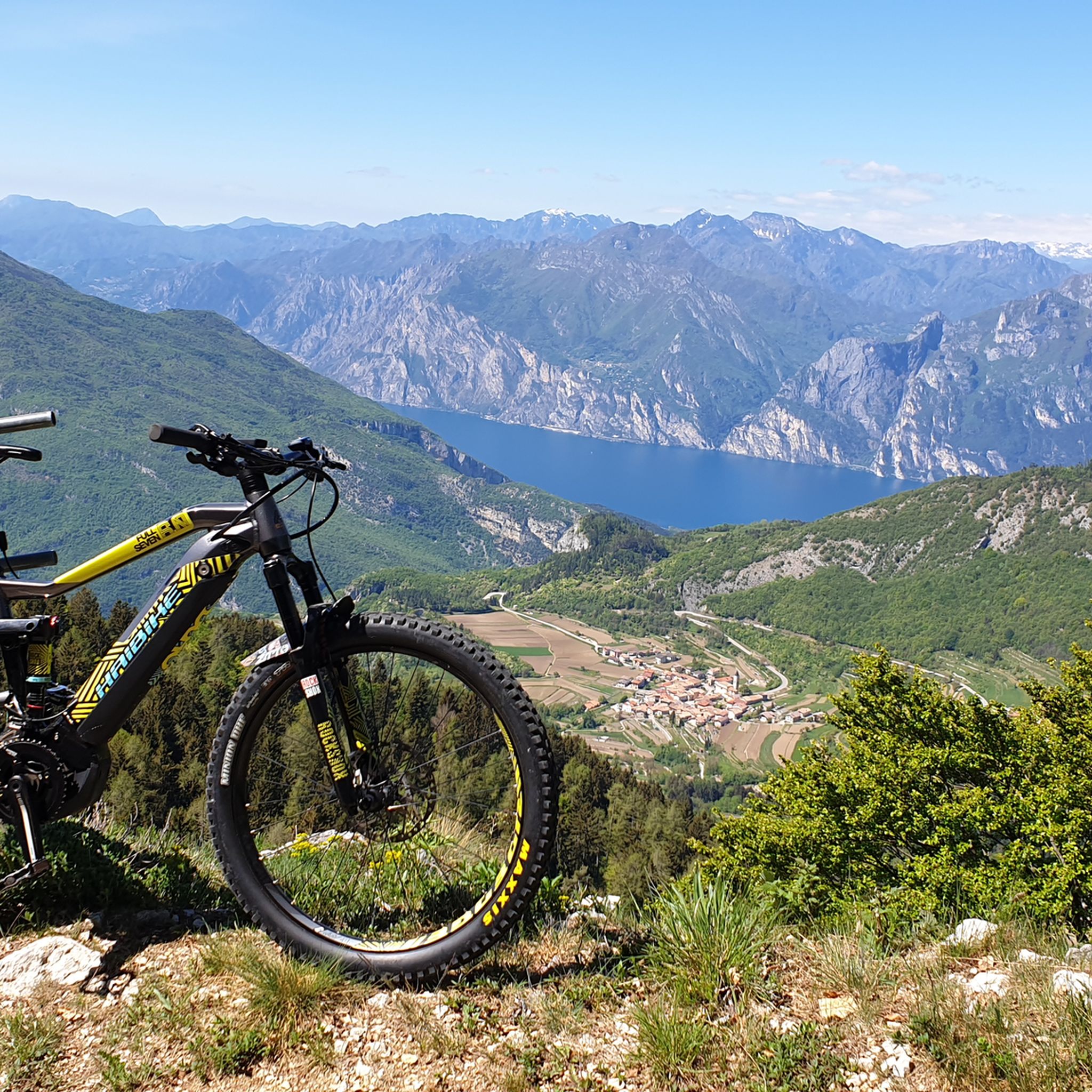
MTB Trails around Rovereto
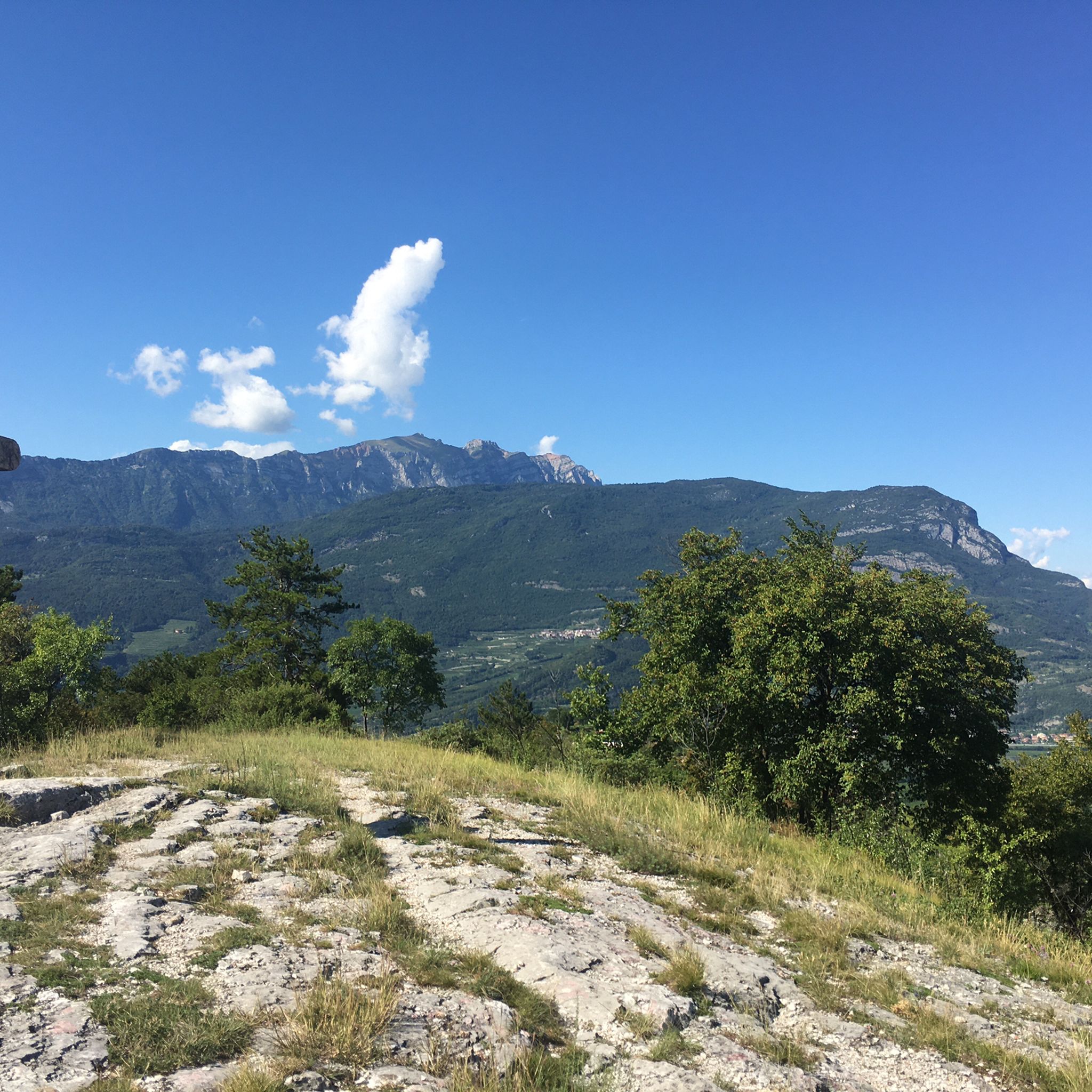
Hiking around Rovereto
Running Trails around Rovereto
Gravel biking around Rovereto
Other adventures around Rovereto


Tips from the Community

During the First World War, the Selletta Comando was a particularly critical and delicate point of the Italian defense line: its collapse could have allowed the Austro-Hungarian army to break through the Italian defenses. The area was subjected to incessant bombardments by imperial artillery, to the point that it was impossible to keep it stably occupied by troops: the soldiers took shelter in the numerous caves or in the masonry barracks built in more sheltered positions. On the Italian side, just behind the Selletta, was the Sector Command, housed in a large cave reinforced with reinforced concrete. A long trench came from Cima Palon and continued along the ridge towards Corno del Pasubio and Nodo d’Aquila, forming a frontline barrier. The position was also effectively defended by the crossfire of light artillery and machine guns positioned on both the Palon and the Corno.
0
0

The strategic position of Corno Battisti was the source of bloody battles for its possession during the Great War. To this end, it was equipped with numerous tunnels dug into the rock, with three separate entrances and numerous firing positions. The tunnels can be accessed with great caution, with a torch and preferably a via ferrata kit. Currently (2025), the upper entrance is closed.
0
0

Il Corno Battisti, an isolated rocky spur of the Pasubio Group, sheer above Vallarsa, offers a spectacular panorama of the long valley and the surrounding mountains: Pasubio, Sengio Alto, Carega, Monte Zugna. Precisely because of its strategic position, it was fiercely contested during the First World War: the possibility of controlling all troop and supply movements in the valley from above made the Corno a crucial point to occupy and defend at all costs... it was indeed nicknamed 'the eye of the Pasubio' or 'the spy of Vallarsa'. At the beginning of the conflict, it was a garrison of the Italian army, but with the Strafexpedition in 1916, it was occupied by the Austro-Hungarians. The Italians, unable to recapture it, dug a mine gallery from below to pierce the Corno and blow up the summit; the imperialists in turn dug a counter-mine gallery from above. Everything was ready for detonation, but a daring raid by a few commandos allowed the summit to be recaptured by the Royal Army, which held it until the end of the war. In 1916, near the summit, the Austro-Hungarians captured the irredentists Cesare Battisti and Fabio Filzi, who were immediately taken to Trento and hanged at the Castello del Buonconsiglio as traitors: for this reason, the summit, known at the time as 'Corno della Vallarsa', was renamed 'Corno Battisti' after the war. The Austro-Hungarian observatory survives on the summit. The bowels of the Corno, on the other hand, are excavated by a surprising labyrinth of dark and damp tunnels with steep steps: they are passable, but to reach them from the summit, one must go around the spur following a narrow, steep path; furthermore, to complete the loop of the tunnels, one must face a short, equipped and exposed section, and descend a metal ladder of about fifteen meters which is by no means trivial (EE). https://it.wikipedia.org/wiki/Monte_Corno_Battisti https://www.esercito.difesa.it/storia/pagine/monte-corno.aspx
3
0

The Road of Heroes owes its name to the twelve plaques affixed along it in honor of the twelve gold medals for military valor who fought on Pasubio during the Great War. The twelve people remembered are: Lieutenant Cesare Battisti, Captain Aldo Beltricco, Bersagliere Torquato Cardelli, Lieutenant Umberto Cerboni, Major Felice Chiarle, Second Lieutenant Fabio Filzi, Colonel Antonio Gioppi, Second Lieutenant Giordano Ottolini, Major Mario Rossani , Colonel Eduardo Suarez, Second Lieutenant Ferdinando Urli, Lieutenant Carlo Sabatini.
1
0
A stretch of road on the Pasubio massif, in the Vicenza Pre-Alps, the Strada degli Eroi was built following the First World War to provide the summit area of the mountain with a safe access route. The actual Road of Heroes is the approximately two kilometer long stretch that connects the Giuseppe d'Havet Gallery to the Achille Papa refuge: this stretch is in a certain sense the appetizer.
1
0

Located along the itinerary of the 5 cemeteries, starting from Camporovere
0
0

Oolite stone quarries dug in the Vastrè hills. The extracted stone, called "statuary stone", was used above all for portals, fountains and statues as it is easily workable. The stone extracted from the quarries was used to create statues that adorn the Taro bridge in Parma, the fountain in Piazza Duomo in Trento, the statues that adorn the Prato della Valle in Padua, some statues found in the Collegiate Church of Arco and the statue of Moses located in the square of Arco. I advise you to enter the quarries and tackle the route inside. The location is truly very suggestive and I would say unique. The extraction planes are inclined about 30° towards the west and in the middle there are rock columns which were used to prevent the roof from collapsing.
1
1
Frequently Asked Questions
What types of underground sites can I explore near Rovereto?
Near Rovereto, you can explore a diverse range of underground sites, including natural karstic caves, historical military tunnels from World War I, and ancient stone quarries. Each offers a unique experience, from geological wonders to significant historical landmarks.
Which caves offer a genuine speleological experience?
For a genuine caving experience, Calgeron Cave near Grigno offers extensive galleries, ponds, and impressive concretions. The initial sections are relatively accessible. For expert speleologists, Bigonda Cave is one of Italy's largest and most complex, but requires expert guidance due to its challenging nature and water levels.
Are there historical caves or tunnels related to World War I near Rovereto?
Yes, the region has several significant historical tunnels. The Tunnel of the Riflemen is an Austro-Hungarian defensive tunnel from the Great War. Another poignant site is the Damiano Chiesa Cavern in Rovereto, a fortified tunnel system commemorating Damiano Chiesa. Additionally, Corno Battisti features a labyrinth of dark, damp tunnels from the First World War, fiercely contested during the conflict.
Are there family-friendly underground attractions near Rovereto?
The Varone Waterfall Cave Park near Lake Garda is a visually stunning and accessible natural attraction suitable for all ages. It features a powerful waterfall plunging into a gorge, with well-maintained paths and observation points. While not a traditional cave, it offers an impressive underground-like experience.
What kind of geological formations can be found in the caves around Rovereto?
The natural caves in the region, such as Calgeron Cave, are rich in karstic formations including stalactites, stalagmites, calcite basins, and underground rivers and lakes. The Old Quarries also feature interesting rock formations sculpted by glaciers and water.
Do I need special permits or guides to explore caves near Rovereto?
For complex caves like Bigonda Cave, expert speleologists and guides are essential due to its challenging conditions and potential for flooding. While initial sections of Calgeron Cave are more accessible, deeper exploration often requires experience. Historical tunnels like Damiano Chiesa Cavern and the Tunnel of the Riflemen are generally open for self-guided exploration, though some may have specific access requirements or closures.
What is the best time of year to visit the caves around Rovereto?
The best time to visit depends on the cave. Natural karstic caves like Bigonda are often best explored during the winter season when water levels are lower. The Varone Waterfall Cave Park is generally accessible year-round, offering a spectacular view regardless of season. Historical tunnels and quarries are also typically accessible throughout the year, though weather conditions can impact the approach trails.
Are there any unique or less-known underground sites near Rovereto?
Beyond the well-known sites, The Statuary Stone Quarries of Vastrè offer a unique experience. These oolite stone quarries, dug into the Vastrè hills, were used to extract stone for famous statues and architectural elements. They also served as protection during wartime, making them a truly suggestive and unique location to explore.
What outdoor activities can I do near these caves?
The Rovereto area offers various outdoor activities. You can find numerous mountain hikes, including routes with scenic views and challenging ascents. There are also running trails and gravel biking routes that allow you to explore the diverse landscape around Rovereto, often passing near or offering views of the cave areas.
What should I wear for cave exploration?
For most cave explorations, especially natural ones, it's advisable to wear sturdy, waterproof footwear and layered clothing as temperatures inside caves are consistently cool and damp. A headlamp or flashlight is essential, particularly for historical tunnels like Corno Battisti, which can be completely dark. For more challenging speleological activities, specialized caving gear is required.
Are any caves near Rovereto dog-friendly?
While many outdoor trails leading to cave entrances might be dog-friendly, the caves themselves, especially natural ones, are generally not suitable for dogs due to dark, damp, and potentially confined spaces, as well as the presence of sensitive ecosystems. Historical tunnels might allow dogs on a leash, but it's best to check specific site regulations beforehand. The Varone Waterfall Cave Park typically allows dogs on leash in the park area, but access to the waterfall observation points might be restricted.
Most popular routes around Rovereto
Most popular attractions around Rovereto

Get inspired with the komoot mobile app


Explore more
Extend your search for the best caves by checking out these guides of the top ones around Rovereto:
