Top 7 Caves around Sutri
Best caves around Sutri are primarily ancient rock-cut structures carved into tufa cliffs, offering insights into Etruscan, Roman, and early Christian history. These sites are largely encompassed within the Parco Regionale Antichissima Sutri. The region is known for its unique archaeological landscape, featuring tombs, temples, and other subterranean dwellings.
Best caves around Sutri
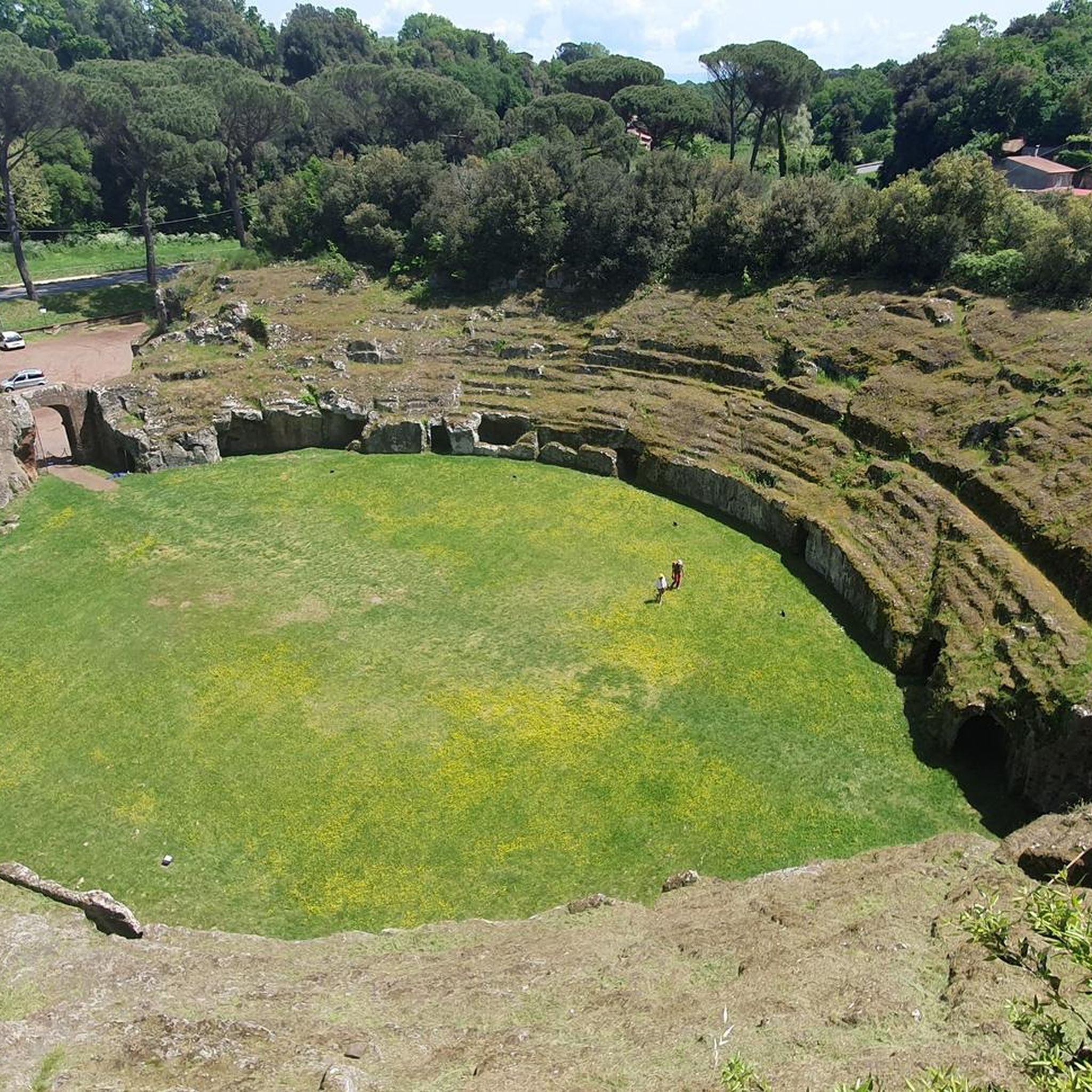
- The most popular caves is Sutri Etruscan Necropolis, a historical site with over 60 rock-cut tombs. These tombs are carved into the tufa cliff and date…
Last updated: May 18, 2026
Devil’s Well Cave (Monte Venere)
Highlight • Cave
It is a mountain of volcanic origin that reaches a height of 835 m asl.
Translated by Google •
Tip by

Church of Madonna del Parto (Mithraeum of Sutri)
Highlight • Religious Site
Translated by Google •
Tip by

Sign up now to discover places like this
Get recommendations on the best single tracks, peaks, & plenty of other exciting outdoor places.
Sign up for free
Tomb of the Stag (Tomba del Cervo)
Highlight • Historical Site
Translated by Google •
Tip by

Sutri Etruscan Necropolis
Highlight • Historical Site
They are a testimony of the past and it is possible to visit them following a well-signposted archaeological route
Translated by Google •
Tip by

The Cavoni of Nepi
Highlight • Gorge
Translated by Google •
Tip by
Sign up for free to discover even more caves around Sutri.
Sign up for free
Already have an account?
Start today with a free account
Your next adventure awaits.
Login or Signup



Tips from the Community

Following this path, just before reaching the devil's well, it is not clear where to go, the path disappears and also the white and red signs. We had to go a bit by intuition and take a very steep climb in the woods to get there. Once we reach the well, the path continues easily until the end.
0
1

Be careful not to lean out!
0
0

The beautiful Sutri
0
0

The Chiesa della Madonna del Parto in Sutri is a unique church carved entirely out of tuff stone. Dating from the 13th-14th centuries, this church was originally a Mithraeum, a temple dedicated to the Eastern god Mithras, from the 3rd century. The church has a square vestibule with frescoes depicting the Madonna and Saints, San Cristoforo and events related to the life of San Michele del Gargano. The main space is divided by tuff pillars into three naves. The church is now an important part of the urban park of the ancient city of Sutri.
2
0


it was born as a temple and then as a church
4
0

Ancient Church. Was previously a temple of the Mithraic cult. You can even see the gutter through which the blood of the bull victims drained
2
0

Please don't enter into the cavity "Pozzo del Diavolo". It's a shelter for bats and people inside could create noise that disturbes colonies. It is also dangerous to enter: we must report several accidents occourred in this point. Download the official guide to the Vico Lake Nature Reserve at http://www.parchilazio.it/vico-pubblicazioni-413-guida_ufficiale_della_riserva_naturale_lago_di_vico
2
0
Frequently Asked Questions
What kind of historical significance do the caves around Sutri hold?
The caves and rock-cut structures in Sutri are primarily ancient sites carved into tufa cliffs, offering deep insights into Etruscan, Roman, and early Christian history. They include extensive necropolises, ancient temples, and other subterranean dwellings, showcasing continuous human presence and cultural layering over centuries.
Are there any family-friendly caves or sites to visit in Sutri?
Yes, the Sutri Etruscan Necropolis, with its numerous rock-cut tombs, and the Church of Madonna del Parto (Mithraeum of Sutri) offer engaging historical exploration for families. The Parco Regionale Antichissima Sutri, which encompasses many of these sites, provides an accessible environment for discovery.
What are the visiting hours or entrance fees for the main cave attractions like the Mithraeum?
The Church of Madonna del Parto (Mithraeum of Sutri) is part of the Sutri Archaeological Park and has specific visiting hours and may require guided tours. The Etruscan Necropolis is also within this park. It is advisable to check current opening times and any associated entrance fees directly with the park administration before your visit.
How can I get to the caves around Sutri using public transport?
Sutri is accessible by public transport, typically via bus services connecting it to larger towns and train stations in the Lazio region. Once in Sutri, the main archaeological park and its cave sites are often within walking distance or a short local bus ride from the town center. Specific routes and schedules should be checked with local transport providers.
Are there hiking trails associated with the caves or in the surrounding area?
Yes, the caves are often integrated into hiking routes within the Parco Regionale Antichissima Sutri. For broader outdoor activities, you can explore various routes around Sutri. For example, there are running trails like the 'Historic Center of Sutri – Sutri Archaeological Park loop' and cycling routes such as the 'Hazelnut Trail – Gravel Road Near Rome loop'. You can find more details on these activities in the Running Trails around Sutri and Cycling around Sutri guides.
What is the best time of year to visit the caves in Sutri?
The spring and autumn months (April-May and September-October) are generally considered the best times to visit the caves and archaeological sites in Sutri. The weather is milder and more pleasant for exploring the outdoor areas of the park, avoiding the peak heat of summer and the cooler, potentially wetter winter months.
Can I bring my dog to the archaeological park or cave sites?
Policies regarding dogs in the Sutri Archaeological Park and specific cave sites can vary. While some outdoor areas might be dog-friendly, access to indoor or sensitive archaeological structures like the Mithraeum may be restricted. It is recommended to check the specific dog policy of the Parco Regionale Antichissima Sutri before your visit.
What unique features can I expect to see at the Church of Madonna del Parto (Mithraeum)?
The Church of Madonna del Parto is unique because it was originally a Mithraic temple from the 1st or 2nd century AD, later converted into a Christian church. You can see frescoes from various historical periods, a central aisle, side-benches, and a niche that once housed a Mithras relief. It exemplifies the layering of different religions and cultures over centuries.
What is the Etruscan Necropolis like, and what makes it significant?
The Sutri Etruscan Necropolis is an impressive collection of over 60 rock-cut tombs carved into the tufa cliff, dating from the 4th century BC to the 1st century AD. Its significance lies in the sheer number and variety of tombs, showcasing Etruscan and Roman funerary architecture, burial customs, and artistic expressions. Some tombs still retain traces of painted decorations and inscriptions.
Are there any other notable rock-cut sites or caves near Sutri besides the main ones?
Beyond the well-known sites, the region features other fascinating rock-cut structures. For instance, the Tomb of the Stag (Tomba del Cervo), located within the necropolis of San Giuliano, is notable for its monumental dimensions and a low relief depicting a deer attacked by a wolf. Another example is The Cavoni of Nepi, impressive hand-carved rock paths that are ancient communication routes of the Falisci civilization.
What is the story behind Grotta di Orlando (Orlando's Cave)?
The Grotta di Orlando is an ancient Etruscan tomb carved into the tufa rock, but it's famous for a local legend. The story claims it was the birthplace of the epic hero Orlando, son of Charlemagne's sister Berta, who gave birth there while on her way to Rome. This blend of ancient use and medieval folklore makes it a site of cultural interest, located along the historic Via Francigena.
What should I wear when exploring the caves and archaeological sites in Sutri?
When exploring the caves and archaeological sites in Sutri, wear comfortable walking shoes suitable for uneven terrain, as many sites involve walking on ancient paths or within natural park settings. Light layers are advisable, as temperatures inside caves can be cooler than outside, even in warmer months. A hat and sunscreen are also recommended for outdoor exploration.
Most popular attractions around Sutri

Get inspired with the komoot mobile app


Explore more
Extend your search for the best caves by checking out these guides of the top ones around Sutri:
