Top 7 Gorges around Santeramo In Colle
Best canyons around Santeramo In Colle are primarily found within the Alta Murgia National Park, a region characterized by its dramatic "gravine" or ravines. These geological formations are carved into limestone bedrock, offering a blend of natural features and historical significance. The area provides access to unique ecosystems and ancient settlements. Visitors to Santeramo In Colle are well-positioned to explore several notable gravine in the surrounding area.
Best canyons around Santeramo In Colle
- The most popular canyons is Suspension bridge…
Last updated: June 29, 2026
Suspension bridge over the Gravina
Highlight • Bridge
Translated by Google •
Tip by

Sentiero 406 Trailhead (Entrance to the Matera Suspension Bridge)
Highlight • Trail
Translated by Google •
Tip by

Sign up now to discover places like this
Get recommendations on the best single tracks, peaks, & plenty of other exciting outdoor places.
Sign up for free
Path Through the Gravina Gorge
Highlight (Segment) • Gorge
Translated by Google •
Tip by

Viewpoint over the Gravina and the Matera Murgia
Highlight • Viewpoint
Translated by Google •
Tip by

Curtomartino Cave
Highlight • Cave
Translated by Google •
Tip by

Sign up for free to discover even more gorges around Santeramo In Colle.
Sign up for free
Already have an account?
Start today with a free account
Your next adventure awaits.
Login or Signup
Popular around Santeramo In Colle

Other adventures around Santeramo In Colle

Tips from the Community

I wasn't expecting a grotto here. But it was closed today.
1
0

Be sure to walk down through the valley
0
0
Worth entering, good footwear is recommended due to loose sand/stone
0
0

From here you go to the caves. A bit strenuous but worth it👍 From the other side you have the complete panorama of Matera👍 And the caves are a landscape worth seeing anyway 💪
0
0
From here we go to the caves of Matera
0
0

Impressive view of the ravine near the church of San Pietro Caveoso.
1
0

Impervious and steep path, better to have suitable shoes to get to the bridge.
0
0
Frequently Asked Questions
What are some of the most impressive gravine to visit near Santeramo in Colle?
The region around Santeramo in Colle, part of the Alta Murgia National Park, is rich in dramatic gravine (canyons). Notable ones include Gravina in Puglia, known for its Romanesque Cathedral and rock-hewn churches; Gravina di Matera, famous for the ancient Sassi cave dwellings and a Tibetan bridge; Gravina di Ginosa, with its unique rock formations and troglodyte villages; and Gravina di Petruscio near Mottola, featuring ancient cave-dwelling civilizations.
What unique natural features can I expect to see in the canyons around Santeramo in Colle?
The gravine are characterized by deep incisions carved into limestone bedrock, creating dramatic landscapes. You'll find impressive rock formations, ancient riverbeds, and unique ecosystems. Many gravine also feature karst cavities, such as the Curtomartino Cave, a karst cavity formed approximately 2 million years ago.
Are there historical or archaeological sites within the gravine near Santeramo in Colle?
Yes, the gravine are rich in history. Many feature ancient rock-hewn churches, cave dwellings, and troglodytic settlements dating back centuries. For example, Gravina in Puglia has an 'underground city' and the Botromagno Archaeological Park, while Matera's Sassi are ancient cave dwellings. The Gravina di Petruscio also showcases traces of ancient cave-dwelling civilizations.
What is the best time of year to visit the gravine around Santeramo in Colle?
The best time to visit is typically during spring (April to June) and autumn (September to October). During these seasons, the weather is milder and more pleasant for exploring and hiking. Summers can be very hot, especially in the central hours, while winters can be cooler and potentially rainy.
Are there family-friendly options for exploring the canyons?
Many areas within the gravine offer accessible paths and viewpoints suitable for families. While some trails can be steep, there are often easier sections or panoramic spots that don't require extensive hiking. Exploring the historical towns built along the gravine, like Gravina in Puglia or Matera, also provides engaging experiences for all ages.
What kind of trails are available for hiking in the gravine?
Hiking trails range from easy strolls to more challenging routes with steep sections. For instance, the Sentiero 406 Trailhead leads to the suspension bridge over the Gravina, requiring trekking shoes and some sure-footedness due to steep downhill and uphill parts. The Path Through the Gravina Gorge offers an interesting, sometimes steep, route between Matera and Murgecchia.
Are the gravine accessible by public transport from Santeramo in Colle?
Yes, some of the major gravine are accessible by public transport. For example, Gravina in Puglia is directly connected to Santeramo in Colle by bus, with travel times around 35 minutes. Matera, bordering Santeramo in Colle, is also easily reachable, making it a highly recommended day trip.
What should I wear or bring when exploring the gravine?
Comfortable, sturdy footwear is highly recommended, especially if you plan to hike. Trekking shoes are ideal for trails with uneven or steep terrain. During warmer months, bring plenty of water, sun protection (hat, sunscreen), and light clothing. In cooler seasons, layers are advisable. Always check the weather forecast before your visit.
What other outdoor activities can I do near the gravine around Santeramo in Colle?
Beyond exploring the gravine themselves, the area offers various outdoor activities. You can find numerous routes for gravel biking, cycling, and mountain biking. These routes often traverse the Alta Murgia National Park, providing opportunities to experience the region's diverse landscapes.
Where can I find the best panoramic views of the gravine?
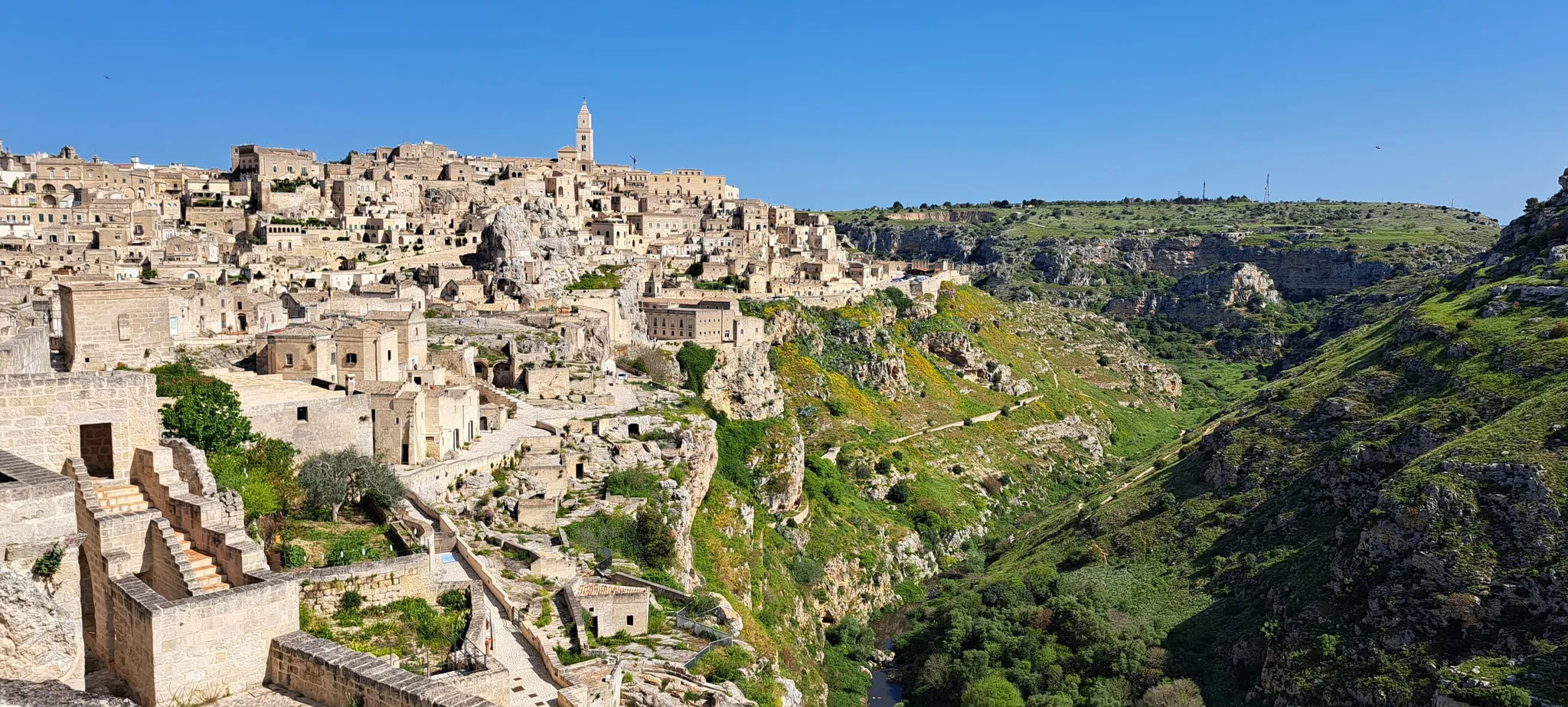
For breathtaking panoramic views, visit the Viewpoint over the Gravina and the Matera Murgia, which offers stunning vistas of the Gravina and the Murgia Materana, with the church of San Pietro in Caveoso visible nearby. The Suspension bridge over the Gravina also provides a unique perspective over the Gravina river and Matera.
Can I explore caves in the canyons near Santeramo in Colle?
Yes, the region is known for its karst geology, meaning there are many caves to explore. The Curtomartino Cave near Acquaviva delle Fonti is a significant karst cavity. Additionally, many gravine feature ancient rock-cut churches and cave dwellings that were historically used for shelter and worship, offering a unique glimpse into the past.
Most popular routes around Santeramo In Colle
Most popular attractions around Santeramo In Colle

Get inspired with the komoot mobile app


Explore more
Already discovered everything in this region? See additional gorges around Santeramo In Colle for your next adventure:
