Top 11 Castles around Parco regionale Monti Picentini
Best castles around Parco regionale Monti Picentini are found in the surrounding provinces of Avellino and Salerno, offering historical insights into the region. While the park is known for its natural landscapes, these nearby castles provide a glimpse into medieval and Renaissance architecture. The area features a variety of historical sites, from ancient fortified settlements to imposing castles with rich pasts. Exploring these structures complements the natural beauty of the Monti Picentini.
Best castles around Parco regionale Monti Picentini
- The…
Last updated: June 29, 2026
Olevano Castle
Highlight • Castle
Translated by Google •
Tip by

Monumental Complex of the Mount (Church, Monastery, and Castle of Montella)
Highlight • Historical Site
Translated by Google •
Tip by
Sign up now to discover places like this
Get recommendations on the best single tracks, peaks, & plenty of other exciting outdoor places.
Sign up for free
Trail 142 – Monastery Trail
Highlight • Trail
Translated by Google •
Tip by
Ruins of the Castle of Senerchia
Highlight • Castle
Translated by Google •
Tip by

Old Senerchia: the ghost village
Highlight (Segment) • Historical Site
Translated by Google •
Tip by

Sign up for free to discover even more castles around Parco regionale Monti Picentini.
Sign up for free
Already have an account?
Start today with a free account
Your next adventure awaits.
Login or Signup
Popular around Parco regionale Monti Picentini
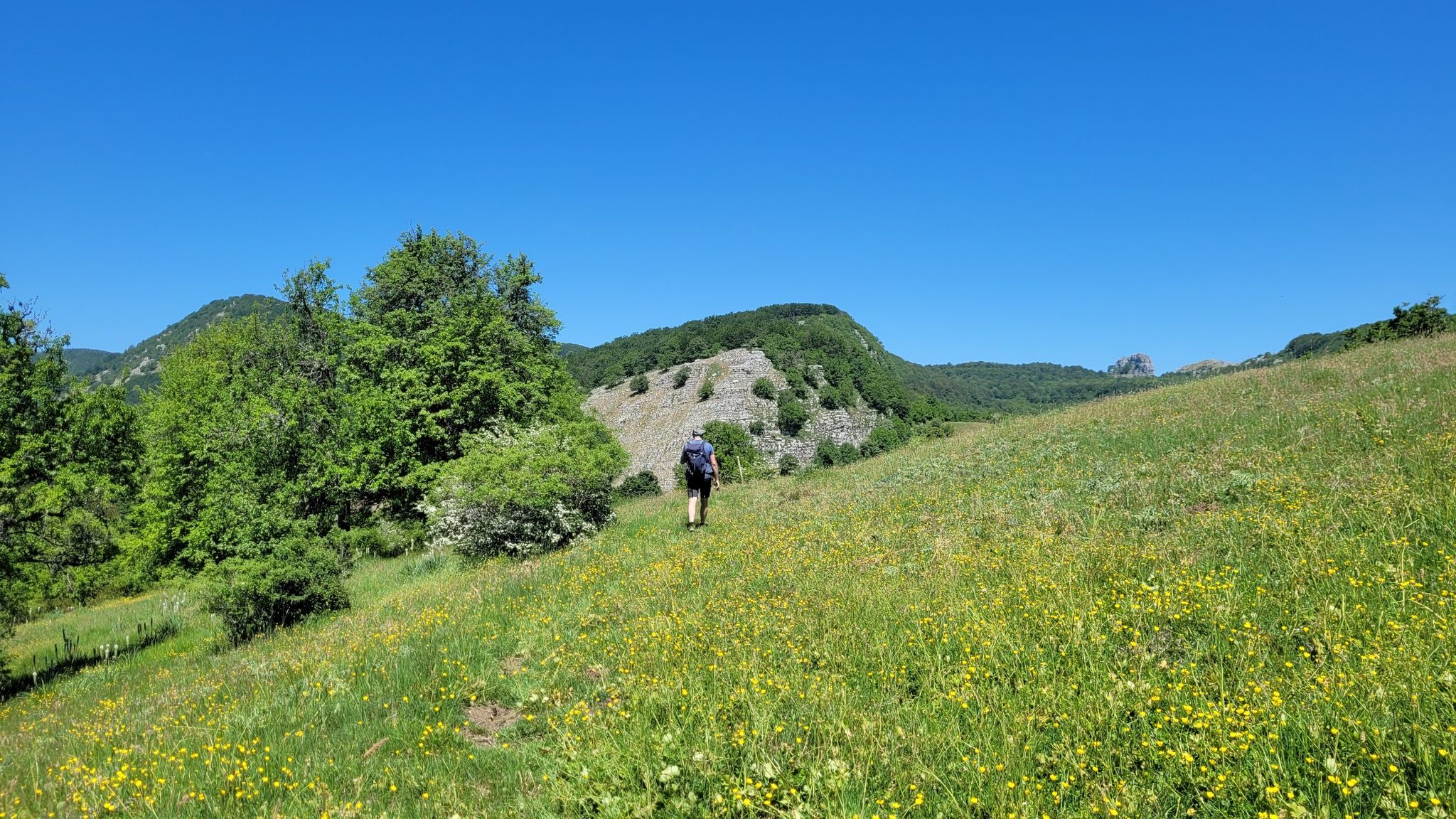
Sentiero Italia – A journey into the heart of Campania
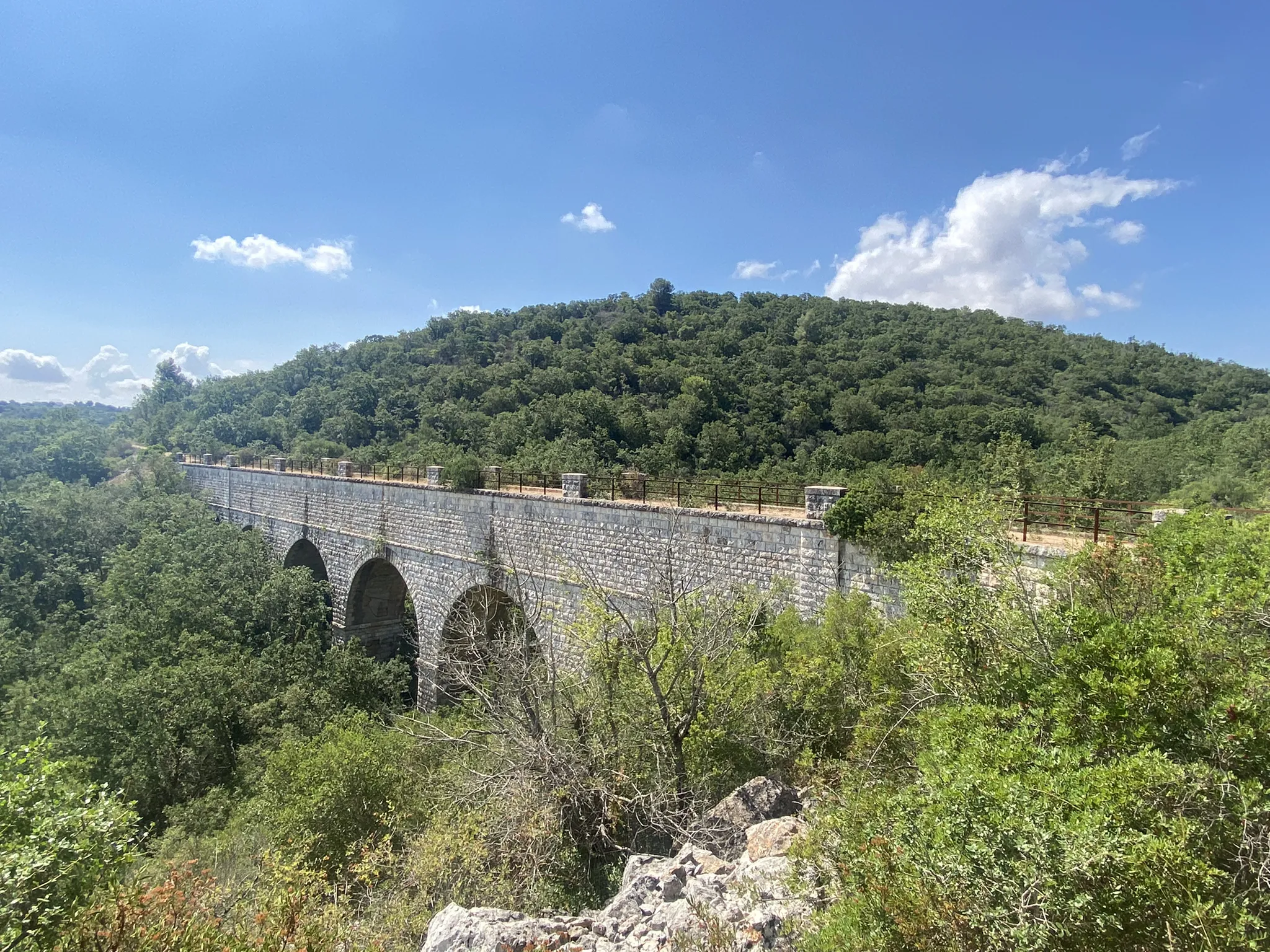
Caposele to Santa Maria di Leuca – Apulian Aqueduct Cycle Route
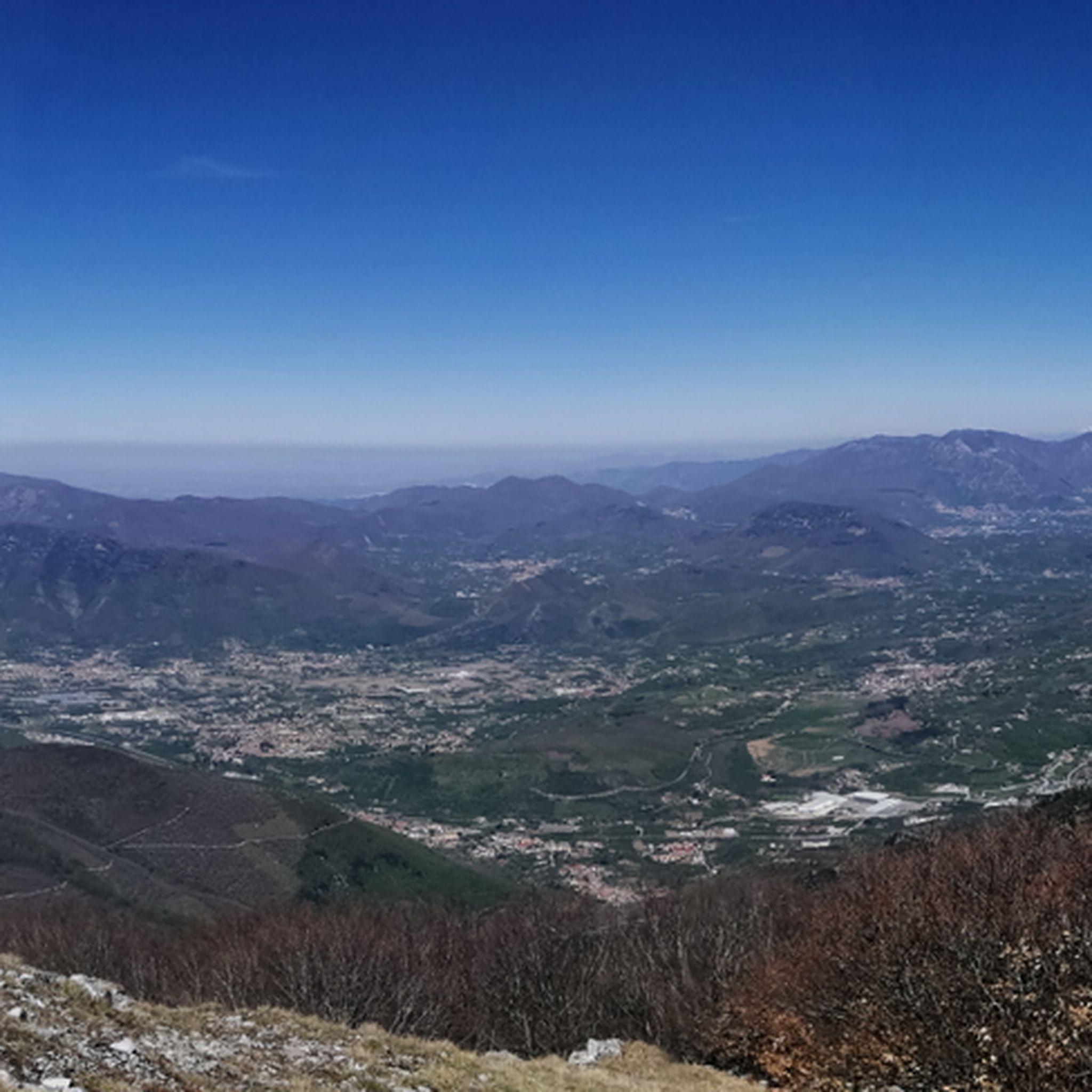
Hiking around Parco regionale Monti Picentini
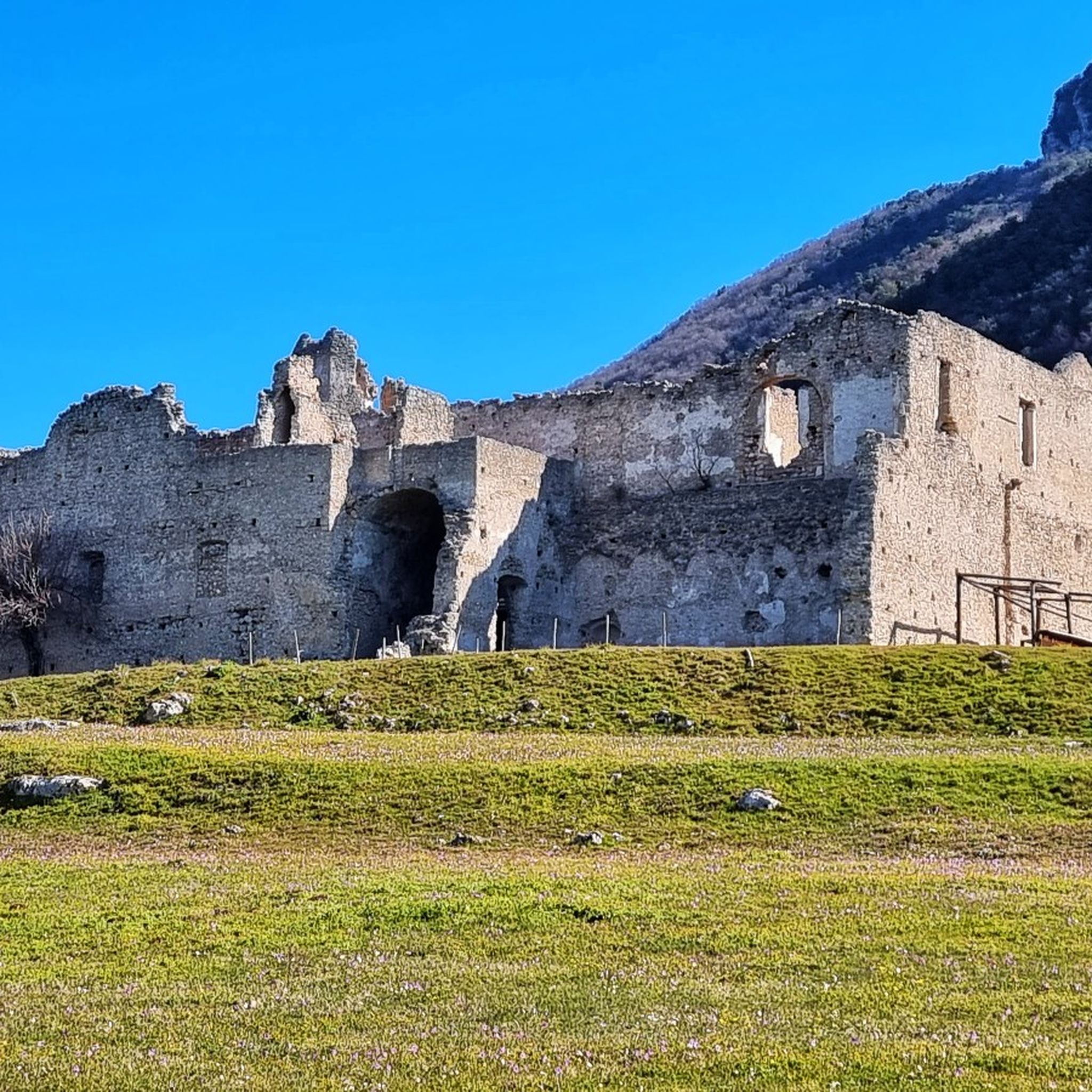
MTB Trails around Parco regionale Monti Picentini
Running Trails around Parco regionale Monti Picentini
Cycling around Parco regionale Monti Picentini
Road Cycling Routes around Parco regionale Monti Picentini

Gravel biking around Parco regionale Monti Picentini
Other adventures around Parco regionale Monti Picentini


Tips from the Community


The defensive building is set between two natural rock towers in a locality in the hamlet of Felitto, in an inaccessible place that dominates the entire valley below. The fortress was surrounded by a triple wall, the first of which can still be identified by some fragments incorporated in the current urbanization; the second, halfway up the slope, still has the watchtowers and the entrance to the Castrum intact; the third with two quadrangular towers was placed to guard the central nucleus built at maximum height. In the factories, the re-use of clay fragments and previous constructions is visible. The various rooms in which the inhabitants' daily activities took place are still clearly evident: three cisterns for collecting rainwater, halls, service area, halls, suspended arches and more. Between the second and third walls, the vast residential settlement can still be identified, positioned on a vast, mainly flat surface. In this area the ruins of a Christian church outline the small nave and the apse.
20
0

This castle was built by the Lombards and the Normans between the eighth and ninth centuries, although the first written texts attesting to its existence date back to the thirteenth century. Located on top of Monte Croce, it dominates the whole valley.
2
0

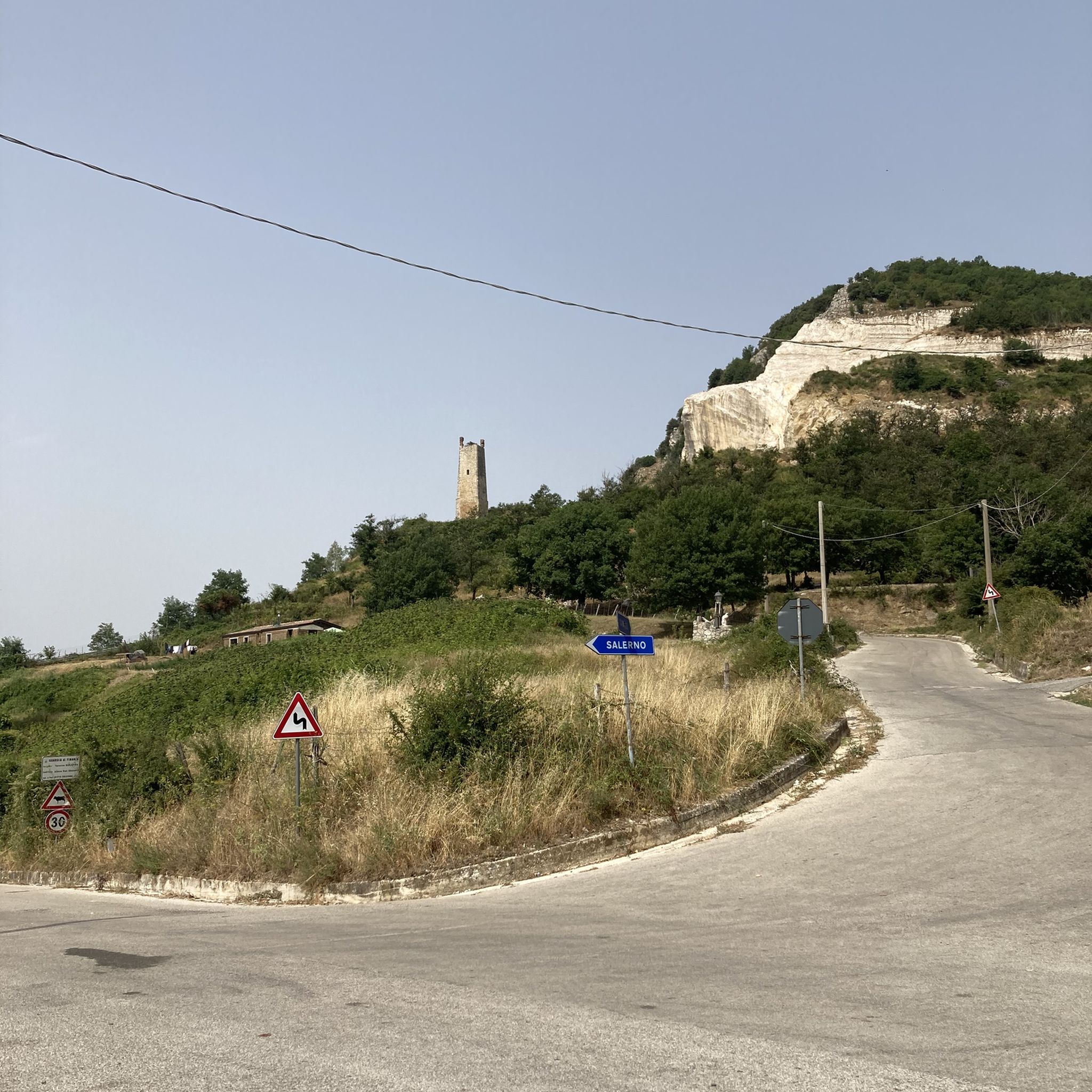
The Ruins of the Castle of Senerchia are located on the street of the same name, near the Borgo Antico. The first documents attesting the history of the Senerchie fortress date back to 1230, when the owner of the stronghold was a certain Giovanna. It is very probable that the already pre-existing fortress was built and enlarged between the 8th and 9th century AD by the Lombards and the Normans, who succeeded one another in dominating the feud. Built on the highest part of the town, overlooking Monte Croce over the surrounding Sele Valley, the Castle was typically medieval and therefore equipped with external walls, a keep and a residential building. info: https://sistemairpinia.provincia.avellino.it/it/luoghi/ruderi-del-castello-di-senerchia The last stretch, even if very short, is demanding, sturdy shoes are suggested.-
6
0
The Borgo Antico of Senerchia, also known as the "Ghost Village", is what remains of the ancient inhabited center of the Irpinian town, located near the Ruins of the Castle. Dating back to the Middle Ages, the village was founded between the 8th and 9th centuries, developing near the fortress built by the Longobards, of which only some portions of the boundary walls and the cylindrical tower remain today, at a height of 600 metres, overhanging the valley below, to then extend downwards, where the new urban center currently stands. Life and time, in this small historical fragment, stopped at 19:34 of that tragic November 23, 1980, the date of the devastating seismic event that severely injured Senerchia as well, tearing it apart with deep evident signs, still today, in the cracks of the old inhabited and well impressed in the memories of those who lived through those tragic moments. Info: https://sistemairpinia.provincia.avellino.it/it/luoghi/borgo-antico-di-senerchia Trekking shoes are recommended.
5
0

It can be visited by reservation only.
5
0
Very suggestive and definitely challenging track in some passages but, overall, beautiful and fun. Final destination: the Montella Castle which can only be visited by reservation.
5
0
The monumental complex of the Monte, consisting of a church, monastery, archaeological garden and castle, rises just above Montella, a small town in the heart of the green Irpinia. Of great historical interest is the site of the 10th century Lombard castle with the adjacent settlement dating back to the 6th-7th century. Excavations conducted in the 1980s have brought to light finds from the Lombard and early medieval times, including coins and fragments of frescoes, as well as burials dating back to the same period. Today the central body (tower or donjon), the surrounding walls and the ruins of the rooms of the nobility are visible. In 1293 Charles II of Anjou confiscated the castle to make it a place for recreation. King Charles II was responsible for the construction of the cistern and the water channeling system. In the fourteenth century, at the behest of the d'Aquino, feudal lords of Montella, the twelfth-century tower was renovated and works to improve the building were carried out, with the creation of pictorial decorations. The castle was inhabited by the Cavaniglia counts in the 15th century, and during their lordship it hosted a memorable hunting expedition in 1445 in which King Alfonso the Magnanimous took part. The church has a single nave with side chapels. The wooden altars are of great value. In one of the side chapels there is an important thirteenth-century wooden altarpiece depicting the "Madonna dell'umiltà". The monastery was built between 1554 and 1586 on the pre-existing church at Monte di Pietà, by the Monte di Pietà di Montella, founded and administered by the Congrega del SS. Sacrament of Montella. It was entrusted to the Minimi Reformed Conventuals of S. Francesco replaced in 1603 by the reformed Observants. In 1613 a community of 12 fathers and several lay brothers lived in the convent. The feudal lord Antonio Grimaldi, in 1642, donated the garden adjacent to the convent, former dependence of the castle, to the Monte di Pietà. It has undergone several changes over the centuries: the structure has a square plan and the typical cloister with cross vaults frescoed in the seventeenth century by Michele Ricciardi. Completely recovered and made usable, the upper floors could be used for spiritual retreats, while it is still possible to visit the cells. The lower rooms, where the life of the friars took place, can be visited in full by taking advantage of the routes prepared also by means of illustrative panels present in each area. The convent garden is located in the open space adjacent to the castle; it has been recovered and the same crops from the Middle Ages that gave sustenance to the monks have been planted there. The entire monumental complex of the Monte, restored and open to visitors, is the property of the Santissimo Sacramento di Montella Archconfraternity
17
0
Frequently Asked Questions
What is the historical significance of castles in the Monti Picentini region?
The castles around Parco regionale Monti Picentini offer a deep dive into the region's history, with origins often dating back to Lombard times (6th-9th centuries AD). They served as strategic strongholds, controlling vital inland routes and reflecting periods of medieval fortification and Renaissance grandeur. Many were built on existing Greek and Roman structures, showcasing layers of history.
What types of castles can I expect to find around Parco regionale Monti Picentini?
You'll find a variety of historical structures, from ancient fortified settlements like Olevano Castle, built by the Lombards, to medieval strongholds and Renaissance courts. Some, like Castello di Gesualdo, were transformed into grand residences, while others, such as the Ruins of the Castle of Senerchia, stand as evocative ruins dominating their valleys.
Can you tell me more about Olevano Castle?
Olevano Castle, also known as Castrum Olibani, is an ancient fortified settlement built by the Lombards between the 6th and 7th centuries AD. It's nestled between two natural rock formations and offers commanding panoramic views of the Tusciano Valley. Visitors can explore remnants of triple defensive walls, guard towers, and a fortified entrance, along with ruins of a Christian church and cisterns.
What can I see at the Monumental Complex of the Mount (Church, Monastery, and Castle of Montella)?
The Monumental Complex of the Mount features a 10th-century Lombard castle, a church, a monastery, and an archaeological garden. You can see the central tower (donjon), surrounding walls, and ruins of noble rooms. The complex has a rich history, including renovations by Charles II of Anjou and the d'Aquino family, and once hosted King Alfonso the Magnanimous. It can be visited by reservation only.
What are the Ruins of the Castle of Senerchia like?
The Ruins of the Castle of Senerchia were built by the Lombards and Normans between the 8th and 9th centuries. Located on Monte Croce, it offers impressive views over the entire valley below. The site includes external walls, a keep, and remnants of a residential building. The last stretch to reach it can be demanding, so sturdy shoes are recommended.
Are there any other notable castles in the broader Monti Picentini area?
Yes, beyond the immediate highlights, you can explore Castello di Gesualdo, a Lombard-era castle transformed into a Renaissance court by Carlo Gesualdo, offering majestic views over the Fredane and Calore valleys. Another is Summonte Castle (Torre Angioina), featuring a majestic 16-meter-high Angevin Tower with extensive panoramic views of the Partenio Mountains and even the Gulf of Naples.
What is the best time of year to explore castles around Monti Picentini?
Spring and autumn are generally the best times to visit. The weather is milder, making it pleasant for exploring outdoor ruins and enjoying the panoramic views without the intense heat of summer or the chill of winter. Always check local weather forecasts before your visit.
What outdoor activities can I do near these castles?
The region around Monti Picentini offers various outdoor activities. You can find MTB trails, running routes, and cycling routes. For example, the 'Monastery Trail' leads from Terminio to the castle of Montella, winding through beech and chestnut groves, though some sections are challenging.
Are there hiking trails near the castles?
Yes, many castles are situated in scenic areas with nearby hiking opportunities. For instance, the 'Monastery Trail' is a challenging path that connects to the Monumental Complex of the Mount. You can find more options for running and MTB that pass through historical areas or offer views of these ancient structures.
What should I wear when visiting castles in this region?
Given that many castles are ruins or located on hillsides, sturdy shoes are highly recommended, especially if you plan to explore the surrounding terrain or access sites like the Ruins of the Castle of Senerchia. Comfortable clothing suitable for walking and varying weather conditions is also advisable.
What do visitors enjoy most about the castles in this region?
Visitors appreciate the historical depth and the panoramic views offered by these ancient structures. The blend of medieval architecture with natural, scenic settings, often overlooking valleys and mountains, is a major draw. The komoot community has shared 135 photos, highlighting the visual appeal and historical significance of these sites.
Most popular routes around Parco regionale Monti Picentini
Most popular attractions around Parco regionale Monti Picentini

Get inspired with the komoot mobile app


Explore more
Looking for the best castles somewhere else? Discover other guides around Parco regionale Monti Picentini:
