Top 15 Castles in Krapina-Zagorje
Best castles in Krapina-Zagorje are found within a region known for its picturesque landscape and numerous historic castles. This area in Croatia features a diverse collection of historic structures, from well-preserved fortresses to ancient ruins. These castles are often situated on hillsides, offering views of the surrounding natural landscape. They provide insight into the area's history and cultural heritage.
Best castles in Krapina-Zagorje
- The most popular castles is Cesargrad Castle Ruins, a castle that was built in the 14th century on a prominent ridge above the Sutla valley. This medieval fortress was expanded and upgraded over time, offering historical insights.
- Another must-see spot is Belecgrad Fortress Ruins, a historical site located on a secluded rocky peak 540m high. These well-preserved ruins offer views and a glimpse into the rule of various noble families.
- Visitors also love Milengrad Castle Ruins, a medieval fortress built in the 13th century on Ivanščica hill. This restored site provides views of the eastern Zagorje and part of Varaždin County.
- Krapina-Zagorje is known for its medieval fortresses, baroque edifices, and castle ruins. The region offers a variety of castles to see and explore, each with its own historical significance.
- The castles in Krapina-Zagorje are appreciated by the komoot community, with 49 upvotes and 118 photos shared across the highlights.
Last updated: October 1, 2026
Cesargrad Castle Ruins
Highlight • Castle
According to tradition, the fortress of Cesargrad was built by the Templars, a knightly order founded in 1119 to protect pilgrims on their way to the tomb of Jesus in the Holy Land. On the opposite side, on the other side of the Sutla, at almost the same height of Bizeljska gora, is the rest of the Konigsberg fortress, or as the people of Klanje call it, Kunšperg, which is attributed to the same builders. The Order of the Templars was abolished in 1312, and their goods were assigned to other orders or became the property of the Crown.
Cesargrad (Kayersperg), on the prominent ridge of Cesarska gora, was first mentioned in 1399 in a gift from King Sigismund, with which he gave Cesargrad to Count Herman of Celje. As the last of the Celje deaths in Belgrade in 1456, Cesargrad came under the rule of the royal crown.
The medieval structure of the city consists of a semicircular stone building that had a residential function, surrounded by a system of walls, and a defensive tower. The fort was expanded and upgraded in several phases.
In 1573, Cesargrad was killed in the Peasant Revolt when it was looted and set on fire. The Erdody family partially restored it, but with the construction of the New Klanječki Palace (built by Ban Toma Bakač Erdody in 1603), the Erdody family slowly moved to the new castle, and the Cesargrad fortress was slowly falling into disrepair.
Source of text and images: klanjec.hr/kultura/spomenici-kulture/cesargrad
Translated by Google •
Tip by

Belecgrad Fortress Ruins
Highlight • Castle
Translated by Google •
Tip by

Sign up now to discover places like this
Get recommendations on the best single tracks, peaks, & plenty of other exciting outdoor places.
Kostelgrad Castle Ruins
Highlight • Castle
Today, the fort is in a dilapidated condition, but it is in the phase of consolidating the walls, the project is financed by the Ministry of Culture. The fort is a favorite picnic spot with a beautiful view of the Sutinska valley, a narrow gap along the river Kosteljina through which you enter the town of Pregrada from the north. Access to the fort is easy and accessible from its northern side from the village of Kostel.
Historical existence Kostelska pištola - Keglević's guard Kostel
Church 7, 49218 Partition
kostelska-pistola.hr
+385 98 981 7041
Translated by Google •
Tip by
Milengrad Castle Ruins
Highlight • Castle
Translated by Google •
Tip by
Veliki Tabor Castle
Highlight • Castle
This cultural monument of the highest zero category is one of the most recognizable identities, not only of Hrvatsko Zagorje, but also of Croatia.
Opinions of the profession are divided over the dating of the Great Camp. Some are of the opinion that the oldest part of Veliki Tabor was built in the middle of the 15th century, while others believe that the construction of the oldest part began only after 1502. The recently conducted conservation research, comparative architectural analysis and analysis of the discovered archaeological finds speak in favor of earlier dating of the oldest part of Veliki Tabor (mid-15th century).
More .... veliki-tabor.hr/o-muzeju/pregled/povijest
Much more about the Palace ... veliki-tabor.hr
Translated by Google •
Tip by
Oršić Castle and Museum of the Peasants' Revolt
Highlight • Castle
The ground plan of the castle is in the shape of the letter L, and the third wing used to continue to the older fort (castle). The wings of the castle are open on the courtyard side by arcades that follow the corridor, and the outer facades are simple, enlivened by rhythmic windows, with a bit of angular rusticity.
In the 19th century, after a great earthquake, a classicist porch with a tympanum and Doric columns was added to the castle. The most preserved chapel in the castle is with illusionist frescoes, an allegorical depiction of four continents and a painted baroque altar with scenes from the life of St. Francis Xavier, which belong to the very top of baroque painting and are attributed to the famous master Anton Lerchinger.
Oršić Castle was a feudal residence until 1924, when the last Oršićs left it. For some time, part of the castle premises served as an elementary school, and it was also used by the local peasant cooperative. In the late sixties and early seventies of the 20th century, the castle was completely renovated and the Museum of Peasant Revolts was located in its premises. The immediate vicinity of the castle is shaped as a ground floor decorative garden. In the 1960s, the wider surrounding area was arranged as a landscape park with domestic and exotic plant species, which also houses a monument to the Peasant Revolt and Matija Gubac, the work of sculptor Antun Augustinčić.
gupcev-kraj.hr/hr/kultura/dvorac-orsi,170.html
Translated by Google •
Tip by
Stubički Golubovec Castle
Highlight • Castle
Translated by Google •
Tip by

Krapina Old Town
Highlight • Castle
Stari grad KrapinaStari grad Krapina
Od cjelokupne srednjovjekovne utvrde do danas je očuvan samo stari dvokatni objekt žute boje, pregrađen u 19. stoljeću, a glavna svrha utvrde je bila obrana granice prema Sutli. U prošlosti su krapinskim vlastelinstvom vladali Arpadovići, Anžuvinci, grofovi Celjski, Petar Gisingovac, Ivan Vitovac, Ivan Korvin, Luka Sekelj, Keglevići, ali je kasnije postalo višegodišnje sjedište hrvatskih banova te su u pet navrata ovdje održavani i hrvatski sabori - 1598., 1599., 1600., 1605. i 1607. godine. To se događalo u vrijeme dok je grad bio pod vlašću Ivana Draškovića, koji ga je na dar dobio od kralja Rudolfa II.
Ovdje je čak 1225. godine stolovao kralj Bela IV., u njemu se 1404. godine za kralja Žigmunda udala Barbara Celjska (Crna kraljica), a 1624. godine u Krapini je umro i Toma Erdödy, poznat po pobjedi nad Turcima u bitci kod Siska.
Od 18. stoljeća Stari se grad sve lošije održava te ga u nasljedstvo dobiva obitelj Lichtenberg, nakon kojih dolaze Ottenfelsi. Barun Franjo Ottenfels kreće s obnovom zgrade i zajedno ju s ostatcima gradine oko 1900. godine daruje Krapini. U jedinoj preostalog zgradi je 1953. godine otvorena zbirka Gradskog muzeja.
Stari grad
Tijekom 1990-ih krenulo se s arheološkim istraživanjima, kad su otkriveni tragovi nazočnosti ljudi još od brončanog doba, otprilike 1100. godina prije Krista. Na istom je mjestu u srednjem vijeku također bilo vrlo živo, još od 1193. godine, što se vidi i po prethodnim odlomcima, a ustanovilo se da je ovdje postojao i sakralni objekt. Pretpostavlja se da se radi o dvorskoj kapelici sv. Trojstva iz vremena grofova Celjskih, odnosno s prijelaza s 15. na 16. stoljeće.
Uz gradske bedeme pronađeni su i ostatci velikog ulaznog obrambenog objekta, kao i niz prostorija vezanih na njega. Osim toga, pronađena je i velika količina keramičkih zdjela, vrčeva i pehara, kao i oruđa i oružja, poput šiljaka, strelica te samostrela.
Danas je Stari grad Krapina, kao hrvatski banski i saborski grad te zbog svoje povijesne važnosti, svakako jedan od najvažnijih mjesta koje vrijedi posjetiti u Hrvatskom zagorju.
* BRISANJEM ISPOD UPISANE POVEZNICE KRŠITE ZAKON O AUTORSKOM PRAVU RH *
Preuzeto s: putovnica.net/plus/hrvatska-bastina/stari-grad-krapina
krapina.net/stari_grad.asp
Tip by

Loborgrad Manor
Highlight • Castle
The first form of institution for the care of the elderly and sick is found around 1920, when Russian doctors - captured on the Eastern Front in World War I, established a hospital in the castle, which operated from 1920 to 1923.
After that, the castle was uninhabited until 1937, when it was bought by the Society for the Suppression of Begging and Supporting the Infirm, which opened an almshouse in it. Initially, there were only 5 people in the castle, but by the beginning of World War II, there were about 60 people in it. During World War II, the institution retained its function.
On March 20, 1954, by the decision of the People's Committee of the Zlatar district, an institution was established as the "Home for the care of the elderly and the sick."
The next change in the name of the institution took place in 1977, when it changed its name to "Home for Adults". In 1980, a new part of the Home was opened, which doubled the accommodation capacity of the institution. In 1988, the Home for Adults again changed its name to "Institute for Social and Health Care Lobor-grad".
And finally, in 2015, the institution changed its name to "Home for Adults Lobor-grad", under which it still operates today.
lobor-grad.hr/index.php/novost
Translated by Google •
Tip by
Bedeković-Vranyczany Castle, Gornja Bedekovčina
Highlight • Castle
The castle was built by Nikola Bedeković, from 1740-1750. year (according to the inscription above the entrance). By marriage, it became the property of the Galjuf family, from whom it was sold in 1887. bought by Baron Viktor Vranyczany. The castle is one-story, with a rectangular floor plan, covered with a high four-roofed roof, with a central tower. The center of the floor plan organization is a three-legged staircase with a stone, perforated fence. Rooms are lined up around the staircase in a horseshoe shape, and the main hall was later partitioned. The rooms of the basement and ground floor are barrel-vaulted, and the vestibule and the chapel (which is located on the northeast facade) are vaulted, while the rooms of the first floor have flat ceilings. Stucco decorations have been preserved in the vestibule. All four facades are shaped identically, the ground floors are decorated with horizontal strips, and the floor zone is divided into fields by pilasters. The longer facade has seven axes, and a centrally located entrance with a highly plastic stone portal and the coat of arms of the Bedeković family.
Translated by Google •
Tip by

Sign up for free to discover even more castles in Krapina-Zagorje.
Already have an account?
Start today with a free account
Your next adventure awaits.
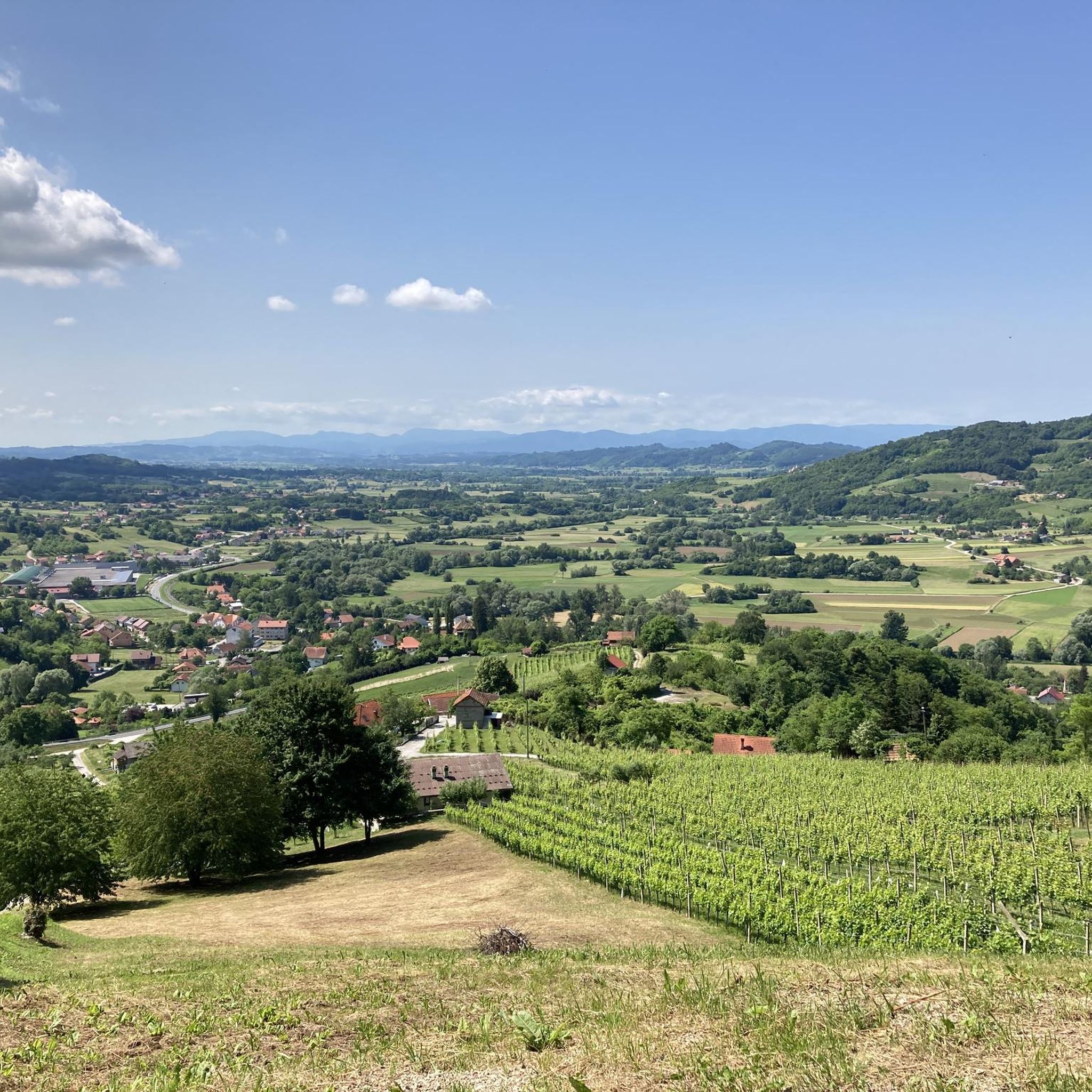
Tips from the Community

Golubovec Castle in Donja Stubica is one of the most valuable Croatian castles of the late Baroque period. It has a high architectural, historical and ambient value, which is why it was declared a cultural and natural asset of national importance. The castle was built around 1800 by Regina pl. Domjanić, married Countess Drašković, but as early as 1804, her heirs sold it to Bishop Maksimilijan Vrhovac, who restored the castle. Vrhovac also buys the estate Donji Golubovec, a manor house with smaller farm buildings, which is located near the castle. He expanded the property with outbuildings and turned it into the main building of Golubovec Castle. After his death and the change of owner, the castle stagnated, until it was owned by Baron Levin Rauch, who renovated and improved it.
0
0


Wonderful location, a nice walk from Klanjec for everyone.
0
0

Bedeković-Vranyczany Castle, Gornja Bedekovčina, an architectural landscape complex is located on top of a hill in Bedekovčina, from where there is a view of the Krapina river valley and the northern slopes of Medvednica. It is surrounded by lawns on all sides, and to the north of it is the farm yard. The castle was built by Nikola Bedeković, from 1740-1750. year (according to the inscription above the entrance). By marriage, it became the property of the Galjuf family, from whom it was sold in 1887. bought by Baron Viktor Vranyczany. The castle is one-story, with a rectangular floor plan, covered with a high four-roofed roof, with a central tower. The center of the floor plan organization is a three-legged staircase with a stone, perforated fence. Rooms are lined up around the staircase in a horseshoe shape, and the main hall was later partitioned. The rooms of the basement and ground floor are barrel-vaulted, and the vestibule and the chapel (which is located on the northeast facade) are vaulted, while the rooms of the first floor have flat ceilings. Stucco decorations have been preserved in the vestibule. All four facades are shaped identically, the ground floors are decorated with horizontal strips, and the floor zone is divided into fields by pilasters. The longer facade has seven axes, and a centrally located entrance with a highly plastic stone portal and the coat of arms of the Bedeković family.
0
0

Milenrad (Hungarian: Milen vára) is a medieval town built in the 13th century after the Tatar invasion (1242) on the hill Ivanščica in Zajezda, which is now part of the Municipality of Budinščina in Krapina-Zagorje County. Fortress Milen or Milengrad is a protected cultural asset.
0
0
The Museum of Peasant Revolts is a must-see.
1
0
It is located near the Cesargrad Mountain House where the lazy can park.
1
0
Frequently Asked Questions
Which castles in Krapina-Zagorje are best for history enthusiasts?
For a deep dive into history, consider visiting Veliki Tabor Castle, a well-preserved late medieval and Renaissance fortress with a rich past and the legend of Veronika Desinićka. Another excellent choice is Oršić Castle, which houses the Museum of Peasant Revolts, offering insights into a significant historical event. The ruins of Cesargrad Castle also provide a glimpse into medieval fortifications and their role in the Peasant Revolt.
Are there family-friendly castles to visit in the Krapina-Zagorje region?
Yes, several castles are suitable for families. Veliki Tabor Castle is family-friendly and often hosts cultural events. Milengrad Castle Ruins are also noted as a great place to visit with family, offering beautiful views. Oršić Castle, with its Museum of Peasant Revolts, can also be an educational experience for older children.
What are the best castles for scenic views in Krapina-Zagorje?
Many castles in the region offer stunning views due to their elevated positions. Veliki Tabor Castle provides an impressive panorama of the entire Croatian Zagorje and parts of Slovenia. Belecgrad Fortress Ruins, located on a secluded rocky peak, offers good views. Similarly, Milengrad Castle Ruins boast beautiful views of eastern Zagorje and Varaždin County.
What outdoor activities can I do near the castles in Krapina-Zagorje?
The region offers various outdoor activities. You can find easy hikes, running trails, and mountain biking routes. For example, there's an easy hike around Veliki Tabor Castle, and a more challenging running trail also loops around it. Mountain biking trails near Cesargrad Castle are also available. Explore more options on the easy hikes, running trails, and MTB trails guides for Krapina-Zagorje.
What is the best time of year to visit the castles in Krapina-Zagorje?
The Krapina-Zagorje region is beautiful year-round. Spring and autumn offer pleasant temperatures for exploring both the castles and their surrounding natural landscapes. Summer is also popular, though it can be warmer. Some castles, like Trakošćan Castle, are surrounded by artificial lakes and parks, making them particularly picturesque in warmer months.
Are there any castles in Krapina-Zagorje that are still inhabited?
Yes, Hellenbach Castle offers a unique experience as it is still inhabited by the family after whom it is named. This personal connection helps maintain the castle's authentic interior and exterior, providing visitors with a genuine sense of its historical grandeur.
Which castles are considered significant cultural or national monuments?
Veliki Tabor Castle holds a 'zero category' monument status, recognizing it as one of the best-preserved late medieval and Renaissance fortified castles. Trakošćan Castle is considered a cultural and natural monument of the highest category. Stubički Golubovec Castle is also recognized for its architectural, environmental, and historical significance as a cultural and national monument.
What kind of collections or exhibits can I expect to see inside the castles?
Inside Trakošćan Castle, you can explore well-preserved interiors housing an impressive collection of weapons and period furniture. Veliki Tabor Castle functions as a museum, showcasing archaeological finds, traditional costumes, and everyday objects. Oršić Castle is home to the Museum of Peasant Revolts, focusing on social history.
Are there any castles that are particularly good for photography?
Trakošćan Castle, with its picturesque setting on a hill surrounded by a scenic park and an artificial lake, is highly photogenic. Veliki Tabor Castle, with its white walls and towers dominating the countryside, also offers impressive photographic opportunities, especially with its unique architectural blend with nature.
What are some lesser-known or 'hidden gem' castles in the region?
While not entirely hidden, Kostelgrad Castle Ruins offer a more rustic experience. It's a medieval fortress in a strategic position, surrounded by dense forest, and serves as a favorite picnic spot with beautiful views. Though in a dilapidated condition, its ongoing consolidation efforts make it an interesting site for those looking beyond the main attractions.
Can I reach any of the castle ruins by car?
Yes, Milengrad Castle Ruins can be reached by car, making it easily accessible for visitors. For Cesargrad Castle Ruins, there's parking available near the Cesargrad Mountain House, from which it's a short walk.
What is the significance of Oršić Castle?
Oršić Castle is a baroque edifice that houses the Museum of Peasant Revolts. It commemorates a significant historical event in Croatia, providing insights into the struggle against feudal oppression and offering a compelling visit for those interested in social history.
Most popular routes in Krapina-Zagorje
Most popular attractions in Krapina-Zagorje

Get inspired with the komoot mobile app


Didn’t find what you were looking for?
Explore Krapina-Zagorje’s best castles region by region:
Explore more
Looking for the best castles somewhere else? Discover other guides in Krapina-Zagorje:
