The 7 Most Amazing Peaks around Tschernitz
Best mountain peaks around Tschernitz are found in the surrounding region of Lower Lusatia, characterized by its flat to gently rolling landscape. While Tschernitz itself lies at a low elevation of approximately 132 meters above sea level and does not feature notable mountain peaks, the area offers several elevated points and hills. These locations provide viewpoints and opportunities for outdoor activities. The guide focuses on these higher elevations in the vicinity, which are often referred to as peaks.
Best mountain…
Last updated: May 15, 2026
Drachenberge
Highlight • Trail
How did the Drachenberg get its name?
A legend tells that God created Lusatia and …
Translated by Google •
Tip by

Vineyard near Weißwasser
Highlight • Summit
Translated by Google •
Tip by

Sign up now to discover places like this
Get recommendations on the best single tracks, peaks, & plenty of other exciting outdoor places.
Sign up for free
Lissberg – The Mountain Where the Fox Lives
Highlight • Summit
Translated by Google •
Tip by
First-Order Triangulation Station Brandberg
Highlight • Monument
Translated by Google •
Tip by

Spitzer Berg
Highlight • Summit
Translated by Google •
Tip by
Sign up for free to discover even more peaks around Tschernitz.
Sign up for free
Already have an account?
Start today with a free account
Your next adventure awaits.
Login or Signup
Tips from the Community

Difficult to reach by bike, but mountain bikes or e-bikes are advantageous. Unfortunately, there's no view from the top...
1
0

There is no view, but the Spitze Berg is one of the highest points in the Spree-Neiße district at 155 meters above sea level. Opposite the mountain is a deciduous forest, which is particularly beautiful in autumn when the leaves change color. A little further on is a large heathland area, which blooms from August to early September. When the weather is right, the entire area is an excellent mushroom hunting area.
1
0
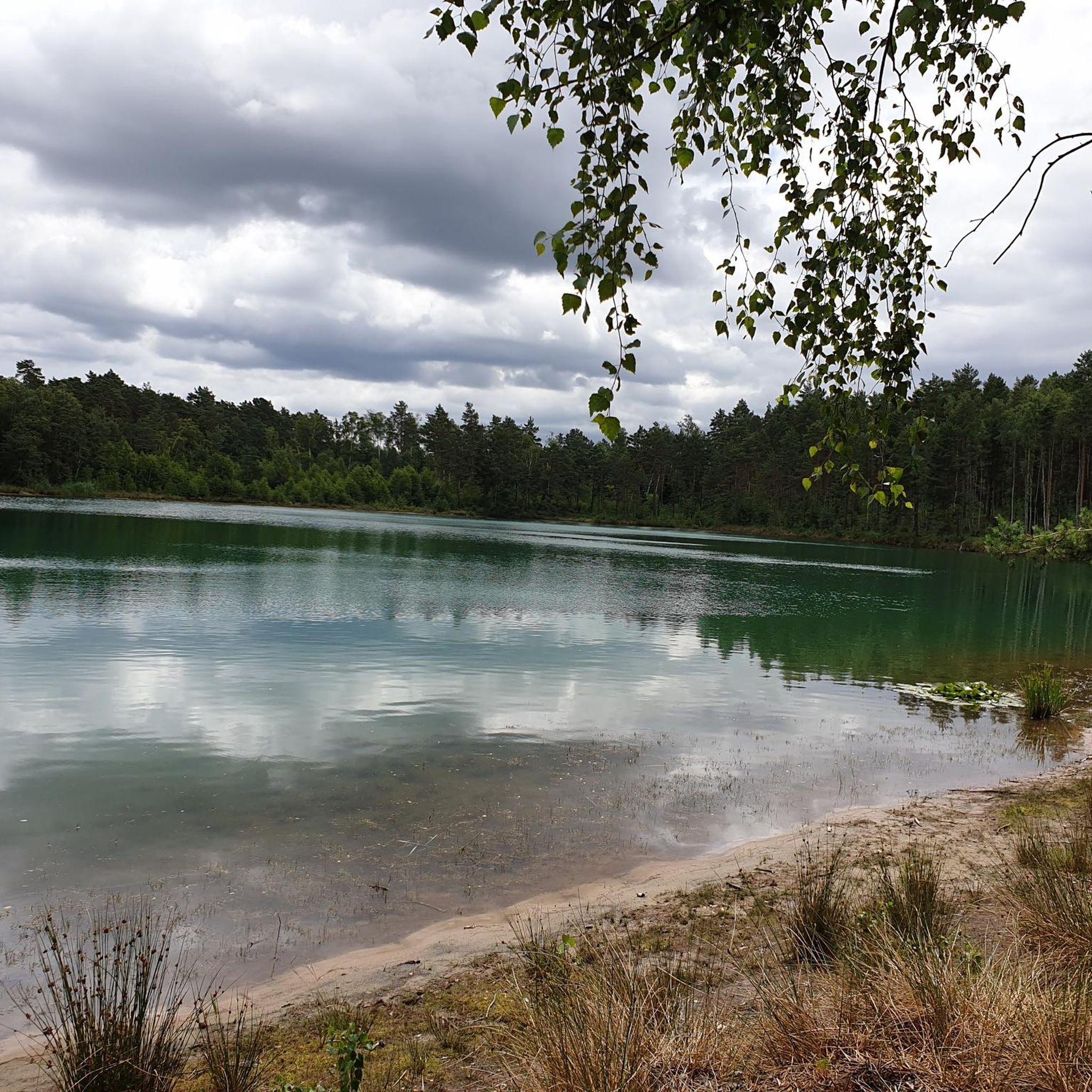
Prince Pückler's grandfather actually grew wine here. A fire watchtower was built at the beginning of the 20th century. Below the hill are the Weinberghaus (formerly a tourist restaurant, now a private residence) and the Weinbergsee, a natural body of water. The Weinberg/Feuerturmberg is the second highest elevation in the former Weißwasser district after the Drachenberg.
8
0

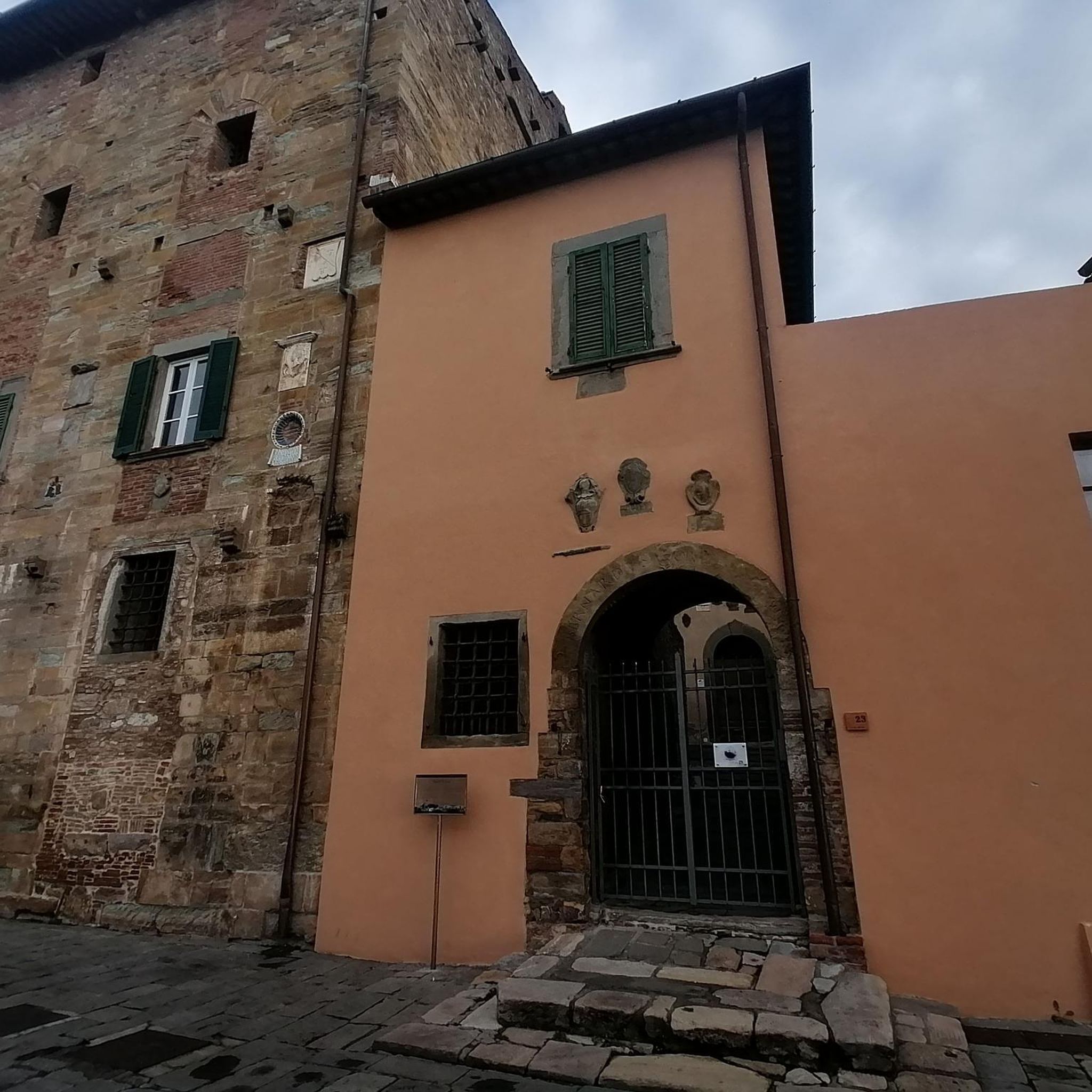
The granite pillar embedded on the summit of the 175 m high Brandberg served as a first-order station for the triangulation of the European degree measurement. The Royal Prussian State Survey recorded the Märkisch Silesian triangular chain in the period from 1868 to 1872 and thus connected the triangular networks of the Kingdom of Saxony (Royal Saxon Triangulation) and the coastal survey with the Berlin base. The Brandberg station was number 21 in the Märkisch-Silesian triangle chain and from this station the peaks of Keulenberg, Hochstein, Rückenberg, Hutberg, Marienberg and Brautberg were targeted for the survey. Especially when connecting to the Saxon network, one benefited from the highly precise triangulation between Keulenberg, Strauch and Collm. The Märkisch Silesian triangular group has a connection to the Saxon triangular network in the south as well as a connection to the Thuringian Saxon in the west and to the Silesian triangular group in the east. In the north there is a connection to the Berlin line and the Elbe chain. The granite pillar is certainly not as impressive as the pillars with the inscriptions that give it its name, but it served the same purpose and had to be brought up the mountain in the 19th century. Although the Brandberg is not the highest mountain on the western flank of the Muskau Arch (https://de.wikipedia.org/wiki/Muskauer_Faltenbogen), it still lives up to its name today, with a fire watchtower on the summit for early forest fire detection (not public). The wooden signal pyramid above the pillar is quite crooked.
1
0

The Drachenberg summit is the highest elevation at 163 m above sea level. N.N. Here is more information about a
1
0
Now the Drachenberg summit is in sight. it is 163m above sea level. Another effort uphill and then it's done,
2
1
Another interesting post from the LR: https://www.lr-online.de/lausitz/weisswasser/krauschwitz-nicht-pilze_-dafuer-ein-quickie-38017084.html
9
0

On the 162.8 m high Drachenberg you can enter your name in a summit book. How did the Drachenberg get its name? A legend tells that God created Lusatia and the devil put the coal on it. A dragon that settled here was supposed to protect the coal from humans. When humans began to mine the valuable raw material, dragon's blood seeped out of the dragon lying in the earth - known to us as red water. Little by little the kite dried up in the area between Krauschwitz and Weißwasser and left a large pool of blood: the brown pond. The back can still be seen today, because the many gies and elevations mark the peaks on the dragon's back. The largest of them is the Drachenberg. https://www.lr-online.de/lausitz/weisswasser/wie-der-drachenberg-zu-seinem-namen-kam-33304006.html
9
0
Frequently Asked Questions
What are the most notable elevated points or 'peaks' around Tschernitz?
While Tschernitz is in a generally flat region, several elevated points are considered local 'peaks'. Among them, Drachenberge stands out at 162.8 meters, known for its summit book. Another significant spot is the Vineyard near Weißwasser, which has historical ties to viticulture and features an early 20th-century fire watchtower. The First-Order Triangulation Station Brandberg, at 175 meters, is also notable for its historical surveying pillar.
Are there family-friendly trails or elevated points suitable for children near Tschernitz?
Yes, Lissberg – The Mountain Where the Fox Lives is particularly known for its family-friendly trails. This summit, reaching 154 meters, offers views within a forested natural monument, making it a pleasant outing for families.
What kind of natural features can I expect to see around the elevated points near Tschernitz?
The region around Tschernitz, despite its low elevation, offers diverse natural features. You can find forested areas, such as those surrounding Lissberg and Spitzer Berg. The Spitzer Berg area also features a large heathland that blooms from August to early September, and deciduous forests that are beautiful in autumn. The Vineyard near Weißwasser is located near a natural body of water, the Weinbergsee.
Are there historical sites or monuments on these elevated points?
Yes, several elevated points have historical significance. The Vineyard near Weißwasser was historically used for viticulture and features a fire watchtower from the early 20th century. The First-Order Triangulation Station Brandberg hosts a granite pillar that was part of a significant European degree measurement project between 1868 and 1872.
What outdoor activities, like hiking or running, can I do near the elevated points around Tschernitz?
The area around Tschernitz offers various outdoor activities. For hiking, you can explore numerous trails, including easy routes like the 'Felixsee Observation Tower loop from Friedrichshain - Frycowy Gaj' or the 'Wolfshain Cemetery Chapel – Tschernitz Glassworks information board loop from Tschernitz'. You can find more hiking options in the Hiking around Tschernitz guide and the Easy hikes around Tschernitz guide. For running, there are moderate routes such as the 'Felixsee Lookout Tower – Felixsee and the Observation Tower loop from Döbern', detailed in the Running Trails around Tschernitz guide.
What is the best time to visit the elevated points around Tschernitz?
The region can be enjoyed throughout the year. Autumn is particularly beautiful around the Spitzer Berg due to the changing colors of the deciduous forest. The heathland near Spitzer Berg blooms from August to early September, offering a vibrant display. Spring and summer are also excellent for exploring the trails and enjoying the natural surroundings.
Are there any viewpoints offering panoramic vistas from these elevated points?
Many of the elevated points serve as viewpoints. Drachenberge and Vineyard near Weißwasser are both categorized as viewpoints. While Spitzer Berg is one of the highest points in the district, it does not offer a panoramic view from the very top due to dense forest cover.
What do visitors enjoy most about the elevated points around Tschernitz?
Visitors appreciate the unique character of these elevated points, which offer a blend of nature, history, and opportunities for outdoor activity in an otherwise flat landscape. The presence of a summit book at Drachenberge is a popular feature, and the historical significance of sites like the Vineyard near Weißwasser adds an interesting dimension to explorations. The family-friendly trails at Lissberg are also highly valued.
Can I find challenging trails or more advanced routes near Tschernitz's elevated points?
While many trails in the region are easy to moderate, some sections, particularly around Spitzer Berg, are categorized as challenging. These might be difficult to reach by bike, suggesting a more strenuous experience for hikers. For specific challenging routes, it's recommended to check the detailed route descriptions in the komoot guides.
Are there any unique local legends or stories associated with these elevated points?
Yes, Drachenberge has a local legend associated with its name. It is said that a dragon once protected coal in Lusatia, and its drying body formed the hills and 'peaks' in the area, with Drachenberg being the largest of these formations. The name of Lissberg translates to 'The Mountain Where the Fox Lives', hinting at local wildlife or folklore.
What is the highest elevated point in the Spree-Neiße district near Tschernitz?
The Spitzer Berg, at 155 meters above sea level, is one of the highest points in the Spree-Neiße district. Although it doesn't offer a view from the top, it's recognized for its elevation and surrounding natural beauty, including deciduous forests and heathland.
Most popular routes around Tschernitz
Most popular attractions around Tschernitz

Get inspired with the komoot mobile app


Explore more
See even more amazing summits around Tschernitz with these guides:
