The 6 Most Amazing Peaks around Schleife
Mountain peaks around Schleife, a municipality in the Görlitz district of northeast Saxony, Germany, are characterized by a relatively low elevation. The area features a wooded landscape on the northwestern edge of the Muskauer Heide. While not a traditionally mountainous region, Schleife offers natural elevations and historical sites that provide unique perspectives on the local terrain. The municipality itself sits at an altitude of 129 meters.
Best mountain peaks around Schleife
- The most popular mountain peaks is Drachenberge, a…
Last updated: June 27, 2026
Drachenberge
Highlight • Trail
How did the Drachenberg get its name?
A legend tells that God created Lusatia and …
Translated by Google •
Tip by

German War Cemetery on Georgenberg
Highlight • Historical Site
Translated by Google •
Tip by

Sign up now to discover places like this
Get recommendations on the best single tracks, peaks, & plenty of other exciting outdoor places.
Sign up for free
Vineyard near Weißwasser
Highlight • Summit
Translated by Google •
Tip by

First-Order Triangulation Station Brandberg
Highlight • Monument
Translated by Google •
Tip by

Mount Geidlich
Highlight • Summit
Translated by Google •
Tip by

Sign up for free to discover even more peaks around Schleife.
Sign up for free
Already have an account?
Start today with a free account
Your next adventure awaits.
Login or Signup
Other adventures around Schleife

Tips from the Community

PLEASE PUSH YOUR BIKE HERE! German military cemetery with high cross, central burial site for war victims. Also the last remaining hereditary burial sites in the city on Georgenberg.
0
0

Thanks for the info.
1
1

Funny name for the raised hill at the German-Sorbian school complex in Schleife. There is even a summit cross. At the foot of the mountain there is a bench for a rest and there is even a trash can. The name refers to the construction department manager in Schleife.
1
0

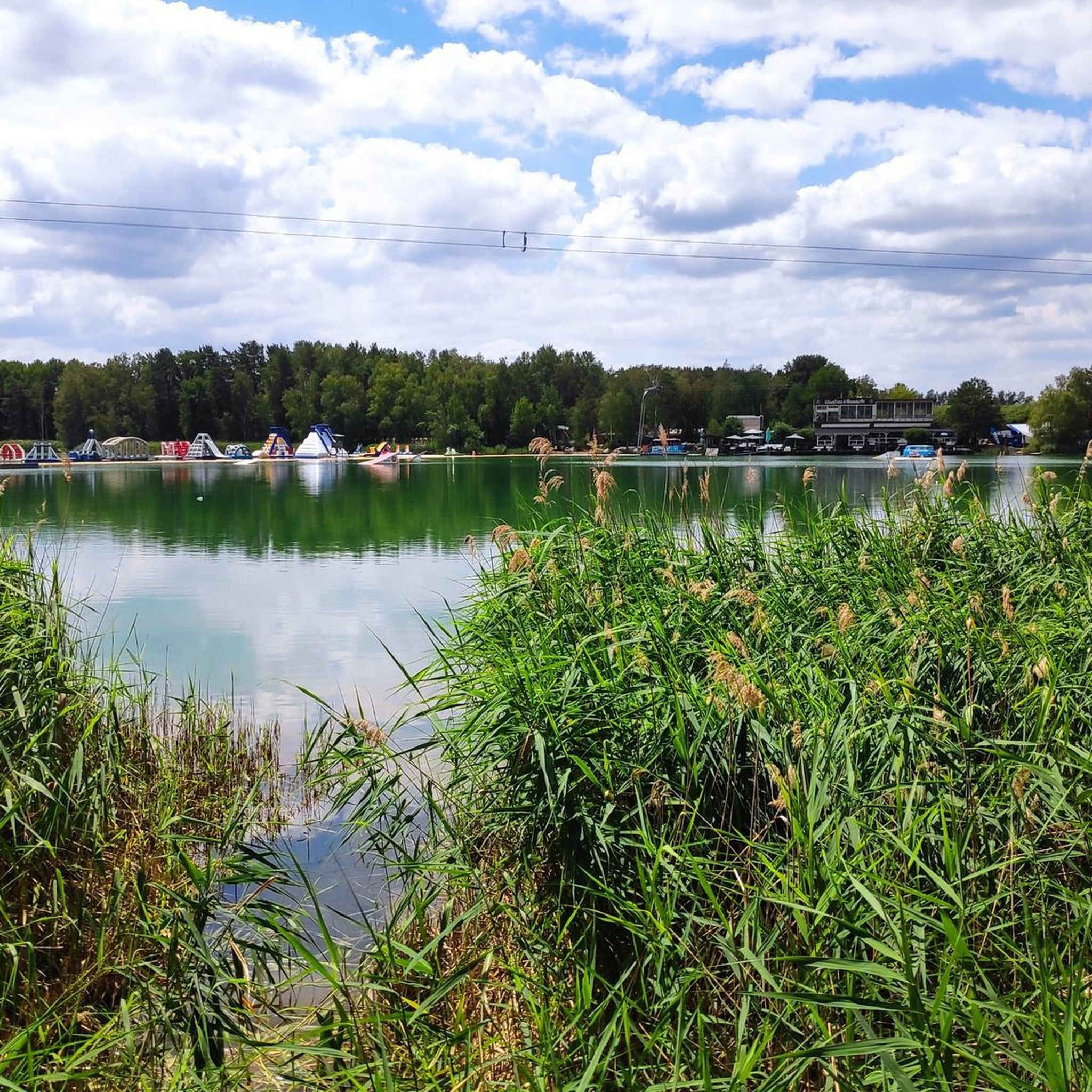
Prince Pückler's grandfather actually grew wine here. A fire watchtower was built at the beginning of the 20th century. Below the hill are the Weinberghaus (formerly a tourist restaurant, now a private residence) and the Weinbergsee, a natural body of water. The Weinberg/Feuerturmberg is the second highest elevation in the former Weißwasser district after the Drachenberg.
8
0

We shouldn't forget you even if we don't know your names!
1
0

The old comrades from the Battle of Kausche are buried here
3
0

The granite pillar embedded on the summit of the 175 m high Brandberg served as a first-order station for the triangulation of the European degree measurement. The Royal Prussian State Survey recorded the Märkisch Silesian triangular chain in the period from 1868 to 1872 and thus connected the triangular networks of the Kingdom of Saxony (Royal Saxon Triangulation) and the coastal survey with the Berlin base. The Brandberg station was number 21 in the Märkisch-Silesian triangle chain and from this station the peaks of Keulenberg, Hochstein, Rückenberg, Hutberg, Marienberg and Brautberg were targeted for the survey. Especially when connecting to the Saxon network, one benefited from the highly precise triangulation between Keulenberg, Strauch and Collm. The Märkisch Silesian triangular group has a connection to the Saxon triangular network in the south as well as a connection to the Thuringian Saxon in the west and to the Silesian triangular group in the east. In the north there is a connection to the Berlin line and the Elbe chain. The granite pillar is certainly not as impressive as the pillars with the inscriptions that give it its name, but it served the same purpose and had to be brought up the mountain in the 19th century. Although the Brandberg is not the highest mountain on the western flank of the Muskau Arch (https://de.wikipedia.org/wiki/Muskauer_Faltenbogen), it still lives up to its name today, with a fire watchtower on the summit for early forest fire detection (not public). The wooden signal pyramid above the pillar is quite crooked.
1
0

The Drachenberg summit is the highest elevation at 163 m above sea level. N.N. Here is more information about a
1
0
Frequently Asked Questions
What are the most notable elevations or 'peaks' to explore around Schleife?
While Schleife is not a traditionally mountainous region, you can explore several interesting elevations. The most popular is Drachenberge, which reaches 162.8 meters and is steeped in local legend. Another significant spot is the Vineyard near Weißwasser, the second highest elevation in the former Weißwasser district, featuring a fire watchtower. You can also visit the First-Order Triangulation Station Brandberg, a historical survey point at 175 meters.
Are there any historical sites or monuments on these elevations?
Yes, several elevations around Schleife have historical significance. The German War Cemetery on Georgenberg is a poignant relocation cemetery for war casualties from the First and Second World Wars. The First-Order Triangulation Station Brandberg features a granite pillar that was part of a significant European degree measurement in the 19th century. Even the Vineyard near Weißwasser has historical ties, as Prince Pückler's grandfather once grew wine there.
What kind of views can I expect from the elevations around Schleife?
Many of the elevations offer pleasant viewpoints over the surrounding wooded landscape. For instance, Drachenberge and the Vineyard near Weißwasser are noted as viewpoints. The First-Order Triangulation Station Brandberg also provides views, and historically was used for surveying other peaks in the region.
Are there family-friendly options among the elevations in Schleife?
Yes, some spots are suitable for families. The German War Cemetery on Georgenberg is categorized as family-friendly, offering a reflective experience. Additionally, Mount Geidlich, a raised hill with a summit cross and a bench, is also considered family-friendly.
What outdoor activities can I do near these elevations?
The region around Schleife offers various outdoor activities. You can find numerous routes for mountain biking, road cycling, and hiking. For example, there are easy hikes like the 'Halbendorfer See Nudist Beach – Tributary of the Struga loop from Schleife - Slepo' which is 3.75 km long. You can explore more options in the guides for MTB Trails around Schleife, Road Cycling Routes around Schleife, and Easy hikes around Schleife.
Are there specific hiking trails associated with these elevations?
Yes, some elevations are part of or accessible via trails. Drachenberge is explicitly categorized as a trail. While the guide focuses on the 'peaks' themselves, the surrounding area, particularly the Muskauer Heide, provides a network of paths suitable for walking and exploring these natural features.
What is the best time of year to visit the elevations around Schleife?
The wooded landscape around Schleife is enjoyable throughout the year. Spring and autumn offer pleasant temperatures and beautiful foliage, making them ideal for hiking and exploring. Summer is also good, especially for enjoying the nearby lakes. While winter hiking is possible, be prepared for colder weather and potentially snowy conditions, which can add a different charm to the landscape.
Can I bring my dog on trails near these elevations?
Generally, the natural areas and trails around Schleife are dog-friendly. However, it's always recommended to keep your dog on a leash, especially near wildlife or in areas with other visitors. Specific rules might apply to certain historical sites or protected areas, so it's good to check local signage.
What unique natural features can I find near the elevations?
The region is characterized by its wooded landscape on the northwestern edge of the Muskauer Heide. Near the Vineyard near Weißwasser, you'll find the Weinbergsee, a natural body of water. The area's low elevation and forest cover provide a distinct natural environment, different from high mountain ranges.
What do visitors enjoy most about the elevations around Schleife?
Visitors appreciate the unique blend of natural elevations, historical sites, and viewpoints. The local legend associated with Drachenberge adds a fascinating cultural layer, and the opportunity to sign a summit book there is a popular activity. The historical significance of sites like the German War Cemetery on Georgenberg also resonates with many.
Are there any facilities like cafes or pubs near the hiking areas?
While the guide doesn't specify facilities directly on the peaks, the municipality of Schleife and nearby towns offer amenities. For example, below the Vineyard near Weißwasser, there was once a tourist restaurant (Weinberghaus), now a private residence. It's advisable to check local listings for current cafes, pubs, and restaurants in Schleife or surrounding villages before your visit.
Most popular routes around Schleife
Most popular attractions around Schleife

Get inspired with the komoot mobile app


Explore more
See even more amazing summits around Schleife with these guides:
