Top 3 Castles around Bruch
Castles around Bruch are primarily located in the Rhineland-Palatinate region of Germany, offering insights into medieval architecture and regional history. The area is characterized by its historical significance, with structures dating back centuries. Visitors can explore various types of castles, from ancient water castles to historical sites. This region provides a tangible connection to medieval life through its well-preserved structures.
Best castles around Bruch
- The most popular castles is Bruch Castle, a castle that was first mentioned in 1138…
Last updated: September 30, 2026
Bruch Castle
Highlight • Castle
Translated by Google •
Tip by

Celtic Fortress Wachenbach
Highlight • Historical Site
Spangdahlem, community Spangdahlem
description
Location on a mountain spur above the Kailbach. Probably bailey to a larger castle on today's airfield (lost). Such a main castle is …
Translated by Google •
Tip by

Sign up now to discover places like this
Get recommendations on the best single tracks, peaks, & plenty of other exciting outdoor places.
Föhren Castle, park grounds and tithe barn
Highlight (Segment) • Castle
Translated by Google •
Tip by

Bergfeld Castle
Highlight • Castle
Translated by Google •
Tip by

Start today with a free account
Your next adventure awaits.
Other adventures around Bruch

Tips from the Community

The castle today includes a restaurant with a beer garden.
2
0

End point of Stage 13 of the Eifelsteig: https://youtu.be/OShDuHjOs_w
1
0
Starting point of the first stage of the Eifelsteig: https://youtu.be/UjJUFcX-2nQ
1
0

Burg Bruch, we were served by very friendly staff. The beer garden is pretty and the cheesecake is a dream.
3
0

The Bruch moated castle is a lavishly renovated castle complex. Individual tours are possible by prior arrangement. Inside the castle complex there is a beer garden with good opening times!
10
0

Very nice beer garden - currently. in the tent . in the castle courtyard; is worth a stop.
2
0

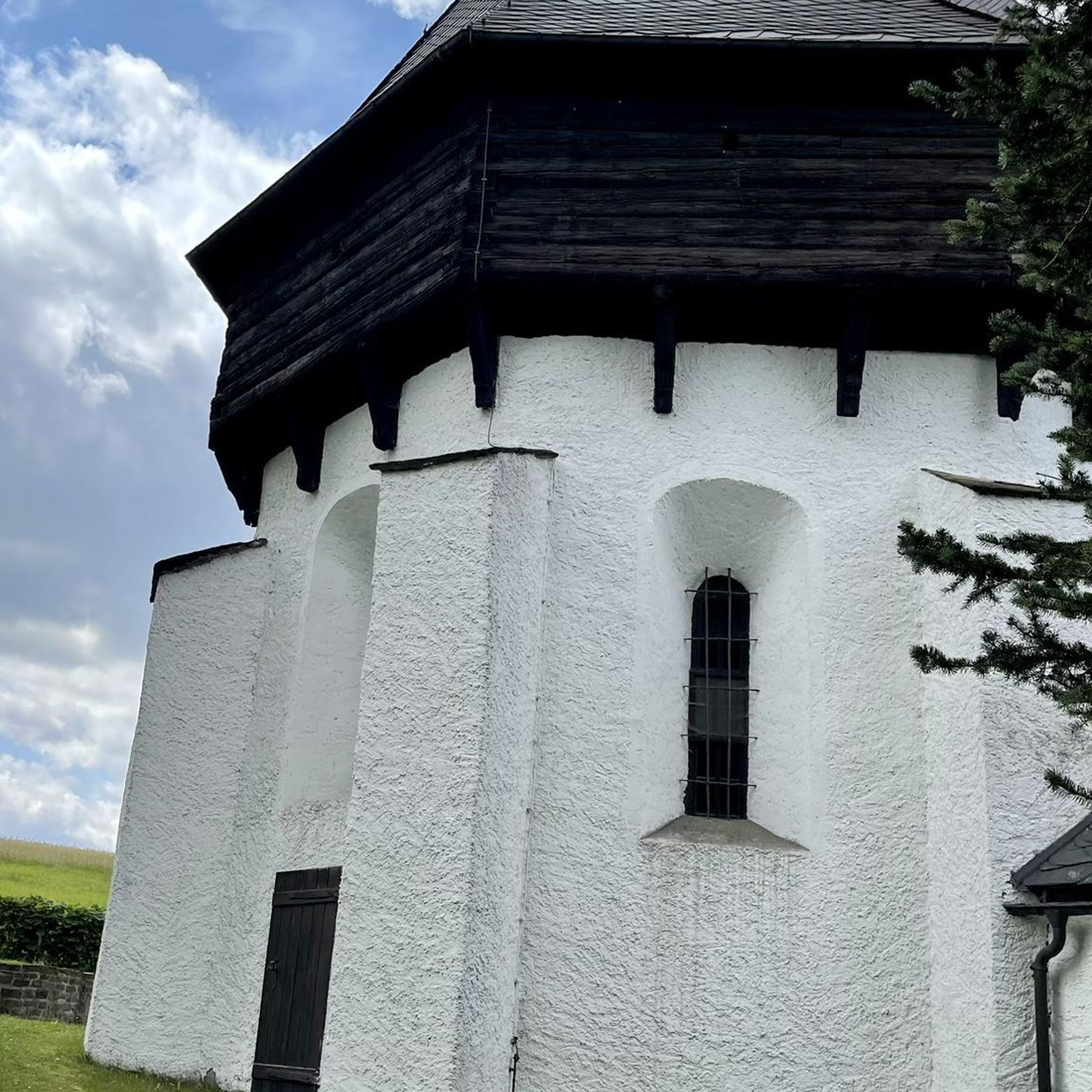
The former chapel of Bruch Castle is now the branch of the registry office of the Wittlich-Land municipality.
6
1

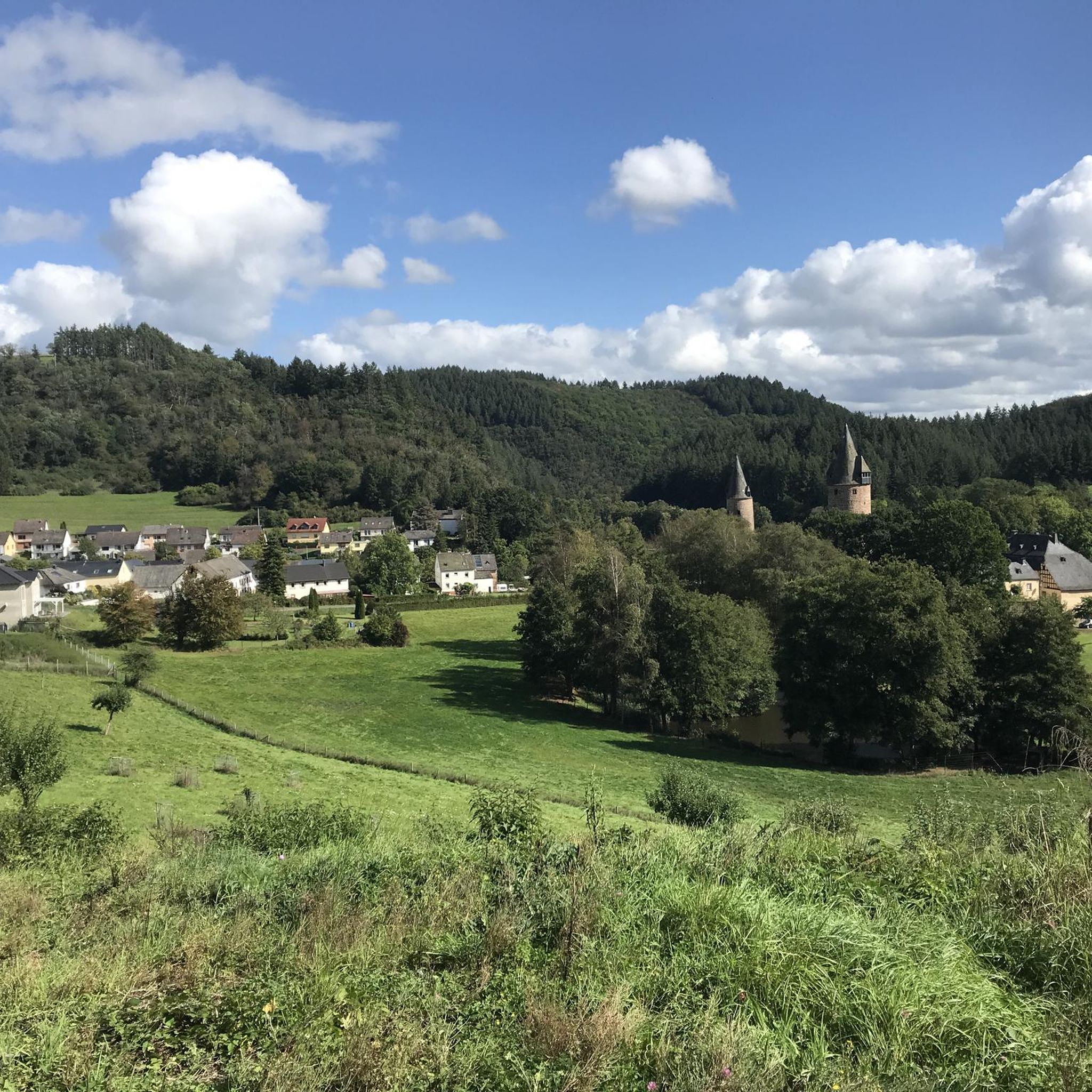
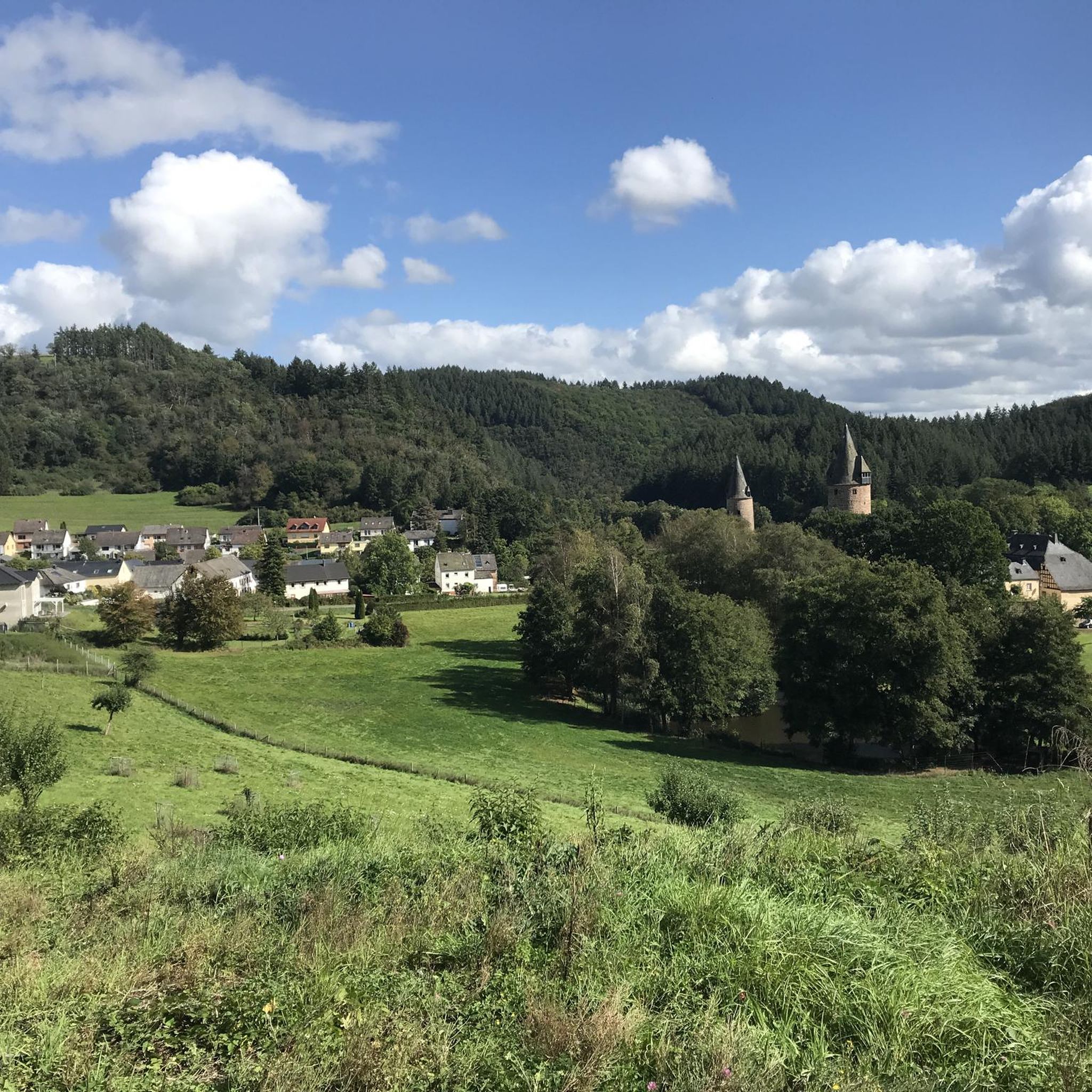
The earliest documented mention of Bruch Castle dates from 1138 (Fridelo von Bruch). The construction of the castle took place during the first half of the 13th century and was probably completed in 1243. In the following centuries, the rule was partly under Electoral Trier, partly under Luxembourg sovereignty, the castle was inherited after the von Bruch family had died out in different ministerial families. The almost rectangular complex of approx. 100 x 50 meters was originally surrounded by a wall and moat. Another ditch divided it into the higher core bailey with palace, keep and gate as well as the larger outer bailey with the outbuildings. Remarkable are the two relatively slim and high round towers, which were raised around 1340 - for the purpose of greater defensive capability of the castle on the border to the Duchy of Luxembourg. The tithe store of considerable length (43 m) dates from around 1650 and had a previous building. There are several sandstone barrel vaults above the ground floor of the current building. From 1995 to 2000 the castle was lovingly and extensively renovated. Individual guided tours are possible by prior telephone arrangement. Source: https://www.eifel.info/a-burg-bruch-in-brucheifel
7
0
Frequently Asked Questions
What is the main castle associated with the Bruch region?
The primary castle in the region is Bruch Castle, a historic water castle first mentioned in 1138. It features distinctive medieval architecture, including a gatehouse, a five-story corner tower, and a round tower, and was extensively renovated between 1995 and 2000.
Are there family-friendly castles to visit around Bruch?
Yes, both Bruch Castle and Föhren Castle are listed as family-friendly. Bruch Castle even has a beer garden in its courtyard, which can be a pleasant stop for families.
What historical periods do the castles around Bruch represent?
The castles around Bruch offer a glimpse into various historical periods. Bruch Castle dates back to the 12th and 13th centuries, with significant 14th-century defensive enhancements. Föhren Castle has origins in the 14th century and was rebuilt in the Baroque style in 1663. Additionally, the Celtic Fortress Wachenbach represents much older history, dating from around 500 BC to 500 AD, spanning Celtic and Roman times.
Can I visit Bruch Castle and what amenities does it offer?
Bruch Castle is privately owned but operates as a bed and breakfast. Individual guided tours can be arranged by prior telephone appointment. It also features a beer garden in its courtyard and its former chapel now serves as a branch of the local registry office.
Are there any castles around Bruch that are privately owned and have restricted access?
Yes, Bergfeld Castle is privately owned. To protect privacy, photographs are generally not permitted, and visits are by prior appointment or by booking its holiday apartments or events.
What kind of outdoor activities can I do near the castles around Bruch?
The region around Bruch offers a variety of outdoor activities. You can find numerous MTB trails, road cycling routes, and hiking routes. For example, there are moderate hikes like the "Bruch Historic Oil Mill – Bruch Castle loop from Bruch" and the "Meulenwald Along the Salm – Peter Zirbes House loop from Bruch".
Are there any castles with unique architectural features in the Bruch area?
Bruch Castle is notable for its water castle design, with a moat and a division into a core castle and an outer castle. Its two slender, high round towers were raised around 1340 for defensive purposes. Föhren Castle also features a significant tithe barn, which has been converted into an event space.
What is the significance of the tithe barn at Föhren Castle?
The tithe barn at Föhren Castle is a notable part of the complex. It has been beautifully restored and converted into an event space, offering a unique venue within the historic castle grounds.
Can I find any ancient fortifications older than medieval castles near Bruch?
Yes, the Celtic Fortress Wachenbach is an ancient fortification located on a mountain spur. It features ring-shaped walls with an estimated diameter of about 400 meters, dating back to Celtic and Roman times (around 500 BC to 500 AD).
Are there any specific tips for visiting Bruch Castle?
Bruch Castle is a lavishly renovated complex. Individual tours are possible by prior arrangement, so it's advisable to call ahead. There is also a beer garden on-site with good opening times, offering a pleasant spot to relax.
What is the best time to visit the castles around Bruch?
While specific seasonal recommendations are not provided for all castles, the region's natural beauty, especially around water castles like Bruch Castle, is often best enjoyed during milder weather. Spring and autumn offer pleasant temperatures for exploring the grounds and nearby hiking or cycling routes. Some castles, like Bruch Castle, may have amenities like a beer garden that are more enjoyable in warmer months.
Most popular attractions around Bruch

Get inspired with the komoot mobile app


Explore more
Looking for the best castles somewhere else? Discover other guides around Bruch:
