Top 9 Caves around Mörschbach
Best caves around Mörschbach are situated in a region historically shaped by extensive mining activities, particularly slate extraction. This area, located in the Rhein-Hunsrück-Kreis, features numerous tunnels and caves, many of which are former mines. These sites offer insights into the local geology and industrial heritage. The landscape is characterized by deep valleys carved into the Hunsrück plateau.
Best caves around Mörschbach
- The most popular caves is Old Slate Mine, a cave that highlights the region's historical importance for…
Last updated: September 30, 2026
Steeg Slate Mine
Highlight • Cave
To the right …
Translated by Google •
Tip by

Mönchholzkopf Slate Mine
Highlight • Historical Site
Translated by Google •
Tip by
Sign up now to discover places like this
Get recommendations on the best single tracks, peaks, & plenty of other exciting outdoor places.
Small Cave Entrance
Highlight • Cave
Translated by Google •
Tip by

Ore mine (barred)
Highlight • Cave
The tunnel entrance is very low and secured with a padlock.
Translated by Google •
Tip by
Schinderhannes Cave
Highlight • Cave
To the …
Translated by Google •
Tip by
Sign up for free to discover even more caves around Mörschbach.
Already have an account?
Start today with a free account
Your next adventure awaits.
Tips from the Community


Spectacular insight into slate mining
0
0

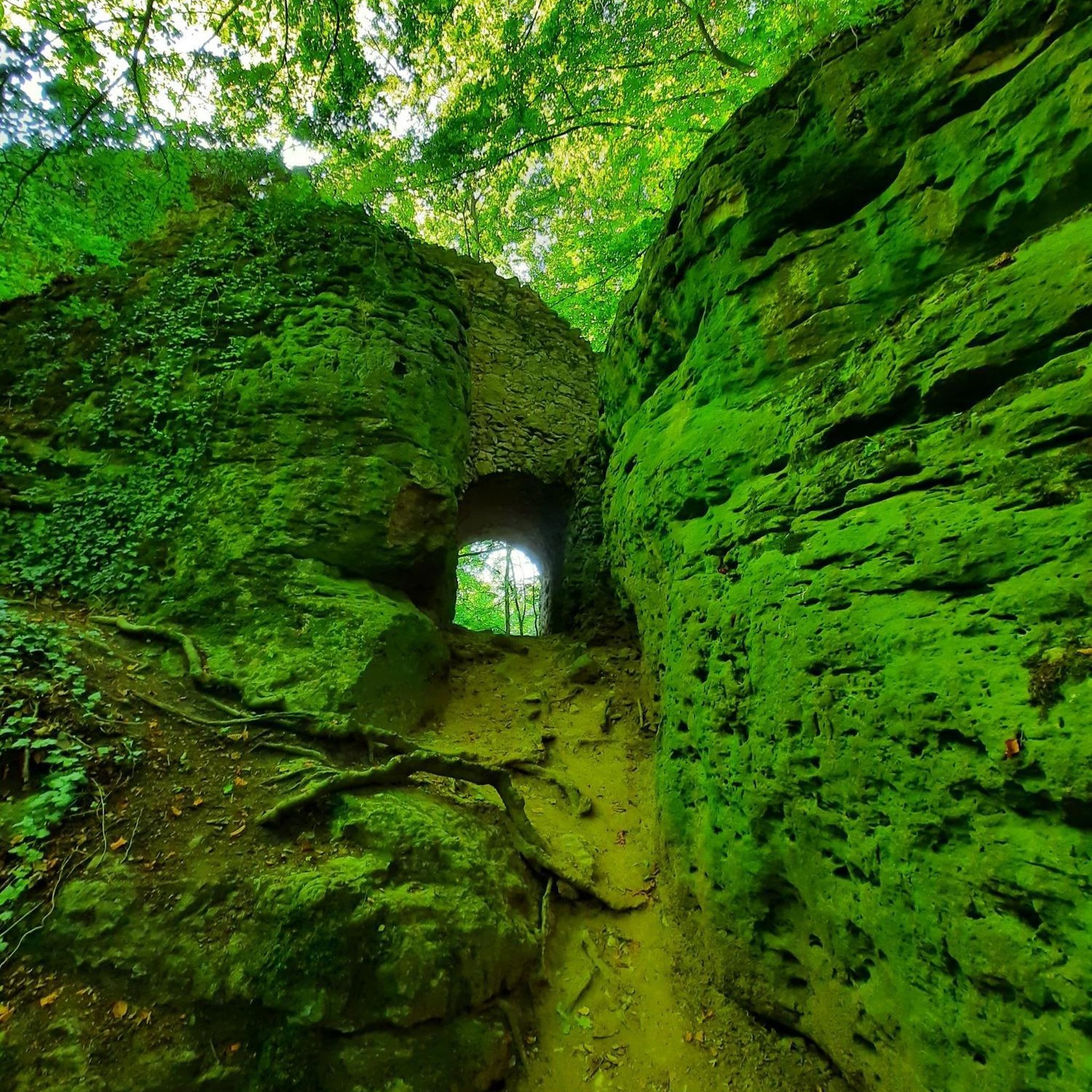
There are several slate mines around Steeg where mining continued until the 20th century. The mines are closed with steel bars for safety reasons.
1
0

Located directly on the street.
1
0

So with these masses of unknown flying objects, we skipped further inspection.
1
0
no chance, the vampires were in the majority and the way to the cave was quite adventurous and overgrown
0
0
Frequently Asked Questions
What kind of caves can I expect to find around Mörschbach?
The caves around Mörschbach are predominantly former mining tunnels, particularly slate and ore mines, rather than natural limestone caves. These sites offer a unique blend of industrial heritage and natural features, with many now serving as important bat habitats. You'll find tunnels, quarries, and historical mining infrastructure.
Are there caves around Mörschbach that visitors can enter and explore?
Yes, some former mines allow for exploration. For instance, the Steeg Slate Mine features tunnels where you can walk through, though parts may be wet. A smaller adjacent tunnel there also allows a close inspection of old machining marks. Many other tunnels are barred to protect bat populations.
What historical insights do the caves around Mörschbach offer?
The region's caves provide a deep look into its historical mining activities, especially slate extraction. Locations like the Old Slate Mine in the Bacharach area highlight the importance of slate for construction and roofing. You can often see remnants of old buildings, tools, and mining patterns at sites like the Mönchholzkopf Slate Mine.
Are there any family-friendly caves or activities near Mörschbach?
While many former mines are barred for safety or ecological reasons, the general area offers varied paths suitable for families. The Small Cave Entrance, though only a few meters deep, is described as a beautiful and varied path with surprising moments, located directly on the street, making it easily accessible for a quick look.
What natural features or wildlife can be observed around the Mörschbach caves?
Many of the former mining tunnels, such as the Mönchholzkopf Slate Mine and those in the Baybachtal area, are now crucial sheltered sleeping places and habitats for bats. The region itself is characterized by deep valleys carved into the Hunsrück plateau, offering scenic natural landscapes.
What outdoor activities can I do near the caves around Mörschbach?
The Mörschbach area is excellent for various outdoor activities. You can find numerous routes for gravel biking, road cycling, and running. These routes often pass by historical sites and natural viewpoints, allowing you to combine cave exploration with other sports.
Is it possible to visit the Ore mine (barred) near Mörschbach?
The Ore mine (barred) is secured with a padlock and has a very low entrance. While it leads 60 meters into the mountain with a mining chamber and a vertical shaft, it is generally inaccessible to the public due to safety concerns and to protect its integrity. It's best appreciated from the outside.
What is the best time to visit the caves and surrounding area in Mörschbach?
The region around Mörschbach is generally pleasant to visit during spring, summer, and autumn for outdoor activities and exploring the cave exteriors and accessible tunnels. Winter visits might offer a different perspective, but some paths could be more challenging due to weather conditions. Always check local conditions before heading out.
Are there any specific safety considerations when exploring the former mines?
Yes, safety is paramount. Many former mines, especially those not officially designated for public access, can have unstable ground, loose slate, or deep shafts. For example, the Upper Laykaul Slate Cave is partially collapsed, and visitors are advised not to enter due to loose slate. Always respect barriers and warnings, and if entering any accessible tunnels, bring a flashlight and be aware of potentially wet or uneven surfaces.
Where can I find parking near the caves around Mörschbach?
Parking availability varies by specific location. Many of the former mines and natural features are situated along hiking or cycling routes, where you might find designated parking areas at trailheads or in nearby villages. It's advisable to check specific access points for parking information before your visit.
What do visitors enjoy most about the caves around Mörschbach?
Visitors appreciate the unique blend of history and nature. The opportunity to walk through tunnels like the Steeg Slate Mine and see old machining marks offers a tangible connection to the past. The scenic beauty of the Hunsrück landscape, combined with the intriguing historical sites, makes for a rewarding exploration.
Most popular routes around Mörschbach
Most popular attractions around Mörschbach

Get inspired with the komoot mobile app


Explore more
Extend your search for the best caves by checking out these guides of the top ones around Mörschbach:
