Top 8 Gorges around Steineberg
Best canyons around Steineberg are found in a region characterized by unique geological features, including volcanic landscapes and river-carved gorges. While Steineberg itself is a mountain in Bavaria, Germany, the guide highlights canyons in the broader region known for its distinctive natural formations. These areas offer diverse terrain, from steep lava walls to winding river valleys, providing varied experiences for outdoor enthusiasts.
Best canyons around Steineberg
- The most popular canyons is Lieser Valley, a gorge that features the Lieserpfad,…
Last updated: June 27, 2026
Lieser Valley
Highlight (Segment) • Gorge
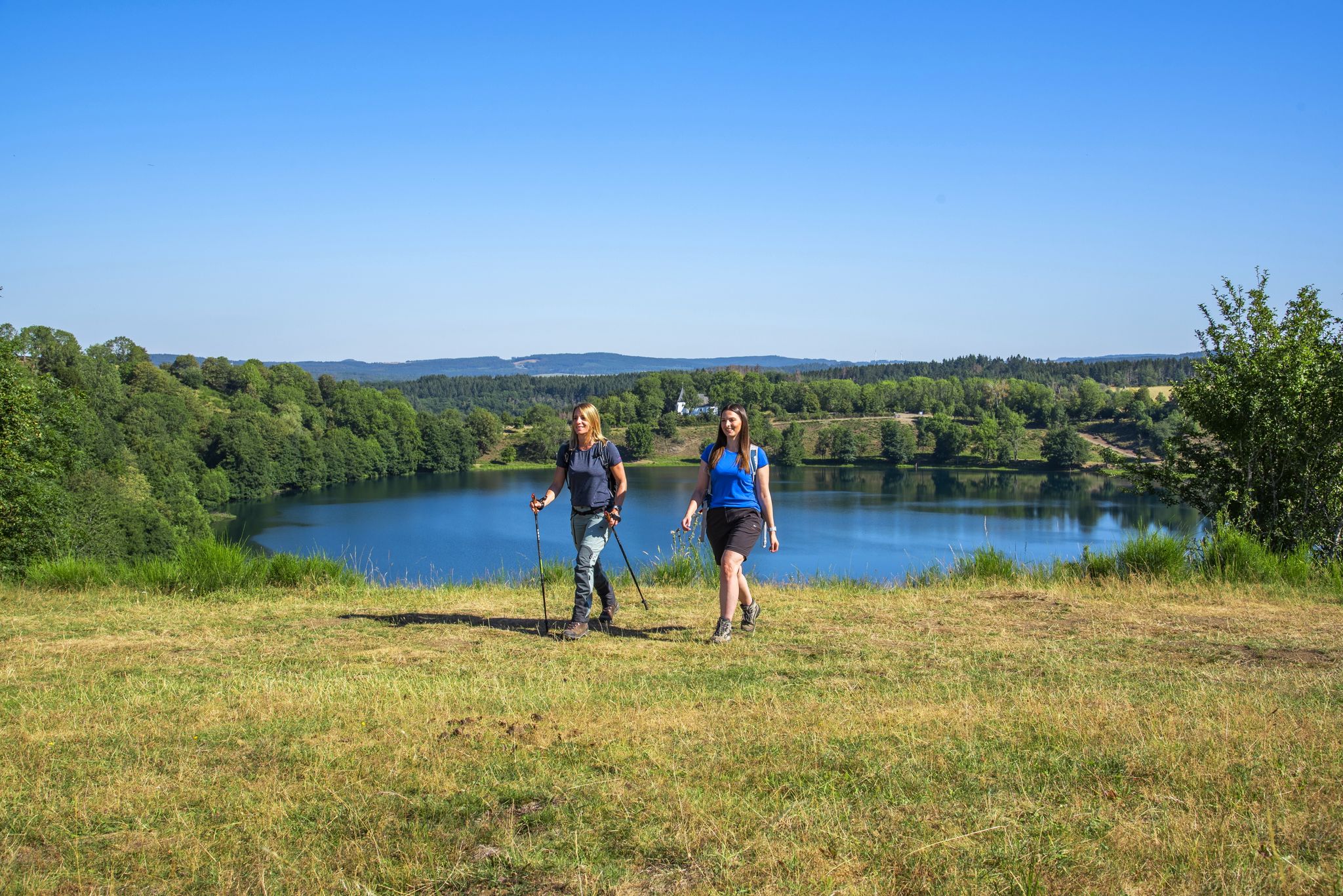
It is only a stream that flows into the Moselle at the place Lieser but it meanders through fantastic nature! A highlight!
Translated by Google •
Tip by

Strohner Switzerland
Highlight • Gorge
Translated by Google •
Tip by

Sign up now to discover places like this
Get recommendations on the best single tracks, peaks, & plenty of other exciting outdoor places.
Sign up for free
Idyllic Alfbach Valley
Highlight • Gorge
Translated by Google •
Tip by

Strohner Schweiz Gorge (Alfbach Valley)
Highlight • Gorge
Translated by Google •
Tip by

Lieser Valley
Highlight • Gorge
Translated by Google •
Tip by
Sign up for free to discover even more gorges around Steineberg.
Sign up for free
Already have an account?
Start today with a free account
Your next adventure awaits.
Login or Signup
Other adventures around Steineberg

Tips from the Community

Simply experience a wonderful piece of nature.
0
0

Beautiful valley along the stream. The Alfbach is integrated into the hiking trail "Strohner Schweiz"
0
0


The Alf (also: "Alfbach") is a nearly 52 km long, orographically left tributary of the Moselle. The Alf rises about 1 km northeast of Hörscheid in the Volcanic Eifel. From its source at 549 m above sea level, the Alf initially flows in a southerly direction. The first town on its route is Darscheid, past whose eastern edge it flows. The next towns directly along its course are Gillenfeld and Strohn. In its upper reaches up to Strohn, the Alf flows for a long time in a wide and broadly gravelled valley, which is followed from near Steiningen to just before Udler, which is also outside the valley basin, briefly by the A 48 motorway and then for a longer period by the A 1 motorway, and a little later, starting at the Mehren industrial estate and ending at Gillenfeld, the Maare-Mosel cycle path, which runs there on the route of the former railway line from Wittlich to Daun. In the following middle section, which continues southwards to Bausendorf, the course of the Alf is quite winding and is more deeply embedded in the Eifel hills; there are only mills on the river. While the direction of the river was predominantly south up to Bausendorf, it turns east there and flows through the towns of Kinderbeuern and Bengel, south of the Kondelwald. Around 3.5 km downstream from Bengel, it abruptly turns north, as the ridge with the Reiler Hals blocks the further route eastwards to the Moselle, which is only 500 m away. After the Alf has taken in the Üßbach from the northwest, by far its largest tributary, whose partial catchment area even exceeds its own up to that point, it breaks its way eastwards for less than three kilometres through the Moselle mountains and then flows into the Moselle from the left in Alf in the Cochem-Zell district at 92 m above sea level. After a 52 km long course with an average bed gradient of 8.8 ‰, the Alf flows into the river 459 meters below its source.
0
0
A beautiful, narrow path, on which you feel completely safe, leads through the short stretch of Strohner Schweiz, along the wildly romantic Alfbach.
2
0
Strohner Switzerland refers to the breakthrough valley of the approximately 52 km long Alfbach, and is called "Switzerland" because of the steep volcanic rock slopes. It starts at the Strohn lava bomb, initially along a road with little traffic, but soon it goes down to the Alfbach, onto narrow paths where you still feel safe. The wild, romantic valley ends at Sprink.
2
0
Small section in "Strohner Switzerland", as the breakthrough valley of the Alfbach near Strohn is called because of the steep slopes and wildly romantic landscape. The narrow hiking path is easy to walk (but not barrier-free). It's almost unfortunate that this section is relatively short, but it's very nice!
2
0
Frequently Asked Questions
What kind of natural features can I expect to see in the canyons around Steineberg?
The region around Steineberg is characterized by unique geological features, including volcanic landscapes and river-carved gorges. You'll find diverse terrain, from steep lava walls in areas like Strohner Switzerland to winding river valleys such as the Lieser Valley. These areas often feature natural monuments, impressive rock formations, and scenic viewpoints.
Are there any unique geological formations in the canyons near Steineberg?
Yes, the region is known for its distinctive geological formations, particularly those shaped by volcanic activity. For instance, Strohner Switzerland features steep lava walls where the Alfbach river has carved its way through ancient lava flows, creating a wild and romantic landscape. This area is part of the longest lava flow in the Eifel.
Are there hiking trails available in the canyons around Steineberg?
Absolutely. The canyons around Steineberg offer numerous hiking opportunities. The Lieser Valley, for example, is home to the Lieserpfad, known as a beautiful hiking area with a stream meandering through natural landscapes. Similarly, the Idyllic Alfbach Valley offers a narrow, scenic path along the Alfbach river.
What is the difficulty level of hiking trails in the canyons near Steineberg?
Many trails in the canyons around Steineberg are considered to be of intermediate difficulty. While some paths, like those in the Idyllic Alfbach Valley, are described as easy to walk, they may not be barrier-free. The terrain can include steep sections, especially in areas with volcanic rock slopes, offering varied experiences for hikers.
What other outdoor activities can I do near the canyons around Steineberg?
Beyond canyon exploration, the broader region around Steineberg offers a variety of outdoor activities. You can find extensive options for gravel biking, road cycling, and running. These guides feature numerous routes with varying distances and difficulty levels, allowing you to explore the diverse landscapes of the area.
Are the canyons around Steineberg suitable for families?
While specific family-friendly ratings for all canyon trails are not available, many paths, such as those in the Idyllic Alfbach Valley, are described as easy to walk, making them potentially suitable for families. However, some areas feature steep slopes and narrow paths, so it's advisable to check specific trail descriptions for suitability with younger children or strollers.
Can I bring my dog to the canyon trails near Steineberg?
Many natural trails in the region are generally dog-friendly, allowing you to explore with your canine companion. However, it's always recommended to keep dogs on a leash, especially in nature protection areas or on narrow paths, and to be mindful of local regulations and other visitors. Specific rules may vary by location.
What is the best time of year to visit the canyons near Steineberg?
The canyons are generally beautiful to visit during spring, summer, and autumn when the weather is mild and the natural scenery is vibrant. Spring brings lush greenery, while autumn offers colorful foliage. While winter hikes are possible, conditions can be challenging due to ice or snow, especially on steep or narrow paths. Always check local weather and trail conditions before your visit.
What do visitors particularly enjoy about the canyons near Steineberg?
Visitors frequently praise the fantastic nature and the impressive, wild, and romantic landscapes. Many appreciate the numerous hiking opportunities and the scenic beauty, with paths meandering through natural settings and offering many panoramas. The unique geological features, like the steep lava walls in Strohner Switzerland, are also a highlight for many.
Are there any circular canyon walks around Steineberg?
Yes, there are circular routes that incorporate sections of the canyons. For example, some visitors have enjoyed circular routes that pass through areas like Strohner Schweiz Gorge (Alfbach Valley), often starting near the Strohn lava bomb and following the Alfbach river. These routes allow for a comprehensive experience of the local natural beauty.
Is there parking available near the canyons?
Parking is generally available at common starting points for hikes and attractions in the region. For specific canyons like Strohner Switzerland or the Lieser Valley, designated parking areas are usually provided for visitors. It's advisable to check local signage or online maps for the most convenient parking spots before your trip.
What are some of the most noteworthy canyons to visit near Steineberg?
Among the noteworthy canyons, the Lieser Valley stands out for its beautiful hiking area along the Lieserpfad. Another impressive spot is Strohner Switzerland, characterized by its steep lava walls and wild, romantic landscape carved by the Alfbach river. The Idyllic Alfbach Valley, a section of Strohner Switzerland, also offers a very scenic hiking experience.
Most popular routes around Steineberg
Most popular attractions around Steineberg

Get inspired with the komoot mobile app


Explore more
Already discovered everything in this region? See additional gorges around Steineberg for your next adventure:
