Top 8 Caves around Hüttlingen
Best caves around Hüttlingen are situated within the broader Swabian Alb region, an area recognized for its diverse underground formations. The landscape features natural caves with archaeological significance and former mining tunnels. This geological setting provides a range of subterranean experiences, from historical mines to natural grottoes. The region's caves offer insights into geological processes and past human activity.
Best caves around Hüttlingen
- The most popular caves is Friedrichshöhle Trail, a trail that leads to a cave. It is…
Last updated: May 14, 2026
Friedrichshöhle Trail
Highlight (Segment) • Trail
Translated by Google •
Tip by

Lourdes Grotto, Hohenberg
Highlight • Religious Site
Translated by Google •
Tip by

Sign up now to discover places like this
Get recommendations on the best single tracks, peaks, & plenty of other exciting outdoor places.
Sign up for free
Hohler Stein Cave
Highlight • Cave
Translated by Google •
Tip by

Langertstein Viewpoint (Langertstein Lookout)
Highlight • Viewpoint
Translated by Google •
Tip by

Tiefer Stollen Visitor Mine
Highlight • Historical Site
aalen-kultur.de/weihnachtsmarkt-im-und-am-tiefen-stollen.198740.htm
The mine train goes along
approx. 20 km/h along the tunnel.
Great fun 👍!
Translated by Google •
Tip by

Sign up for free to discover even more caves around Hüttlingen.
Sign up for free
Already have an account?
Start today with a free account
Your next adventure awaits.
Login or Signup
Tips from the Community

Pastor Franz Josef Fuchs had the Lourdes Grotto built into the northern slope of Hohenberg Mountain. It was consecrated on June 20, 1886. Glass particles from the Rosenberg glass factory can still be seen in the Lourdes Grotto today. Slag stones from the disused glass factory were used as building material, into which various colored glass was melted. The grotto is freely accessible and can be reached via a path northwest of the pilgrimage church of St. James. It is located in a small wooded area directly next to a small pond. Cycling is prohibited, but you can easily push your bike down from Hohenberg Mountain; there are a few steps at the bottom. You can continue by bike from the grotto.
1
0
Pastor Franz Josef Fuchs had the Lourdes Grotto built into the northern slope of Hohenberg Mountain. It was consecrated on June 20, 1886. Glass particles from the Rosenberg glass factory can still be seen in the Lourdes Grotto today. Slag stones from the disused glass factory were used as building material, into which various colored glass was melted. The grotto is freely accessible and can be reached via a path northwest of the pilgrimage church of St. James. It is located in a small wooded area directly next to a small pond. Cycling is prohibited, but you can easily push your bike down from Hohenberg Mountain; there are a few steps at the bottom. You can continue by bike from the grotto.
1
0

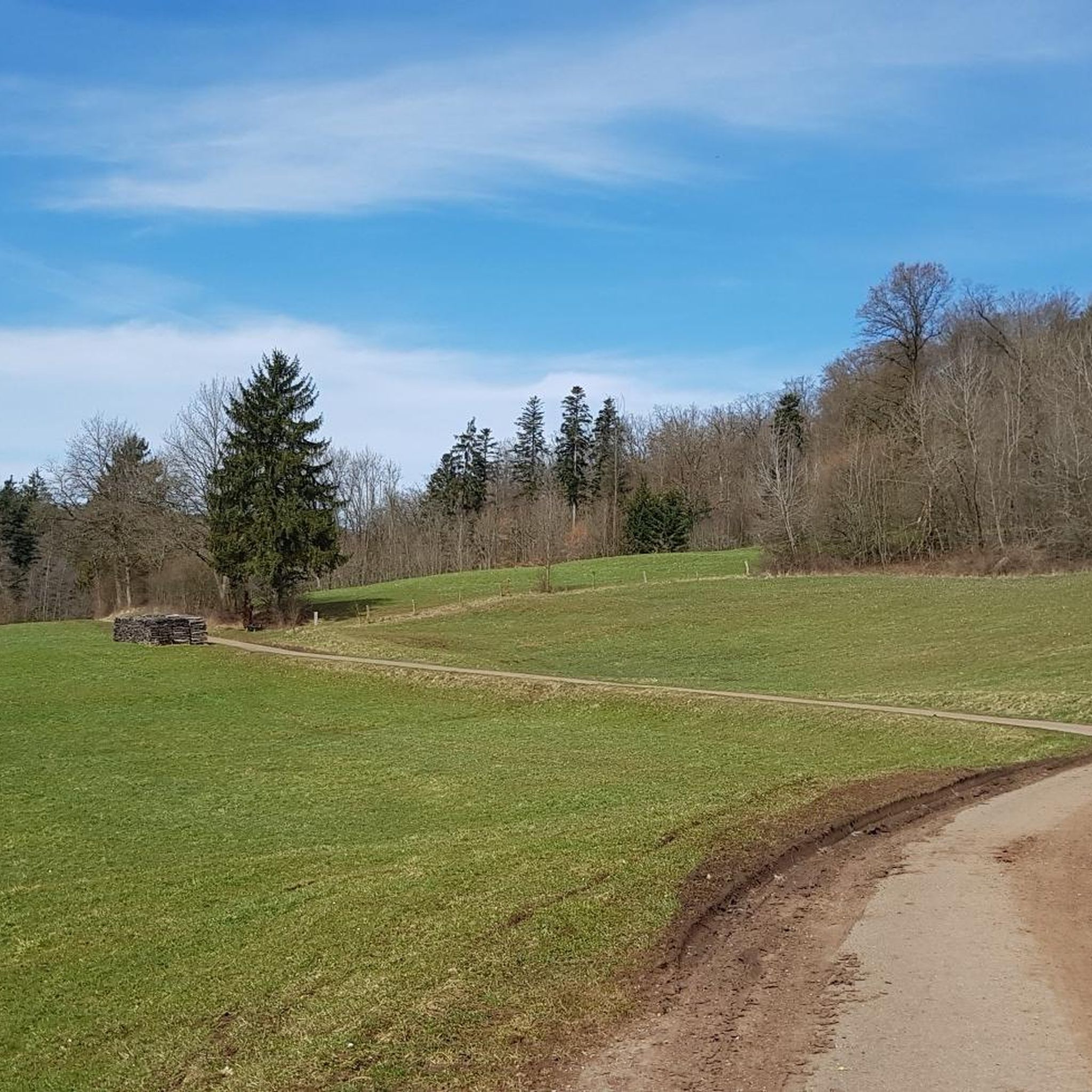
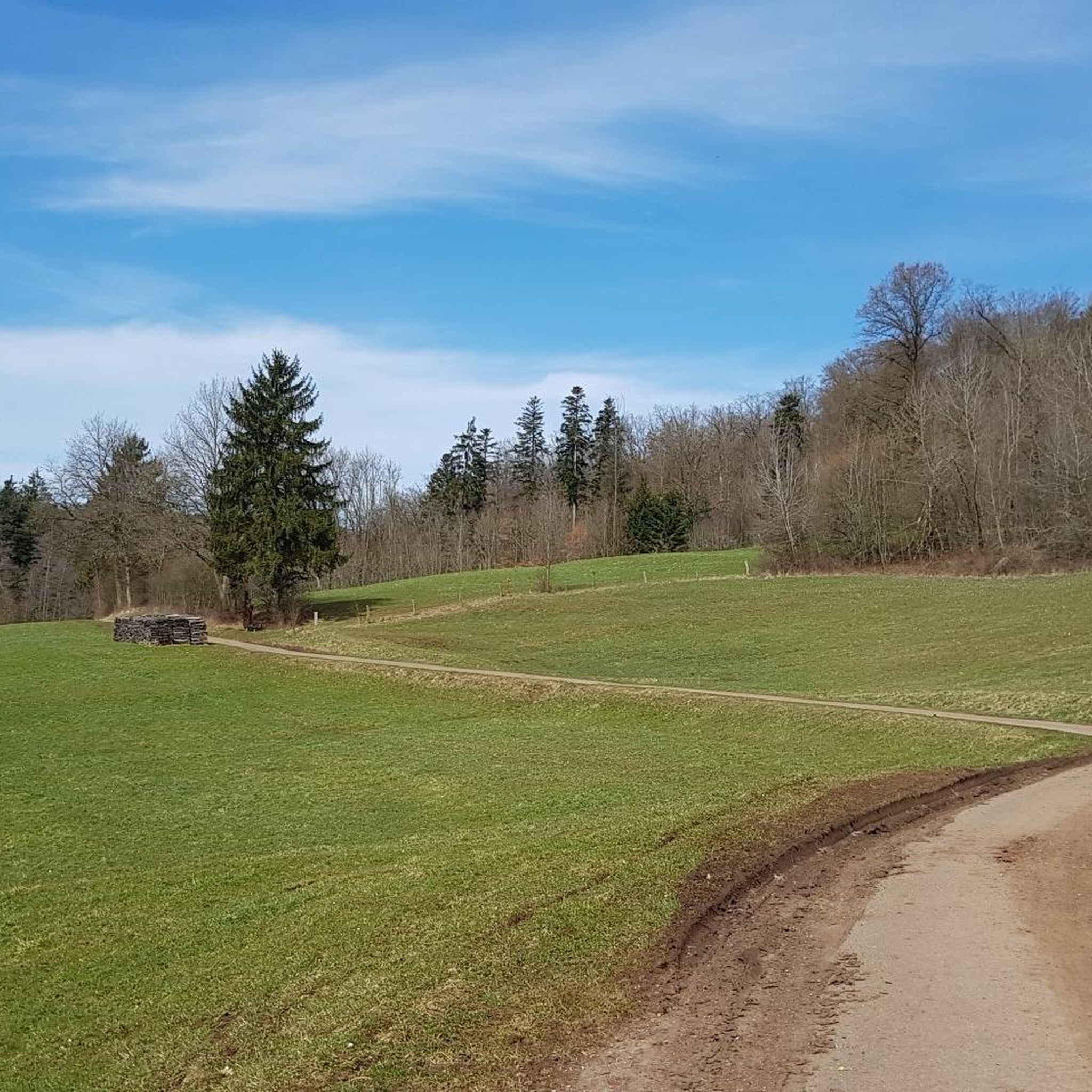
short trail, you can also take a few jumps
1
0

Good location, there are many such tunnels here.
1
0

A bit out of the way but easily accessible when the ground is dry. CAUTION when wet.
0
0

The rock formation here has a large hole. The path down into the valley to Glashütte is quite challenging. A T2 trail. The Hohle Stein in Unterkochen The Hohle Stein lies above Unterkochen-Glashütte on a steep rocky outcrop. It represents a spacious rock hollow, complemented by two cave chimneys leading upwards and a long, very shallow cave passage. This place is also popularly known as the "Hell's Throat," which is quite appropriate, as entering from above is not entirely safe and plunges vertically into the ground, and is only recognized at a later stage. The Hohle Stein is the most famous and legendary cave in Unterkochen, located next to the "Schlossbaufeld" (castle building field) where the Kocherburg castle once stood. Among other things, an old tradition tells us that the Hohle Stein served as a hiding place during wartime, which is quite conceivable, given its well-hidden location on a steep mountain slope, offering protection from bad weather and making it difficult for strangers without good local knowledge to find. The fact that people occasionally stayed at the Hohle Stein is also confirmed by a hearth with a chimney in the rock. Its legendary status and proximity to other attractions, such as sections of the Härtsfeld Railway, the Kocherburg Tunnel, the viaduct, the prehistoric ramparts, and the Kocherburg Castle, make a trip there worthwhile. Source: https://www.aa-history.de/Hohler_stein_Text.html
6
1

The descent to the cave is very steep, make sure you are sure-footed
0
0

You can find more information about the Christmas market here: https://www.aalen-kultur.de/weihnachtsmarkt-im-und-am-tiefen-stollen.198740.htm The mine train goes along approx. 20 km/h along the tunnel. Great fun 👍!
13
0
Frequently Asked Questions
What are the most popular caves and grottoes to visit around Hüttlingen?
Among the most appreciated spots by the komoot community are the Lourdes Grotto, Hohenberg, a unique religious building built into a mountain slope, and the Langertstein Viewpoint, which features a cave and offers magnificent views. The Friedrichshöhle Trail also leads to a cave and is known for its easy path with small jumps.
Are there any caves with historical significance near Hüttlingen?
Yes, the Tiefer Stollen Visitor Mine in Aalen-Wasseralfingen is a former iron ore mine that operated until 1945. It offers a unique insight into the region's industrial history, with visitors exploring the extensive tunnel system in a lorry. The iron ore found here dates back approximately 170 million years.
Are there family-friendly cave experiences available?
The Tiefer Stollen Visitor Mine is categorized as family-friendly, offering an engaging experience with its mine train ride. Further afield, the Bärenhöhle (Bear Cave) in the Swabian Alb also provides a relatively short, guided tour with a bear skeleton display, which can be interesting for families.
What kind of natural features can I expect to see in the caves around Hüttlingen?
The region's caves showcase diverse natural formations. For instance, the Hohler Stein Cave features a spacious rock hollow with two cave chimneys. The Swabian Alb, which surrounds Hüttlingen, is known for its impressive stalactites and stalagmites in caves like Nebelhöhle, and unique geological formations such as the Rosenstein's extensive cave system.
Are there any unique cave experiences, like boat tours?
Yes, the Wimsener Höhle (Wimsen Cave or Friedrichshöhle), located further in the Swabian Alb, is the only water cave in Germany that can be entered by boat. Visitors can travel 70 meters into the cave, offering a unique journey into an active underground river system.
What outdoor activities can I combine with a visit to the caves?
The area around Hüttlingen offers various outdoor activities. You can find numerous hiking trails, including easy routes like the Four Seasons Wooden Sculpture loop. For cyclists, there are MTB trails, such as the Niederalfingen Castle – Laubach Castle loop. There are also running trails like the Path to Schlierbach loop.
Are there any caves that are freely accessible?
Many of the over 40 caves on the Rosenstein near Heubach are freely accessible, at least during the summer months. This includes the Great Scheuer Cave, a tunnel-like living cave, and the Dreieingangshöhle (Three-Entrance Cave).
When is the best time to visit the caves around Hüttlingen?
Many natural caves, such as the Falkenhöhle, Bärenhöhle, and Nebelhöhle, are closed during winter (typically November to March) to protect hibernating bats. For these, spring through autumn is the best time to visit. Show mines like the Tiefer Stollen Visitor Mine may have specific operating hours, including special events like Christmas markets in December, so it's advisable to check their schedules.
Are there any caves known for their ecological importance?
Yes, the Falkenhöhle (Falcon Cave) is closed in winter specifically to protect hibernating bats, highlighting its ecological role as a vital habitat for these creatures. Similarly, the Bärenhöhle and Nebelhöhle also close during winter for bat protection.
What should I bring for cave exploration in the Hüttlingen area?
For guided tours in show caves, specific gear might not be necessary beyond comfortable walking shoes and appropriate clothing for cool, damp conditions. For exploring freely accessible natural caves, especially those requiring surefootedness like the Hohler Stein Cave, sturdy footwear, a headlamp or flashlight, and potentially protective clothing are recommended. Always check specific requirements for each cave.
Are there any caves that are part of a larger hiking route?
The Great Scheuer Cave on the Rosenstein is located directly on the Albsteig, making it a convenient stop for hikers exploring this long-distance trail. The Friedrichshöhle Trail is also a dedicated route leading to a cave, offering an integrated hiking and cave experience.
Where can I find unique rock formations in the caves near Hüttlingen?
The Hohler Stein Cave is known for its distinctive rock formation with a large hole and cave chimneys. The broader Swabian Alb region, home to many caves, is renowned for its diverse karst topography, including impressive stalactites and stalagmites found in show caves like Nebelhöhle.
Most popular routes around Hüttlingen
Most popular attractions around Hüttlingen

Get inspired with the komoot mobile app


Explore more
Extend your search for the best caves by checking out these guides of the top ones around Hüttlingen:
