Top 4 Caves around Elbingen
Best caves around Elbingen are found within a region characterized by diverse natural landscapes, including forests and geological formations. The area offers opportunities to explore unique underground environments. These natural features contribute to the region's appeal for outdoor activities and discovery. The presence of various cave types provides insight into the geological history of the Elbingen area.
Best caves around Elbingen
- The most popular caves is Eternal Ice at Dornburg, a natural monument and cave that features ice formations…
Last updated: June 26, 2026
Eternal Ice at Dornburg
Highlight • Natural Monument
Translated by Google •
Tip by

Wolf Cave
Highlight • Cave
Translated by Google •
Tip by

Sign up now to discover places like this
Get recommendations on the best single tracks, peaks, & plenty of other exciting outdoor places.
Sign up for free
Bärenloch Prehistoric Karst Cave
Highlight • Cave
It's already pretty overgrown.
Translated by Google •
Tip by

Bear cave
Highlight • Cave
Translated by Google •
Tip by

Start today with a free account
Your next adventure awaits.
Login or Signup

Tips from the Community

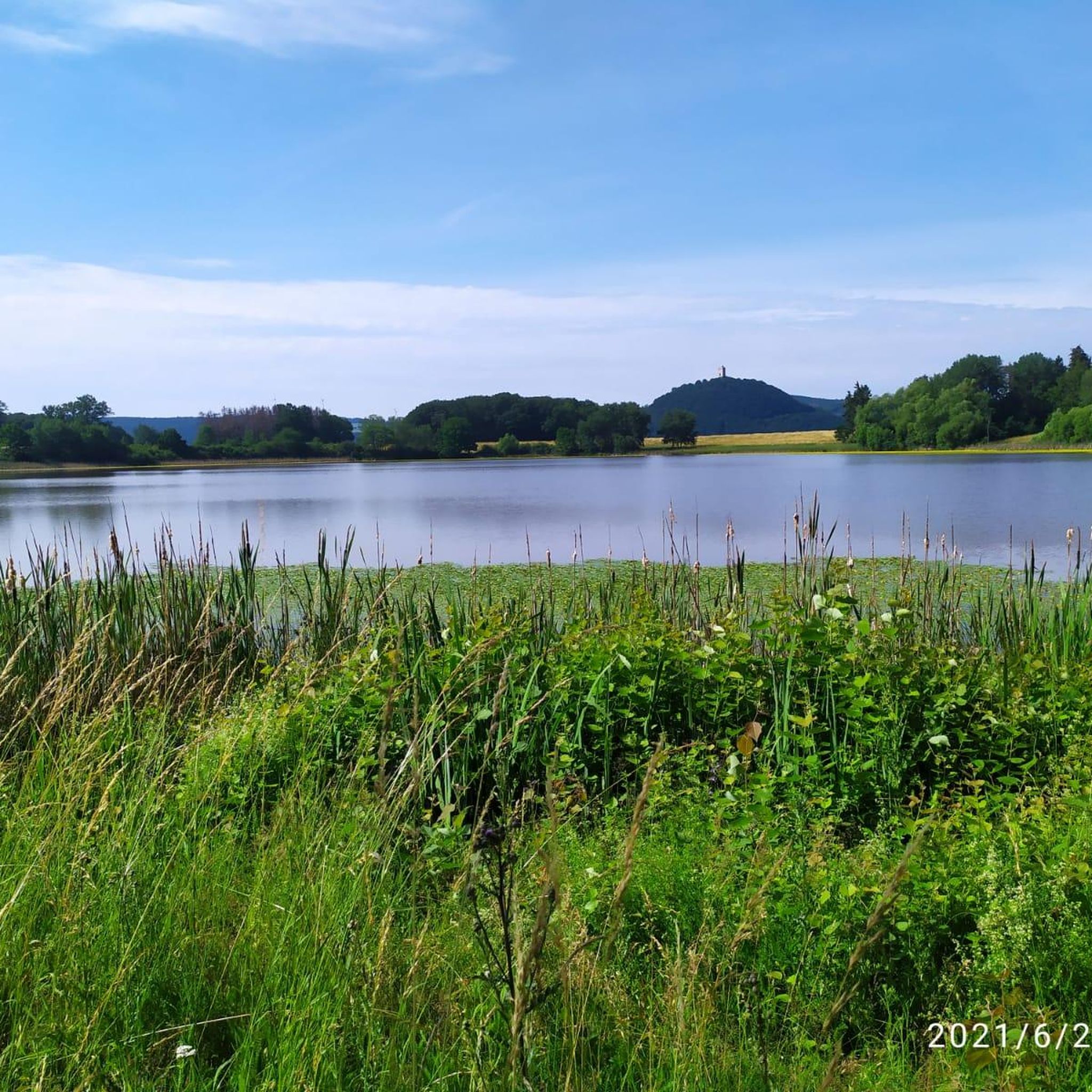
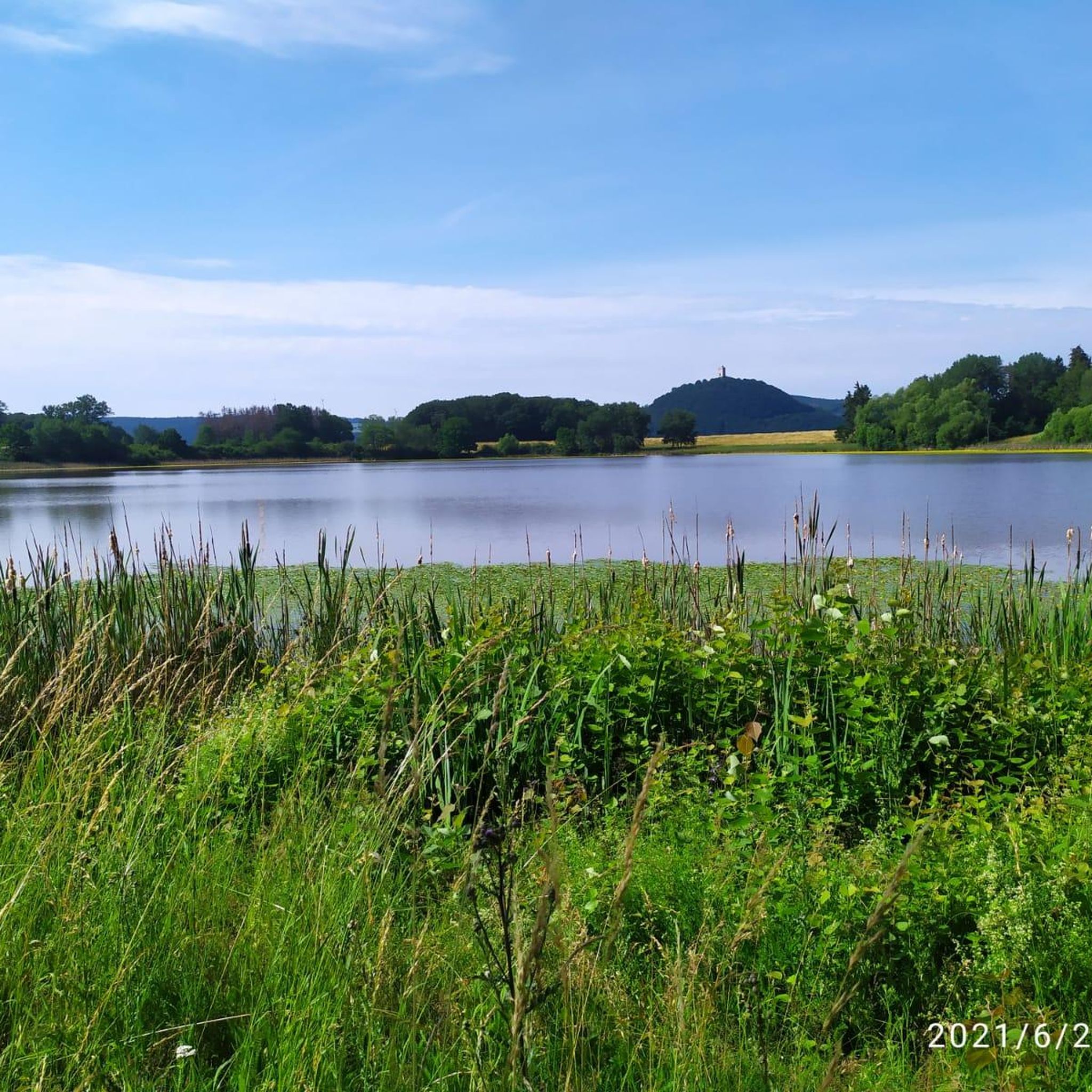
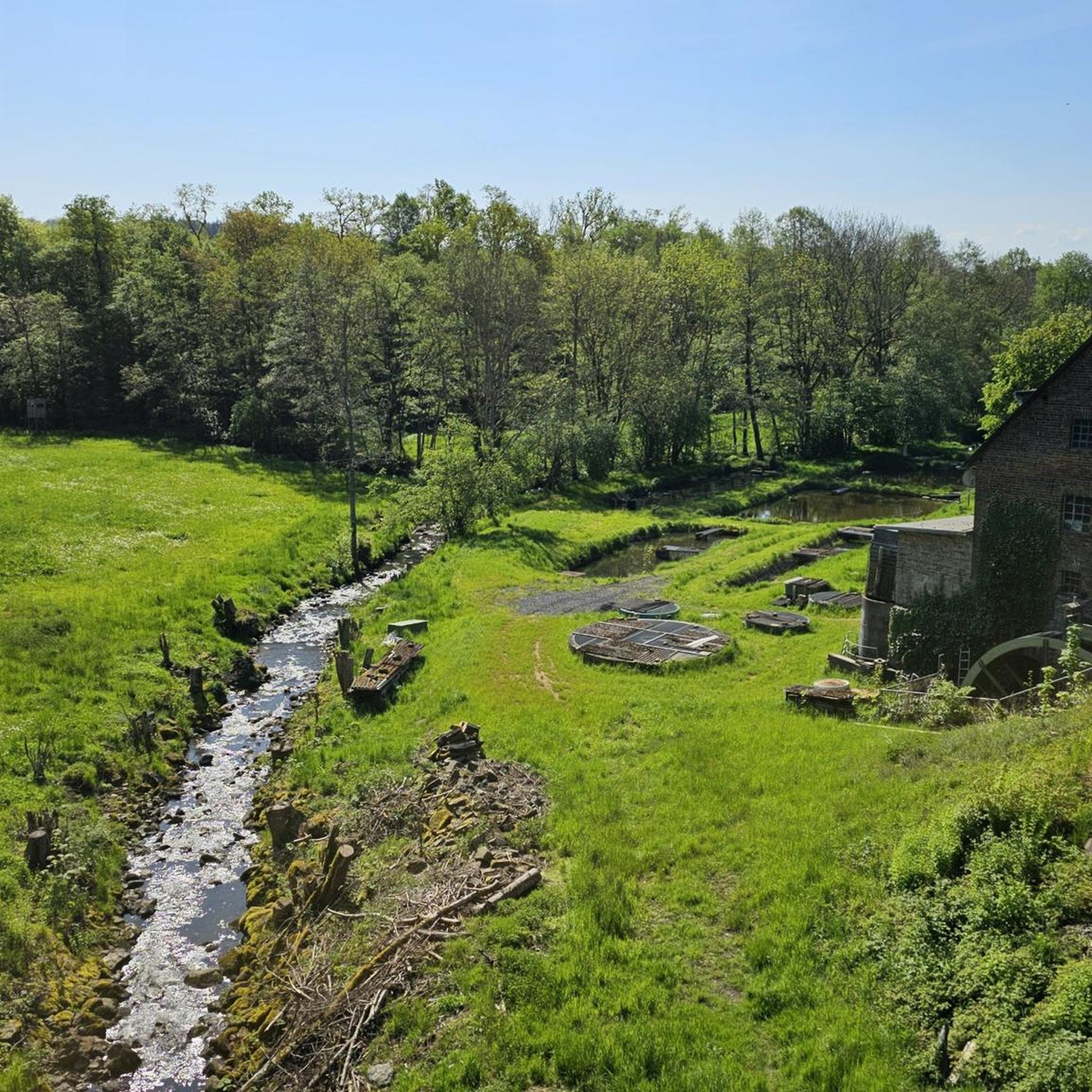
The cave is hidden in a sheltered spot near the water, where you can easily imagine why the "cavemen" chose it as their place of residence. Today bats live there, so it is closed. But you can look inside and there is a bench and an information board about bats and the Neolithic finds.
2
0

Simply fascinating and definitely worth a visit to the eternal ice. Pleasant cooling off on hot days and you can also linger here very well. A sign explains the phenomenon of "Eternal Ice" in a way that everyone can understand. We will definitely come back here.
8
1

unfortunately you cannot enter the cave
0
1

this cave (man-made) is constantly being rebuilt
1
0
Shortly before the puppies are born, the pregnant she-wolf looks for a cave in which she gives birth to her offspring and houses them for protection. A wide variety of loopholes are useful for this, such as deep riverbank hollows, cavities under fallen trees or rock overhangs, hollow tree trunks, a gap between rocks and so on. Sometimes wolves also use abandoned burrows of other animals such as bear caves or beaver dams. Often caves have been used by wolves for generations. A cave in Jasper National Park was used eight times in 15 years. Another on Ellesmere Island may be even older. Bones up to 783 years old have been found in it. In an ordinary wolf cave, the birth chamber is at the end of a tunnel that can be up to 5 meters long in soft earth. The cave itself is often slightly elevated from the rest of the tunnel. The birth chamber has a diameter of about 90cm and is about 60cm high. The cave entrance has a width of about 50cm to 70cm and a height of about 38cm to 50cm. Often the cave is located near a water source and at an elevated place so that the wolf can spot approaching enemies early. The alpha male stays outside the cave for protection and often plays the decoy to lure approaching predators such as bears and eagles away from the cave, whose prey can be a very young puppy. Although wolves often defend their den against wild predators, they will usually run away when humans approach them. Over the years, wolves change their burrows and relocate with their offspring, covering a distance of more than 1.6km. This happens either due to a parasitic infection of the cave or disturbance from humans or other animals.
1
0

Interesting geological feature. Well signposted and you can feel the cold air immediately.
6
0

If the temperatures rise above 30 degrees and make us sweat a lot, then a visit to the Eternal Ice in Dornburg is recommended, where the outside temperatures are a pleasant 20 degrees and very close to the mountain even drop to 3 degrees. Everyone has probably heard of the eternal ice in Dornburg. I was also familiar with it, but unfortunately I had never been there myself in all those years. Due to a professional appointment, I was lucky enough to get to know this place for the first time. Coming from Frickhofen in the direction of Wilsenroth, there is a small car park on the right after the building yard, from which it is 300 meters to the Eternal Ice. The closer I get to the spot, the noticeably cooler it gets. Cool air from the mountain The place itself seems quite inconspicuous at first. Two large, barred openings allow a view of the mountain. You are at the end of a slope covered with basalt boulders. A clear draft can be felt in front of the openings. There is still snow in one of the openings. It was shoveled in in winter so that visitors to this place can get an idea of how cold it is in the mountain, Joachim Habel from the Frickhofen Culture and History Association explained to me. The thermometer goes down in no time and stays at 3 degrees Celsius. It was a funny coincidence, because only one day later the Hessenschau was there and reported on the coolest place in Hessen. Since the eternal ice is a unique natural phenomenon in the Westerwald, it is part of the Geopark Westerwald-Lahn-Taunus. In 1839, while demolishing basalt rock, workers discovered icing beneath the mass of rubble. Deep in the mountain, the rocks are frozen to a depth of eight meters. Now with the hot temperatures, this ice is not visible. It would also make no sense to remove stones, because then the ice would melt very quickly because of the lack of insulation. The mountain made of basalt rock has numerous cracks and crevasses that promote ice formation. Furthermore, this is favored by the large difference in height between the inlet and outlet openings for the air. These are all prerequisites for a chimney effect to occur. The rubble on the slope has a heat-insulating effect. The incoming warm air from outside penetrates the mountain and cools down. Cold air is heavier and sinks downwards - thereby drawing new air into this "chimney" from above. The cold air flows back out at the two ends of the tunnel. This cool draft can be felt very well when you stand in front of it. From there it is worth a slight climb to the Hildegardisfelsen, from which there is a wonderful view. The Hildegardis chapel and the fountain as well as the Celtic wall at the former Dornburg can also be discovered there. They are all part of the Blasiussteig. An interesting area on the doorstep and a recommended visit given the current temperatures.
8
0

The cave is a cultural monument and is among other things inhabited by bats. It is closed with a grille and is therefore not open to the public.
2
0
Frequently Asked Questions
What types of caves can I explore around Elbingen?
The Elbingen area offers a variety of interesting underground formations. You can find unique natural phenomena like the Eternal Ice at Dornburg, which maintains ice even in summer. There are also several historical sites such as the Bärenloch Prehistoric Karst Cave and the Bear cave, which were once used by early humans or are now home to bats.
Are there any family-friendly caves in the Elbingen region?
Yes, the Eternal Ice at Dornburg is considered family-friendly and offers a fascinating experience for all ages. It's a great spot to cool down on hot days and learn about a unique natural phenomenon.
What makes the Eternal Ice at Dornburg unique?
The Eternal Ice at Dornburg is a fascinating physical phenomenon where ice persists even during the summer months. Visitors describe it as a wonderful way to cool down, with temperatures dropping significantly as you approach the openings. An information sign explains this natural wonder.
Can I access historical caves like the Bärenloch Prehistoric Karst Cave?
The Bärenloch Prehistoric Karst Cave, while historically significant as a potential shelter for Stone Age people, is currently not accessible to visitors due to a grid at its entrance. Similarly, the Bear cave is closed to protect its current inhabitants, bats, though you can look inside and find information boards nearby.
What is the Wolf Cave and what can I expect to see there?
The Wolf Cave is a site that highlights the natural habitats of wolves. While the cave itself is described as man-made and constantly rebuilt, it offers insight into how wolves utilize such spaces for shelter and raising their young. Information boards often detail wolf behavior and their use of dens.
Are there any natural monuments or unique geological features near Elbingen?
Beyond the caves, the Elbingen area features several natural monuments. The Eternal Ice at Dornburg is a prime example of a unique geological phenomenon. The region's landscape, including forests and other natural formations, contributes to its appeal for outdoor enthusiasts.
What outdoor activities can I do near the caves around Elbingen?
The area around Elbingen offers various outdoor activities. You can find excellent options for hiking, with routes like the 'Elbbach Crossing – Elbbach Valley loop from Mähren'. For cyclists, there are cycling routes such as the 'Dendrophon Interactive Exhibit – View of Neumühle loop from Kaden', and gravel biking trails like the 'Stöffel Observation Tower – View of Stöffel Quarry loop from Rotenhain'.
Are there hiking trails directly to or near the caves?
While specific trails leading directly into the caves might be limited due to accessibility, many of the caves are situated within natural areas. For instance, the Wolf Cave is located within a forest. You can explore nearby hiking routes around Elbingen to reach these natural settings.
What do visitors enjoy most about the caves in the Elbingen area?
Visitors frequently highlight the unique natural phenomena, such as the cooling effect and persistent ice at Eternal Ice at Dornburg. The historical significance of sites like the Bärenloch Prehistoric Karst Cave also draws interest, even if access is limited. The opportunity to observe wildlife habitats, like those at the Bear cave, is also appreciated.
Is Elbląg known for natural caves, and are they related to the Elbingen caves?
Elbląg, a city in northern Poland, is not known for natural cave systems in its immediate vicinity. The caves mentioned in this guide are located around Elbingen. However, for those willing to travel further within the broader Pomeranian Voivodeship, the Mechowo Caves (Groty Mechowskie) offer a unique experience as rare suffosion caves formed in sandstone, distinct from typical karst caves.
What should I wear when visiting caves in the Elbingen region?
Even on warm days, caves can be significantly cooler than the outside temperature, especially at sites like the Eternal Ice at Dornburg. It's advisable to wear layers, including a light jacket or sweater. Comfortable, sturdy shoes are also recommended, as paths can be uneven or damp.
Most popular routes around Elbingen
Most popular attractions around Elbingen

Get inspired with the komoot mobile app


Explore more
Extend your search for the best caves by checking out these guides of the top ones around Elbingen:
