Top 3 Castles around Inzing
Best castles around Inzing are found in this charming municipality in North Tyrol, Austria, nestled within the scenic Inn Valley. The region is known for its historical structures and cultural significance, offering a glimpse into centuries of Tyrolean heritage. Visitors can explore a variety of historic sites, from well-preserved castles to ancient ruins, set against a backdrop of natural landscapes. This area provides a rich historical experience for those interested in the region's past.
Best castles around Inzing
- The most…
Last updated: June 26, 2026
Fragenstein Castle Ruins
Highlight • Castle
Only a few minutes' drive from the Tyrolean capital Innsbruck lies the ruin of the castle Fragenstein. It is believed that it …
Tip by

Schlossberg Castle Seefeld
Highlight • Castle
Translated by Google •
Tip by

Sign up now to discover places like this
Get recommendations on the best single tracks, peaks, & plenty of other exciting outdoor places.
Sign up for free
Telfs–Obsteig Scenic Route
Highlight (Segment) • Trail
Translated by Google •
Tip by

Martinsbühel Castle
Highlight • Castle
Tip by
Start today with a free account
Your next adventure awaits.
Login or Signup
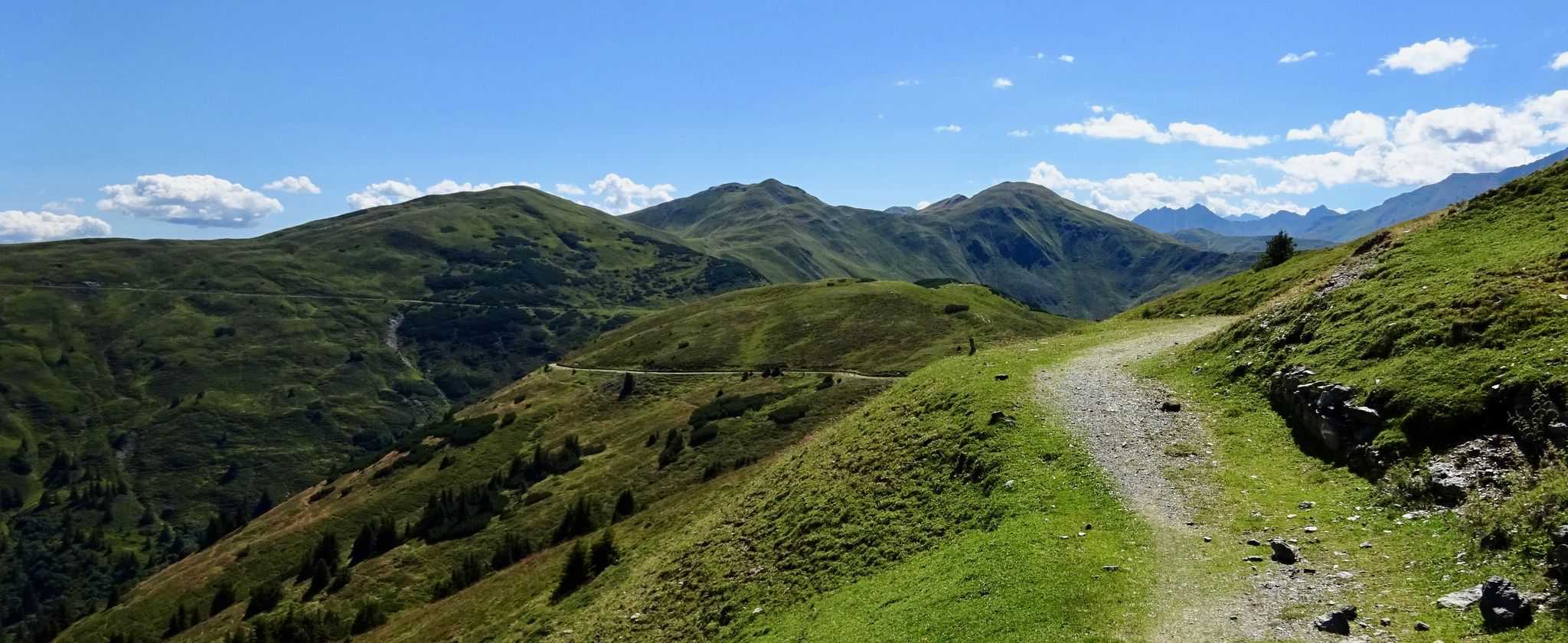
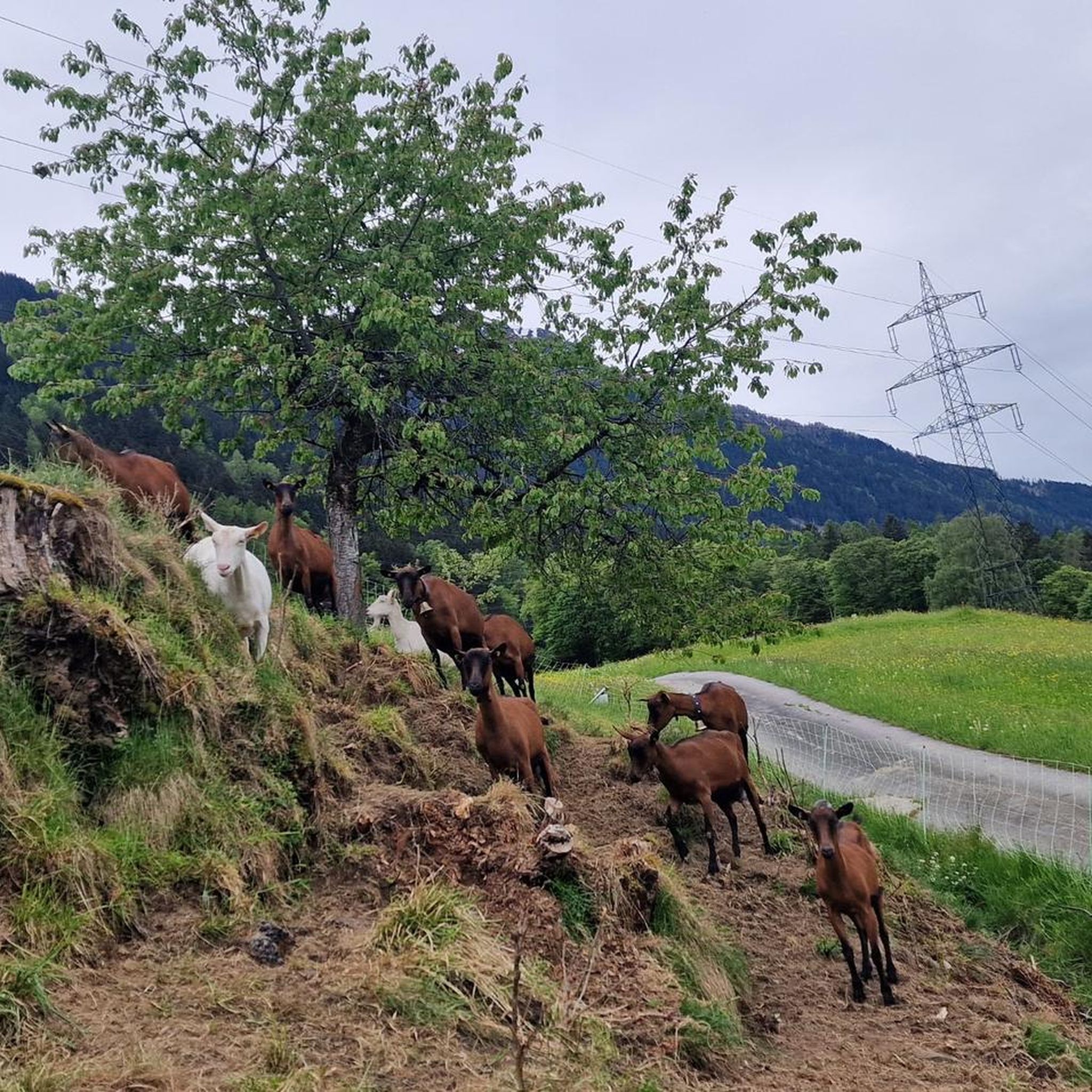

Other adventures around Inzing

Tips from the Community

Great hike .. definitely sturdy shoes
0
0

There's a nice animation on YouTube showing what the castle once looked like: https://youtu.be/uoZ6R732W_Q?si=jnkCu17-k__vppUf
1
0

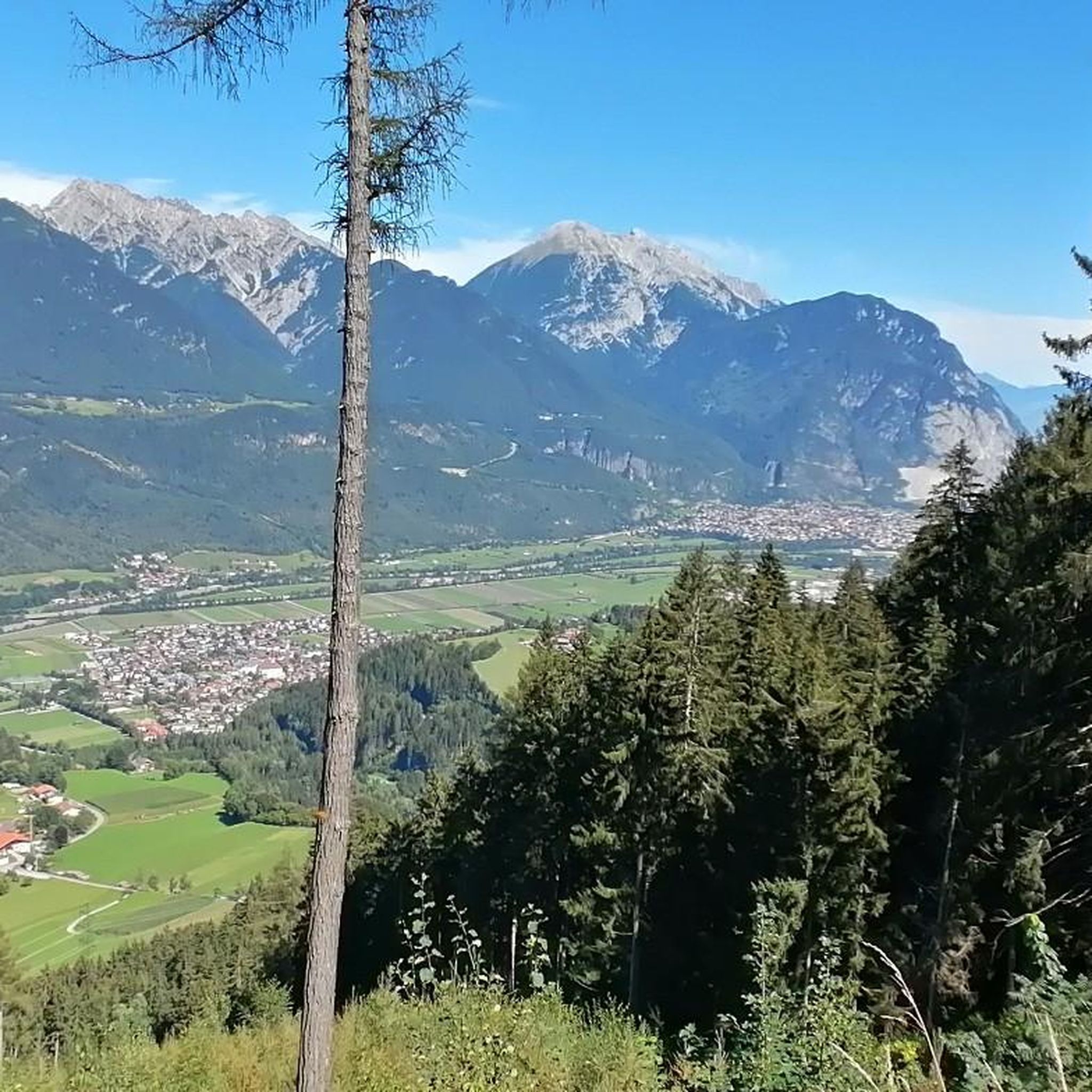
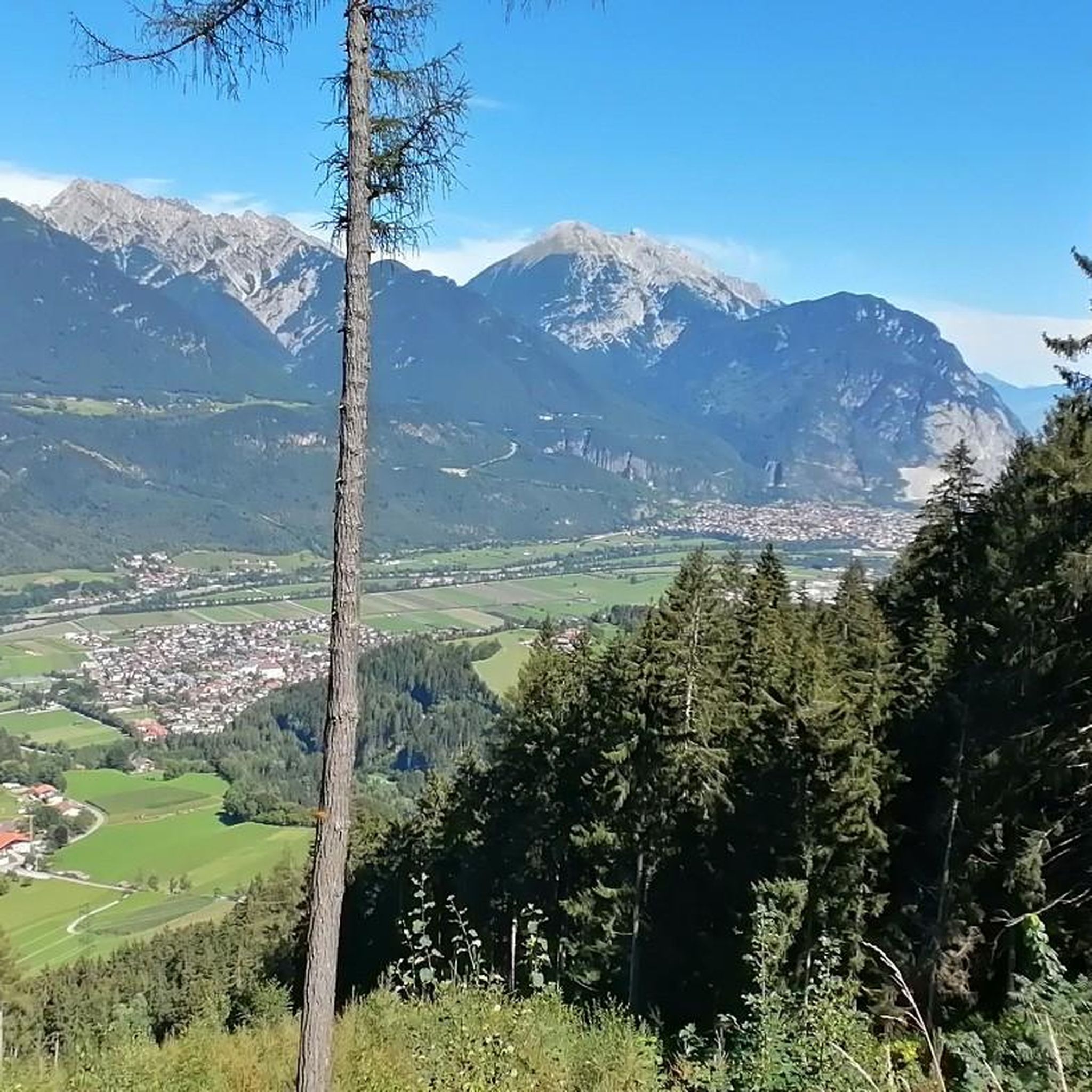
From here you have a wonderful view of the Inn Valley.
3
0
Very beautiful old castle ruins with a fantastic view of the Inn Valley.
2
0

Both directions possible, shortening possible at any time, Simmering Alm currently closed. Marienbergalm or Lehnberhaus can be attached.
0
0

Martinsbühel Castle, sometimes also referred to as Martinsbühel Castle or Sankt Martinsberg, is a renovated hilltop castle between the Inn and the Martinswand in the municipality of Zirl in the Innsbruck-Land district of Tirol. The Martinsbühel is a low hill east of Zirl at the foot of the Martinswand. It rises at 616 m above sea level. A. around 30 meters over the Inn. It was already settled in the Latène period, later the Roman fort Teriolis was located here. The hill was also important in the Middle Ages because of its strategic location on the Inn ferry and the road from Innsbruck to the Upper Inn Valley and to the Seefelder Sattel. At the site of the late Roman Teriolis fort and the former road block, a castle was built over the ruins of the fort in the early Middle Ages. In 1290 Heinrich von Aufenstein enfeoffed Ludwig von "sant Marteinsberg bei Zierlen". After the nobles of Martinsberg died out, Martinsberg fell to Prince Meinhard II of Tirol. Martinsbühel was originally intended to be the widow's residence of Margarete Maultasch, who had kept St. Martinsberg in addition to Ambras Castle and two castles in South Tirol when Tirol was handed over to the Habsburgs in 1363. Rudolf IV von Habsburg prevented Margarete Maultasch from remaining in Tirol. In the 15th century it became a hunting lodge for Duke Friedrich with the empty pocket or for Archduke Sigismund the Coin-Rich. The hunting lodge was also expanded by Emperor Maximilian I (a zoo, stables, farm buildings) and used as a starting point for show hunts in the Martinswand. The castle was mostly administered by aristocratic fiefdoms, around 1450 by the Mentlberg family. In the 17th century the facilities were neglected and later also sold by the government. The Benedictine Father and Prior Edmund Hager (1826–1906) from St. Peter's Monastery, founded the “Kinderfreunde-Benediktiner”; In 1888 he acquired the property of the early castle complex to build a monastery with the aim of building an educational institution and training center for boys based on the model of Don Bosco. In Martinsbühel, a home for apprentices was set up in 1895, in which young people who were considered neglected were trained in tailoring, shoemaking, locksmithing and gardening. After the expropriation by the National Socialists, there was a school in Martinsbühel from 1938 to 1945 for "difficult to educate children", then a home for South Tirolean emigrants and a prisoner-of-war camp. After 1947, the Benedictine nuns from Scharnitz, who belonged to the Melchtal mother monastery, ran a denominational girls' home in the buildings with an attached special school for mentally and physically disabled girls (the school was rebuilt in 1988). Against the nuns of this institution there are allegations of physical and sexual abuse of the children entrusted to them. From 1985 until the closure in July 2008, the one-year housekeeping school for girls was retained, which girls from other federal states could also attend and which were assigned by the respective youth welfare services of the federal states. Due to insufficient registrations, this facility was also completely closed and at the end of 2008 the last remaining nuns moved to the Benedictine monastery in Scharnitz. Since then, the building complex, including the school - this has been largely empty since 2010 - or is partly managed and inhabited by an estate manager (the artist Ferdinand Lackner). A media and publishing office can be found in the former special school. Around 1700 the palas of the castle, the adjacent St. Martin's chapel and the castle wall were still completely preserved, but other buildings had already become ruins. Today the rectangular Romanesque palace of the castle, which is built up from regular layers of stone, is also still fully preserved. The house has a half-hip roof and unplastered stone masonry; it probably dates from the first half of the 14th century. The walled up arched portal on the second floor of the south wall is remarkable. Romanesque windows and a double-fluted, pointed arched gate from the time of Archduke Sigmund the Rich in Coin can also be seen on it. The front is adorned with a double-headed eagle on a yellow background. There are still a few remains of the old barrier walls. The late Gothic St. Martin's Chapel next to it dates from the 15th century in its current form; At that time, under Emperor Maximilian, the ribbed vault was built and the presbytery was added. It is believed that this is the work of Niklas Türing the Elder, the court architect of Emperor Maximilian. The origins of the chapel go back to the 6th century; it is even assumed that Martinsbühel was temporarily the seat of the Rhaetian bishop Martinus-Marcianus (around 570 AD). In addition, the Martinskirche is said to be the oldest still existing church in North Tirol. The chapel was also rebuilt in the 17th century. The long building is now provided with a high gable roof, contains fresco paintings (serrated meanders, Heavenly Jerusalem and a holy bishop from the 12th century) and is adorned with a baroque bell rider. The last renovation took place in 1965. The property is still owned by the St. Peter's Monastery in Salzburg today. On July 24, 1703, an ambush was carried out on the Bavarian Elector Max Emanuel at Martinsbühel when he marched into Tyrol. But instead of him, the magnificently dressed Count Ferdinand von Arco (1643–1703), who was part of the company (and who was pro forma married to the Elector's mistress, Agnes Le Louchier,) was shot by mistake.
0
0

Two square towers, visible from afar, still stand from the once extensive castle complex of Felsenstein Castle. The better preserved upper "Weinecker Tower" located here was built in 1483 and still has the remains of a ring wall. The pyramid roof was put on it only in the last quarter of the 20th century. The five-storey tower is about 30 m high. Its quarry stone walls are between 1.60 and 2.0 m thick, the side length is 7.75 m. On the top floor there is a round-arched opening, which is slightly offset from the central axis and occupies almost the entire width of the interior.
4
0
At the memorial cross below the ruins of the ruins of the ruins of the castle in remembrance of the Zirler standschützen there is a beautiful panoramic view.
3
0
Frequently Asked Questions
What historical castles can I visit in the broader Innsbruck-Land region?
Beyond Inzing, the Innsbruck-Land region offers several impressive castles. You can explore Fragenstein Castle Ruins, known for its historical role in securing the road to Seefeld. Other notable sites include Ambras Castle in Innsbruck, Thaur Castle Ruins with views of the Inn Valley, and Hasegg Castle with its Mint Tower in Hall in Tirol. Each offers a unique glimpse into the region's rich history.
What is the history of the 'Schlössl' in Inzing?
Inzing is home to a historical structure known as the 'Schlössl,' a tower reportedly built by the Knight of Eben. While specific details are limited, it stands as a local point of historical interest. It's important to note this is distinct from 'Schloss Inzing' in Bavaria, Germany, which was a vanished early modern castle.
Are there any castles directly in Inzing?
While Inzing itself features the historical 'Schlössl' tower, the most prominent and well-documented castles and ruins are found in the surrounding Innsbruck-Land region. These include sites like Fragenstein Castle Ruins and Martinsbühel Castle, which are a short drive away.
What is special about <a href="https://www.komoot.com/highlight/4002224" target="_blank" rel="noopener">Martinsbühel Castle</a>?
Martinsbühel Castle is a renovated hilltop castle historically significant due to its strategic location on the Inn ferry and the road from Innsbruck to the Upper Inn Valley. It has a rich past, serving as a Roman fort, a medieval castle, a hunting lodge, and later an educational institution. Today, its rectangular Romanesque palace and the late Gothic St. Martin's Chapel are still preserved.
What kind of historical experience does Ambras Castle offer?
Ambras Castle in Innsbruck is a significant cultural and historical site, strongly linked to Archduke Ferdinand II. It's considered the first museum in the world that remains in its original location, allowing visitors to experience its magnificent collections as they were 450 years ago. The castle also features a richly landscaped park.
Are there family-friendly castle visits around Inzing?
Yes, several castles in the region are suitable for families. Fragenstein Castle Ruins is categorized as family-friendly, offering an engaging historical exploration. Ambras Castle also provides a rich experience for all ages with its museum and park. Many of these sites offer open spaces for children to explore.
What kind of views can I expect from castles in the region?
Many castles in the Inzing region offer excellent panoramic views. The ascent to Fragenstein Castle Ruins is rewarded with impressive vistas over Zirl and the Inn Valley. Thaur Castle Ruins also provides great views of the Inn Valley, and the Mint Tower at Hasegg Castle offers splendid views of Hall in Tirol.
Are there hiking trails that include castle views near Inzing?
Yes, the Telfs–Obsteig Scenic Route is a highlight that offers scenic vistas and the opportunity to see historical landmarks, including castles, from a distance. For more hiking options, you can explore the 'Mountain Hikes around Inzing' guide, which features routes like the 'Apollon Temple at Hundstalsee loop' near Rangger Köpfl. You can find more details on these routes in the Mountain Hikes around Inzing guide.
What outdoor activities can I do near these castles?
The region around Inzing offers various outdoor activities. Besides visiting castles, you can find numerous running, mountain biking, and hiking trails. For example, the 'Running Trails around Inzing' guide includes routes like the 'Gaisau Biotope loop.' The 'MTB Trails around Inzing' guide offers options like the 'Inzinger Alm loop.' Explore these activities further in the Running Trails around Inzing guide or the MTB Trails around Inzing guide.
What do visitors enjoy most about the castles around Inzing?
Visitors appreciate the rich historical experience and the stunning views offered by the castles around Inzing. The komoot community has shared over 150 photos and given more than 100 upvotes, highlighting the picturesque settings and the opportunity to explore centuries of Tyrolean heritage. The blend of historical exploration with natural landscapes is a key draw.
What is the best time to visit castles in the Inzing area?
The best time to visit castles in the Inzing area is generally during the spring, summer, and early autumn months (April to October). During these seasons, the weather is typically mild, making it pleasant for exploring ruins and castle grounds. Many sites, like Ambras Castle, also have beautifully landscaped parks that are best enjoyed when in full bloom.
Are there accessible castle ruins in the Inzing region?
While many castle ruins, such as Fragenstein Castle Ruins and Thaur Castle Ruins, involve ascents and uneven terrain typical of historical sites, some parts of more developed castles like Ambras Castle may offer better accessibility. It is advisable to check specific accessibility information for each site if mobility is a concern.
Most popular routes around Inzing
Most popular attractions around Inzing

Get inspired with the komoot mobile app


Explore more
Looking for the best castles somewhere else? Discover other guides around Inzing:
