Top 9 Caves in Schwandorf
Best caves in Schwandorf are located in a region of Bavaria, Germany, known for its Upper Palatinate Jura landscape. The area features both historical subterranean structures and natural cave formations. Schwandorf is home to a significant historic rock cellar labyrinth, which played a role in the city's brewing culture and served as air-raid shelters. Natural dripstone caves also offer insights into geological processes.
Best caves in Schwandorf
- The most popular caves is Wotanstein Natural Monument, a natural monument that…
Last updated: September 29, 2026
Burglengenfeld Historic Beer Cellars
Highlight • Historical Site
Translated by Google •
Tip by

Wotanstein Natural Monument
Highlight • Natural Monument
Translated by Google •
Tip by

Sign up now to discover places like this
Get recommendations on the best single tracks, peaks, & plenty of other exciting outdoor places.
Railway Workers' Grotto
Highlight • Cave
Translated by Google •
Tip by
The legendary Güttingloch
Highlight • Cave
Translated by Google •
Tip by
Historical Rock Cellars of Schwandorf
Highlight • Historical Site
Translated by Google •
Tip by

Maria Magdalene Grotto
Highlight • Cave
Translated by Google •
Tip by

Lourdes Grotto and Brünnl in the St. Laurentius Chapel in Schwarzach
Highlight • Religious Site
The Brünnl Grotto is located in the basement. On the side wall there …
Translated by Google •
Tip by

Marian Grotto near Schönsee
Highlight • Religious Site
Translated by Google •
Tip by

Start today with a free account
Your next adventure awaits.
Popular around Schwandorf
Bavaria-Bohemia long-distance cycling trail – Crossing borders
Nurtschweg – Hiking along the German-Czech border
The Goldsteig – 38 stages between Upper Palatinate and Passau
Goldsteig — The best routes for long distance hiking in Eastern Bavaria
The Rain valley cycle path — 4 days through the Bavarian Forest
The Upper Palatinate Castle Trail — 9 days in picturesque northern Bavaria
The National Natural Landscapes in Bavaria
How refreshing! Trails by the water in the Upper Palatinate Forest
On the 'Kultouren' through the Upper Palatine Forest
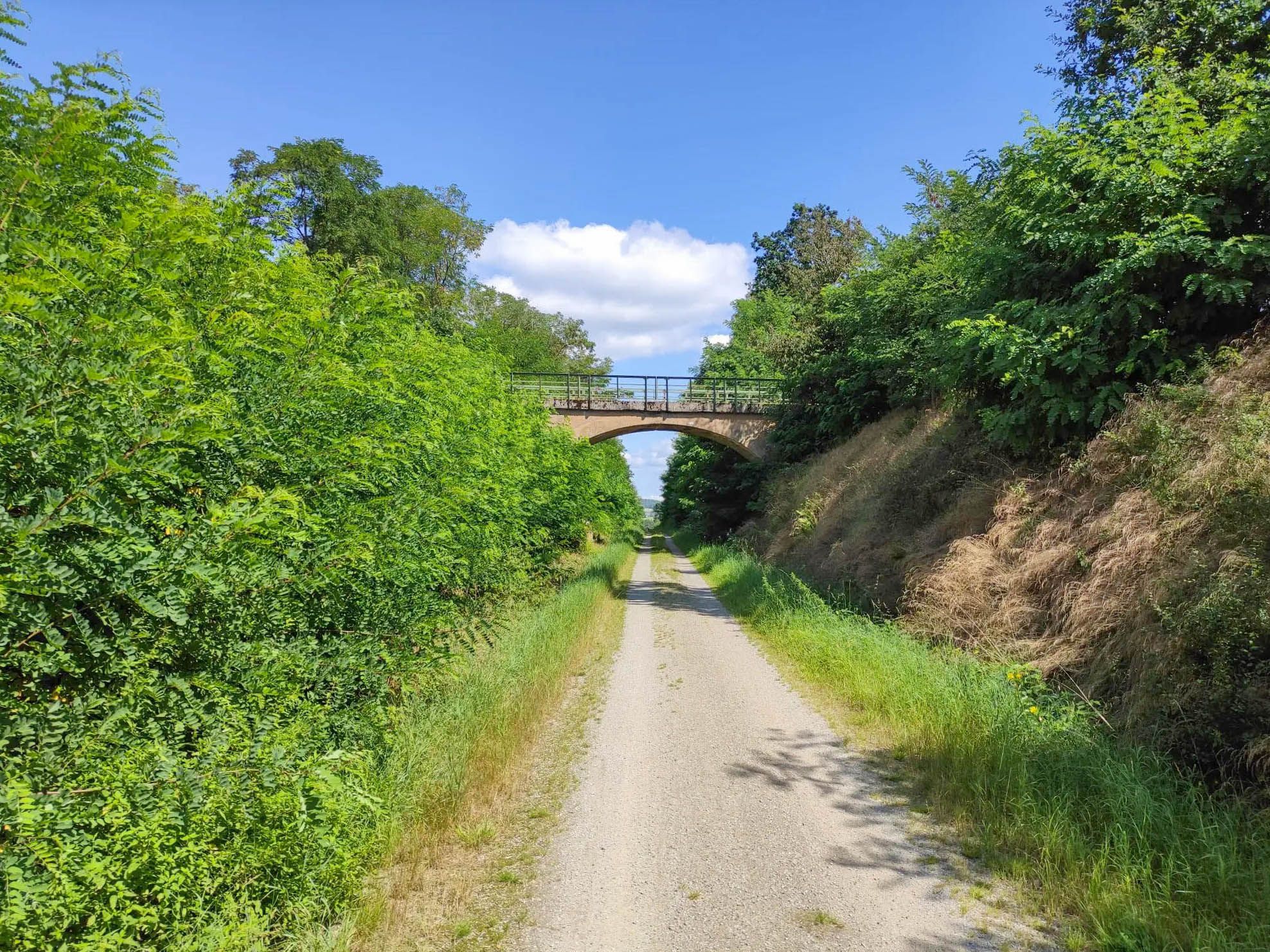
Cycling on the Bavarian-Bohemian Friendship Trail
Other adventures in Schwandorf


Tips from the Community

interesting rock formation, freely accessible
1
0

The first stop on the Tanzacker circular trail. Fascinating and so beautiful to look at!
0
0

In the basement of the St. Laurentius Chapel next to the Church of St. Ulrich in Schwarzach is the so-called "Brünnl" with a Lourdes grotto. This was built in 1894. The pilgrimage dates back to 1726. The blind Georg Rottmayr from Schwarzach regained his sight that year when he washed his eyes with the well water and then prayed and worshipped in the church. The Church of St. Ulrich already contained the miraculous image of the Holy Mother of God, which now stands on the main altar. This gave rise to the pilgrimage, which flourished from 1728 onwards. From 1791 onwards the well was expanded and converted into a Lourdes grotto and consecrated in 1794. After secularization in 1803, the pilgrimage became quieter and with the erection of the Iron Curtain during the two world wars it slowly died down. Today, August 15th and the Sunday after October 7th are still pilgrimage days. Schwarzach is located on the Bohemian-Bavarian Brünnl pilgrimage route, which also includes the pilgrimage site "Dobrá Voda" near Pocinovice, the twin town of Schwarzach b. Nabburg. Text from the website of the municipality of Schwarzach: https://www.schwarzach-bei-nabburg.de/freizeit-kultur-tourismus/kultur-tourismus/sehenswuerdigkeiten/st-ulrich-kirche-schwarzach-b-nabburg
0
0

Italian railway workers built this grotto in honor of the Holy Mother of God directly on the railway line.
1
0


Exciting hole, unfortunately very overgrown in summer
0
0

The brewing tradition is also related to the Naab. The numerous inns from the town entrance at the Naab Bridge to the Upper Gate needed space for storage and every winter blocks of ice were sawn out of the frozen Naab and brought to the cellars by cart so that the temperature of the cellar for the bottom-fermented beer did not exceed nine in the summer degrees rose.
1
0
Since autumn 2014, one of the beer cellars has been used as a music and cabaret stage, Keller No 10. The aim is to establish a cabaret stage that will enable cultural workers to stage performances in the areas of music, theater and cabaret in general bring. On the one hand, this creates an attractive performance opportunity and, on the other hand, closes a large cultural gap in the city of Burglengenfeld.
1
0
Frequently Asked Questions
What historical caves or subterranean sites can I visit in Schwandorf?
Schwandorf is home to Bavaria's largest rock cellar labyrinth, the Historical Rock Cellars of Schwandorf. These cellars, some dating back 500 years, were vital for brewing and later served as air-raid shelters. You can also visit the Railway Workers' Grotto, built by Italian railway workers around 1904, and the Old Rock Cellar on the Pfreimd, historically used for storage.
Are there natural dripstone caves in the Schwandorf region?
Yes, the Osterhöhle (Easter Cave) near Neukirchen and Sulzbach-Rosenberg is a natural dripstone cave approximately 200 meters long, featuring impressive stalactites, sinter pools, and a small cave lake. It offers a captivating glimpse into the natural underground world.
Are there family-friendly cave experiences in Schwandorf?
Absolutely. The Osterhöhle welcomes children aged 5 and older for its guided tours. The Historical Rock Cellars of Schwandorf are also considered family-friendly, offering an engaging historical experience. Additionally, the Maria Magdalene Grotto and Wotanstein Natural Monument are accessible and suitable for families.
When is the best time to visit caves in Schwandorf?
For the natural Osterhöhle, guided tours are available from Easter to October. The rock cellars, like the Historical Rock Cellars of Schwandorf, maintain a consistent cool temperature year-round, making them suitable for visits in any season. Note that the Osterhöhle serves as a winter roost for bats from November to March.
Are guided tours available for Schwandorf's caves?
Yes, guided tours are available for both the Schwandorf Rock Cellar Labyrinth and the Osterhöhle. These tours provide insights into their history, geology, and significance. The Osterhöhle tours typically last about 30 minutes.
What geological features can be found in Schwandorf's caves?
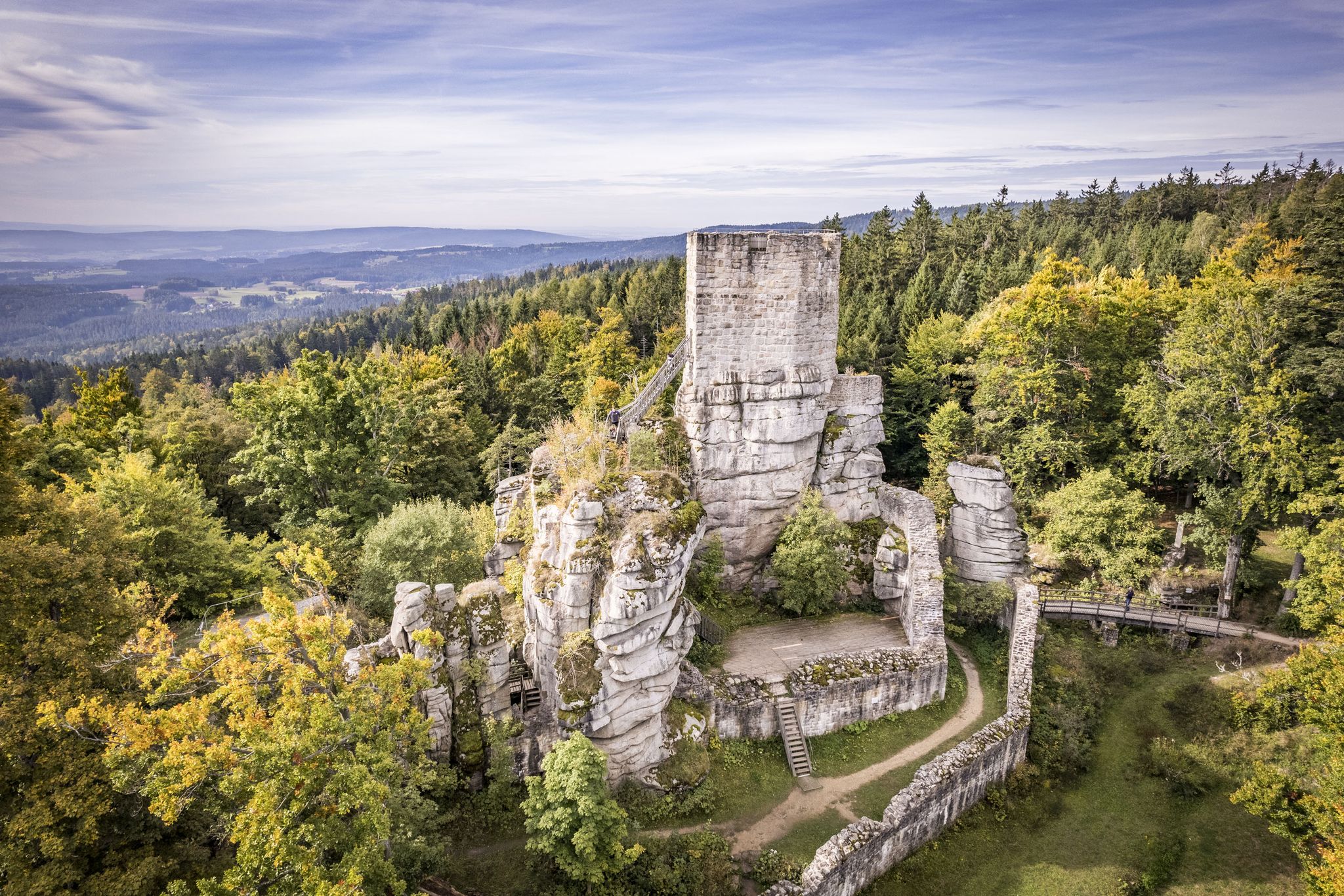
The Osterhöhle is a natural dripstone cave showcasing impressive stalactites, sinter pools, and dome-like cavities formed by millennia of water leaching. The Wotanstein Natural Monument features a significant rock formation in the forest, around which many local legends are entwined.
What outdoor activities can I combine with a visit to Schwandorf's caves?
The Osterhöhle is situated along several hiking trails, making it a great stop for walkers and cyclists. You can find various outdoor routes in the region, including easy hikes, running trails, and road cycling routes, allowing you to explore the Upper Palatinate Jura landscape.
Are there any legendary or mysterious cave sites in Schwandorf?
Yes, the legendary Güttingloch has long been a source of local mystery, with tales of its infinite depth. The Wotanstein Natural Monument is another site steeped in local legends due to its impressive rock formation.
What should I wear when visiting caves in Schwandorf?
Caves in Schwandorf, both natural and man-made, maintain cool temperatures year-round. The Osterhöhle is around 9°C (48°F) and the rock cellars around 8°C (46°F). It's advisable to wear layers and bring a light jacket, even in summer, to stay comfortable during your visit.
Are there any religious grottoes or cave sites in Schwandorf?
Yes, the region features several religious sites within or near cave formations. These include the Maria Magdalene Grotto, built in 1828, and the Railway Workers' Grotto, which houses a figure of the Lourdes Madonna. Another notable site is the Lourdes Grotto and Brünnl in the St. Laurentius Chapel in Schwarzach.
What is the history behind Schwandorf's rock cellars?
Schwandorf's rock cellars, including the extensive labyrinth, were initially carved into sandstone over centuries to provide ideal cool conditions for brewing bottom-fermented beer, supporting the city's significant brewing culture. During World War II, this network of cellars served as crucial air-raid shelters for thousands of residents, particularly in 1945.
Most popular routes in Schwandorf
Most popular attractions in Schwandorf

Get inspired with the komoot mobile app


Didn’t find what you were looking for?
Discover more caves in Schwandorf region by region:
Explore more
Extend your search for the best caves by checking out these guides of the top ones in Schwandorf:
