Craters Of The Moon National Monument
Craters Of The Moon National Monument
Top 5 Caves in Craters Of The Moon National Monument
Best caves in Craters Of The Moon National Monument features a unique volcanic landscape with over 700 documented caves, primarily lava tubes. This national monument offers a rare opportunity to explore subterranean environments formed by ancient lava flows. Visitors can access 5 publicly available caves, providing insights into the region's geological history. A free permit is required from the visitor center to enter any cave, ensuring protection for local bat populations.
Best caves in Craters Of The Moon National Monument
…Last updated: May 29, 2026
Indian Tunnel
Highlight • Cave
Tip by

Buffalo Cave
Highlight • Cave
Tip by
Sign up now to discover places like this
Get recommendations on the best single tracks, peaks, & plenty of other exciting outdoor places.
Sign up for free
Parking and Info at Caves Trail
Highlight • Rest Area
Tip by
Broken Top Loop Trail
Highlight • Trail
Tip by
Caves Trail
Highlight • Trail
Tip by
Start today with a free account
Your next adventure awaits.
Login or Signup
Popular around Craters Of The Moon National Monument
Other adventures in Craters Of The Moon National Monument

Tips from the Community

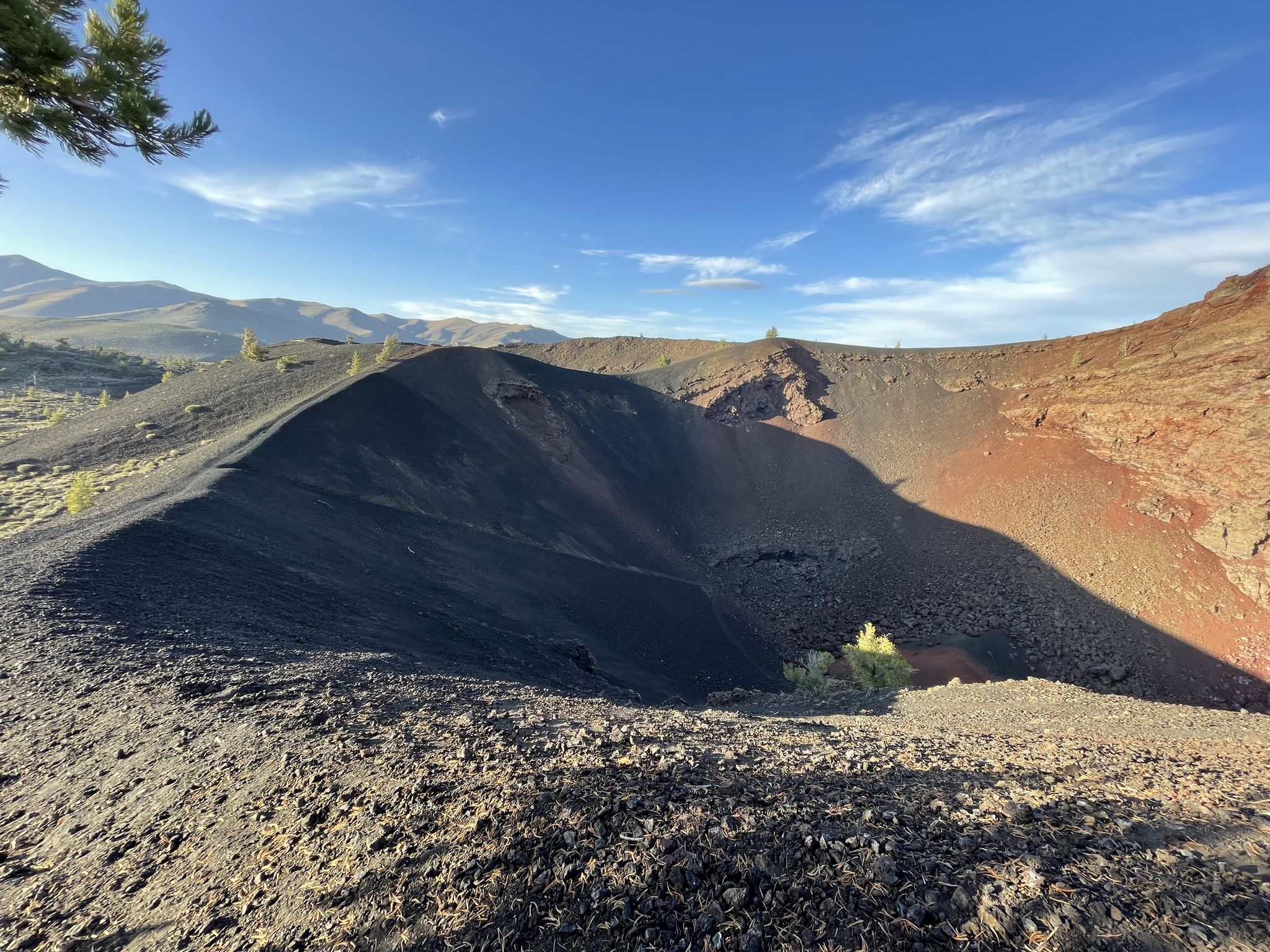
On the 1.8-mile Broken Top Loop Trail, you can observe almost all the volcanic features of the basalt eruptions that created this unique landscape. With an elevation gain of just 242 feet, you'll circle the extinct Broken Top volcano and pass Buffalo Cave. This trail is also the access point to the Wilderness Trail.
4
0
The Caves Trail leads to four different caves that are actually lava tubes: Dewdrop Cave, Indian Tunnel, Boy Scout Cave and Beauty Cave. Some of the caves might be closed to protect bats or for the season and you need to obtain a free permit from the Visitor Center to enter any cave. While walking above the ground, you can discover fascinating formations that were created by the latest lava flow: the Blue Dragon Lava Flow with bluish lava.
1
0
The "Indian Tunnel" is the largest and longest of the lava tubes along the Caves Trail that can be accessed. To do so, you need to obtain a free permit at the Visitor Center. You will climb over rocks that can be slippery in places, but it is a unique small adventure. On the ceiling of the tube you can see lava stalactites formed as the river of lava pulled away from the ceiling, and molten material began to drip from the hot ceiling. The exit is about 800 feet further north.
1
0
There is a fairly large parking lot at the Caves Trailhead. You will find restrooms and picnic benches. To enter one or more caves along the Caves Trail, you need to obtain a free permit at the Visitor Center of Craters of the Moon National Monument.
1
0

The Buffalo Cave is a popular and easy to get to lava cave in Craters of the Moon National Monument. It was created when hot lava cooled down and left a huge tunnel filled with air. Today it is home to numerous bats. Take the Broken Top loop trail to get here. To enter any of the caves, you have to obtain a permit from the Visitor Center. The cave might be closed for the protection of bats.
2
0

There are ample parking spaces at all attractions in the Craters of the Moon National Monument. The park, like many others, is not yet so crowded with tourists. Only a small part can be visited on the created paths. A flashlight is recommended to visit the accessible caves and tunnels.
0
0
Great cave that can be crossed. Sure-footedness is necessary because you have to climb over rocks.
0
1
Frequently Asked Questions
Which caves are publicly accessible in Craters of the Moon National Monument?
There are five publicly accessible lava tube caves in Craters of the Moon National Monument: Indian Tunnel, Dew Drop Cave, Boy Scout Cave, Beauty Cave, and Buffalo Cave. These offer a unique opportunity to explore the park's subterranean volcanic landscape.
Do I need a permit to enter the caves?
Yes, a free cave permit is required to enter any of the caves. You can obtain this permit from the visitor center or an entrance booth. This measure helps protect bats from White-Nose Syndrome.
What should I bring when exploring the caves?
It is highly recommended to bring a dependable light source, such as a flashlight or headlamp, as many caves are dark. Wearing sturdy shoes is also advisable for navigating the uneven terrain. Some caves, like Indian Tunnel, require sure-footedness due to climbing over rocks.
Are there family-friendly caves in Craters of the Moon National Monument?
Yes, the publicly accessible caves offer varying levels of exploration suitable for families. Indian Tunnel is often considered easily accessible with a stairway at the entrance and natural skylights. The Caves Trail itself is also considered family-friendly.
What makes Indian Tunnel unique?
Indian Tunnel is the largest and longest of the lava tubes along the Caves Trail, approximately 800 feet long. It features several large holes in the ceiling that act as natural skylights, illuminating much of the cave. Visitors can observe lava stalactites and marks on the walls from fluctuating lava levels.
What is the Caves Trail?
The Caves Trail is a popular trail that leads to four different lava tube caves: Dewdrop Cave, Indian Tunnel, Boy Scout Cave, and Beauty Cave. It allows visitors to explore fascinating formations created by the Blue Dragon Lava Flow.
What are the temperatures like inside the caves?
The caves are significantly cooler than the surface, with temperatures often dropping 15-30 degrees instantly upon entering. Boy Scout Cave and Beauty Cave are particularly known for their cold temperatures, making them refreshing on warm days.
What kind of geological features can I expect to see in the caves?
Inside the lava tubes, you can observe features like lava stalactites on the ceiling, marks on the walls indicating past lava levels, and the overall structure of hollowed-out formations left by ancient molten lava flows. These caves were formed during volcanic eruptions, such as the Blue Dragon Flow.
Are there hiking trails near the caves?
Yes, several hiking trails are accessible near the caves. The Caves Trail itself is a popular option. You can also explore the Broken Top Loop Trail, which passes Buffalo Cave. For more hiking options, refer to the Hiking in Craters Of The Moon National Monument guide.
Where can I park when visiting the caves?
There is a fairly large parking lot at the Caves Trailhead. You will also find restrooms and picnic benches there. Remember to obtain your free cave permit from the Visitor Center before heading to the caves.
What is the best time to visit the caves in Craters of the Moon National Monument?
The caves can be visited during the park's operating season. However, some caves might experience seasonal closures, particularly for bat protection. Visiting during warmer months can make the cool cave temperatures especially refreshing.
Why might Buffalo Cave be closed?
Buffalo Cave is home to numerous bats, and it might be closed periodically for their protection, especially during certain seasons or to prevent the spread of White-Nose Syndrome. Always check for current conditions at the visitor center.
Most popular routes in Craters Of The Moon National Monument
Most popular attractions in Craters Of The Moon National Monument

Get inspired with the komoot mobile app


