Top 20 Castles around Porto Salvo
Best castles around Porto Salvo are found in the surrounding municipalities of Oeiras, Sintra, and Lisbon. This region, situated near the Tagus estuary, is rich in historical fortifications and palaces. The area offers a blend of coastal defenses and inland royal residences, providing insights into Portugal's past. Its varied landscape includes mountainous terrain and urban settings, each hosting unique architectural landmarks.
Best castles around Porto Salvo
- The most popular castles is Belém Tower, a man-made monument that is a…
Last updated: August 24, 2026
Pena Palace
Highlight • Castle
Translated by Google •
Tip by

Castle of the Moors
Highlight • Castle
Translated by Google •
Tip by
Sign up now to discover places like this
Get recommendations on the best single tracks, peaks, & plenty of other exciting outdoor places.
Sign up for free
Belém Tower
Highlight • Monument
Translated by Google •
Tip by
Quinta da Regaleira
Highlight • Castle
Translated by Google •
Tip by

National Palace of Sintra
Highlight • Castle
Of all the palaces erected throughout the Middle Ages by the Portuguese monarchs, …
Translated by Google •
Tip by
Sign up for free to discover even more castles around Porto Salvo.
Sign up for free
Already have an account?
Start today with a free account
Your next adventure awaits.
Login or Signup
Tips from the Community

The view of Pena Palace and Sintra from the Castelo dos Mouros is one of the most spectacular in the entire region. Walking along the castle walls, you'll discover a landscape that blends history, architecture, and nature in perfect harmony.
7
0
The Sintra National Palace, also known as Palácio da Vila, is one of Portugal's most iconic monuments and the oldest royal palace in the country. Located in the historic center of Sintra, it is easily recognizable by its two large, white, conical chimneys, nearly 33 meters high, visible from many points in the city.
16
0
It was originally a Hieronymite monastery founded in the 16th century, dedicated to Our Lady of Sorrow. After the 1755 earthquake, it fell into ruins and was acquired by King Ferdinand II in 1838. Between 1842 and 1854, it became a summer palace for the Portuguese royal family. In 1910, following the end of the monarchy, it passed into state hands and was opened to the public.
20
0
The Pena Palace in Sintra is one of Portugal's most spectacular monuments and a jewel of European Romanticism. Located high in the Sintra Mountains, about 25 km from Lisbon, this palace looks like something out of a fairy tale with its colorful and eclectic architecture.
21
0
The Belém Tower is one of the most iconic monuments in Lisbon, Portugal. Built between 1515 and 1519 by architect Francisco de Arruda, this Manueline-style tower was originally a fortress intended to protect the entrance to the port of Lisbon across the Tagus River. Over time, the tower also served as a tax collection center, a lighthouse, and a prison. In 1983, it was declared a UNESCO World Heritage Site along with the nearby Jerónimos Monastery.
17
3
The Belém Tower is a 16th-century military construction designed by Francisco de Arruda and Diogo de Boitaca. It played a crucial role during the Age of Discovery as a fortress and port. Throughout its history, it has served as a prison, lighthouse, and tax collection center. Along with the Jerónimos Monastery, it was declared a UNESCO World Heritage Site in 1983. I hope this information is useful to you! 😊
19
2
The Belém Tower is a 16th-century military construction designed by Francisco de Arruda and Diogo de Boitaca. It played a crucial role during the Age of Discovery as a fortress and port. Throughout its history, it has served as a prison, lighthouse, and tax collection center. Along with the Jerónimos Monastery, it was declared a UNESCO World Heritage Site in 1983. I hope this information is useful to you! 😊
25
1

The Quinta da Regaleira palace was built at the beginning of the 20th century by the millionaire Antonio Augusto Carvalho Monteiro (1848-1920), who fulfilled his dream here with the help of the theater architect Luigi Manini (1848-1936). It is a UNESCO World Heritage Site. A fairytale 🏰. Beautiful here 🥰.
18
0
Frequently Asked Questions
Are there family-friendly castles around Porto Salvo?
Yes, several castles in the region are great for families. Belém Tower, Quinta da Regaleira, and the National Palace of Sintra are all categorized as family-friendly. Quinta da Regaleira, with its mystical gardens, hidden grottoes, and the Initiation Well, is particularly enchanting for children.
What historical insights do the castles near Porto Salvo offer?
The castles provide a rich tapestry of Portuguese history. The Castle of the Moors in Sintra offers a glimpse into medieval military architecture from the 8th century. The National Palace of Sintra showcases royal history as the best-preserved medieval royal palace in Portugal. Belém Tower highlights Portugal's Age of Discovery as a 16th-century fortress. Even the Fort of Giribita, directly associated with Porto Salvo, played a role in the Portuguese Restoration War.
How can I get to the castles near Porto Salvo using public transport?
Sintra's castles, including the Castle of the Moors, Quinta da Regaleira, and the National Palace of Sintra, are easily accessible by train from Lisbon, with Sintra station being the main hub. From there, local buses or walking can take you to the sites. For Lisbon's São Jorge Castle and Belém Tower, Lisbon's extensive public transport network (trams, buses, metro) is the best option.
What is the best time of year to visit the castles near Porto Salvo?
The best time to visit is generally during the spring (April-May) or early autumn (September-October). The weather is pleasant, avoiding the intense heat of summer and the larger crowds. Winter visits are possible, but some areas might have reduced hours, and the weather can be cooler and wetter. Always check specific castle opening times before your visit.
Are there any hiking opportunities near the castles?
Yes, the region offers various outdoor activities. For instance, the Pena Park surrounding Pena Palace in Sintra has numerous hiking trails. You can also find easy hikes, MTB trails, and running routes around Porto Salvo. For more details on nearby routes, explore the easy hikes around Porto Salvo, MTB trails around Porto Salvo, and running trails around Porto Salvo guides.
Are there options for visitors with limited mobility or wheelchairs at these castles?
Accessibility varies greatly by castle. Older fortifications like the Castle of the Moors with its steep, uneven paths and many stairs are generally not wheelchair accessible. Palaces like the National Palace of Sintra or Quinta da Regaleira may have some accessible areas, but often involve stairs or challenging terrain. It's best to check the official websites of individual sites for specific accessibility information before your visit.
Can I bring my dog to any of the castles or nearby areas?
While dogs are generally not allowed inside the historical buildings of most castles and palaces, some outdoor areas or parks might be dog-friendly. For example, the extensive grounds of Pena Park in Sintra might allow dogs on leashes in certain areas, but always confirm local regulations. The surrounding natural parks, like Sintra-Cascais Natural Park, often have dog-friendly trails.
Where can I find food and drink near the castles?
Sintra's historic center, located near the National Palace of Sintra and a short distance from other Sintra castles, offers numerous cafes, restaurants, and pastry shops. Around Lisbon's São Jorge Castle, the Alfama district is full of traditional eateries. Near Belém Tower, you'll find many options, including the famous Pastéis de Belém.
What kind of views can I expect from these castles?
The castles offer spectacular panoramic views. From the Castle of the Moors, you can see Sintra, Pena Palace, and the Atlantic Ocean. São Jorge Castle in Lisbon provides commanding views of the city and the Tagus River. Pena Palace, perched atop the Sintra mountains, offers breathtaking vistas of Sintra, Lisbon's coastline, and the Atlantic. Even the Fort of Giribita, though smaller, offers views of the Tagus estuary.
How long should I plan for a visit to these castles?
For a comprehensive visit to a major site like Pena Palace or Quinta da Regaleira, plan at least 3-4 hours, especially if you want to explore the gardens thoroughly. The Castle of the Moors or São Jorge Castle might take 2-3 hours. If you plan to visit multiple sites in Sintra, dedicate a full day or even two.
What should I wear when visiting the castles?
Comfortable walking shoes are essential, as many castles involve significant walking, stairs, and uneven terrain. Layers are recommended, as weather can change, especially in Sintra's mountainous area. A light jacket or rain protection is advisable, particularly outside of summer. For sunnier days, consider a hat and sunscreen.
Is there a castle directly in Porto Salvo?
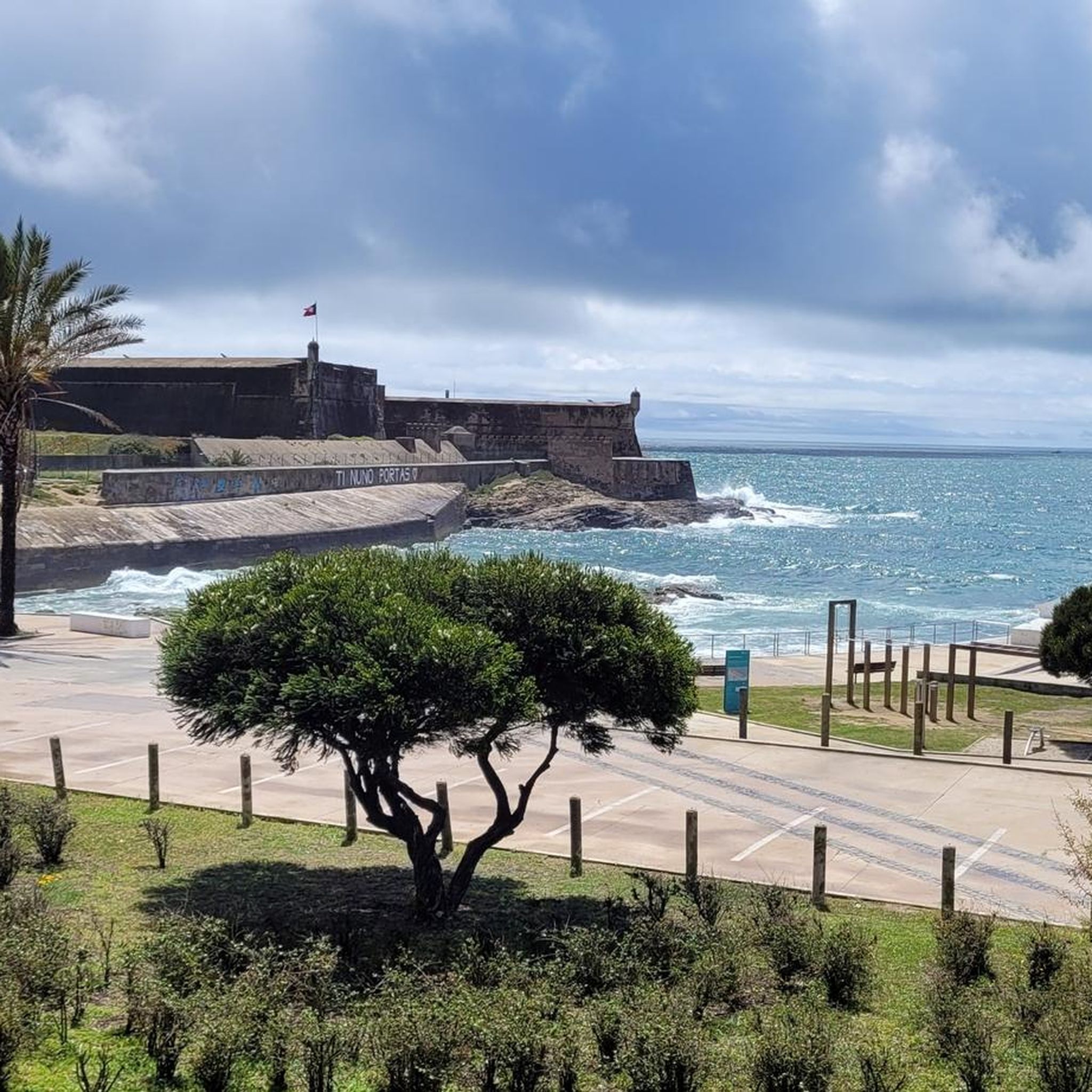
While Porto Salvo itself doesn't host a grand castle, it is directly associated with the Fort of Giribita (Forte de Nossa Senhora de Porto Salvo). This historical fortification, completed in 1649, is located on the right bank of the Tagus estuary in the municipality of Oeiras and was strategically built to defend Lisbon's coastline. You can learn more about it on Wikipedia.
Most popular attractions around Porto Salvo

Get inspired with the komoot mobile app


Explore more
Looking for the best castles somewhere else? Discover other guides around Porto Salvo:
