Attractions and Places To See around Saint-Souplet-Sur-Py - Top 7
Attractions and places to see around Saint-Souplet-Sur-Py offer insights into a rural Champagne village with significant historical and natural appeal. The area is characterized by its traditional architecture and remnants of World War I. Visitors can explore unique natural features like an orchid meadow and the Py river. The region provides a blend of historical sites and natural landscapes.
Best attractions and places to see around Saint-Souplet-Sur-Py
- The most popular attractions is Sommepy-Tahure National Cemetery, a major site of…
Last updated: July 5, 2026
Sommepy-Tahure National Cemetery
Highlight • Other
Translated by Google •
Tip by

Sommepy Tahure
Highlight • Other
Translated by Google •
Tip by
Sign up now to discover places like this
Get recommendations on the best single tracks, peaks, & plenty of other exciting outdoor places.
Sign up for free
Camp de Moronvilliers
Highlight (Segment) • Historical Site
Translated by Google •
Tip by
Moronvilliers, destroyed village
Highlight • Historical Site
Translated by Google •
Tip by
Sainte-Marie-à-Py
Highlight • Other
Translated by Google •
Tip by
Sign up for free to discover even more attractions around Saint-Souplet-Sur-Py.
Sign up for free
Already have an account?
Start today with a free account
Your next adventure awaits.
Login or Signup
Popular around Saint-Souplet-Sur-Py

Tips from the Community

One of the most notable figures buried here is Michel Coiffard, a French fighter pilot from the First World War. Originally an infantryman, he was declared unfit for service after an injury, but managed to re-enlist – this time in the air force. As a member of escadrille 154, he specialised in shooting down German observation balloons, an extremely dangerous mission due to the heavy anti-aircraft defences. Coiffard shot down no fewer than 33 balloons, an exceptional feat. On 28 October 1918, he was fatally hit during a mission, but managed to land his aircraft safely. He died of his injuries shortly afterwards. His grave can be found in this necropolis, under number 1027 (but that number is incorrect, check the register).
3
0
The bakery closes at 12:30 and opens at 17:00
6
0
At the foot of the church plateau, along the Rue de l’Hôtel Dieu, there is a well-preserved German shelter (abri allemand). This concrete construction was used by the German troops as an observation and command post. Its location close to the church offered protection and an overview, which was crucial in this heavily contested sector of the front.
7
0
On the slope of the Église Saint-Martin opposite 32, Rue de l'Hôtel Dieu The church of Sommepy-Tahure, Église Saint-Martin, is located on a raised plateau in the centre of the village. During the First World War, this location had strategic importance, as it offered a view over the surrounding front area in Champagne. The church was badly damaged during the war and later rebuilt, but the area around it still bears the traces of the conflict.
7
0
This national cemetery, located on a hill near Sommepy-Tahure in the Marne, is a major site of remembrance for the First World War. It was built between 1920 and 1924 and contains the remains of 2,201 French soldiers, 721 of whom are in an ossuary. The site centralizes graves from several former battlefields in the region. The necropolis is located in an area that was heavily fought over during the Battles of Champagne. In 1918, the nearby village was liberated by French and American troops, including the 2nd American Infantry Division. The cemetery symbolizes not only the French military sacrifice, but also the Franco-American collaboration during the conflict.
7
0
Sainte-Marie-à-Py played an important role during the First World War, particularly during the Champagne Offensives, when French troops attempted to push back the German lines. The region was badly affected by the fighting, and today the Navarin Monument commemorates the soldiers who fought and died here. The village also has a war memorial in memory of the inhabitants who died in both world wars. The traces of the destruction are still visible in the landscape, a silent witness to the fierce fighting that took place here.
6
0
Where the village of Moronvilliers once stood, there is now a vast military training area. Managed by the French army, the site covers over 1,500 hectares and is used for target practice and military training. Despite its strategic function, it is also a protected Natura 2000 area, where rare calcareous grasslands (savarts) and chalk quarries are home to exceptional flora and fauna. Nature and military use exist here in a fragile balance – a landscape shaped by war, but today managed with an eye for ecology and heritage
5
0
Moronvilliers was a village in the Marne that was completely destroyed during the First World War. It was located in the zone rouge, an area that was so badly damaged by the fighting that reconstruction was considered impossible. After the war, the village was not rebuilt and today it is part of the Moronvilliers military training area. Its name lives on in Pontfaverger-Moronvilliers, and like other "destroyed villages", only a few traces remain as silent witnesses to the devastating battle.
4
0
Frequently Asked Questions
What historical sites related to World War I can I visit near Saint-Souplet-sur-Py?
The area around Saint-Souplet-sur-Py is rich in World War I history. You can visit the Sommepy-Tahure National Cemetery, a significant site of remembrance for French soldiers and a symbol of Franco-American collaboration. Another important location is Camp de Moronvilliers, a former battlefield now a military training area and a protected Natura 2000 site. Additionally, the village of Sainte-Marie-à-Py, particularly the Navarin Monument, commemorates soldiers who fought in the Champagne Offensives.
Are there any unique natural attractions in the Saint-Souplet-sur-Py area?
Yes, the region offers unique natural features. The 'Prairie aux orchidées' (Orchid Meadow) on the 'Terme des Côtes' is home to several species of wild orchids, attracting botanists and nature lovers. The Py River, which flows through the village, also contributes to the local natural landscape.
What cultural landmarks are there in Saint-Souplet-sur-Py itself?
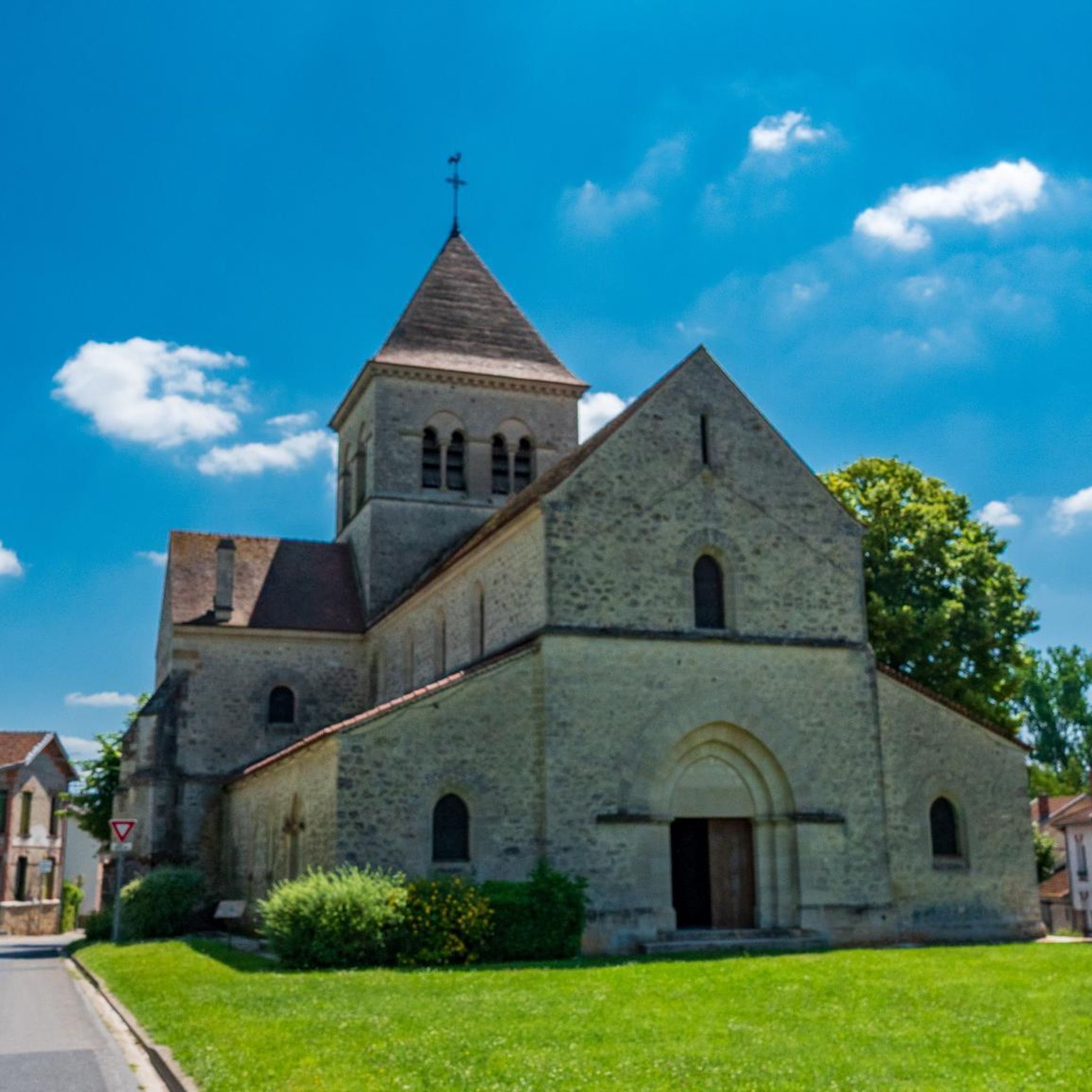
Within Saint-Souplet-sur-Py, the village church is a notable cultural landmark. Largely destroyed during World War I, it was rebuilt with its nave oriented in the opposite direction, making it a unique historical monument. It is recognized as a 'Bâtiment historique de France' and features a stained-glass window dedicated to the 'Poilus' (French soldiers of WWI).
What outdoor activities, like cycling or running, are available near Saint-Souplet-sur-Py?
The area around Saint-Souplet-sur-Py offers various outdoor activities. For road cycling, you can explore routes like 'The Four Corporal’s… loop from Suippes' or 'Église (ruines de l') loop from Saint-Hilaire-le-Grand'. Running enthusiasts can find trails such as 'Ancien pont loop from Suippes' or 'Running loop from Sommepy-Tahure'. You can find more details on these routes in the Road Cycling Routes around Saint-Souplet-Sur-Py and Running Trails around Saint-Souplet-Sur-Py guides.
Can I visit any 'destroyed villages' from World War I near Saint-Souplet-sur-Py?
Yes, you can visit Moronvilliers, destroyed village. This village was completely devastated during the First World War and was never rebuilt. Today, only a few traces remain as silent witnesses to the intense battles that took place there, now part of the Moronvilliers military training area.
What are some notable towns or cities to visit in the wider vicinity of Saint-Souplet-sur-Py?
Several significant towns and cities are within a reasonable driving distance. Reims, about 32 km away, boasts three UNESCO-listed sites: its Cathedral, Abbey, and Palace. Châlons-en-Champagne, also around 32 km distant, is known for its churches, including the Collégiale Notre-Dame-en-Vaux. Epernay, approximately 43 km away, is renowned for its grand wine houses and extensive vineyards.
Are there any specific places to learn about the Champagne region's wine heritage near Saint-Souplet-sur-Py?
While Saint-Souplet-sur-Py itself is a rural village, the wider Champagne region is famous for its wine heritage. Epernay, located about 43 km to the west-south-west, is a key destination for exploring grand wine houses and vineyards, offering a prime opportunity to learn about and experience Champagne production.
What is the significance of Camp de Moronvilliers?
Camp de Moronvilliers is a site of dual significance. Historically, it was a village and a major battlefield during World War I. Today, it serves as a vast military training area managed by the French army. Simultaneously, it is a protected Natura 2000 area, recognized for its rare calcareous grasslands and chalk quarries that support exceptional flora and fauna.
What is the best time of year to visit Saint-Souplet-sur-Py for outdoor activities or nature viewing?
The spring and summer months are generally ideal for visiting Saint-Souplet-sur-Py, especially for nature viewing. Spring allows you to witness the wild orchids in bloom at the 'Prairie aux orchidées', while summer offers pleasant weather for outdoor activities like cycling and running along the Py River and surrounding trails.
Are there any family-friendly activities or sites suitable for children near Saint-Souplet-sur-Py?
While specific child-focused attractions are not highlighted, the natural features like the Orchid Meadow and gentle routes along the Py River can be enjoyable for families who appreciate nature walks and easy outdoor exploration. The historical sites, such as the WWI memorials, can also offer educational opportunities for older children.
What do visitors appreciate most about the attractions around Saint-Souplet-sur-Py?
Visitors to the Saint-Souplet-sur-Py area appreciate the blend of profound historical significance, particularly related to World War I, and the tranquil natural beauty. The unique historical context of sites like the Sommepy-Tahure National Cemetery and the remnants of destroyed villages offer a poignant experience, while the rural charm and natural landscapes provide a peaceful escape.
Are there any other significant war memorials or sites of remembrance in the area besides Sommepy-Tahure?
Yes, in addition to the Sommepy-Tahure National Cemetery, the village of Saint-Souplet-sur-Py has a local War Memorial (Monument communal) commemorating the conflicts of 1914-1918 and 1939-1945. The nearby village of Sainte-Marie-à-Py also features a war memorial and the Navarin Monument, which remembers soldiers from the Champagne Offensives.
Where can I find information about the local flora, such as wild orchids?
The 'Prairie aux orchidées' (Orchid Meadow) on the 'Terme des Côtes' is the primary location for observing local wild orchids. While specific detailed information might be found through local botanical societies or regional nature guides, visiting the meadow itself during spring and early summer will allow you to experience this natural treasure firsthand.
Most popular routes around Saint-Souplet-Sur-Py

Get inspired with the komoot mobile app


Explore more
Still not found the Highlight you’re looking for? See guides of the top attractions in other regions:
