The best gravel rides around Corme-Royal
3.9
(7)
36
riders
8
rides
Gravel biking around Corme-Royal offers access to the diverse and generally flat landscapes of the Charente-Maritime department in Nouvelle-Aquitaine, France. The region is characterized by white gravel paths winding through salt marshes, shaded trails in pine forests, and scenic routes through vineyards. Cyclists can also find riverside paths along the Charente and its tributaries, providing varied terrain for exploration. The predominantly flat topography makes it suitable for various fitness levels, with subtle variations and transitions between environments adding dynamic riding.
…Last updated: May 16, 2026
4.0
(1)
12
riders
Hard gravel ride. Very good fitness required. Mostly paved surfaces. Suitable for all skill levels.
4.3
(3)
6
riders
Moderate gravel ride. Good fitness required. Mostly paved surfaces. Suitable for all skill levels.

Sign up for free
3.0
(1)
5
riders
46.7km
02:49
170m
160m
Moderate gravel ride. Good fitness required. Mostly paved surfaces. Suitable for all skill levels.
4.0
(1)
2
riders
33.0km
02:11
110m
110m
Moderate gravel ride. Good fitness required. Mostly paved surfaces. Suitable for all skill levels.
3
riders
Hard gravel ride. Good fitness required. You may need to push your bike for some segments of this route.
Get access to more routes and recommendations from other explorers.
Sign up for free
Already have an account?
Our route recommendations are based on thousands of hikes, rides, and runs completed by other people on komoot.
Start today with a free account
Your next adventure awaits.
Login or Signup


Tips from the Community

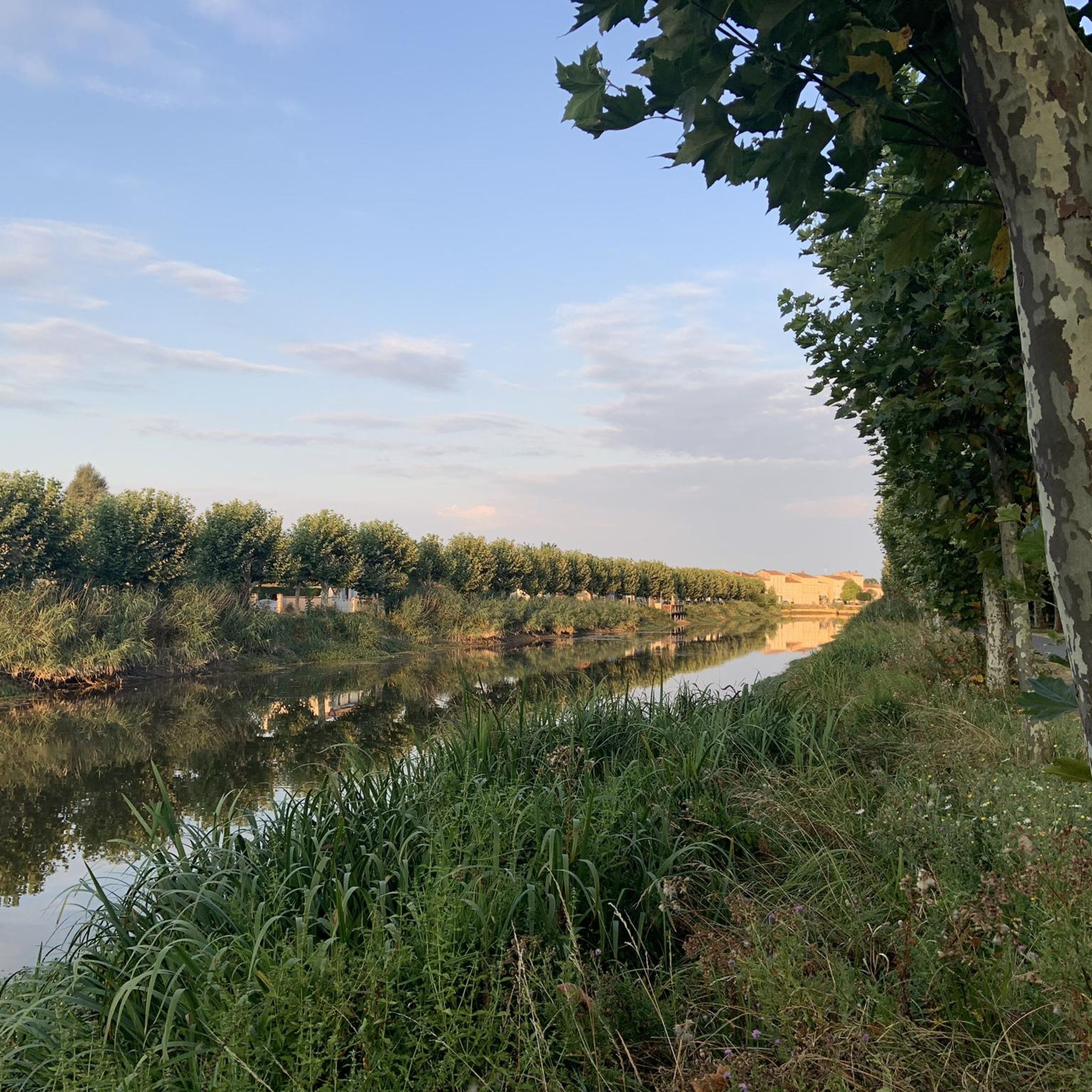
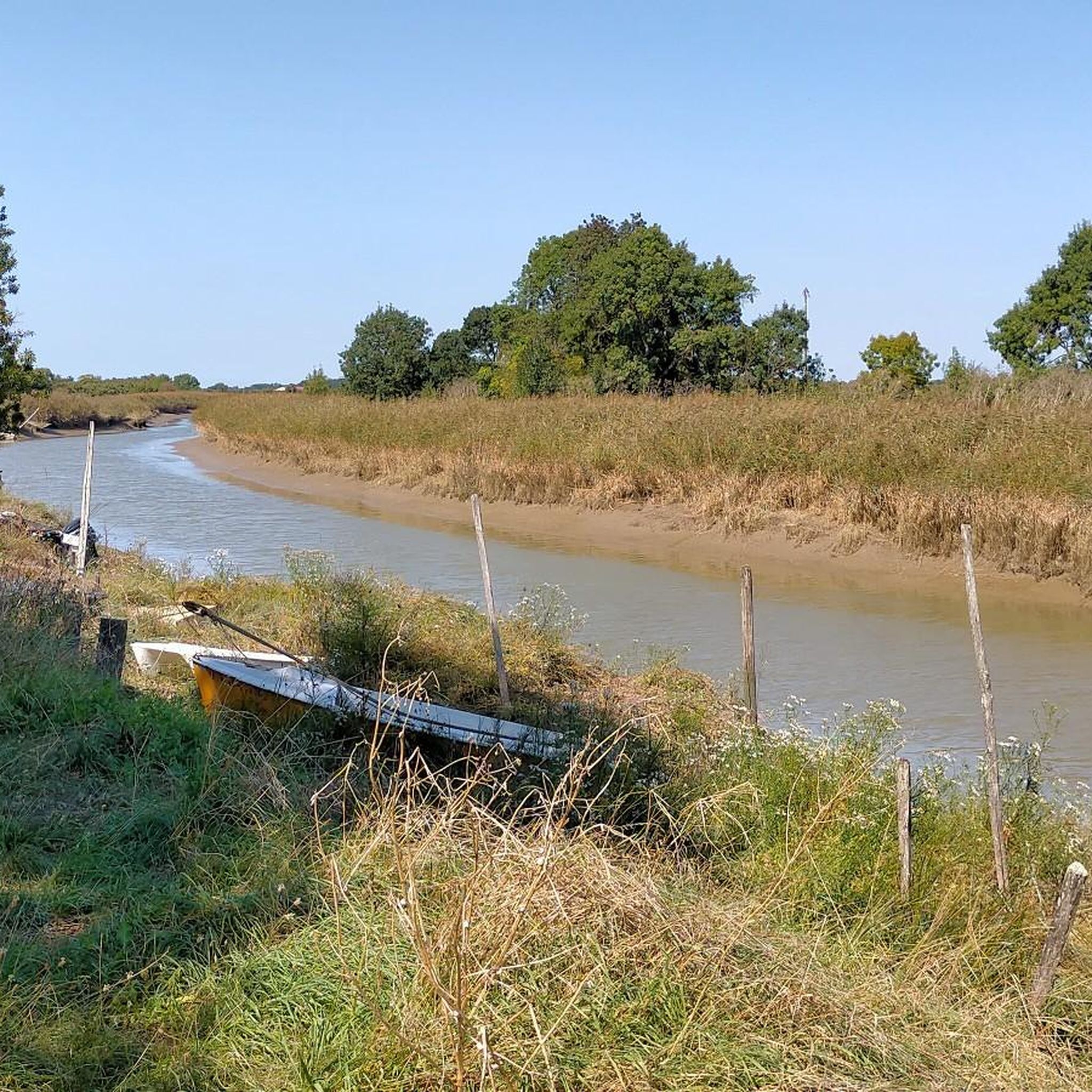
The port of Ribérou is a major heritage site in Saujon, bearing witness to a prosperous maritime past linked to the salt and wine trade. Transformed in the 19th century by ambitious works, it has now been reinvented as a place for living, relaxation, and preserving local history. 🛶 Origins and the Middle Ages The port of Ribérou takes its name from the Latin word ripa ("riverbank") or the Occitan word ribèira ("river"). It is located at the head of the Seudre estuary. It existed as early as the 11th century and became an important river and sea port thanks to its strategic position at the head of the estuary, used particularly for the salt trade—then called "white gold"—a highly sought-after product for preserving food. 🚢 Medieval Period and International Trade With the opening of British markets during the reigns of Eleanor of Aquitaine and Henry II Plantagenet, ships laden with wool, salt, wine, and other goods flocked to Ribérou. In the 16th century, the port exported local wines (such as cognac and pineau) throughout Europe. In 1577, during the Wars of Religion, the port was a strategic site: troops were stationed there, and battles took place. 🏗️ Decline, Reconstruction, and the 19th Century The estuary gradually silted up, making navigation difficult. By 1691, only smaller vessels could dock there. During the French Revolution, the sale of the tidal mill, which helped remove sediment, worsened the silting, leading to the port's decline. A modernization project began in 1822, but it wasn't until 1839 that an ambitious program was launched under the impetus of Jules Dufaure—a native of Saujon and Minister of Public Works—with the construction of sturdy quays, slipways, a lock bridge (marking the boundary between fresh and salt water), and reception facilities. In 1842, the work was completed, and the main quay was named Quai Dufaure in honor of this political support. 📉 Gradual Decline and Modernization The arrival of the railway in 1876 and the persistent problems of silting led to a decline in the port's traditional commercial activity, already facing competition from other transport networks. In the 20th century, the port gradually lost its economic importance but remained active for traditional fishing and became a place for pleasure boating, leisure, and local culture. Urban and tourism development projects (particularly in 2011–2012) modernized the port while preserving its historical charm. 🌊 Today The port of Ribérou is now a small fishing and pleasure port, much appreciated for its walks along the Seudre River, water sports (canoeing, kayaking, paddleboarding, etc.), and seasonal events.
0
0


A very beautiful archway!
2
0

The port of Ribérou is a fishing and pleasure port located at the end of the Seudre estuary, in Saujon. It is one of the two ports in the city, along with that of Breuil, a little downstream. Active since the 11th century, it took on its current appearance from 1842, under the impetus of the Minister of Public Works at the time, Jules Dufaure, a "local boy", who thus attempted to revive maritime trade and fishing activities, which were then in decline. Ideally located, on the edge of the city center, the La Lande leisure center and the preserved areas of the Seudre marshes (towpaths transformed into walking trails), it has become one of the major tourist attractions in Saujon, where theme evenings and the July 14 fireworks are organized. In 2011, the municipality began a renovation program for the port site, entrusted to the architect-urban planner Sophie Blanchet. It consists of transforming the old car parks into a pedestrian esplanade, a real meeting place with modern street furniture and, in the long term, green spaces. From the quays, lined with bourgeois buildings, small picturesque streets lined with hollyhocks allow you to crisscross the district and reach the city centre. The Ribérou lock bridge, known as the "bridge of opposing waters", was renovated in 2010. It marks the separation between the waters of the estuary (port side: brackish water) and the waters of the river (retention basin side: fresh water). Ribérou is a starting point for certain water sports (canoeing and kayaking). It is approximately 250 metres long and 40 metres wide. From Ribérou, it is possible to reach successively the ports of Breuil (Saujon), L'Éguille, Mornac, Chaillevette, Chatressac (Chaillevette), Grandes Roches and Orivol (Étaules), La Grève in Duret and Coux (Arvert), La Grève (La Tremblade) and La Cayenne (Marennes).
0
0
The organs of the Saint-Jean-Baptiste church in Saujon. In 1962-1963, Pierre Nadeau built a 6-stop organ, without visible pipes, entirely expressive. In 1973, Dominique Oberthür carried out a repair of the organ. In 1978-1979, the Etablissements Muhleisen of Strasbourg rebuilt the organ which was inaugurated by Jacques Dussouil on June 9, 1979. The Walther Buffet is a two-body, polychrome, in fir and plywood. The large body has three turrets (the central one in a pointed third) framing two flat faces. The back positive includes two flat turrets framing a flat face. The facade includes 56 tin pipes (29 in the large body and 27 in the back positive). Console in a window projecting from the base. 4 windchests with engravings and registers.
0
0
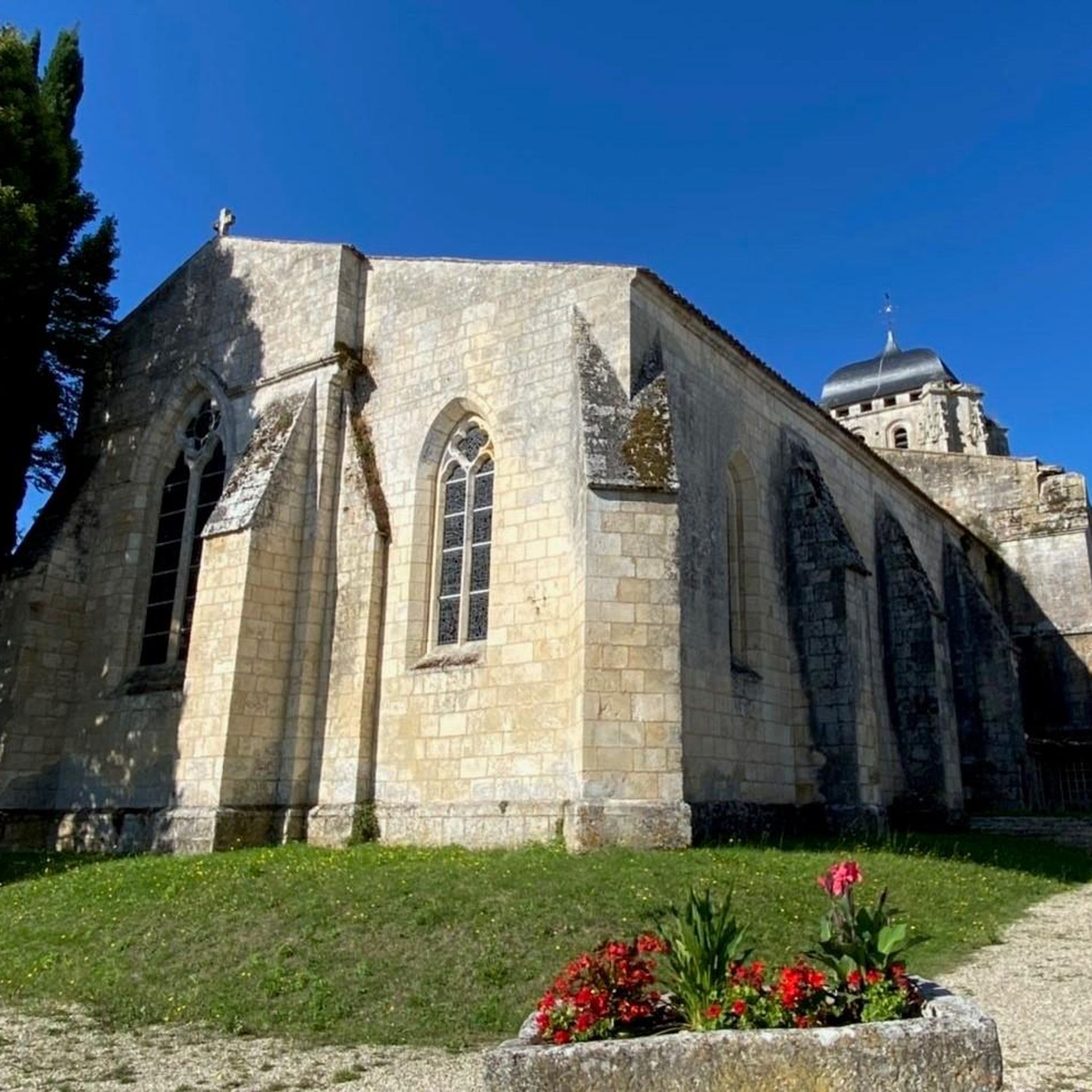
The first Romanesque church of Saint-Jean-Baptiste, about which we know practically nothing except that it replaced a monument destroyed and burned in 1415 by the English, at the same time as the priory of Saint-Martin and this by a certain Hutington, at the breaking of the truces of King Richard. Around 1530 it was ruined during the wars of religion. It had a vaulted nave and buttresses larger than the current church. The current church of Saint-Jean-Baptiste, built between 1679 and 1683, on a project by Jacques Guérinet, architect of the convent buildings of the Abbaye-aux-Dames de Saints. Houses four capitals of the old Romanesque church, discovered during work carried out on the fairground. One of them shows Daniel in the lion's den, the saint seated blessing holds the Book. It is separated from the wild animals by a horseshoe-shaped mandorla, decorated with pearls. Another capital represents the Resurrection with the Holy Women and the tomb on which the angel is seated. The third illustrates the Weighing of Souls. The clothes, the finely worked details, the varied expressions of the characters (note the horrible clawed demon who tries to tip the scales on his side), make this work one of the peaks of Saintonge Romanesque sculpture. The last one presents an enigmatic scene: characters, including a man bending under the weight of an enormous fish that he is carrying. These four capitals, which are among the most beautiful sculpted works of Saintonge, are placed at a low height, which allows one to admire all the details. The following website is very well documented on these capitals: http://chapiteaux.free.fr/TXT_Saujon.html
0
0
Frequently Asked Questions
How many gravel bike trails are available around Corme-Royal?
There are over a dozen gravel bike trails around Corme-Royal, offering a variety of experiences. These routes range from moderate loops to more challenging, longer excursions, catering to different fitness levels.
Are there any easy or beginner-friendly gravel routes in the area?
Yes, Corme-Royal offers several routes suitable for beginners or those looking for an easier ride. There are 3 routes classified as easy, and 8 moderate routes that can be approached by those with a reasonable fitness level. The generally flat landscape of Charente-Maritime makes many paths accessible.
What kind of landscapes can I expect to see while gravel biking near Corme-Royal?
You can expect a diverse and generally flat landscape. Routes often feature white gravel paths winding through salt marshes, shaded trails in pine forests, and scenic rides through vineyards. You might also find riverside paths along the Charente and its tributaries, offering varied terrain and views.
Are there any circular gravel bike routes available?
Yes, many of the gravel routes around Corme-Royal are designed as loops. For example, the Pirelonge Tower – Riberou Port loop from Corme-Royal is a popular circular route starting directly from the town. Another option is the Porche de Pont l'Abbé loop from Pont-l'Abbé-d'Arnoult, which takes you through agricultural landscapes.
What are some interesting landmarks or places to explore along the gravel trails?
Many routes offer opportunities to see local points of interest. You could pass by the Riberou Port, or discover historical churches such as the Saint-Romain Church of Saint-Romain-de-Benet, the Notre-Dame Church of Corme-Écluse, or the Saint Sulpice Church, Saint-Sulpice-d'Arnoult. The wider region also features attractions like Château de la Roche-Courbon, which can be incorporated into longer excursions.
What is the best time of year for gravel biking in Corme-Royal?
The region offers a visually stimulating experience throughout the seasons. Spring brings dunes in bloom, summer provides fast terrain, and autumn showcases warm ochre colors. The predominantly flat terrain is generally accessible, but be mindful of wind exposure, especially in open areas like salt marshes.
Are there any longer or more challenging gravel routes for experienced riders?
Yes, for experienced riders seeking a challenge, routes like the Crazannes Castle – Royal Ropewalk loop offer a more demanding experience, covering nearly 100 km. Another difficult option is the Porche de Pont l'Abbé – La Roche Courbon Castle loop, which is over 50 km long.
What do other gravel bikers say about the trails in Corme-Royal?
The gravel biking routes around Corme-Royal are highly rated by the komoot community, with an average score of 3.8 stars from over 8 reviews. Riders often praise the varied terrain, which includes salt marshes, pine forests, and vineyards, providing a dynamic and engaging experience.
Is Corme-Royal a good base for exploring the wider Charente-Maritime region by gravel bike?
Absolutely. Corme-Royal's location within Charente-Maritime makes it an excellent base. The department is known for its diverse landscapes, including salt marshes, pine forests, vineyards, and riverside paths. It's also crisscrossed by major cycling routes like the Vélodyssée and Flow Vélo, which often include unpaved sections suitable for gravel riding.
Are there any family-friendly gravel biking options near Corme-Royal?
Given the region's generally flat topography and the presence of easy and moderate routes, many paths can be suitable for families. Look for shorter, less challenging loops that traverse the quieter agricultural landscapes or riverside paths for a pleasant family outing.
What kind of surfaces can I expect on the gravel trails?
The gravel trails around Corme-Royal feature a mix of surfaces. You'll encounter classic white gravel paths, especially in the salt marsh areas, as well as forest trails, paths through vineyards, and potentially some unpaved sections along river towpaths. This variety is typical for gravel biking in the region.
Most popular routes around Corme-Royal
Most popular attractions around Corme-Royal

Get inspired with the komoot mobile app


Explore more
Browse the best Gravel rides in other regions.
