Attractions and Places To See around Romagne-Sous-Les-Côtes - Top 9
Attractions and places to see around Romagne-Sous-Les-Côtes are primarily shaped by the region's history, particularly its role in World War I. Located in the Meuse department of France, the area features numerous historical sites, including remnants of destroyed villages and military cemeteries. Beyond its historical significance, the landscape offers natural features such as elevated viewpoints and conserved ponds. These elements combine to provide a range of points of interest for visitors.
Best attractions and places to see around Romagne-Sous-Les-Côtes
- The…
Last updated: July 2, 2026
Ruins of Église Saint-Michel
Highlight • Historical Site
Translated by Google •
Tip by

Bezonvaux
Highlight • Other
Translated by Google •
Tip by

Sign up now to discover places like this
Get recommendations on the best single tracks, peaks, & plenty of other exciting outdoor places.
Sign up for free
Beaumont-en-Verdunois Destroyed Village
Highlight • Historical Site
Translated by Google •
Tip by
Ornes WWI Tragedy Memorial
Highlight • Other
Translated by Google •
Tip by
Azannes II German military cemetery
Highlight • Other
Translated by Google •
Tip by

Sign up for free to discover even more attractions around Romagne-Sous-Les-Côtes.
Sign up for free
Already have an account?
Start today with a free account
Your next adventure awaits.
Login or Signup



Tips from the Community

Ornes was a real city, larger than the other villages destroyed, but eventually, after the Great War, is at the same point that they or essentially disappeared under the rocks. In the middle of the 19th century it has 1367 inhabitants. This number drops to 750 inhabitants in 1914, mainly due to depopulation of the countryside, which provides labor to large industrial centers booming in the late 19th century. Nevertheless, this city has an industrial textile processing and very suitable for local agricultural production and of the plain of the neighboring Woëvre. But at the outbreak of the Great War August 1914, the location of the village is in the danger zone. It is quite quickly in the middle of the front line. Residents were evacuated on August 25, 1914. This was not without risk under the continuous bombardments and raids by German patrols. In September 1914, two children were killed by shrapnel. In October 1914 a number of villagers were captured by the Germans and murdered. In 1915 and until February 1916 French troops held the village. But from 21 to 24 February 1916 the German superiority was so strong that the village of Ornes was taken by the German infantry after heavy bombardments. The village of Ornes was recaptured on 23 August 1917. This memorial reminds passers-by of the tragedy of Ornes.
3
0
Ornes was a real city, larger than the other destroyed villages, but which eventually found itself, after the First World War, on the same site, or almost, under their stones. In the course of its history, its lord's castle suffered the same fate, when it was taken in February 1653 and then destroyed by the Catholic troops of Lorraine, while he, like his ancestors since 1563, vigorously defended Protestantism. As early as 1587, a very bloody battle took place between his troops and the Catholic troops of the Duke of Lorraine. In the mid-19th century, the city had 1,367 inhabitants, but in 1914 the number of inhabitants fell again to 750. This was mainly due to the rural exodus, which provided labour for the large industrial centres that were growing rapidly at the end of the 19th century. However, this city has an industrial textile and processing factory that is well suited to local agricultural production and textiles from the neighbouring Woëvre plain. But its geographical location, close to the border with the annexed Moselle and then on the front that had been stabilised after the Battle of the Marne, was not favourable for the area. In the event of an enemy offensive, the area would quickly find itself on the front line. For this reason, on 25 August 1914, the population was asked to leave the village. But not everyone left, at their own risk, because the bombardments and German patrols in the village became increasingly intense. In September 1914, two children were killed by shrapnel. In October 1914, several villagers who were about to leave were taken prisoner by the Germans... In 1915 and until February 1916, French troops held the village where units were positioned, in the second line opposite the front, at the beginning of the great German offensive. But from 21 to 24 February, the German advance was so strong that the village of Ornes was taken by their infantry on 24 February 1916, after heavy bombardments that destroyed all the houses and buildings in the village. It was not until 23 August 1917 that the area was retaken by our soldiers. At the end of the war, the area was classified as a 'red zone' and could never be rebuilt. Source: Tourism Verdun
3
0

The German military cemetery of Azannes II was created in March 1916 during the Verdun offensive after the front had advanced several kilometers to the South.
0
0
In September 1914, the 186 inhabitants were evacuated from the village, which was temporarily left in no man's land. In October 1914, it was occupied by French troops who transformed it into a strong point. Beaumont unfortunately lay just behind the front line where the first German attack took place on 21 February 1916. Lieutenant-Colonel Emile Driant's chasseurs defended the Caures Wood to the north, in the most advanced position. Despite the heroic resistance of the chasseurs, the wood fell and Colonel Driant gave the order to withdraw to Beaumont. As the columns emerged from the wood, they came under withering German machine gun fire. The colonel, who formed the rearguard, was killed, but fragments of his sections managed to reach Beaumont and reinforce the garrison there. February 24 was the critical day. From the village, elements of two French regiments (four companies) fought off repeated attacks. As the troops of the 18th German Corps entered the village, they were mowed down by machine guns firing from cellar windows. The enemy formations, which were extremely densely packed, advanced so rapidly, with each wave passing the previous one, that the French automatic fire at first seemed to overwhelm them and they suffered terrible losses. The Germans began a systematic shelling of the village again. When the infantry attack was resumed, they again encountered fierce resistance, but the balance of power was now too unequal. As more of the attacking troops managed to break through, the French officers realized that a withdrawal was necessary. The French were able to keep an escape route open and a number of their survivors were able to escape the following morning. Beaumont was lost and it was to become a formidable stronghold for the German army for the remainder of the battle of 1916. Read the full story at https://roadstothegreatwar-ww1.blogspot.com/2022/10/three-battles-at-beaumont-en-verdunois.html
2
0

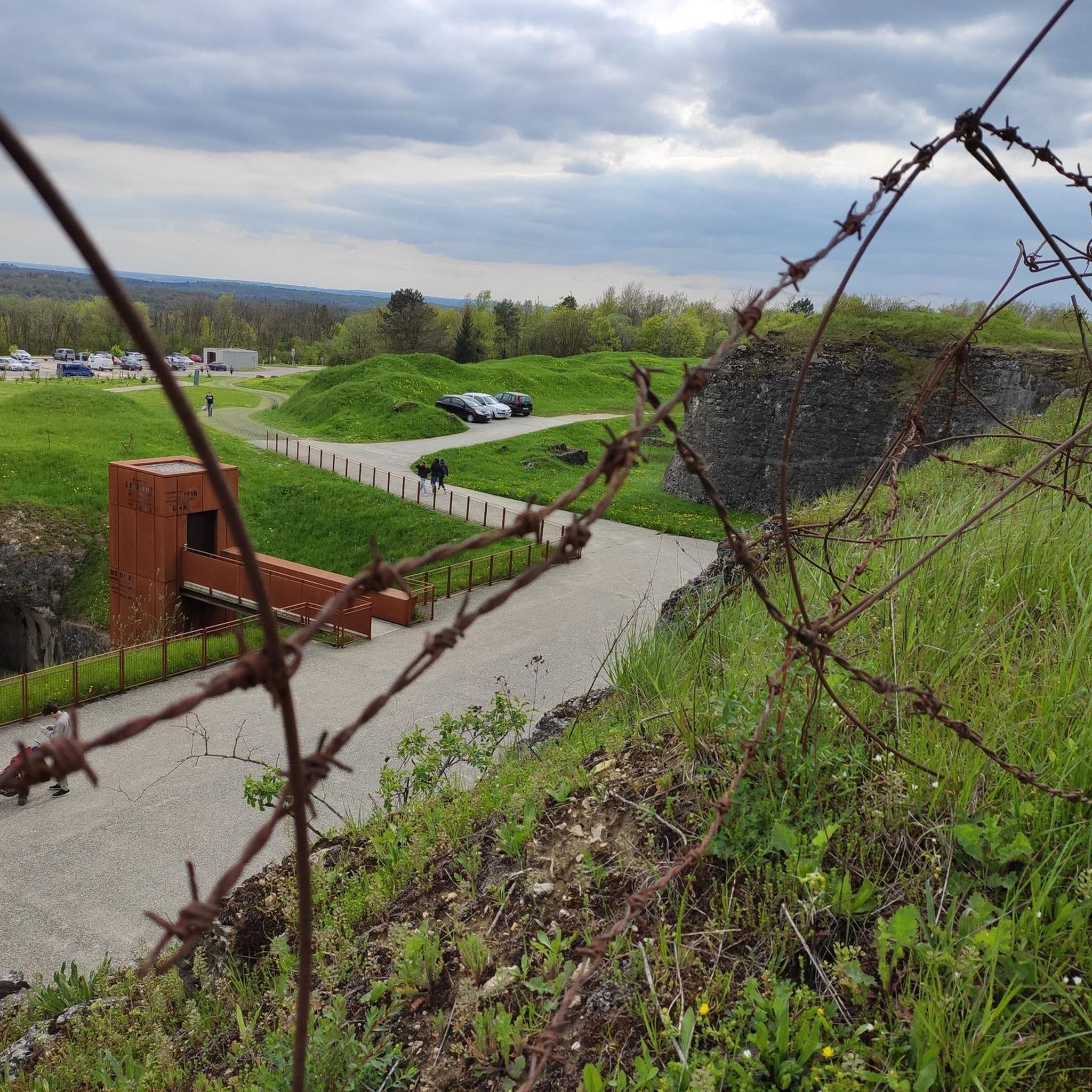
This is one of the destroyed villages from WWI that were not rebuilt
4
0
This is one of the destroyed villages from WWI that were not rebuilt
2
0
This is one of the destroyed villages that have not been rebuilt after WWI
3
0
Frequently Asked Questions
What historical sites related to World War I can I visit around Romagne-Sous-Les-Côtes?
The region is rich in WWI history. You can explore sites like the Ruins of Église Saint-Michel in Ornes, which was a significant town extensively destroyed during the war. Other notable sites include the Beaumont-en-Verdunois Destroyed Village, which played a crucial role in the Battle of Verdun, and the destroyed village of Bezonvaux.
Are there any destroyed villages from World War I that I can explore?
Yes, several poignant destroyed villages serve as powerful reminders of WWI. You can visit Bezonvaux, a village that was never rebuilt after its destruction. Another significant site is Beaumont-en-Verdunois, which also remains as a historical marker of the conflict.
Where can I find memorials or cemeteries dedicated to World War I in the area?
The area features several important WWI remembrance sites. You can visit the Ornes WWI Tragedy Memorial, which commemorates the devastating impact on the village of Ornes. Additionally, the German Military Cemetery (Cimetière militaire allemand) and the Azannes II German military cemetery offer places for reflection on the conflict's human cost.
What natural features or scenic viewpoints are there in the region?
For natural beauty and views, you can visit Cote Saint Pierre, which features a table d'orientation offering panoramic views of the surrounding landscape. The Étang du conservatoire des sites lorrains, a pond part of the Conservatory of Lorraine Sites, also provides a tranquil natural setting.
Are there opportunities for hiking near Romagne-Sous-Les-Côtes?
Yes, the area offers various hiking opportunities. You can find moderate trails like the 'Pc du Colonel Driant – First-aid station loop from Azannes-et-Soumazannes' (14.5 km) or the 'Bezonvaux – Ruins of Église Saint-Michel loop from Ornes' (11.1 km). For easier options, consider the 'Saint-Michel Chapel - Ornes – Ruins of Église Saint-Michel loop from Ornes' (6.6 km). Explore more routes on the Hiking around Romagne-Sous-Les-Côtes guide.
Can I go cycling around Romagne-Sous-Les-Côtes?
Absolutely! There are several cycling routes available, catering to different difficulty levels. You can find moderate routes such as the 'Verdun Memorial – Douaumont Ossuary loop from Verdun' (51 km) or the 'Louppy-sur-Loison Castle – Ancien lavoir loop from Damvillers' (32.3 km). More challenging options include the 'The Meuse – Memoire Vive loop from Beaumont-en-Verdunois' (84.2 km). Discover more on the Cycling around Romagne-Sous-Les-Côtes guide.
What cultural or religious sites are present in the region?
Beyond the WWI historical sites, you can visit the local church, which was rebuilt after the devastation of World War I, symbolizing resilience. There is also a Replica of the Lourdes Grotto, offering a spiritual and contemplative site for visitors.
What do visitors typically appreciate most about the attractions in Romagne-Sous-Les-Côtes?
Visitors are deeply moved by the historical significance of the area, particularly the preserved WWI sites like the destroyed villages and memorials. The poignant reminders of the conflict, combined with the natural landscape, offer a unique and reflective experience. The komoot community has shared over 40 photos and given more than 10 upvotes, highlighting the impact and importance of these sites.
Are there any German WWI vestiges or remnants to see?
Yes, scattered remnants from the First World War, known as German WWI Vestiges, can be found throughout the area. These tangible connections to the historical events offer a deeper understanding of the conflict's presence in the landscape.
What kind of road cycling routes are available, and what are their difficulty levels?
Road cyclists can find a variety of routes. Moderate options include the 'Douaumont Ossuary – Douaumont Ossuary loop from Damvillers' (62.5 km) and the 'Main Square of Marville loop from Mangiennes' (35.7 km). For an easier ride, consider 'Le Trou de l'Épinette loop from Mangiennes' (38.2 km). More challenging routes like the 'Torgny Village – RAVeL Ruette–Chenois Path loop from Verdun' (97.4 km) are also available. Find more details on the Road Cycling Routes around Romagne-Sous-Les-Côtes guide.
Is there a site that offers a glimpse into daily life in the community before WWI?
Yes, the Gayoir, an ancient wash house and horse trough, provides a unique glimpse into the daily life and communal activities of the local population in earlier times, predating the major conflicts that shaped the region.
Most popular routes around Romagne-Sous-Les-Côtes

Get inspired with the komoot mobile app


Explore more
Still not found the Highlight you’re looking for? See guides of the top attractions in other regions:
