Attractions and Places To See around Monte Do Trigo - Top 20
Best attractions and places to see around Monte Do Trigo include a mix of historical sites, cultural landmarks, and natural features within Portugal's Alentejo region. This area, historically significant for its strategic location and fertile lands, offers insights into ancient pasts and traditional Portuguese village life. Visitors can explore megalithic tombs, remnants of old thermal baths, and the unique Montado ecosystem. The region's natural beauty, including its connection to the Alqueva lake and cork oak forests, provides diverse landscapes for…
Last updated: July 5, 2026
Termas da Ganhoteira
Highlight • Historical Site
Translated by Google •
Tip by

Charcoal Kilns
Highlight • Structure
Translated by Google •
Tip by
Sign up now to discover places like this
Get recommendations on the best single tracks, peaks, & plenty of other exciting outdoor places.
Sign up for free
Praça da Liberdade, Reguengos de Monsaraz
Highlight • Settlement
Translated by Google •
Tip by

Montado ecosystem.
Highlight • Forest
Tip by
Montado Forest
Highlight • Forest
On the tree level it can be …
Tip by
Sign up for free to discover even more attractions around Monte Do Trigo.
Sign up for free
Already have an account?
Start today with a free account
Your next adventure awaits.
Login or Signup
Popular around Monte Do Trigo
Tips from the Community

Charcoal factory. Here, holm oak, cork oak, or olive wood is transformed into precious charcoal for grilling. 👍🇵🇹
4
0
Walking among the cork oaks, enjoying their shade.👍
2
0

Charcoal, a versatile and essential fuel source, is created through a fascinating process that involves converting wood into a concentrated carbon-rich material. Over the years, both traditional and modern methods have been employed to produce charcoal from wood, each with its own set of advantages. Near S. Bartolomeu do Outeiro we can view charcoal makers in laboration...
9
0
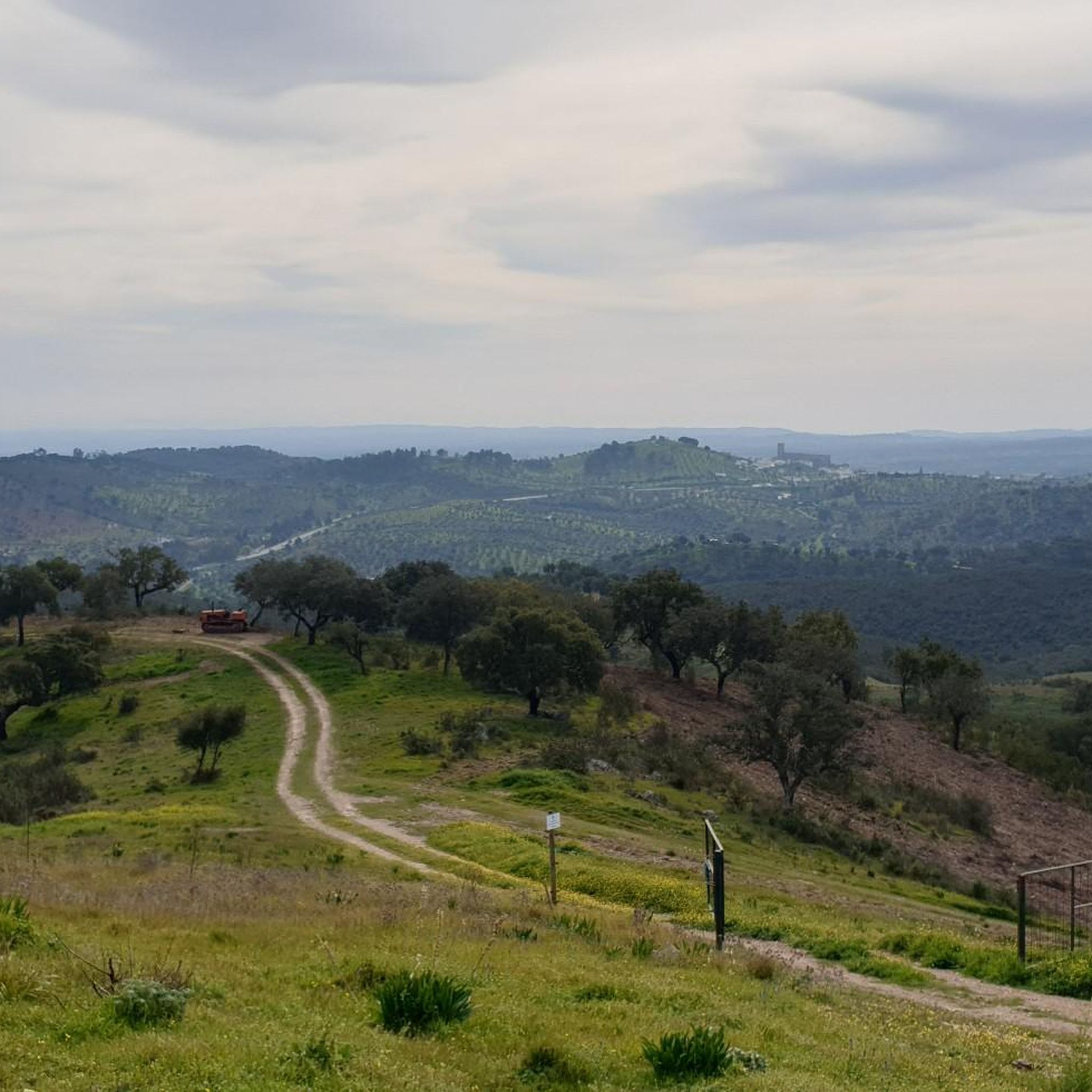
The montado is a unique ecosystem, created by man, characteristic of the Alentejo. It consists of forests of holm oaks, cork oaks, oaks and chestnut trees, with a very delicate balance and which only exist in the Mediterranean, Algeria, Morocco and especially in the south of the Iberian Peninsula. In Portugal, the country with the largest extension of cork oaks in the world (33% of the world's area), the montado is legally protected, with its felling prohibited and exploitation encouraged. Portugal is the world's leading exporter of cork through the manufacture of stoppers.
6
0
The Montado is an agrosilvopastoral system explored at several levels – trees, bushes and herbs – according to the potential of each region. On the tree level it can be made up of oaks like cork oak (Quercus suber), holm oak (Q. rotundifolia) and less frequently pyrene oak (Q. pyrenaica) and portuguese oak (Q. faginea), in pure or mixed populations with variable densities. The ground cover is occupied by pastures used by cattle or is used for dry land crops on a rotation system. The natural pastures can be occupied by shrubs, in variable proportions. Humans are an integral and fundamental part of this ecosystem. It was through our clearing action that the montados were created, ever since we started intervening on our natural surroundings. Human management is necessary, in a more or less intensive way, in order to maintain the montado. Without this intervention, the system evolves, naturally to form a dense forest, where people have more difficulty obtaining resources. The way this process of transformation of the Mediterranean forest developed influenced the structure of the system as it presents today. Some older practices still persist, now without context, making more difficult the adaptation of the system to the new ways of agrarian production. Other ways emerged, some well adapted to the system, other causing more or less serious disturbances. The montado is a system for using the soil developed on a physical background that involves climate, pedological and geomorphological factors with specific characteristics. It is why this ecosystem is restricted to such a limited area, when compared to other ecosystems in our planet.
6
0
Charcoal ovens existed throughout most of the Alentejo, although we can assume that they were more common near areas where there were more holm oak and cork oak forests. Theoretically, the wood used to create charcoal comes from the cleaning of trees, an activity that normally takes place between January and March. After the cutting, the "traça" (wood cutting) is done, which is the cleaning of the trunks. This results in a quantity of wood that is taken close to the place where the oven will be. In some localities, this act of transporting the wood close to the oven is called "rechega" (a kind of "rechega"). The oven is normally built in a previously selected location, on flat land with "good, non-floury" soil. Text taken from the book: Tradição por Terras Dentro (Tradition in the Lands Within).
9
0
Ruins of the Ganhoteira Thermal Baths. Between the towns of Aguiar, in the municipality of Viana do Alentejo, and São Bartolomeu do Outeiro, in the municipality of Portel, are the ruins of the Ganhoteira Thermal Baths, which used to belong to the municipality of Évora. Construction records date back to 1853. They have been abandoned for about sixty years and currently belong to the Eugénio de Almeida Foundation, which has fenced off the area, but allows access on the rural roads that serve the area. In the past, local residents would come to bathe in these thermal baths, as the water is very ferruginous and hyposaline, forming a red cream on the surface. It was used to treat skin and psychiatric diseases. The Associação dos Amigos de Alcáçovas, through the Grupo Pedestrianista Alcáçovas Outdoor, regularly organizes hikes in this area of the Serra de Portel.
8
1
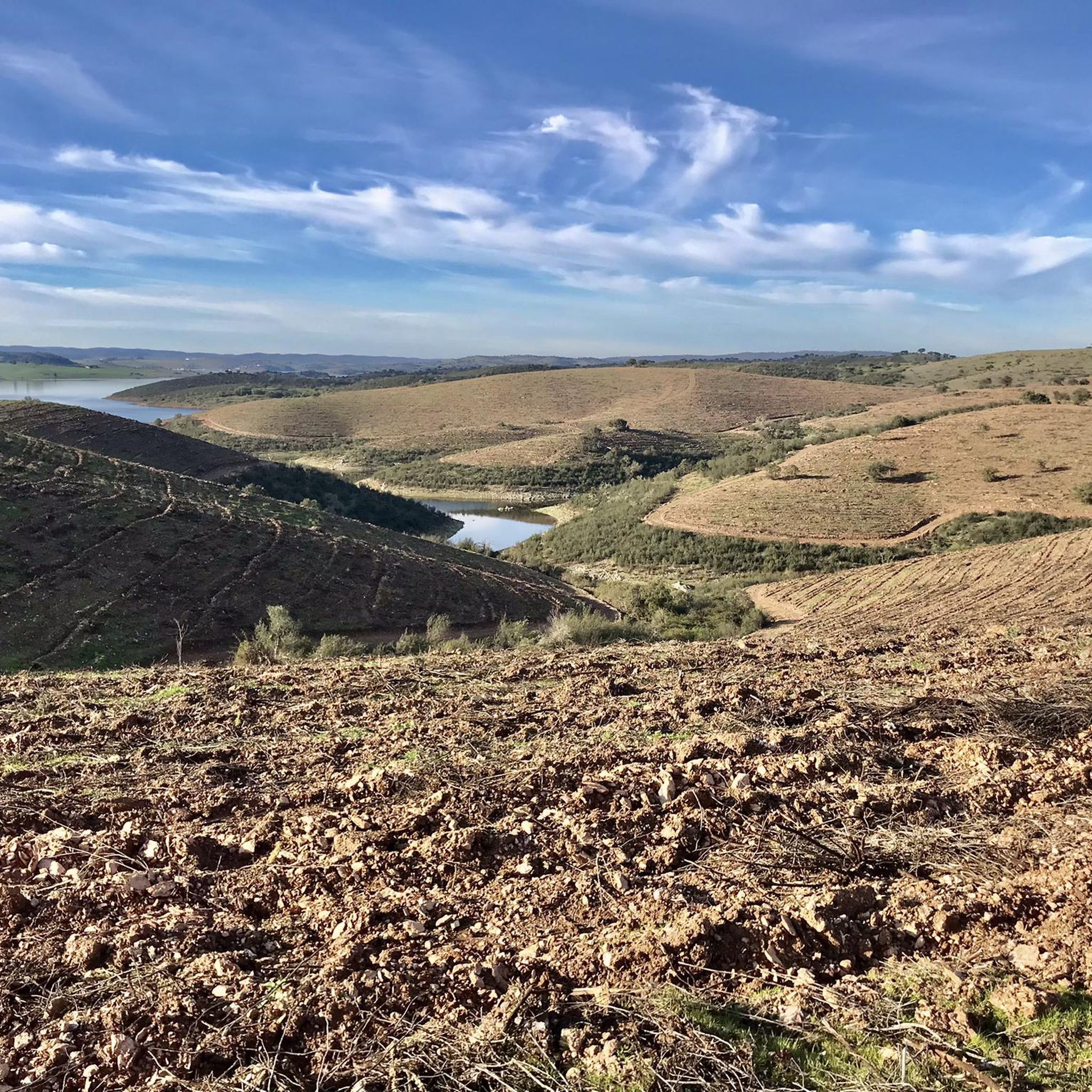
At Mediterranean latitudes, (30º-40º) the effect of the moist winds coming from the west (the sea), during the winter, soothing the continental cold, alternates with the dry and hot winds of summer, associated with subtropical high pressures. During winter, the Mediterranean basin is also subject to winds coming from the North Atlantic. These cold and moist masses of air warm up when in contact with the Mediterranean Sea, forming low pressures. These, then, result in short periods of intense rainfall, causing easy erosion of the soil. During summer the Azores High moves north, while hot and dry winds move up from the Sahara seaside (Sirocco wind). As for the geomorphological aspects, the montados occupy preferably flat lands or softly rolling hills. They can occupy more steep areas, but in that situation the risk of erosion of the soil is high, being recommended it stays covered with bushes, in a more natural structure. Several abiotic factors act differently to create a large diversity of variants in the system. The inclines and running of nutrients to lower areas, the various levels of sun exposure, the various types and depths of soils, as well as the various densities of arboreal cover, combine with different interventions of humans over time, level of pressure of grazing, cycles of rupture and pressure of usage, to create an extreme diversity in the patterns of the montado. From this diversity results a mosaic of structurally and ecologically interdependent systems.
6
0
Frequently Asked Questions
What historical sites can I explore around Monte Do Trigo?
Monte Do Trigo is rich in history. You can visit the ruins of the old Ganhoteira Thermal Baths, known as Termas da Ganhoteira, which were highly regarded in the 19th and early 20th centuries. The area also features the Charcoal Kilns, showcasing traditional methods of wood transformation. Beyond these, the region boasts ancient megalithic tombs like the Antas da Herdade de Freixo and the Rota Recintos Cerimoniais, dating back to the late 4th millennium BC.
What natural features can I discover near Monte Do Trigo?
The area around Monte Do Trigo offers diverse natural beauty. You can explore the unique Montado ecosystem and the Montado Forest, characterized by cork oak and holm oak trees. The region is also connected to the Alqueva lake and is known for its vibrant wildflowers and diverse ecosystems, making it a good spot for birdwatching.
Are there family-friendly attractions around Monte Do Trigo?
Yes, several attractions are suitable for families. Praça da Liberdade, Reguengos de Monsaraz, a settlement featuring the Igreja Matriz de Santo António, is considered family-friendly. Additionally, exploring the Montado ecosystem and Montado Forest offers a natural, family-friendly experience.
What outdoor activities can I do near Monte Do Trigo?
Monte Do Trigo is an excellent base for outdoor activities. You can enjoy cycling, with routes like the 'View of Reguengos de Monsaraz loop' available. For mountain biking enthusiasts, there are trails such as the 'Outeiro do Salto loop'. You can find more details and routes in the Cycling around Monte Do Trigo and MTB Trails around Monte Do Trigo guides.
Can I go cycling around Monte Do Trigo?
Absolutely! The area offers several cycling routes. For an easy ride, consider the 'View of Reguengos de Monsaraz loop' (13.1 km). If you're looking for a moderate challenge, the 'Castelo de Monsaraz – Main Church of Monsaraz loop' (42.9 km) is a great option. Explore more routes in the Cycling around Monte Do Trigo guide.
What is the best time of year to visit Monte Do Trigo for outdoor activities?
The Alentejo region, where Monte Do Trigo is located, experiences hot, dry summers and moist, tempered winters. For outdoor activities like hiking and cycling, spring (March to May) and autumn (September to November) are generally ideal, offering pleasant temperatures and vibrant landscapes, including wildflowers in spring.
Is Monte Do Trigo a good place for birdwatching?
Yes, the broader Alentejo region, including areas around Monte Do Trigo, is recognized for its diverse ecosystems and is a good spot for birdwatching. Various species like storks, eagles, and kingfishers can be observed, especially near natural features and water bodies like the Alqueva lake.
What is the Montado ecosystem?
The Montado is a unique agrosilvopastoral system characteristic of the Alentejo. It's a man-made ecosystem consisting of cork oak and holm oak forests, where human management is crucial to maintain its delicate balance. It's a protected system in Portugal, known for its cork production and providing habitat for diverse flora and fauna.
Are there any easy hiking trails near Monte Do Trigo?
While specific hiking trails are not detailed in the provided data, the nearby MTB guide lists an 'Outeiro do Salto loop from Torre de Coelheiros' (23.6 km) as an easy mountain biking route, which might be suitable for a longer, easy hike. For more options, check the MTB Trails around Monte Do Trigo guide, as some MTB routes can be adapted for hiking.
What can I learn about traditional industries in the region?
You can learn about traditional industries by visiting the Charcoal Kilns. These kilns demonstrate the historical process of transforming wood, primarily from holm oak and cork oak forests, into charcoal, a significant industry in the Alentejo region.
What is the significance of Praça da Liberdade in Reguengos de Monsaraz?
Praça da Liberdade, Reguengos de Monsaraz is a notable settlement that features the Igreja Matriz de Santo António. It's considered a popular attraction for its cultural insights and is suitable for family visits, offering a glimpse into local life and architecture.
What are the Termas da Ganhoteira?
The Termas da Ganhoteira are the ruins of old thermal baths that were highly regarded in the late 19th and early 20th centuries. Known for their ferruginous and hyposaline waters, they were historically used for treating skin and psychiatric diseases before being abandoned around 80 years ago.
Most popular routes around Monte Do Trigo

Get inspired with the komoot mobile app


Explore more
Still not found the Highlight you’re looking for? See guides of the top attractions in other regions:
