Top 20 Lakes around Oostrozebeke
Best lakes around Oostrozebeke provide a variety of water-related natural areas and recreational spots. While large natural lakes are not prominent within the municipality, the region features riverine landscapes, wetlands, and managed water bodies. These areas offer opportunities for enjoying local flora and fauna, alongside activities like walking and cycling. The water features contribute to both ecological development and water management in the broader area.
Best lakes around Oostrozebeke
- The most popular lakes is Lake at Provinciedomein De Gavers,…
Last updated: October 7, 2026
Bergelen Provincial Domain
Highlight • Natural
Translated by Google •
Tip by

Machelenput – Old Leie Arm
Highlight • Lake
Showing Translation
Tip by

Sign up now to discover places like this
Get recommendations on the best single tracks, peaks, & plenty of other exciting outdoor places.
Lake at Provinciedomein De Gavers
Highlight • Lake
Translated by Google •
Tip by

De Zavelput Nature Reserve
Highlight • Natural
Translated by Google •
Tip by
Buffer Zone Zwenken
Highlight • Structure
Translated by Google •
Tip by
Sign up for free to discover even more lakes around Oostrozebeke.
Already have an account?
Start today with a free account
Your next adventure awaits.

Tips from the Community

The Machelenput is a beautiful nature and recreation area of about 8 hectares, right next to the village center of Machelen. The quiet, mirror-like meander of the Lys is not only a wonderful place to enjoy the water and nature for a moment, but also carries a special story from Flemish art history. Once, this cut-off bend of the Lys threatened to disappear completely. Just like elsewhere, the river was straightened for shipping, and in the early 70s, there were plans to fill in the Machelenput. But Roger Raveel put a stop to it. The world-famous artist and born-and-bred Machelen resident protested on August 19, 1971, in his own unique way. He had a raft, covered with blue plastic garbage bags and equipped with a large painting, sail across the water. The striking action received national media attention and ensured that the infill plans were eventually halted. Thanks to Raveel's playful art protest, the bend of the Lys was preserved, and the Machelenput is now a green oasis. With the Adventure Island for children and a free self-service ferry boat to the other side, there is also plenty of room for recreation. A place where nature, art, and a touch of idiosyncrasy come together beautifully.
2
0

The Bergelen Provincial Estate in Wevelgem developed around a 10-hectare artificial sand extraction pit. The sand was used for the construction of the E403 (A17) motorway in the early 1970s. The municipality purchased this pit and surrounding land between 1989 and 1995. Various planting activities and numerous management works (reprofiling the banks, creating a water berm, building observation huts and walls, creating walking paths, constructing a bat shelter, digging ponds, etc.) were carried out by the municipal council. This created a small but very interesting nature reserve. In 1996, the farm and the 29 hectares of surrounding agricultural land were purchased by the province, and large parts of the newly acquired area were afforested. In 1999, the province entered into a lease with the municipality for the management of the Bergelen pit and its surroundings. This created the Bergelen Provincial Estate, which currently covers an area of 47 hectares. The Heulebeek stream flows along and through the estate, still following a largely natural course there. You'll also find the Bulskamphoeve, first mentioned in Gullegem in 1549. It's a historic farmstead whose horseshoe-shaped buildings are situated within the ramparts. The farmstead was destroyed several times during wartime and subsequently rebuilt or renovated. The current building is believed to date from 1775. A protected monument, the Meiboom, also stands in the area. This is a group of six lime trees with a large iron cross in the center. Source: wevelgem.be
4
0
The Zavelput is an old sand quarry that is now managed as a nature reserve. After the exploitation, the pit filled with water and a rich ecosystem was created. The site is 5.2 hectares in size, the pond itself about two hectares. You can go for a walk and observe birds from the observation hut. Nearby you will find the Goed te Beaulieu, a historic farm that dates back to the Frankish period. Behind the farm runs the Leie - it is very nice to walk along the banks. In 2024, the area was expanded on the north side: a forest was planted on a strip along the Leie, between the actual zavelput and the Vlasbrug. Source: https://www.toerisme-leiestreek.be/
5
0

The provincial domain De Gavers in Harelbeke and Deerlijk covers 192 hectares and is a popular recreational area with a large lake, created by sand extraction in the 1960s. The domain offers a wide range of activities: swimming, water sports, walking, cycling and an adventure park. In addition, there is a nature reserve where birds hibernate and a flower-rich area managed by Natuurpunt. The domain attracts around 800,000 visitors annually, who enjoy both the natural environment and the extensive recreational facilities.
3
0
In July 2005, Meulebeke suffered major flooding (including the entire domain of the nearby sports centre being completely submerged). Six years later, the province started major water management works, of which this double pond is one of the interventions. It should provide extra water storage during heavy rainfall, but the basin should also solve a second problem: that of drought for farmers. Water is deliberately left in the basin at all times, so that farmers can tap water from a distribution point that can be connected to tankers. A total of 55,000 cubic metres (or 5,500,000 buckets) of water can be stored in the 4.5 metre deep buffer basin. In order to give the aquatic plants and fish every chance, the well must never really become empty. Source: https://www.nieuwsblad.be/cnt/i93cib59
6
0

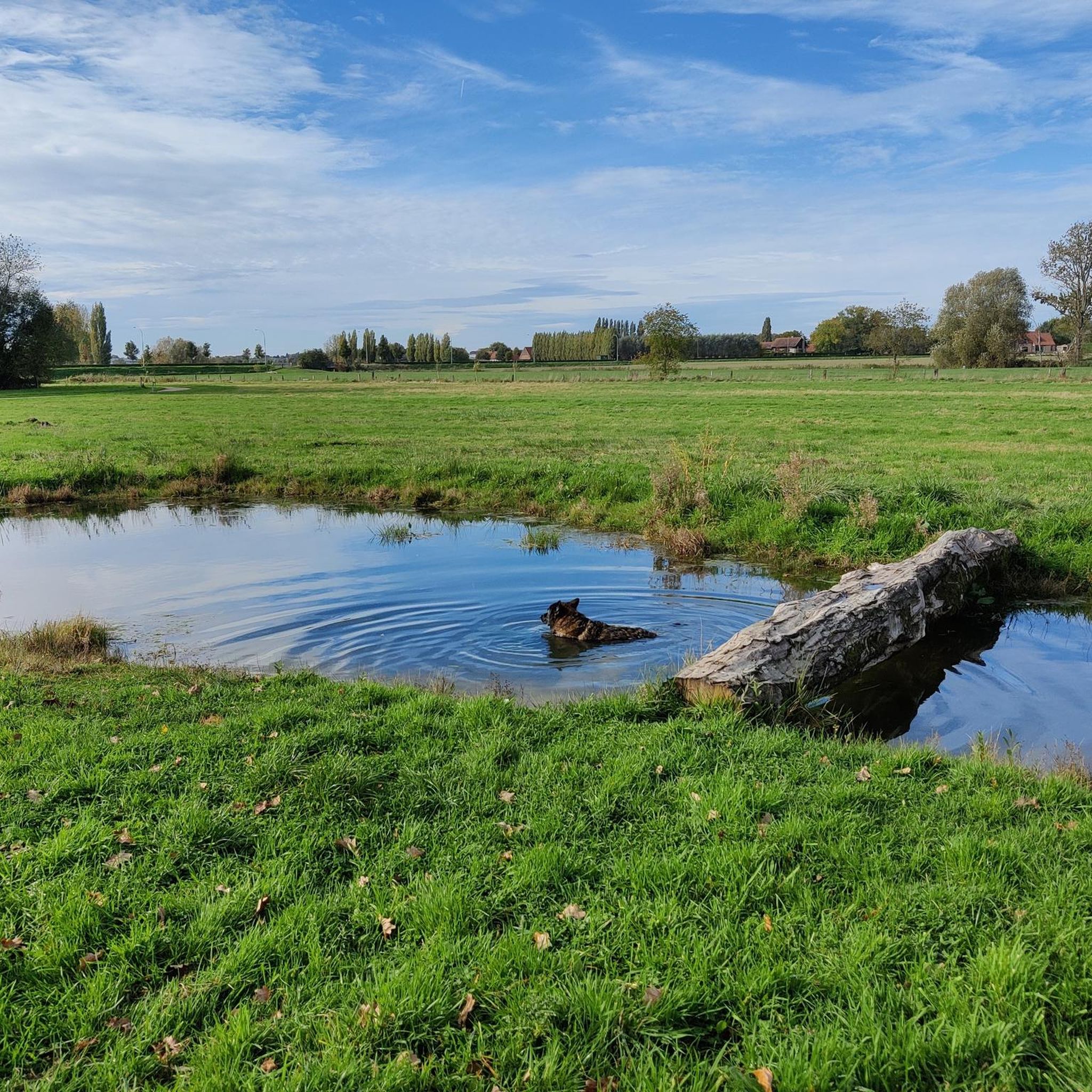
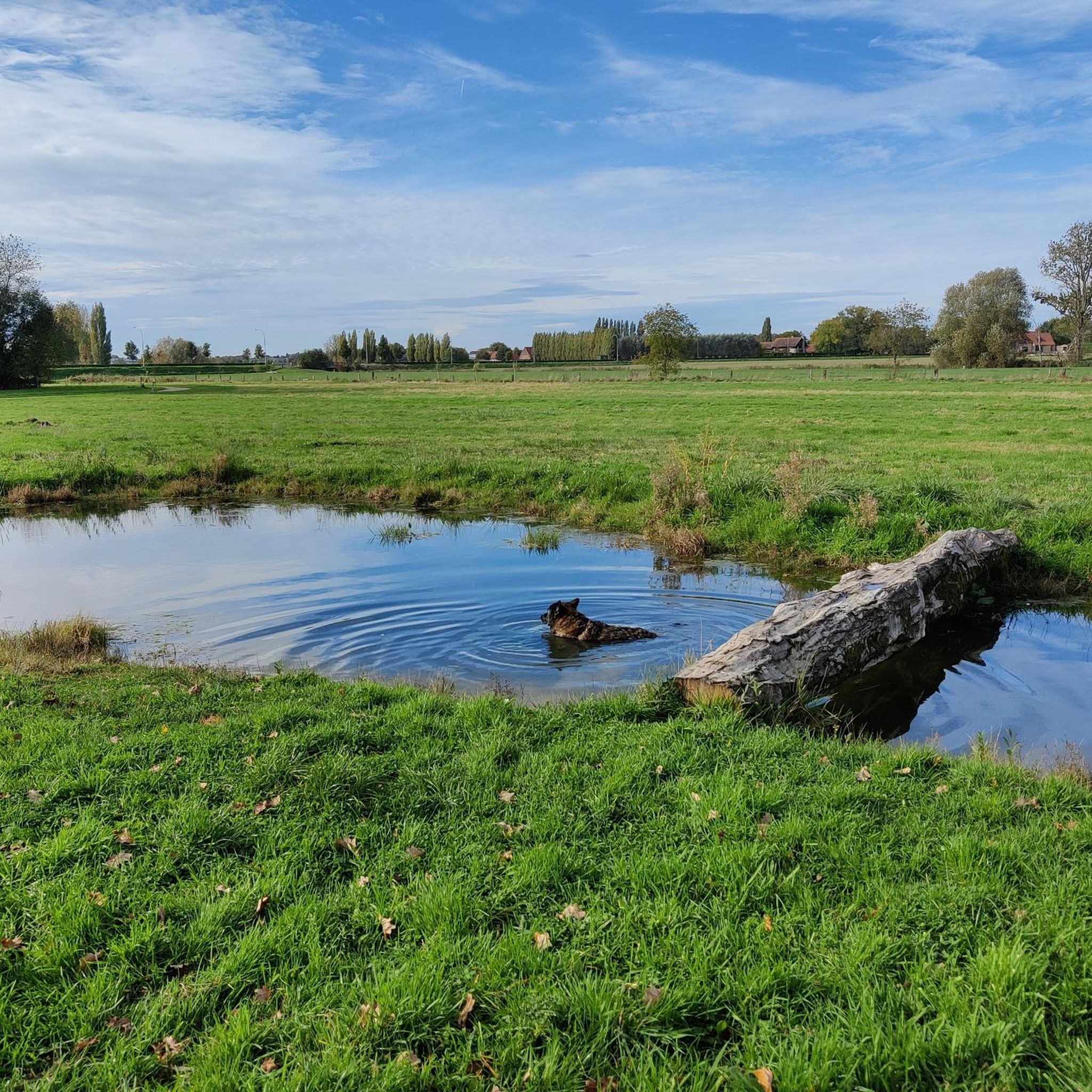
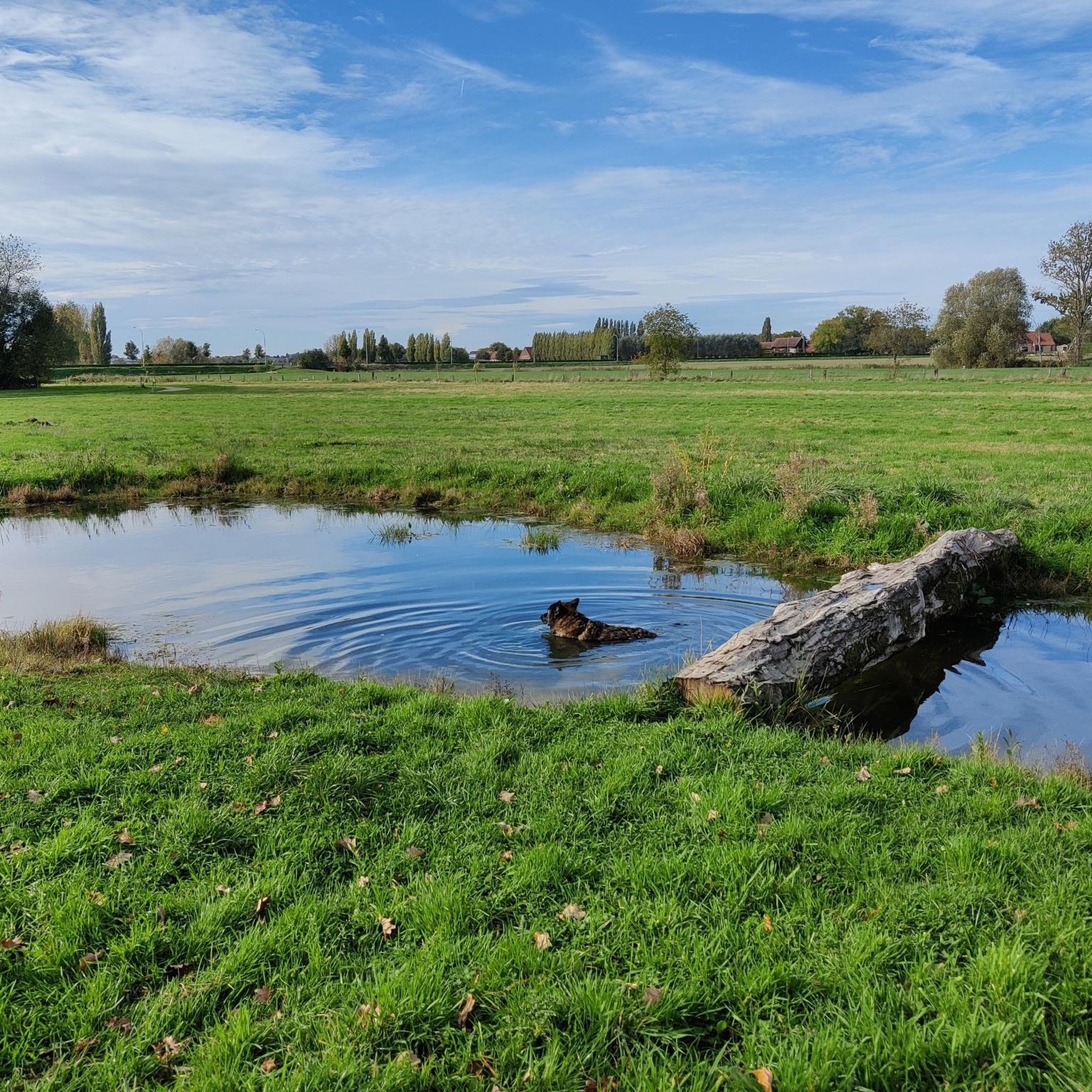
Children can also wade in the water here and walk on the planks
0
1
Very nice to walk around the quiet lake, well-maintained path.
0
1

Frequently Asked Questions
What kind of water bodies can I find around Oostrozebeke?
Around Oostrozebeke, you'll find a mix of riverine landscapes, wetlands, and managed water bodies rather than large natural lakes. These include nature reserves with ponds, buffer basins designed for water management, and recreational areas centered around water features like the Mandelmeersen Picnic Area and Ooigembos.
Are there good places for walking or hiking near the lakes around Oostrozebeke?
Yes, several areas offer pleasant walking and hiking opportunities. For example, Lake at Provinciedomein De Gavers features well-maintained paths around its quiet lake. De Zavelput Nature Reserve allows visitors to walk around an old sand quarry that has become a rich ecosystem. Additionally, the Buffer Basins Koolskampstraat and Egemstraat have a 1030m Finnish track for hikers. You can also explore various running trails in the region, such as the Baliekouter loop or the Mandelmeersen Nature Reserve trail, which are part of the Running Trails around Oostrozebeke guide.
Which lakes are suitable for families with children?
Many water-related areas around Oostrozebeke are family-friendly. Lake at Provinciedomein De Gavers is a large recreational area with an adventure park and opportunities for children to wade in the water. De Zavelput Nature Reserve and Aaigem Ponds and Bamboo also offer gentle walks and nature observation suitable for families.
Can I do water sports or swim in any of the lakes?
Yes, Lake at Provinciedomein De Gavers is a popular spot for swimming and various water sports. It's part of a 192-hectare recreational area specifically designed for such activities.
Are there cycling routes near the water bodies in Oostrozebeke?
Absolutely. The region is well-suited for cycling. The Mandelmeersen Picnic Area, for instance, is part of the Leiestreek Cycle Network. You can find numerous cycling routes, including the 'Birth Avenue – Baliekouter loop' or the 'Old Railway Embankment – Mandel Valley Canal loop', detailed in the Cycling around Oostrozebeke guide.
What is the best time of year to visit the lakes around Oostrozebeke?
The areas around Oostrozebeke are enjoyable year-round. Spring and summer are ideal for water sports and picnics, while autumn offers beautiful scenery for walks. Even in winter, the well-maintained paths around places like Lake at Provinciedomein De Gavers provide opportunities for quiet strolls.
Are there any nature reserves with lakes for birdwatching?
Yes, De Zavelput Nature Reserve, an old sand quarry now managed for nature, features a pond and an observation hut for birdwatching. Lake at Provinciedomein De Gavers also includes a nature reserve where birds hibernate.
What are buffer basins and what is their purpose around Oostrozebeke?
Buffer basins, such as Buffer Zone Zwenken and Buffer Basins Koolskampstraat and Egemstraat, are man-made water features primarily designed for water management. They help prevent flooding by temporarily holding rainwater and also address drought by providing water storage for local farmers. Beyond their functional role, they often offer recreational paths and contribute to local ecology.
Where can I find a peaceful spot for fishing near Oostrozebeke?
The Aaigem Ponds and Bamboo area is known for providing a relaxing environment for anglers, with well-maintained paths around the ponds.
What do visitors enjoy most about the water areas around Oostrozebeke?
Visitors frequently appreciate the tranquility and well-maintained paths for walking, especially around places like Lake at Provinciedomein De Gavers and Aaigem Ponds and Bamboo. The diverse recreational opportunities, from swimming and water sports to birdwatching and cycling, are also highly valued.
Are there any larger, more traditional lakes with extensive recreational facilities in Belgium, if I'm willing to travel further?
Yes, if you're looking for larger lakes with extensive recreational facilities beyond Oostrozebeke, the Eau d'Heure Lakes in Hainaut province are the largest lake complex in Belgium. They offer a wide array of water sports, hiking, biking, and panoramic views. Other notable options include Lake Genval in Walloon Brabant and Lake Warfaaz in the Ardenne region.
Most popular routes around Oostrozebeke
Most popular attractions around Oostrozebeke

Get inspired with the komoot mobile app


Explore more
Still not found your perfect lake around Oostrozebeke? Check out the guides of these regions to see even more beautiful places.
