The best cycling routes in Gjevenesstranda Naturreservat
4.3
(25)
76
riders
1
ride
Touring cycling in Gjevenesstranda Naturreservat is primarily focused on routes in the surrounding region, as the reserve itself is established for the conservation of noble deciduous forests and rich deciduous forests. Cycling is restricted within the protected area to existing roads only. The broader area features a mix of coastal roads, fjord-side paths, and routes with varying elevation gains, characteristic of the Hjørundfjorden region in Ørsta municipality.
Best touring cycling routes in Gjevenesstranda Naturreservat
- The most popular touring cycling route…
Last updated: June 30, 2026
3.8
(5)
46
riders
Moderate bike ride. Good fitness required. Mostly paved surfaces. Suitable for all skill levels.
4.4
(7)
14
riders
49.5km
03:06
520m
520m
Hard bike ride. Very good fitness required. Mostly paved surfaces. Suitable for all skill levels.

Sign up for free
4.5
(6)
7
riders
16.2km
01:02
170m
170m
Moderate bike ride. Good fitness required. Mostly paved surfaces. Suitable for all skill levels.
4.6
(7)
9
riders
27.8km
01:45
310m
310m
Moderate bike ride. Good fitness required. Mostly paved surfaces. Suitable for all skill levels.
Our route recommendations are based on thousands of hikes, rides, and runs completed by other people on komoot.
Start today with a free account
Your next adventure awaits.
Login or Signup
Popular around Gjevenesstranda Naturreservat
Tips from the Community

This is a designated Stikk UT car park. You will find more details in the Stikk UT app or on the website.
0
0

This panoramic road allows you to enjoy typical Norwegian views and an unforgettable experience.
0
0

The port city is located on Norway's west coast. Ålesund is notable for its Art Nouveau architecture. After a major fire in 1904, it was almost completely rebuilt, using this distinctive architectural style. This makes the city one of the most attractive in the country. Ålesund stretches across several islands connected by bridges and tunnels. This creates impressive views of the sea and the surrounding mountains. The viewpoint on the local mountain, Aksla, is famous – from here you can enjoy a magnificent view of the city and the harbor, as well as the Sunnmøre Alps in the distance. Source: seereiseplanung-kreuzfahrte.de A short trip to the Geirangerfjord is recommended.
0
0

Aksel Thalberg Holm (1890-1947) was born in Alesund and grew up in Molovein. He took over the company Oluf Holm A/S founded by his father and significantly expanded the business both at home and abroad. The main product was medicinal oil. The company dominated the world market. When war broke out in 1940, Holm was German consul and member of the Presidium. He gained a central position when the Presidium asked him to negotiate with the squatters, a task for which he received great thanks from the city's judicial authorities. For this legacy, as well as for his donations to the cultural life in the city, the municipality has the opportunity to connect this place. [ Source: https://www.hmdb.org/m.asp?m=243247 ]
0
0
The young town of Ålesund got its own church in 1855. It was a stone church with Heinrich Ernst Schirmer (1814-1887) as architect. He was also the architect for the churches in Ørsta, Vartdal and Hareid - and from 1857 for Strøm Church. Strøm Church near Skarnes at Kongsvinger is very similar to the church that fell victim to the town fire on January 23, 1904. Neighbouring wooden houses were preserved after the fire, while the stone church burned! The explanation is that the tower hatches were left open so that the sound of the church bells warning of the fire could reach as far as possible among the people in the town. 850 houses burned, 10,000 people were left homeless - and the town had no church. In a busy period of reconstruction, when one might think that every family had enough for their own needs, work to build a new church was nevertheless given high priority. An architectural competition was announced as early as the summer of 1904. 63 proposals were received! The proposal by architect Sverre Knudsen from Oslo won. The old church, as is usual for Norwegian churches, had the choir facing east – towards the sunrise and the direction of Jesus' return. To take advantage of the topography and have a beautiful entrance from Øwregata, sheltered from the western weather, the end of the church was turned and the main entrance was facing east. This way the choir façade – with stained glass – had plenty of space facing the wide Aspøgata. The foundation stone was laid by the new king on 13 July 1906. King Haakon 7 was then on his first visit to Ålesund after being crowned king in Nidaros Cathedral. A reminder for us of the change that was taking place in our country at exactly that time – Norway became a free nation in 1905. The church is built of natural stone (Ålesund Wall) and clad with marble stone from Lyngstad in Eide municipality in Nordmøre. 2,000 square meters of marble stone cover the church façade – the stone has shades of pink, gray and black in the white, but still: it is marble! Stones from the same quarry can be found, for example, in Rønnebergbua, Fladmarkhuset and the narrow house in Kongensgate. The church was consecrated on September 15, 1909. [ Source: https://www.visitnorway.de/listings/%C3%85lesund-kirche/30031/ ]
2
0

Old church from 1909 It's worth a visit The stained glass windows are well worth seeing
4
0
The exchange stone is made of Carrara marble. The church building is made of local marble
2
0
Foundation stone laid in 1906
2
0
Frequently Asked Questions
Can I go touring cycling directly through Gjevenesstranda Naturreservat?
No, touring cycling is restricted within the nature reserve itself. The reserve is established for the conservation of noble deciduous forests, and the use of bicycles is prohibited outside of existing roads within the protected area. The touring cycling routes highlighted in this guide are located in the surrounding region, offering experiences near the reserve.
How many touring cycling routes are available in the Gjevenesstranda Naturreservat area?
This guide highlights 5 distinct touring cycling routes in the region surrounding Gjevenesstranda Naturreservat. These routes offer a variety of experiences, from moderate loops to more challenging paths with significant elevation changes.
What types of terrain and difficulty levels can I expect on touring cycling routes near Gjevenesstranda Naturreservat?
The routes in the surrounding region offer varied terrain, characteristic of the Hjørundfjorden area in Ørsta municipality. You'll find a mix of coastal roads, fjord-side paths, and routes with varying elevation gains. For example, the Ålesund Harbour – Ålesund Harbour loop is moderate, while the Søvikskaret – Bytehaugen loop is considered difficult due to significant elevation changes.
Are there any circular touring cycling routes in the area?
Yes, several routes in the region are designed as loops, allowing you to start and end at the same point. Examples include the moderate Ålesund Harbour – Ålesund Harbour loop and the shorter Reitane loop from Sykkylven kyrkje.
What is the best time of year to go touring cycling near Gjevenesstranda Naturreservat?
Given the region's climate, the best time for touring cycling is typically during the warmer months, from late spring through early autumn. This period generally offers more favorable weather conditions and longer daylight hours, making for a more enjoyable experience on the coastal and fjord-side roads.
Are there any family-friendly touring cycling options in the Gjevenesstranda Naturreservat area?
While specific 'family-friendly' designations depend on the family's experience, routes with moderate difficulty and shorter distances are generally more suitable. The Reitane loop from Sykkylven kyrkje, at 10.4 miles (16.8 km) and moderate difficulty, could be a good option for families looking for a less strenuous ride.
What do other touring cyclists say about the routes in this region?
The touring cycling routes in the Gjevenesstranda Naturreservat area are highly rated by the komoot community, with an average score of 4.4 stars from over 20 reviews. More than 80 touring cyclists have used komoot to explore the varied terrain, often praising the scenic fjord landscapes and coastal roads.
Are there any routes suitable for advanced touring cyclists looking for a challenge?
Yes, for advanced touring cyclists seeking a challenge, routes with significant elevation changes are available. The Søvikskaret – Bytehaugen loop from Sykkylven kyrkje, for instance, is a difficult 30.2 miles (48.7 km) path with over 500 meters of elevation gain, traversing varied terrain near Sykkylven.
What natural features can I expect to see while cycling in the region?
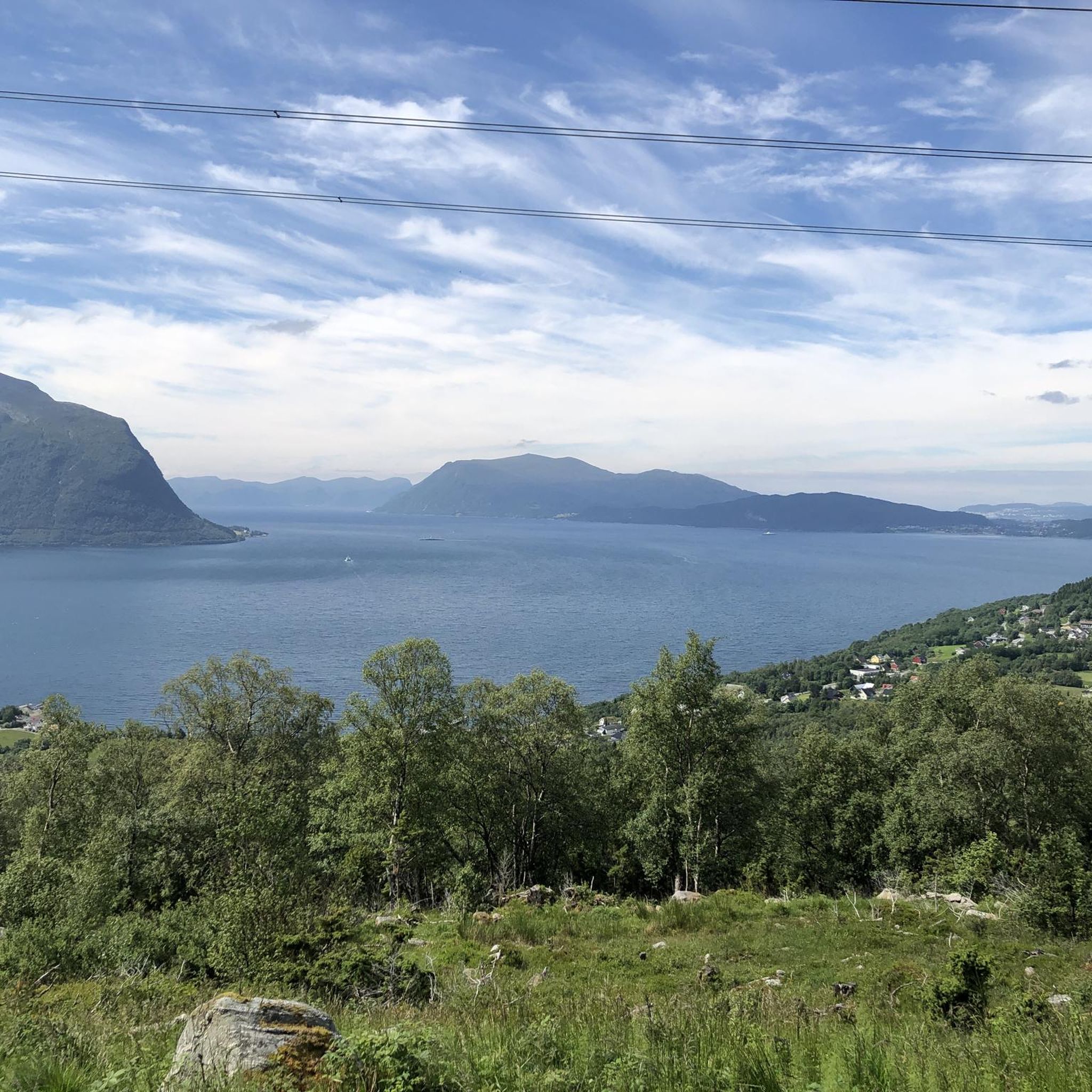
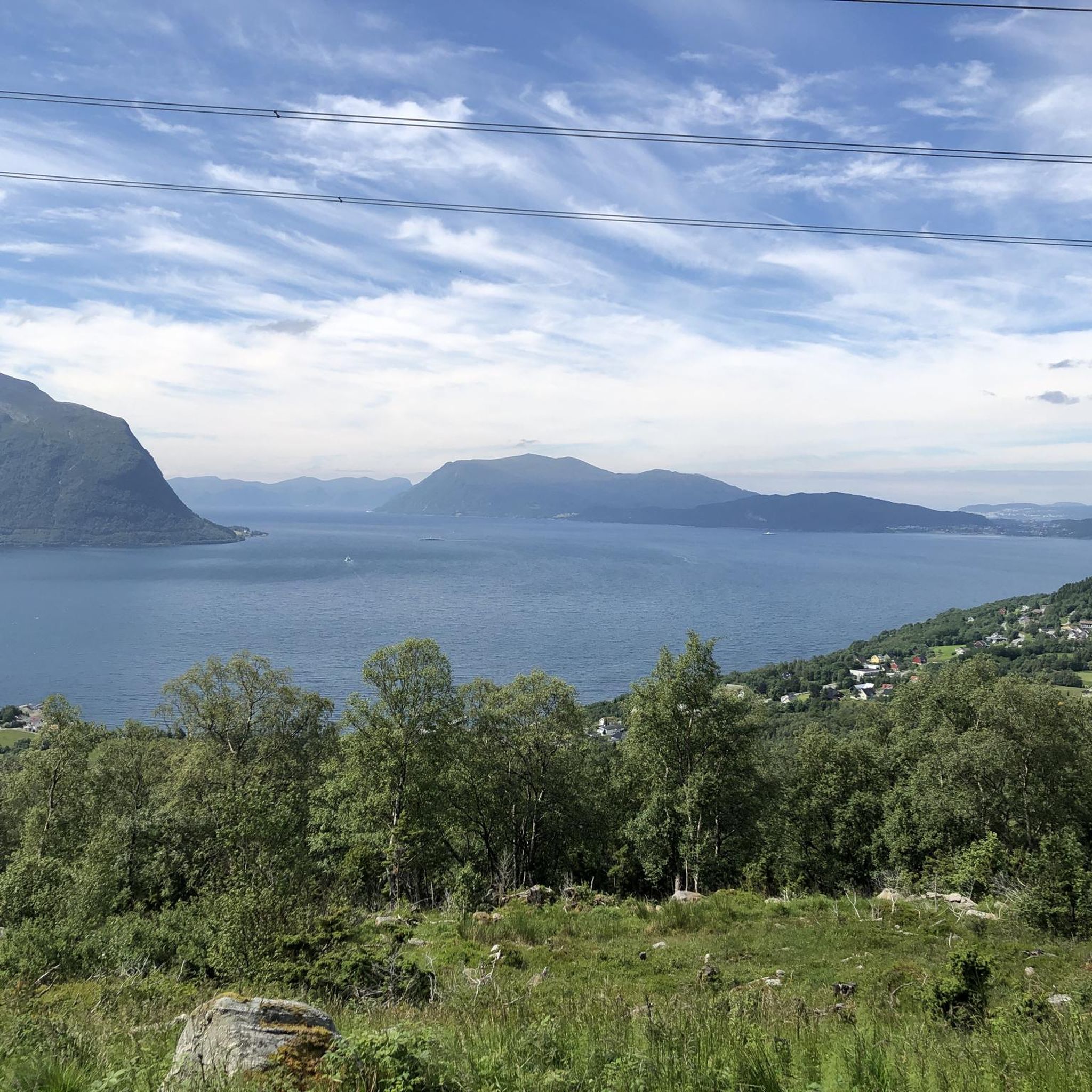
While the Gjevenesstranda Naturreservat itself is known for its rich deciduous forests, the surrounding touring cycling routes offer views of fjord landscapes, coastal scenery, and the characteristic natural beauty of the Ørsta municipality. You'll experience the interplay of land and water typical of the Norwegian fjords.
Is there public transport available to access the touring cycling routes?
Access to specific starting points for touring cycling routes in the region around Gjevenesstranda Naturreservat may vary. While public transport options exist within the broader Ørsta municipality, it's advisable to research local bus or ferry schedules to determine the best way to reach your desired route starting point, especially if you plan to bring your bicycle.
Are there any specific routes that offer a good balance of distance and moderate difficulty?
For a balanced ride, the Sykkylven loop from Sykkylven kyrkje is a moderate 26.8 km (16.6 miles) route that can be completed in about 1 hour 42 minutes, offering a good mix of distance and manageable elevation for many touring cyclists.
Most popular routes in Gjevenesstranda Naturreservat

Get inspired with the komoot mobile app


Explore more
Browse the best Cycling routes in other regions.
