The best walks and hikes around gmina Żarnów
4.0
(1)
15
hikers
5
hikes
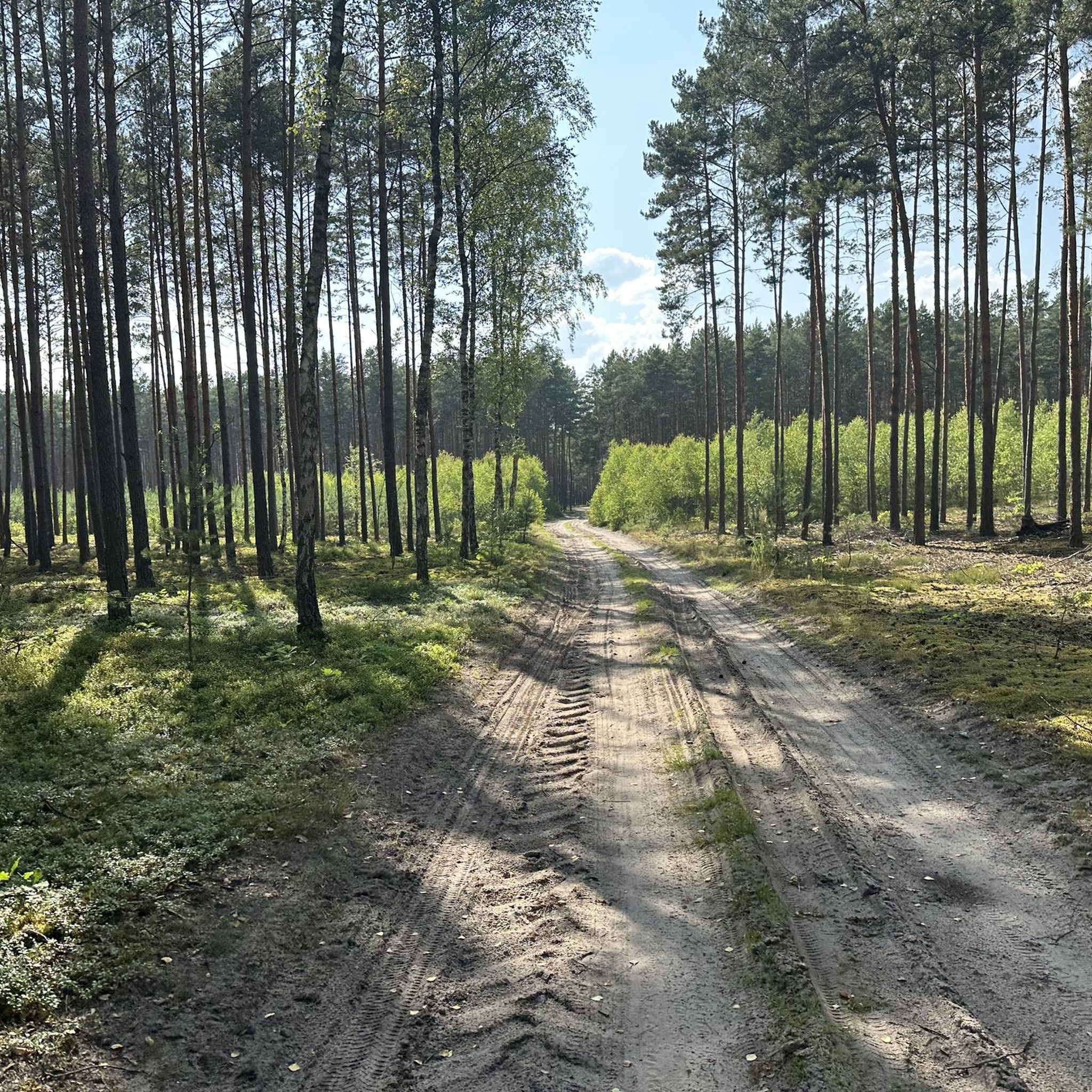
Hiking around gmina Żarnów offers diverse natural landscapes, including agricultural fields, forests, and rolling moraine hills, making it a compelling destination for outdoor enthusiasts. The region is characterized by significant forest areas, such as the "Diabla Góra" and "Jodły Sieleckie" nature reserves, which provide varied terrain for exploration. Rivers like the Czarna, Wąglanka, and Pilica, along with a substantial reservoir, enhance the natural appeal and contribute to the diverse ecosystem, creating picturesque backdrops for hiking trails. These natural features define…
Last updated: June 27, 2026
4.0
(1)
3
hikers
7.23km
01:53
50m
50m
Easy hike. Great for any fitness level. Easily-accessible paths. Suitable for all skill levels.
5
hikers
13.3km
03:25
60m
60m
Moderate hike. Good fitness required. Easily-accessible paths. Suitable for all skill levels.

Sign up for free
2
hikers
6.61km
01:41
20m
20m
Easy hike. Great for any fitness level. Easily-accessible paths. Suitable for all skill levels.
2
hikers
3.11km
00:52
60m
60m
Easy hike. Great for any fitness level. Easily-accessible paths. Suitable for all skill levels.
2
hikers
14.0km
03:36
70m
70m
Moderate hike. Good fitness required. Easily-accessible paths. Suitable for all skill levels.
Our route recommendations are based on thousands of hikes, rides, and runs completed by other people on komoot.
Start today with a free account
Your next adventure awaits.
Login or Signup
Popular around gmina Żarnów
Tips from the Community

The parish was established on May 18, 1958 by Bishop Jan Kanty Lorek from the separate parishes of Lipa, Bedlno and Kazanów Konecki. The Church of St. Jude Thaddeus, according to the design of the architect Zdzisław Wiek from Kielce and the constructor Stanisław Szafrański, was built in the years 1982-1983 by the efforts of Father Sylwester Rybak. The raw state was consecrated in 1982 by Bishop Walenty Wójcik, and consecrated on November 22, 1987 by Bishop Adam Odzimek. The church is built of brick and stone.
0
0
The manor chapel of the Annunciation of the Blessed Virgin Mary in Ruda Maleniecka (originally of Jude Thaddeus), in the area of a vast historic manor park intersected by an unnamed tributary of the Czarna River, was built in 1848 according to the design of the architect Jan Jakub Gay, from the foundation of the heir of Tadeusz Bocheński. It is a neo-Romanesque, single-nave building, built of sandstone ashlar. In 1965 it was restored and renovated.
0
0

A small town with a lot of history, I recommend it to everyone, lots of walking and cycling paths
0
0

The area around Żarnów was the site of fierce fighting during World War I and II. Partisan units that fought the Germans also operated in this area. The town's Jewish community was resettled to the Opoczno ghetto, from where it was transported to the German extermination camp in Treblinka. After the end of World War II, Żarnów was located in the Topolice commune (until 1954). After the administrative reform of 1975, the town was located in the Piotrków Voivodeship. In 1998, the neighboring villages of Tresta Wesoła and Drobna Wieś were incorporated into the town.
4
0
In 1655, one of the largest battles took place near Żarnów, which, like the entire war, ended in defeat for the Republic. The destruction of the "Swedish Deluge" was completed by epidemics that plagued the town in the following centuries. A short-term economic recovery took place only at the end of the 19th century and was associated with the Old Polish Industrial Region, which included the area around Żarnów due to its rich mineral resources. However, the decree of Tsar Nicholas II of June 1, 1869, taking away the town rights of this center, caused it to lose its importance.
5
0
The city was probably founded on the site of a trading settlement. In 1111, a temple was built by Bolesław Krzywousty, as a votive offering for victories in Pomerania. The building was rebuilt several times, but fragments of Romanesque architecture have been preserved in the structure of today's temple. During the period of the first Piasts, the castellany of Żarnów, together with the castellanies in Sieradz, Łęczyca, Spicymierz, Rozprza, Ruda, Małogoszcz and Skrzynno, formed the province of Łęczyca. In 1239, the castellanies located on the right bank of the Pilica were incorporated into the Duchy of Sandomierz, which was part of Lesser Poland. Żarnów received a location privilege under Środa law from Casimir the Great around 1360. Then Władysław Jagiełło granted the city Magdeburg law in 1415. From that moment on, Żarnów began to flourish, mainly due to its good communication location. Numerous privileges of subsequent rulers concerning trade spheres resulted in the city gaining a significant position in the grain trade. The end of the city's development was connected with the Swedish-Polish war.
4
0
The parish is one of the oldest in the diocese, founded around 1191.
4
0
Church of St. Nicholas - Roman Catholic parish church belonging to the Żarnów deanery of the Radom diocese. Church before 1913 The first mention of the temple comes from 1191. Originally, it was a Romanesque, single-nave building, expanded in 1503 (a late Gothic presbytery was added at that time). After a fire in 1893, the church was expanded according to the design of Stefan Szyller. The original temple is currently the transverse nave of the current one. Partially preserved fragments of walls and Romanesque and Gothic details. To this day, the western bay of the nave with the gallery, the round tower added to it, and fragments of the walls of the northern and southern naves added to the presbytery have survived. The side walls of the nave are decorated with Romanesque pilasters (including two decorated with acanthus leaf and fantastic animal motifs). There is a Romanesque window in the northern wall. On the stone walls of the older part of the building, inscriptions dedicated to people who renovated the church are scratched into the stone. They include the inscription "Matki Skórko 1595". The interior of the church features, among other things, a spiral stone staircase, three pointed arch windows in the Gothic style with tracery. The presbytery was built on a rectangular plan and is covered with three bays of a star vault[2].
4
0
Frequently Asked Questions
How many hiking trails are available in gmina Żarnów?
There are 5 hiking routes detailed in this guide for gmina Żarnów, ranging from easy strolls to moderate excursions. The region also features an extensive Nordic Walking Park with over 27 kilometers of marked routes suitable for hikers and runners.
What types of landscapes can I expect to see while hiking in gmina Żarnów?
Gmina Żarnów offers a varied landscape, including significant forest areas, rolling moraine hills, gentle Opoczno Hills, and river basins like the Czarna, Wąglanka, and Pilica. You'll encounter agricultural fields, dense woodlands, and scenic river views, providing a diverse backdrop for your hikes.
Are there any easy, family-friendly hiking trails in gmina Żarnów?
Yes, gmina Żarnów has several easy trails perfect for families. For instance, the St. Nicholas Church in Żarnów loop from Rezerwat Jodły Sieleckie is an easy 7.2 km route, and the Church of St. Jude Thaddeus loop from gmina Ruda Maleniecka is another accessible 6.6 km option. The region's Nordic Walking routes are also categorized by difficulty, with green routes being particularly easy and suitable for all skill levels.
Can I bring my dog on the hiking trails in gmina Żarnów?
While many trails in gmina Żarnów are generally dog-friendly, it's important to keep dogs on a leash, especially when passing through nature reserves like "Diabla Góra" and "Jodły Sieleckie," or near agricultural areas and wildlife habitats. Always ensure your dog is under control and respect local regulations.
What historical or natural attractions can I visit along the hiking routes?
Hikers can explore several interesting sites. Consider visiting the Maleniec Ironworks Museum, a technical monument showcasing old steelworks. You can also see the historic St. Nicholas Church in Żarnów, dating back to 1191. For a unique natural feature, look for the Małpi Most (Monkey Bridge) over the Pilica River, or its nearby ford for crossing.
Are there any circular hiking routes available?
Yes, many of the trails in gmina Żarnów are designed as loops, offering convenient circular walks. Examples include the St. Nicholas Church in Żarnów loop from Rezerwat Jodły Sieleckie, the Church of St. Jude Thaddeus loop from gmina Ruda Maleniecka, and the Rezerwat Diabla Góra loop from Rezerwat Diabla Góra. These allow you to start and end at the same point.
What is the best time of year to go hiking in gmina Żarnów?
The best time for hiking in gmina Żarnów is typically from spring through autumn (April to October), when the weather is mild and the natural scenery is at its most vibrant. Spring brings blooming flora, while autumn offers beautiful fall colors. Summer is also popular, but trails can be busier.
Are there any nature reserves I can explore?
Yes, gmina Żarnów is home to notable nature reserves such as "Diabla Góra" and "Jodły Sieleckie." These reserves protect significant forest areas and offer varied terrain for exploration. The Rezerwat Diabla Góra loop from Rezerwat Diabla Góra is an easy trail that takes you directly through one of these protected areas.
What do other hikers say about the trails in gmina Żarnów?
The komoot community rates the hiking experience in gmina Żarnów highly, with an average score of 4.0 stars. Hikers often praise the region's diverse natural landscapes, the tranquility of its forests, and the well-maintained paths that cater to various fitness levels.
Is parking available near the trailheads?
Parking is generally available near popular trailheads and attractions in gmina Żarnów, especially around nature reserves and key starting points for the Nordic Walking Park routes. It's advisable to check specific starting points for designated parking areas.
Are there any longer, more challenging hikes in the area?
While most trails are easy to moderate, you can find longer routes like the St. Nicholas Church in Żarnów loop from Żarnów, which covers nearly 14 km and is rated moderate. The Nordic Walking Park also features a 12.9 km 'black' route, offering a more difficult option for those seeking a greater challenge.
Most popular attractions around gmina Żarnów

Get inspired with the komoot mobile app


Explore more
Browse the best Hikes in other regions.
