Top 11 Castles around Claro
Best castles around Claro are primarily found in the Bellinzona area, a region in Ticino, Switzerland, known for its significant medieval fortifications. This area is characterized by its strategic location in an Alpine valley, where three well-preserved castles stand as UNESCO World Heritage Sites. The landscape features a blend of historical architecture and natural surroundings, including the Ticino river and surrounding hills. The castles served as crucial defensive strongholds, reflecting centuries of history and architectural development.
Best castles around Claro
…Last updated: May 11, 2026
Bellinzona: Old Town and Castles
Highlight • Historical Site
Once upon a time, there were knights and drawbridges. Where? In Bellinzona, of course! Take a journey back in time and visit the …
Translated by Google •
Tip by

Castelgrande Bellinzona
Highlight • Castle
Translated by Google •
Tip by

Sign up now to discover places like this
Get recommendations on the best single tracks, peaks, & plenty of other exciting outdoor places.
Sign up for free
Montebello Castle
Highlight • Castle
Here, the walls surrounding the old town and meeting with …
Translated by Google •
Tip by

Sasso Corbaro Castle
Highlight • Castle
Tip by

Bellinzona Ramparts
Highlight • Monument
Tip by

Sign up for free to discover even more castles around Claro.
Sign up for free
Already have an account?
Start today with a free account
Your next adventure awaits.
Login or Signup
Tips from the Community

Description Features See also Opening hours 2025/2026 April 5, 2025 - November 9, 2025: 10:00 a.m. - 6:00 p.m. November 10, 2025 - March 27, 2026: 10:30 a.m. - 4:00 p.m. The first human settlement on San Michele Hill dates back to 5500/5000 BC (Neolithic period). The first archaeologically confirmed fortress was built in the 4th century AD. Various documents from the 6th century also mention the existence of a fortified complex. In the 14th century, the castle was first called Castrum Magnum, Castel Grande. This is its current name, although during Swiss rule it was called Uri Castle (1630) or Altdorf Castle, and in 1818, S. Michele Castle.
4
0

In Bellinzona's Old Town From the train station, the bus takes us to the stop at the end of Via Lugano. To the east is the Church of Santa Maria delle Grazie. On the other side of the railway line, we pass the Villa dei Cedri, nestled in a magnificent park and home to the municipal art collection. We head north along Via Pedotti to Piazza San Biagio, where the 13th-century church of the same name can be admired. The church, one of the most interesting in the region, has been restored and stripped of its Baroque additions. The remarkable frescoes date from the late Middle Ages. We return and follow Via Lugano north to Piazza Indipendenza, where we find the Church of San Rocco, a building dating back to 1330 and enlarged in 1478. This is where the actual old town begins. The town hall, with its elegant courtyard, was completely rebuilt in 1924, using materials from the previous 15th-century building. At Piazza Nosetto, with its beautiful porticoes, we turn left onto Via Teatro, passing the restored theater building from the previous century and reaching the government building. The oldest part consists of the former Ursuline convent, dating back to the 13th century and rebuilt in the previous century. Returning to Piazza Nosetto, we approach Piazza Collegiata, passing the Casa Rossa, a brick-clad building inspired by the Lombard style of the 15th century. The massive church of SS. Pietro e Stefano reflects the Renaissance style with Baroque elements. A lively market is held every Saturday in Piazza Collegiata. On Viale Stazione, we find ourselves in the city's commercial district. The post office building is noteworthy, a prime example of contemporary Ticino architecture. Text / Source: Agenzia turistica ticinese SA., Via C. Ghiringhelli 7, Bellinzona https://www.ticino.ch/de/commons/details/In-Bellinzonas-Altstadt/3156.html
14
0
The Fortress of Bellinzona and its Castles Once upon a time, there were knights and drawbridges. Where? In Bellinzona, of course! Take a journey back in time and visit the castles, which were declared UNESCO World Heritage Sites in 2000. Arm yourself with a camera and discover Castel Grande, Montebello, and Sasso Corbaro. Tin-reinforced walls, towers, and enormous gates: you'll be catapulted straight into the Middle Ages! Dream of the knights' heroic deeds and immerse yourself in life back then. The Fortress of Bellinzona offers visitors a hands-on experience of medieval history. You can purchase the Fortress Pass online, at the InfoPoint in Bellinzona, or at the ticket offices of the three castles. It allows you to visit the fortress and its walls, the Castel Grande Museum, the Archeologia Montebello exhibition trail, and the temporary exhibitions. Are you primarily interested in visiting the exhibitions? Then buy the new Expo Pass: a combined ticket that grants access to the temporary exhibitions at Castel Grande, Sasso Corbaro, and the Museo Villa dei Cedri! Text / Source: Bellinzona e Valli Tourism https://www.bellinzonaevalli.ch/de/discover/castles.html
14
0

a beautiful path on the fortification wall
0
0


The cityscape of Bellinzona is reminiscent of the 17th century. The castles and city walls are a world heritage site.
0
0

Connected to the western part of Castel Grande, the bulwark completely blocked off the Ticino valley, guaranteeing the Duchy of Milan control of numerous alpine passes. Although the origins of this mighty wall are not precisely documented, it is likely that an early barrier wall was erected in the aftermath of the conquest of Bellinzona Castle by the Visconti family in 1340. But it was only during the 1480s, that is, in the era of the Sforza family, that the bulwark was significantly reinforced and expanded in light of the growing expansionist aims of the Confederate. The complex was doubled through the construction of a second wall, thus creating the two passageways that can still be seen: one covered, about 4 meters high, and the other, in the form of an upper external walkway, equipped with battlements and embrasures. In addition to forming a structure that served to defend and keep watch over the territory, the bulwark – along with its gate – was also an important point for controlling goods in transit to Bellinzona and other regional fairs. In the fifteenth century, the bulwark had its own castellan, who – not always successfully – watched out to ensure that the walls were not crossed for military or smuggling purposes.
0
0

Sasso Corbaro Castle was built in 1400 and today is a UNESCO heritage site.
1
0
Frequently Asked Questions
Which castles around Claro are most popular with visitors?
The castles in the Bellinzona area are highly regarded. Montebello Castle, which houses the Regional Archaeological Museum, is a favorite. Visitors also frequently explore Castelgrande Bellinzona, known for its impressive structure and public access, and the Bellinzona Historic Centre, a UNESCO World Heritage Site.
Are the castles around Claro suitable for families?
Yes, many of the castles in the Bellinzona area are family-friendly. Castelgrande Bellinzona, Montebello Castle, and Sasso Corbaro Castle are all tagged as family-friendly, offering historical exploration for all ages.
What historical significance do the castles in the Claro area hold?
The castles, particularly those in Bellinzona, are UNESCO World Heritage Sites due to their strategic importance as medieval fortifications. They served as crucial defensive strongholds in an Alpine valley, reflecting centuries of history and architectural development. The Bellinzona Historic Centre itself is recognized for its rich history, culture, and art.
Are there any wheelchair accessible castles near Claro?
Yes, Castelgrande Bellinzona is wheelchair accessible. It offers lifts for those who prefer not to use the stairs, making it easier to explore this impressive fortress.
Can I bring my dog to the castles around Claro?
Yes, both Castelgrande Bellinzona and Montebello Castle are tagged as dog-friendly, allowing you to explore these historical sites with your canine companion.
What kind of views can I expect from the castles?
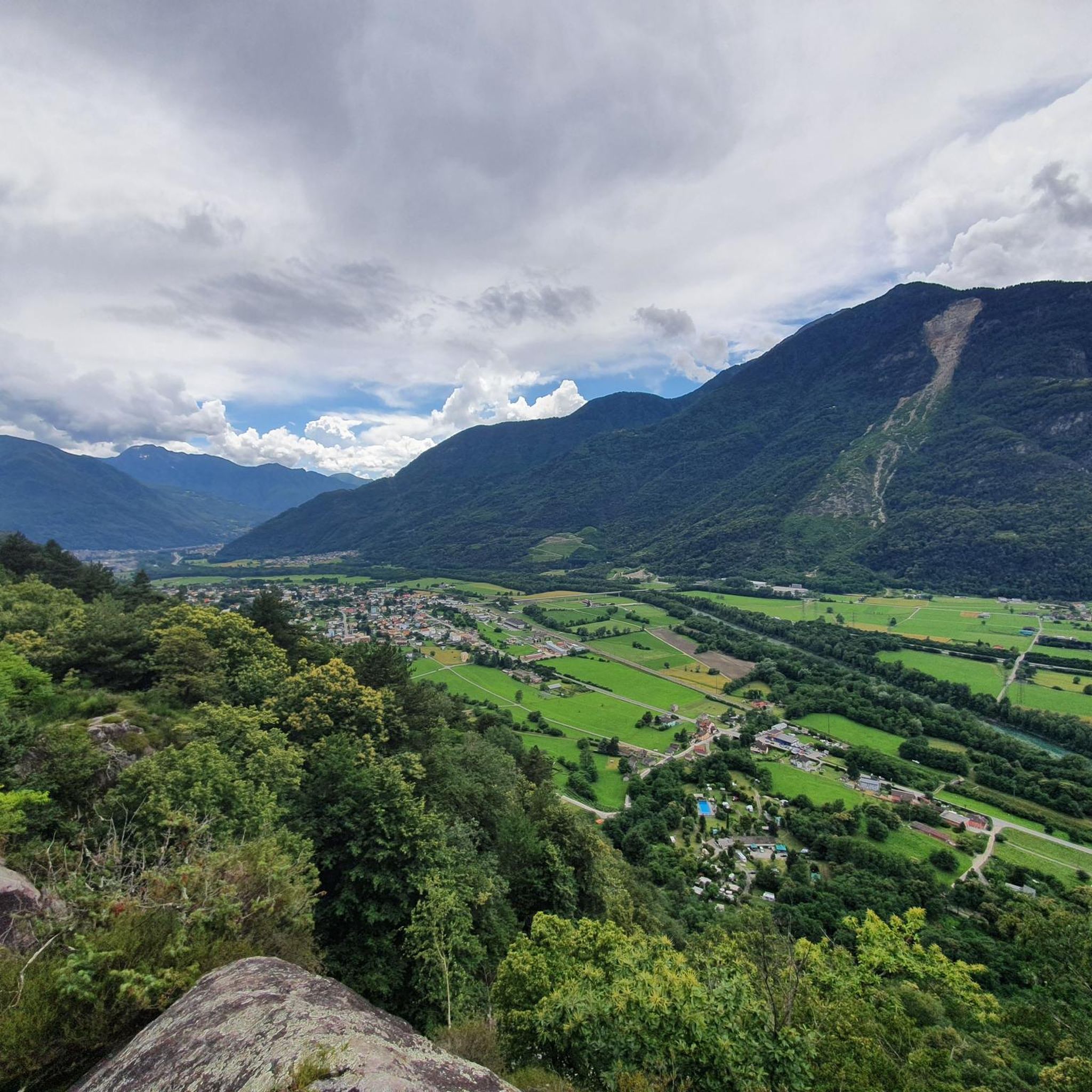
The castles offer panoramic views of the surrounding landscape. From Montebello Castle, you can look down on Castelgrande and the city, with views reaching over the Magadino plain to Lake Maggiore. Castelgrande Bellinzona and Sasso Corbaro Castle also provide excellent vantage points over the valley and the other fortifications.
What outdoor activities can I do near the castles around Claro?
The area around Claro and Bellinzona offers various outdoor activities. You can find numerous cycling routes, including the 'Ticino and Moesa Rivers Loop' or the 'Brenno Bridge, Biasca – Church of San Pietro in Motto loop'. For road cycling, options like the 'Graubünden Route Loop in Val Mesolcina' are available. Gravel biking routes such as the 'Trail along the Moesa river – The Castles of Bellinzona loop' also provide opportunities to explore the region. You can find more details on these routes in the Cycling around Claro, Road Cycling Routes around Claro, and Gravel biking around Claro guides.
Are there places to eat or drink at the castles?
Yes, Castelgrande Bellinzona features a beautiful grotto (bistro) where you can linger and enjoy refreshments. Montebello Castle also offers a culinary experience, where you can learn about and taste local specialties like Salame dei Castelli.
What is the best way to visit all three Bellinzona castles?
The three main castles – Castelgrande, Montebello, and Sasso Corbaro – are relatively close. You can purchase a Fortress Pass online or at the castles, which allows access to the fortress, walls, and museums. Some visitors recommend leaving your car at Sasso Corbaro and taking footpaths to the other castles to save on parking fees. There are also lifts available at Castelgrande Bellinzona for easier access.
What unique architectural features can be found in the castles?
The castles showcase robust stone construction typical of medieval fortifications. Castelgrande Bellinzona features a passageway that runs under the wall into the valley. The castles' extensive walls, towers, and gates transport visitors back to the Middle Ages, with elements like the late medieval Bering resting on Roman fort walls at Castelgrande.
What else is there to see in the Bellinzona area besides the castles?
Beyond the castles, the Bellinzona Historic Centre is a must-visit, known for its authentic old town, rich history, culture, and art. You can explore the town hall, Piazza Nosetto with its porticoes, and the churches of San Biagio and SS. Pietro e Stefano. A lively market is held every Saturday in Piazza Collegiata.
Most popular attractions around Claro

Get inspired with the komoot mobile app


Explore more
Looking for the best castles somewhere else? Discover other guides around Claro:
