The best gravel rides around Larchamp
4.3
(5)
35
riders
6
rides
Gravel biking around Larchamp offers routes through a landscape characterized by rolling hills, woodlands, and rural paths. The region features a mix of historical sites and natural areas, providing varied terrain for gravel cyclists. Elevation gains on routes indicate a gently undulating topography, suitable for mixed-surface riding. This area provides opportunities to explore both open countryside and more sheltered forested sections, including the nearby Forêt de Fougères.
Best gravel bike trails around Larchamp
- The most popular gravel bike trail is…
Last updated: July 4, 2026
4.0
(2)
8
riders
35.3km
02:09
300m
300m
Moderate gravel ride. Good fitness required. Mostly paved surfaces. Suitable for all skill levels.
3
riders
40.9km
02:22
320m
320m
Hard gravel ride. Good fitness required. You may need to push your bike for some segments of this route.

Sign up for free
6
riders
46.4km
03:13
570m
580m
Hard gravel ride. Very good fitness required. Mostly paved surfaces. Suitable for all skill levels.
5.0
(1)
4
riders
46.8km
02:42
380m
380m
Moderate gravel ride. Good fitness required. Mostly paved surfaces. Suitable for all skill levels.
1
riders
73.9km
04:08
660m
660m
Hard gravel ride. Very good fitness required. Mostly paved surfaces. Suitable for all skill levels.
Our route recommendations are based on thousands of hikes, rides, and runs completed by other people on komoot.
Start today with a free account
Your next adventure awaits.
Login or Signup



Tips from the Community

The famous rock alignment known as the Druids' Line is as intriguing as it is fascinating. What are eighty quartz blocks doing, stretching over three hundred meters, in an area where this type of stone doesn't exist? Was it a religious or pagan practice? To date, no researcher has found the answer. The Druids' Line follows a general north-northeast orientation, despite numerous meanders. This type of alignment, in a single line, is quite rare in Brittany. It is mistakenly called the Druids' Line, as it is not a Celtic installation, dating back to the Neolithic period. (Source: https://www.destination-fougeres.bzh)
0
0

The Église Saint-Léonard was built in the 12th century and acquired its present form in the flamboyant Gothic style in the 15th and 16th centuries. During the French Revolution, the church was deprived of its sacred function, but in the 19th century, under architects such as Aristide Tourneux, it underwent extensive renovations, including a new main façade with a large rose window. Inside, 19th-century stained-glass windows depicting episodes from the life of Saint Léonard can be seen.
1
0

The renowned landscape painter and avant-garde colorist Emmanuel de la Villéon, who associated with the greatest independent painters of his time, experimented with different styles and brushstrokes. This collection of oil, pastel, gouache, charcoal, and ink paintings traces his career through selected works. The museum is usually open during school holidays in Zone B. The museum is currently closed due to leaks!
1
0


This part of the greenway is really in a pitiful state. Holes, stones, moss.... the other part up to Fougères is new.
0
1
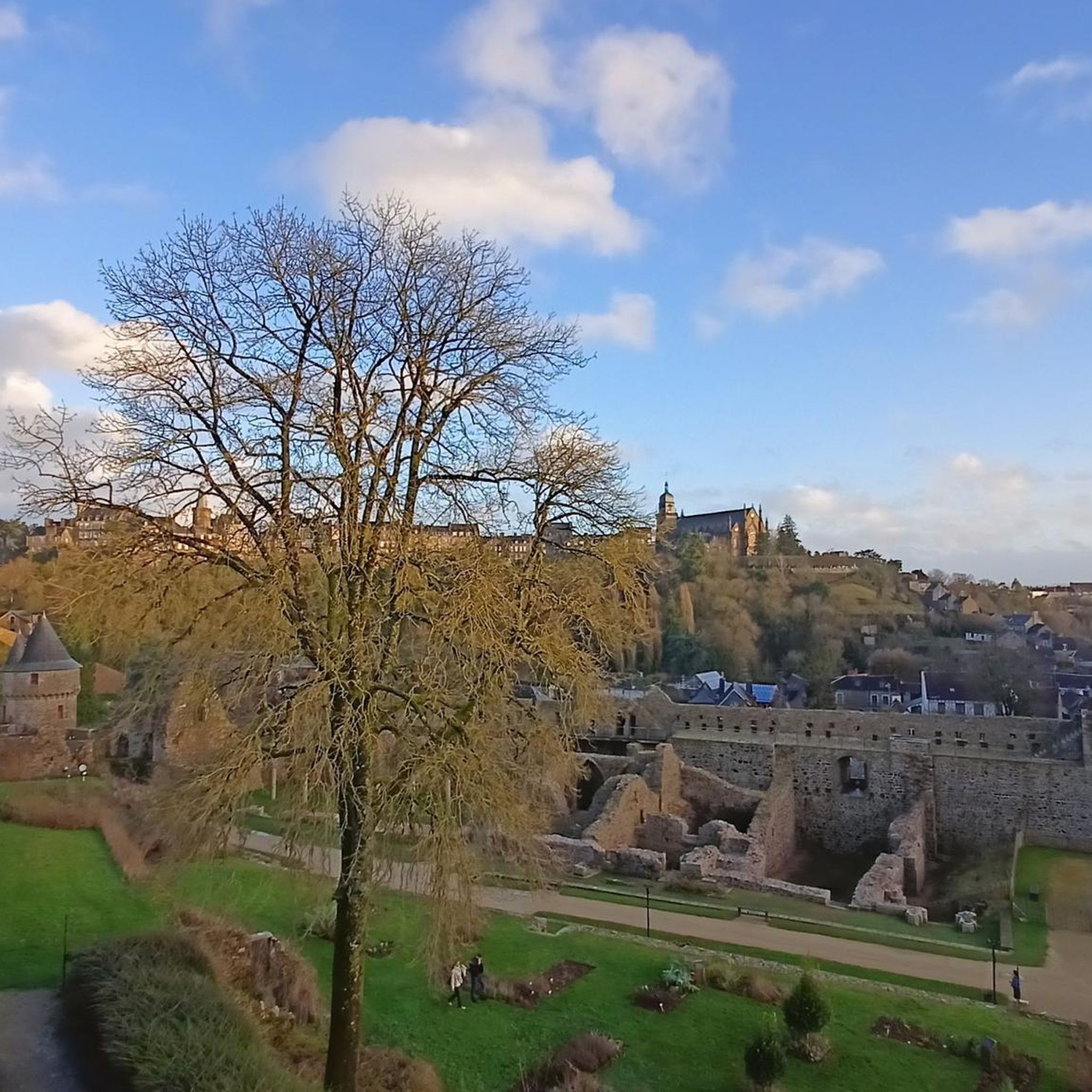
The largest fortress in Europe, the castle of Fougères stands on a rocky outcrop surrounded by marshland. The first castle of Fougères was built around the turn of the millennium to defend the north-eastern part of the border area of the Duchy of Brittany. Built at the crossroads of important trade routes, this primitive fortress had the main objective of monitoring the powerful neighbors and preventing their raids on Breton lands. To the north, Normandy belonged to the kings of England at the time.
4
1
The church tower can be visited in high season, where you can discover an incredible panorama of Fougères as well as its monuments and the surrounding countryside. Here you will have the opportunity to discover the secret interior of its tower, its impressively large bell and of course... a spectacular 360° view of the city, the castle and the valley!
1
0
Frequently Asked Questions
How many gravel bike trails are available around Larchamp?
Larchamp offers a selection of 4 gravel bike routes, ranging from moderate to difficult, providing diverse options for exploring the region's rolling hills and rural paths.
What is the general difficulty level of gravel biking in Larchamp?
The gravel bike routes around Larchamp are generally rated as moderate to difficult. They feature undulating topography with elevation gains, suitable for riders looking for a good challenge on mixed-surface terrain.
Are there any longer, more challenging gravel routes for experienced riders?
Yes, for experienced riders seeking a challenge, routes like the Beautiful Singletrack – The Ernée loop from Ernée cover nearly 47 km with significant elevation, often taking over 3 hours to complete. Another difficult option is the Cordon des druides – Former Parigné stop loop from Fougères, which is about 41 km long.
What kind of scenery can I expect on the gravel trails in Larchamp?
You can expect a varied landscape characterized by rolling hills, dense woodlands, and quiet rural paths. Many routes also pass by historical sites and natural areas, offering a mix of cultural and scenic points of interest.
Are there any historical landmarks or points of interest along the gravel routes?
Yes, several routes incorporate historical elements. For instance, the Saint Léonard Church – Fougères Castle loop from Landéan connects historical landmarks like Fougères Castle with varied terrain. The 'Cordon des druides' mentioned in other routes also suggests ancient sites.
What do other gravel bikers say about the trails in Larchamp?
The komoot community highly rates the gravel biking experience in Larchamp, with an average score of 4.0 stars. Riders often praise the varied terrain, the blend of historical sites, and the natural beauty of the region's woodlands and rural paths.
Are there any loop routes available for gravel biking in Larchamp?
All the gravel bike routes listed for Larchamp are loop trails, allowing you to start and finish at the same point. Examples include the Saint Léonard Church – Fougères Castle loop from Landéan and the A beautiful coastline – Cordon des druides loop from Fougères.
What is the best time of year to go gravel biking in Larchamp?
While gravel biking is enjoyable year-round, spring and autumn generally offer the most pleasant conditions with milder temperatures and vibrant scenery. Summer can also be great, but be prepared for warmer weather. Winter riding is possible, but trails might be muddier or have icy patches.
Where can I find parking near the gravel bike trails in Larchamp?
Parking availability varies by route starting point. For routes originating near towns like Fougères or Ernée, you can typically find public parking in or around the town centers. It's advisable to check specific route details on komoot for recommended starting points and parking information.
Are there any cafes or places to refuel near the gravel bike routes?
The routes often pass through or near small towns and villages where you can find local cafes, bakeries, or small shops to refuel. Towns like Fougères and Ernée, which serve as starting points for several tours, offer more options for refreshments.
Are there any gravel routes that offer particularly scenic viewpoints?
Given the region's rolling hills and varied terrain, many routes naturally offer scenic viewpoints over the countryside and woodlands. While specific named viewpoints aren't detailed, the undulating nature of the trails ensures picturesque vistas throughout your ride.
Is public transport an option to access gravel trails in Larchamp?
Accessing the gravel trails directly by public transport can be challenging as Larchamp and its surrounding rural areas are not extensively served by public transport networks. Driving to a starting point in a nearby town like Fougères or Ernée is generally the most convenient option.

Get inspired with the komoot mobile app


Explore more
Browse the best Gravel rides in other regions.
