Top 6 Castles around Gondeville
Castles around Gondeville, located in the Charente region, offer a glimpse into centuries of history and architectural evolution. The area is characterized by its position along the Charente river, with many historical sites built on strategic promontories. This region is known for its vineyards and historical ties, reflecting its past significance in controlling trade and land. Visitors can explore a range of historical structures, from medieval fortresses to 17th-century mansions.
Best castles around Gondeville
- The most popular castles is Saint-Brice…
Last updated: November 2, 2026
Bourg-Charente Castle
Highlight • Castle
Acquired …
Translated by Google •
Tip by

Château de Bouteville
Highlight • Castle
Translated by Google •
Tip by

Sign up now to discover places like this
Get recommendations on the best single tracks, peaks, & plenty of other exciting outdoor places.
Gademoulin Castle in Gensac-la-Pallue
Highlight • Castle
Translated by Google •
Tip by

Château de Gondeville
Highlight • Castle
Translated by Google •
Tip by

Saint-Brice Castle
Highlight • Castle
Tip by

Sign up for free to discover even more castles around Gondeville.
Already have an account?
Start today with a free account
Your next adventure awaits.





Tips from the Community

Bourg-Charente castle is a 17th century mansion. Nestled on a rocky promontory, it is located a few kilometers from Cognac. It also houses the remains of a medieval fortress. Acquired in the 20th century, this château houses cellars for producing Grand Marnier. It can be visited from Monday to Friday from 8 a.m. to 5 p.m.
0
0

The ruins of Bouteville Castle were built around the year 1000 on the site of a Roman villa.
3
0
It is in this castle that the cognac cellars of the Marnier-Lapostolle family are located, used for the production of Grand Marnier cognac.
4
0


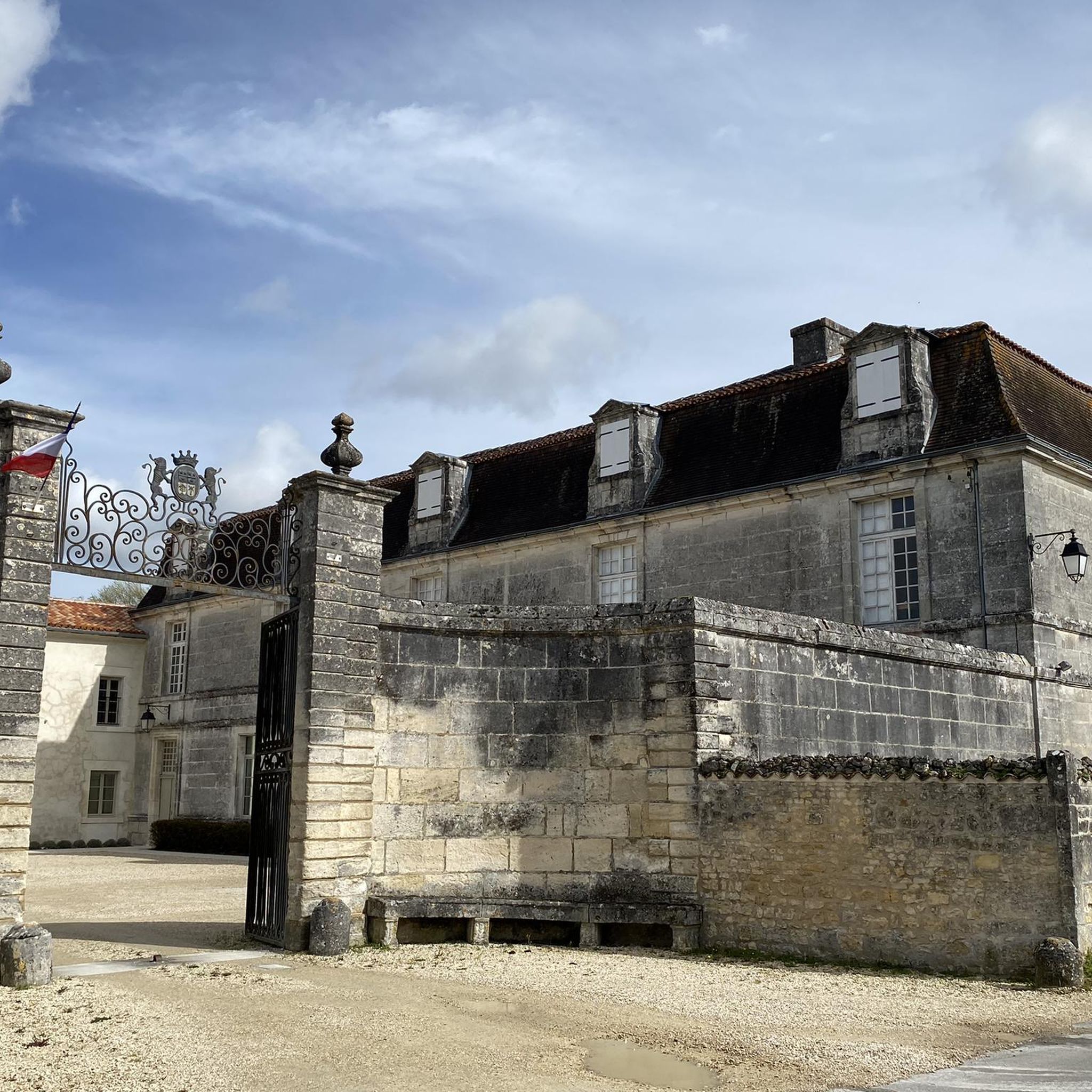
In 1655, Pierre Laisné, Sieur du Chardonneaux acquired the land of Gondeville from the heirs of Samuel de Lanauve. He made great efforts to have Gondeville erected into a parish, which led to many disputes with Jean de Culant, lord of Saint-Même who had a pew in the church while the lord of Gondeville did not. had not. The construction of the church in Gondeville is due to his son-in-law, Isaac Laisné de Nanclas, whose name was given to the main street. Isaac Laisné de Nanclas had a brilliant military career; First becoming lieutenant-colonel of the Sainte-Maure regiment, he was appointed, in 1690, brigadier of the king's armies. He distinguished himself in numerous campaigns and died on October 30, 1704, after having obtained the title of lieutenant-general; he was buried in the church of Gondeville. His son, Philippe Laisné de Nanclas, having died childless, left his property to his nephew, Louis Saulnier, de Pierre Levée. The Saulnier family kept Gondeville until the end of the 18th century. At the beginning of the 18th century, Philippe Laisné de Nanclas built the new castle, all the buildings surrounded a long rectangular courtyard. The castle occupies the east side. On the west side, rose a circular leak. The wrought iron entrance gate to the courtyard is surmounted by a wrought iron impost, bearing an escutcheon with the arms of the Saulnier de la Pierre Levée and Laisné de Nanclas families, flanked by two lions and surmounted by a crown. . On the cadastre of 1849, the various buildings are arranged around a large rectangular courtyard, there remains only the house to the east, part of the outbuildings to the north, a well and the gate to the south. It should be noted that the stones which would have been used to build the current castle would come from the first fortified castle which would have been built in the 10th century on an island in the Charente to block the road to the Vikings who went up the Charente. It would have been destroyed during the Hundred Years War, but still existed in the 17th century. The two remaining wings became the town hall in 1947. .
0
0

In 1262, the land of Bourg already belonged to the Ollivier family. In 1363, Sir Ollivier, Baron de Bourg, paid homage to the Prince of Wales, the remarriage of Eleanor of Aquitaine having made the castle of Bourg-Charente an English possession. It then passed to the Bragier, Gouffier, Pons de Pons families, to the Count of Miossens (lord of Pons and governor of Guyenne). The current castle was built by Pons de Pons, to replace the fortified castle destroyed by Marshal de Sancerre while trying to take it back from the English. A Le Camus de Neville was the last lord. In 1921, it was bought by the Marnier-Lapostolle family to set up its cognac cellars there, necessary for the production of Grand Marnier. Since 2012, there are also stills used for the distillation of bitter oranges used in the recipe for Grand Marnier liqueurs.
1
0
Construction of the second half of the 19th century, the castle of Gademoulin stands proudly in the town of Gensac-la-Pallue. Neo-Gothic in style, it takes place on the remains of an old medieval castle destroyed in the 16th century during the protests against the salt tax. Sold as national property under the French Revolution, it now houses a luxury accommodation space.
0
0

a true wonder and at its feet, do not forget to visit a local artisan manufacturer of balsamic vinegars sold in the best restaurants!
0
0
Frequently Asked Questions
What are some of the most notable castles to visit around Gondeville?
The region offers a variety of historical castles. You can explore the 17th-century Bourg-Charente Castle, known for its connection to Grand Marnier, or the medieval Château de Bouteville, which recently reopened after extensive restoration. Another significant site is Saint-Brice Castle, a 16th-century construction owned by the Hennessy Cognac family.
Which castles have unique historical connections or architectural styles?
Château de Bouteville has a rich medieval history, hosting figures like Richard the Lionheart and the Black Prince, and features a pseudo-Renaissance style. The Bourg-Charente Castle, a 17th-century mansion, incorporates salvaged battlements from Bouteville and was once an English possession. The Gademoulin Castle is a neo-Gothic construction from the 19th century built on medieval ruins.
Are there any castles that offer a unique blend of history and local industry?
Yes, Bourg-Charente Castle is a prime example. This 17th-century mansion, built on older foundations, now houses the cellars for Grand Marnier production, with stills for distilling bitter oranges installed since 2012. It offers a unique insight into both heritage and a famous local industry.
Can I visit a castle that has recently undergone restoration?
Absolutely. The medieval Château de Bouteville, first established around the year 1000, reopened to the public in June 2024 after extensive restoration. It now features modern museographic displays, including dynamic models and video projections, offering an engaging journey through its thousand-year history.
Are there family-friendly castles in the area?
The Bourg-Charente Castle is listed as family-friendly. Additionally, the Château de Bouteville, with its interactive museographic displays, offers an engaging experience for visitors of all ages, making history accessible and fun.
What outdoor activities can I do near these castles?
The region around Gondeville is excellent for outdoor activities. You can find numerous routes for cycling, gravel biking, and mountain biking. For example, there are cycling routes like the 'Bourg-Charente Castle – The Jarnac Quays loop' and mountain biking trails such as the 'Saint-Brice Castle – Bourg-Charente Castle loop'. You can explore more options in the Cycling around Gondeville, Gravel biking around Gondeville, and MTB Trails around Gondeville guides.
Are there specific cycling routes that pass by castles?
Yes, several cycling routes in the area incorporate castle views. For instance, the 'Bourg-Charente Castle – The Jarnac Quays loop' is an easy 19 km cycling route. You can also find routes like the 'Saint-Brice Castle – The Jarnac Quays loop'. Check the Cycling around Gondeville guide for more details and options.
What is the best time of year to visit the castles around Gondeville?
While many castles have varying opening hours, some, like the Château de Richemont, typically offer guided tours from mid-July to the end of August. The summer months generally provide pleasant weather for exploring both the castles and the surrounding Charente region, though it's always advisable to check specific castle opening times before your visit.
Is there a castle connected to a famous writer or historical figure?
Yes, the Château de Richemont, primarily a 17th-century construction, is notable for its connection to Pierre de Bourdeille (Brantôme), a famous 16th-century chronicler. His office and bedroom are preserved there, and the crypt of the old chapel from the original castle also remains, offering a glimpse into his life and work.
What do visitors appreciate most about the castles in this region?
Visitors frequently highlight the deep historical significance and architectural beauty of the castles. The Château de Bouteville is praised for its innovative museum experience, while Bourg-Charente Castle is appreciated for its unique connection to the Grand Marnier industry. The strategic locations on promontories overlooking vineyards or the Charente River also offer beautiful views.
Are there any castles that offer a unique viewpoint?
Yes, the Château de Bouteville stands on a promontory overlooking the Grande Champagne vineyards, offering impressive views of the Charente valley. The most spectacular view of the castle itself can be found by taking the D 152 towards Malaville.
How can I reach these castles, and is parking available?
Most castles in the Charente region are best accessed by car, and parking is generally available on-site or nearby. For example, Bourg-Charente Castle is easily reachable and open for visits Monday to Friday. Public transport options are limited, so driving offers the most flexibility for exploring multiple sites.
Are there less crowded options for visiting castles?
While popular sites like Château de Bouteville attract visitors, the region has several other historical châteaux. The Château de Gondeville in Mainxe-Gondeville, which houses the town hall, offers a glimpse of local heritage in a less tourist-focused setting. Additionally, visiting during off-peak hours or weekdays can help avoid larger crowds at public-access castles.
Most popular routes around Gondeville
Most popular attractions around Gondeville

Get inspired with the komoot mobile app


Explore more
Looking for the best castles somewhere else? Discover other guides around Gondeville:
