Attractions and Places To See around Cuba - Top 20
Attractions and places to see around Cuba, the Portuguese town in the Alentejo region, offer a blend of historical sites and local culture. This area is characterized by its rural, agricultural landscape, known for grapes, grains, and cork production. Visitors can explore significant landmarks and experience the distinct appearance of an Alentejo town. The region provides insights into Portuguese history and architectural styles.
Best attractions and places to see around Cuba
- The most popular attractions is Alvito Castle and Pousada…
Last updated: May 20, 2026
Alvito Castle and Pousada
Highlight • Castle
Tip by

Alvito Bandstand
Highlight • Monument
The lower part currently houses public and accessible toilets.👍🇵🇹
Translated by Google •
Tip by

Sign up now to discover places like this
Get recommendations on the best single tracks, peaks, & plenty of other exciting outdoor places.
Sign up for free
Alvito Parish Church
Highlight • Religious Site
Translated by Google •
Tip by
Church of Saint Anthony
Highlight • Religious Site
Translated by Google •
Tip by
Chapel of São Sebastião
Highlight • Religious Site
Showing Translation
Tip by

Sign up for free to discover even more attractions around Cuba.
Sign up for free
Already have an account?
Start today with a free account
Your next adventure awaits.
Login or Signup
Popular around Cuba
Tips from the Community

The Castle of Alvito (Castelo de Alvito) is a historic fortified residence located in the Alentejo region of Portugal, which since 1993 has hosted the Pousada Castelo Alvito, a luxury hotel belonging to the prestigious Pousadas de Portugal network.
1
0

Alvito Castle is a military monument and an inn, located in the village of Alvito, in the Alentejo region, in Portugal. It is considered an example of a fortified palace, which combined the functions of a fortress and a wealthy house. It also stands out for its combination of styles, with several Gothic and Manueline elements, and Islamic inspiration. (Source: Wikipedia) Alvito Castle is currently an inn.
10
0
Hermitage built at the beginning of the 16th century, it presents an architecture that can be framed within the Gothic-Mudejar style, an Alentejan particularity of the Gothic style. It is located at the edge of the village in order to protect it, through the patron saint – St. Sebastian –, from the plague. It held a mural painting campaign from the beginning of the 17th century that covered its entire interior. What currently remains, evidences the way of fresco painting specific to this region, namely, with the recurrence of the theme of musician angels. (Source: www.e-cultura.pt)
12
0

The Church of Santo António has been classified as a Monument of Public Interest since 2012. The church is located in Terreiro de Santo António, in the historic centre of the town. The building is in the Mannerist style, and still maintains the same layout in which it was built. It has a longitudinal plan, with a single nave and two side chapels. The exterior is quite sober in appearance, contrasting with the rich interior, which contains a Mannerist altarpiece in an aedicule, decorated with gilded carvings. It is divided into three parts, with the lower and central parts decorated with scenes alluding to Saint Anthony, while the upper part depicts the Holy Trinity. Other elements of interest include the paintings on the vault of the chancel, in the proto-baroque style, and the set of blue and white tiles, with albarradas, made in the late 17th century. The church was built in the 1640s and was supposed to be part of a convent dedicated to Saint Anthony, but it was never built.
10
0


The chapel of S. Sebastião is one of the monuments in Alvito that is part of the Fresco Route (see information about the Fresco Route), due to the beauty and heritage importance of the fresco paintings that can be seen inside. Located in the Rossio area, the chapel was probably built before 1535, although its authorship is unknown. It is a Manueline style building, with Mudejar influences (similar to the chapel of S. Brás, in Évora). The plan is simple, consisting of a single nave and a main chapel. The vaults of both the nave and the main chapel are painted in fresco, with figures of musical angels and are believed to have been designed by José de Escobar (a resident of Évora).
9
0
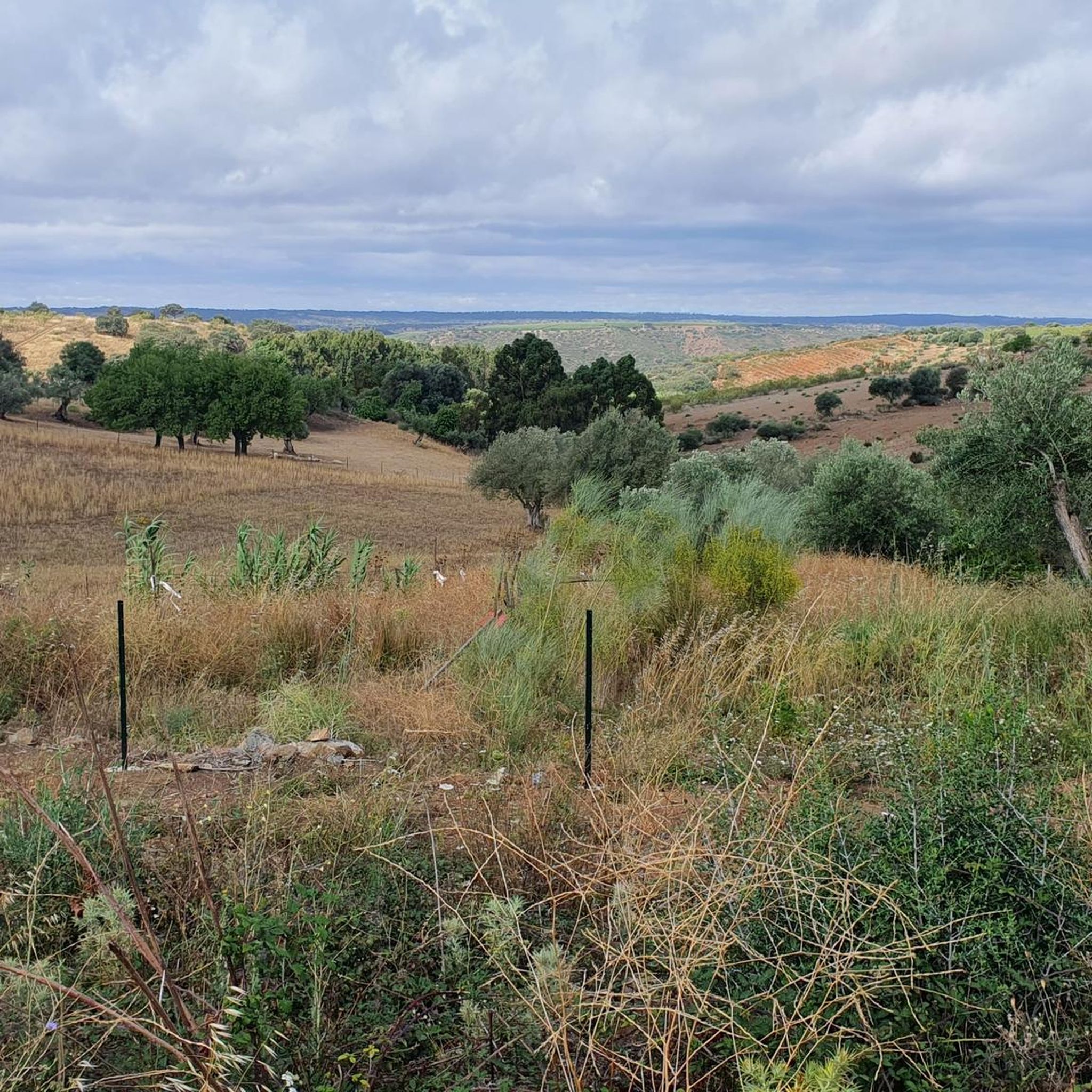
Situated at a high point in the midst of the Alentejo plains, and offering extensive views over the distant horizons, the graceful town of Alvito has grown around its palatial castle, where the Pousada de Alvito is now housed. The white houses give Alvito the distinct and unmistakable appearance of an Alentejo town, many of them having doors framed by Manueline-style arches, revealing their seventeenth-century origin. The settlement of this town dates back to the early days of the Portuguese monarchy. The town was granted its first charter by the king D. Dinis in 1327, later confirmed by D. Manuel in 1516. The Alvito Castle, whose construction began in 1494, is undoubtedly one of the most curious buildings of its kind in Portugal. Visiting it helps to evoke memories of the town´s historical past. The long Moorish presence in this region left its distinctive marks in the Mudejar architecture clearly visible in various monuments (which laymen can easily recognise through the small cupolas and white-painted conical pinnacles). The parish church of Nossa Senhora da Assunção, dating back to the early sixteenth century, has certain exterior decorative features that clearly identify it as an example of Mudejar architecture. A modest Renaissance doorway leads to the interior, its walls covered in azulejo panels whose beautiful patterns are a harmonious blend of blue and yellow. In the upper choir, there is a large seventeenth-century altarpiece of carved and gilded wood. The same Mudejar influence is also to be noted in the small fortified chapel of São Sebastião, crowned by an array of chamfered merlons. Inside, painted on the vaulted Gothic ceiling are frescos depicting musical angels. Attention is also drawn to the town hall with its picturesque clock tower, a typical feature of Alentejo architecture. Two almost adjoining churches, the Igreja da Misericórdia and the Igreja da Senhora das Candeias (the latter housing a museum of Sacred Art), are equally interesting buildings of some architectural merit, as is the small chapel of Santa Luzia on the outskirts of the town, which was originally a Muslim oratory.
9
0
The Igreja Matriz de Nossa Senhora da Assunção de Alvito, as it is officially known, was built in the late 13th or early 14th century and was dedicated to Santa Maria de Alvito at the time. Between 1485 and 1535, it underwent extension work, with almost all of the walls being knocked down. Archaeologist Jorge Feio assures us that “it is still possible to see architectural elements from the first phase. The extension is identical to the Igreja Matriz de Viana do Alentejo, so it may have been designed by the same architects (the Arrudas family, architects of the Court)”. Dom João Fernandes da Silveira, the first Baron of Alvito (and of Portugal), is buried in this church. Its greatest wealth is fundamentally in its interior, through the gilded carved altars (the one on the main altar was placed between 1692 and 1705) and the tiles: those in the main chapel were placed before 1625, and others, “Persian carpet type”, some of them using only yellow and white, “very rare”, which decorate the body of the church, dating from 1647.
13
0
Frequently Asked Questions
What are the most popular historical sites to visit in Cuba?
Cuba is rich in history. You can explore Old Havana, a UNESCO World Heritage Site, known for its colonial architecture and historic plazas. Other significant historical sites include the El Morro and La Cabaña Fortresses guarding Havana's harbor, the Plaza de la Revolución with its José Martí Memorial, and the grand El Capitolio. For revolutionary history, the Che Guevara Mausoleum in Santa Clara is a key site.
Where can I find the best natural attractions and outdoor activities in Cuba?
For stunning natural beauty, visit the Viñales Valley, a UNESCO World Heritage Site, famous for its tobacco fields and dramatic limestone 'mogotes,' perfect for hiking and cave exploration. Varadero Beach offers pristine white sands and clear waters for swimming and water sports. Topes de Collantes natural park in the Sierra del Escambray is excellent for hiking to waterfalls like Caburní Falls and El Nicho. The Sierra Maestra mountains offer challenging treks to Pico Turquino, Cuba's highest peak.
Are there family-friendly attractions in Cuba?
Yes, Cuba offers several family-friendly options. Varadero Beach is ideal for families with its calm waters and various activities. Exploring the Viñales Valley on horseback or visiting the Cueva del Indio can be an exciting adventure for all ages. Many historical sites like Old Havana and the fortresses also offer engaging experiences for families, allowing children to learn about history in an immersive setting.
What cultural experiences can I find in Cuba?
Cuba's vibrant culture is everywhere. In Havana, explore the Museum of the Revolution, housed in the former Presidential Palace, or immerse yourself in Afro-Cuban culture at Callejón de Hamel. The Gran Teatro de La Habana Alicia Alonso is a magnificent venue for ballet and opera. Trinidad and Cienfuegos, both UNESCO World Heritage Sites, offer well-preserved colonial architecture and unique cultural influences, while Matanzas is known for its rich Afro-Cuban music and poetry.
What are the best places for snorkeling and diving in Cuba?
Cuba boasts excellent spots for underwater exploration. Bahía de Cochinos (Bay of Pigs) is renowned for its crystal-clear waters and coral reefs, offering some of the best diving opportunities. Cayo Levisa and Cayo Jutías also feature beautiful coral reefs ideal for snorkeling and diving. Varadero Beach and the nearby Cueva de Saturno provide clear waters for swimming and exploring.
What are some unique experiences related to Cuban heritage?
Beyond major landmarks, you can experience Cuba's unique heritage by visiting tobacco plantations in regions like Viñales to learn about traditional cigar rolling. Engaging with Cuba's lively music scene is a must-do, with live performances common in many cities. Also, taking a ride in one of Cuba's classic cars, especially in Havana, offers a nostalgic glimpse into the past.
Are there any UNESCO World Heritage Sites in Cuba?
Yes, Cuba is home to several UNESCO World Heritage Sites. These include Old Havana and its Fortification System, the Viñales Valley, the historic center of Trinidad, the historic center of Cienfuegos, and the historic center of Camagüey. Additionally, Desembarco del Granma National Park and San Pedro de la Roca Castle in Santiago de Cuba are also recognized for their outstanding universal value.
What kind of wildlife can I see in Cuba?
Cuba's diverse ecosystems support a variety of wildlife. The Ciénaga de Zapata (Zapata Swamp), a Biosphere Reserve, is the largest swampland in the Caribbean and is rich in wildlife, including flamingos, tarpons, turtles, and crocodiles. The Sierra Maestra mountains also host diverse flora and fauna within its rainforests and cloud forests.
What outdoor activities are available near the attractions in Cuba?
Near many attractions, you can find opportunities for outdoor activities. For instance, the Viñales Valley is excellent for hiking and horseback riding. The Topes de Collantes natural park offers numerous hiking trails to waterfalls. For more structured outdoor adventures, you can explore various hiking routes around Cuba, such as the Hiking around Cuba guide, or try road cycling routes like those found in the Road Cycling Routes around Cuba guide.
What is the best way to explore Havana's main attractions?
Havana's main attractions, particularly in Old Havana, are best explored on foot to appreciate the colonial architecture and vibrant street life. Many key sites like Plaza Vieja, Plaza de la Catedral, and Castillo de la Real Fuerza are within walking distance. For areas further afield, such as Plaza de la Revolución or El Capitolio, taxis or classic car tours are popular and convenient options.
Are there any accessible attractions for visitors with mobility challenges?
While accessibility can vary, some areas are more accommodating. For example, the Cuba Town Center (referring to the general concept of a town center, not the specific highlight data which is for Portugal) and many main plazas in cities like Havana and Cienfuegos offer relatively flat surfaces. The Alvito Bandstand (referring to the general concept of a bandstand, not the specific highlight data which is for Portugal) is noted as having accessible public toilets. It is advisable to check specific venue accessibility in advance.
What are some lesser-known natural gems in Cuba?
Beyond the popular spots, consider exploring Desembarco del Granma National Park, a UNESCO site recognized for its unique karst topography and biodiversity. The extensive mangrove forests of Ciénaga de Zapata offer a different natural experience. For pristine beaches away from the main tourist hubs, look into Cayo Levisa and Cayo Jutías.
Most popular routes around Cuba

Get inspired with the komoot mobile app


Explore more
Still not found the Highlight you’re looking for? See guides of the top attractions in other regions:
