Attractions and Places To See around Saint-Utin - Top 12
Best attractions and places to see around Saint-Utin include a collection of historical and religious sites. This charming village is situated in the Champagne region, known for its cultural heritage and serene environment. The area is particularly notable for its unique half-timbered churches, which offer a glimpse into 16th to 18th-century architecture. Visitors can explore these historical witnesses that connect the region's past.
Best attractions and places to see around Saint-Utin
- The most popular attractions is Saint-Nicolas d'Outines church,…
Last updated: July 4, 2026
Saint-Nicolas d'Outines church
Highlight • Historical Site
Translated by Google •
Tip by

Saint-Georges Church of Chavanges
Highlight • Religious Site
Translated by Google •
Tip by
Sign up now to discover places like this
Get recommendations on the best single tracks, peaks, & plenty of other exciting outdoor places.
Sign up for free
Saint Martin's Church
Highlight • Other
Translated by Google •
Tip by

Rosnay-L'Hôpital
Highlight • Other
Translated by Google •
Tip by
Donnement
Highlight • Religious Site
Translated by Google •
Tip by
Sign up for free to discover even more attractions around Saint-Utin.
Sign up for free
Already have an account?
Start today with a free account
Your next adventure awaits.
Login or Signup
Popular around Saint-Utin


Tips from the Community

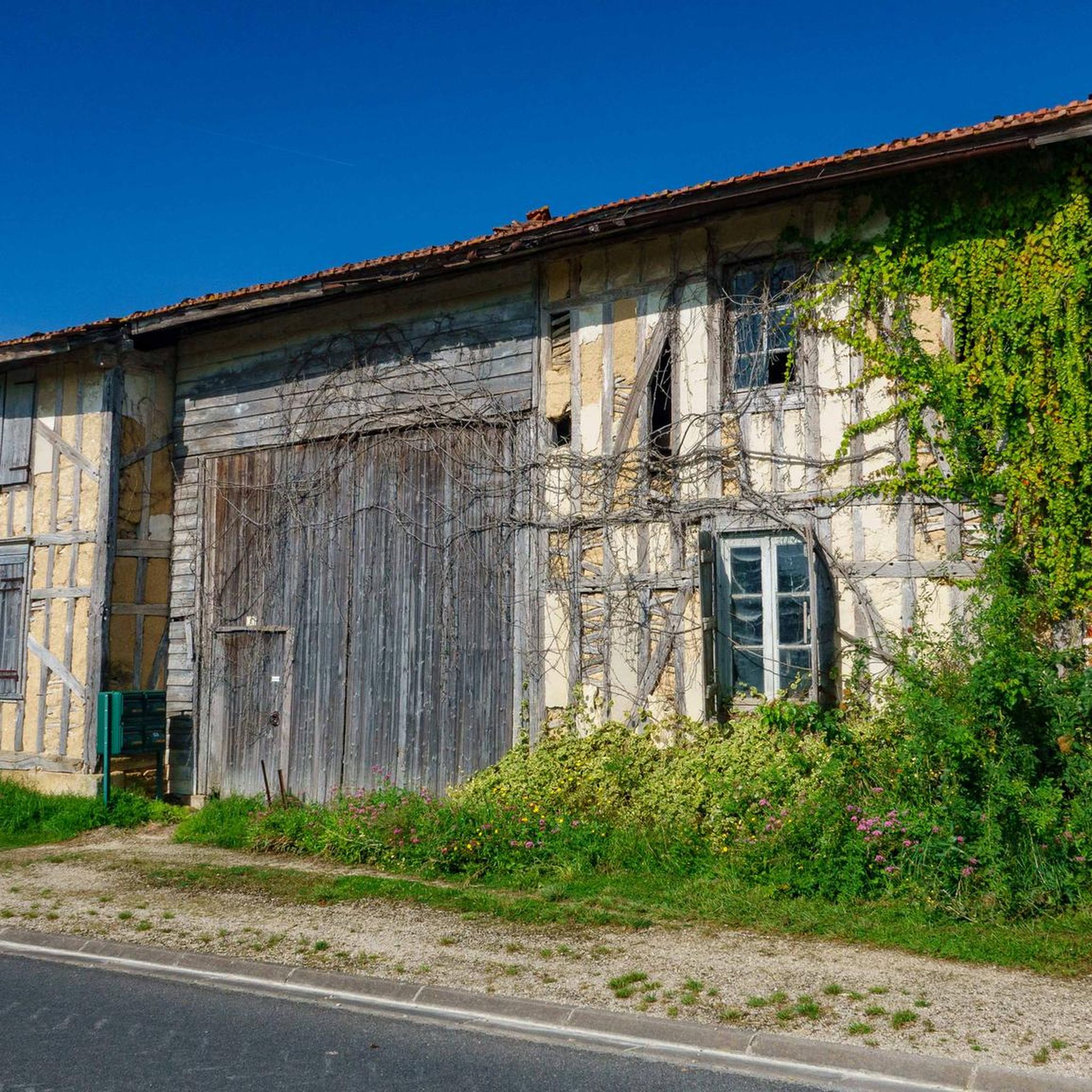
Another beautiful half-timbered church on the Route des Églises à pans de bois de Champagne.
0
0

Stage city Via Francigena France Cyclo/Pied: During this stage, the "romieux" are invited to stop at Rosnay l'Hôpital, whose church exceptionally has a crypt. In the 12th century, Thomas of Canterbury, a refugee in France, honoured Rosnay with his presence. He celebrated mass in the crypt in 1164, and it is said that a spring gushed out there that cured all who came there to quench their thirst. This spring still exists today under the name of "St. Thomas Well". A little further on, in Lesmont, the walker can take a small detour to access the remains of the old Roman road linking Reims to Langres, which would have been used by Sigeric in his time.
6
0
Église Saint-Amand: The oldest part of the church, the north-east wall, dates from the 12th century. The rest of the building consists of numerous additions from the 16th century. The single-door portal is set in a rectangular loophole decorated with three coats of arms. It supports a bare tympanum surrounded by two archivolts, one of which has a plant decoration; A lightly braced gable rests on plinths outside the portal and rises above the whole.
2
0
The church of Saint Martin de Somsois dates from the first Gothic period, but was thoroughly restored in the 16th and 19th centuries. The three-bay nave is covered with sexpartite vaults which have been preserved in the first two. The two-bay choir is flanked by aisles and chapels. The three-sided apse dates from the 16th century. The west façade has retained its three portals. The central pointed arch portal was flanked by two column statues, of which only one remains (13th century). In the choir there are 4 painted panels from the 16th century, including a crucifixion.
2
0

Saint Nicholas (Saint-NICOLAS), Bishop of Myra, to whom the half-timbered church in Outines is dedicated, is - along with Saint Martin - one of the most popular saints of all. Almost every child in Germany - and far beyond - is probably familiar with his day of remembrance, December 6th. On the eve of this day, the children used to put their shoes or boots - which were of course cleaned with great care - in front of the door so that Saint Nicholas could fill them with gifts that night. In more agricultural areas, it was also customary for children to provide a small donation of food for the donkey, St. Nicholas' riding animal (according to another tradition, it was a gray horse).
1
0

The Roman Catholic parish church of Saint-Georges in Chavanges, a commune in the Aube department in the Grand Est region of France, dates back to the 12th century. In the 15th and 16th centuries the church was rebuilt in the Gothic style. The Romanesque west portal of the 12th century church has been preserved. The arched portal is framed by simple archivolts that rest on slender columns decorated with capitals. Stylized leaves, birds and a kneeling person are depicted on the capitals. The nave has three aisles and is divided into three bays. Adjacent to the nave is a two-aisled transept, which opens onto a wide choir. This has three apses with a polygonal end. The grisaille window with scenes of the Apocalypse was installed in 1540. The motifs are largely borrowed from Albrecht Dürer's woodcuts of the Apocalypse, which he published in 1498 in his “Big Book” with the title The Secret Revelation of Iohannis. Source: Wikipedia
1
0
In southern Champagne, between the Lac du Der-Chantecoq and the lakes of the Forêt d'Orient, there are a number of half-timbered churches (Eglises en pans de bois) from the 16th to 18th centuries. Without exception, the churches are located in smaller towns that lacked the financial resources for a stone building at the time of construction. Today the churches are considered special historical witnesses that have been renovated in recent years. They are accessible to tourists through a “Street of Half-timbered Churches” that connects some of the churches. The Church of Saint Nicholas was built around 1600. Source: Wikipedia
2
0
Frequently Asked Questions
What kind of historical architecture can I explore around Saint-Utin?
The region around Saint-Utin is particularly known for its unique half-timbered churches, which are significant historical witnesses dating from the 16th to 18th centuries. These churches, often found in smaller towns, showcase a distinctive regional architectural style. You can visit sites like the Saint-Nicolas d'Outines church, built around 1600, or the Saint-Georges Church of Chavanges, which features a preserved 12th-century Romanesque west portal.
Are there any Romanesque architectural sites near Saint-Utin?
Yes, the Saint-Georges Church of Chavanges, while largely rebuilt in Gothic style, retains a beautifully preserved Romanesque west portal from the 12th century. This portal is adorned with simple archivolts resting on slender columns with capitals depicting stylized leaves, birds, and a kneeling person.
What are some other notable historical churches in the Saint-Utin area?
Beyond the half-timbered churches, you can visit Saint Martin's Church (Saint Martin de Somsois), which dates from the first Gothic period and features 16th-century painted panels. Also, the Église Saint-Amand in Donnement has its oldest section from the 12th century, with numerous 16th-century additions.
Is there a specific route to see the half-timbered churches?
Yes, many of the half-timbered churches in the southern Champagne region are connected by a designated “Street of Half-Timbered Churches,” making them accessible for tourists interested in this unique regional architectural style. This route allows visitors to explore several of these historical witnesses that have been renovated in recent years.
What outdoor activities can I do around Saint-Utin?
The area around Saint-Utin offers various outdoor activities, particularly cycling and running. You can find several routes for touring bicycles, road cycling, and jogging. For detailed routes and guides, explore the Cycling around Saint-Utin, Running Trails around Saint-Utin, and Road Cycling Routes around Saint-Utin guides.
Are there any family-friendly attractions in the vicinity of Saint-Utin?
The Saint-Georges Church of Chavanges is listed as a family-friendly religious building, offering an opportunity to explore historical architecture with children. The serene environment of the region also provides a peaceful setting for family outings.
What kind of cycling routes are available near Saint-Utin?
You can find a variety of cycling routes, including easy and moderate options. For touring bicycles, there are routes like the 14.8 km 'Bike loop from Chavanges' (easy) or the 55.1 km 'Port of Giffaumont-Champaubert – Lake Der-Chantecoq loop from Chavanges' (moderate). Road cycling options include the 40.6 km 'Lake Der-Chantecoq loop from Drosnay' (easy). More details are available in the Cycling around Saint-Utin and Road Cycling Routes around Saint-Utin guides.
Are there running trails for different fitness levels?
Yes, running trails around Saint-Utin cater to various fitness levels. You can find moderate trails like the 11.7 km 'Running loop from Rosnay-l'Hôpital' or more challenging ones such as a 15.1 km 'Running loop from Chavanges'. For a comprehensive list, refer to the Running Trails around Saint-Utin guide.
What do visitors appreciate most about the attractions around Saint-Utin?
Visitors particularly appreciate the historical churches, religious architecture, and cultural landmarks. The area offers a variety of historical sites and religious buildings that provide a glimpse into the region's rich past. The komoot community has shown its appreciation with over 10 upvotes and 10 photos shared for these attractions.
Is there a site with a unique religious history near Saint-Utin?
Yes, Rosnay-L'Hôpital is a notable site. Its church exceptionally has a crypt where Thomas of Canterbury is said to have celebrated mass in 1164. A spring, known as 'St. Thomas Well,' is believed to have gushed out there, curing those who drank from it, and it still exists today.
Can I find any remnants of ancient Roman roads in the area?
Near Rosnay-L'Hôpital, in Lesmont, walkers can take a small detour to access the remains of the old Roman road that linked Reims to Langres. This road is believed to have been used by Sigeric in his time.

Get inspired with the komoot mobile app


Explore more
Still not found the Highlight you’re looking for? See guides of the top attractions in other regions:
