The best gravel rides around Młodzieszyn
5.0
(1)
25
riders
8
rides
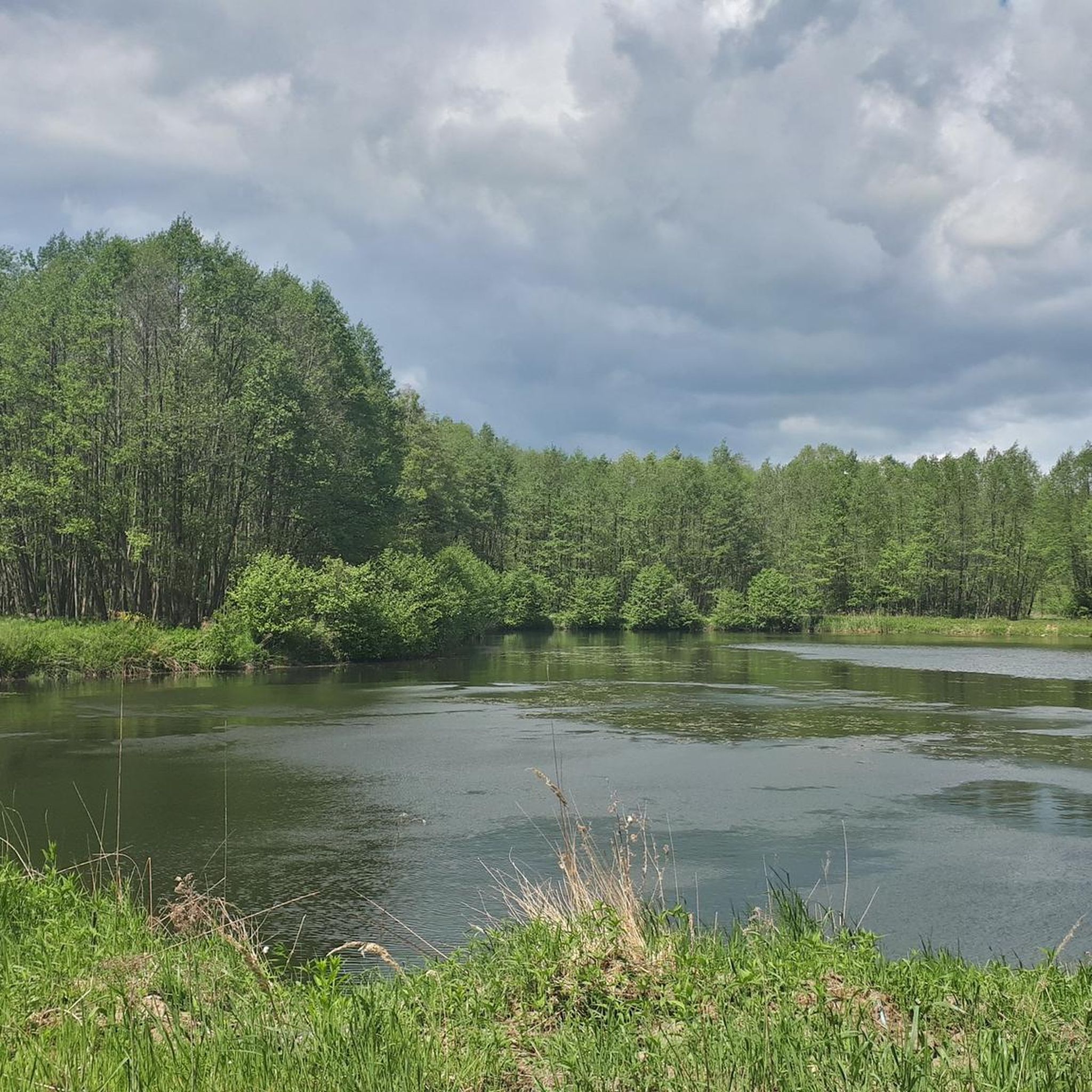
Gravel biking around Młodzieszyn offers routes through a landscape characterized by generally flat to gently rolling terrain, with modest elevation changes. The region features a mix of rural paths, forested sections, and country roads, providing varied surfaces for exploration. Proximity to the Vistula River suggests potential for scenic rides along its banks or floodplains. The area's rural character and agricultural land are ideal for developing gravel routes.
Best gravel bike trails around Młodzieszyn
- The most popular gravel bike trail is…
Last updated: July 2, 2026
7
riders
Hard gravel ride. Good fitness required. You may need to push your bike for some segments of this route.
2
riders
37.1km
02:33
100m
100m
Moderate gravel ride. Good fitness required. Mostly paved surfaces. Suitable for all skill levels.

Sign up for free
1
riders
48.4km
03:11
130m
120m
Moderate gravel ride. Good fitness required. Mostly paved surfaces. Suitable for all skill levels.
5.0
(1)
3
riders
Hard gravel ride. Good fitness required. You may need to push your bike for some segments of this route.
5
riders
Easy gravel ride. Great for any fitness level. Mostly paved surfaces. Suitable for all skill levels.
Get access to more routes and recommendations from other explorers.
Sign up for free
Already have an account?
Our route recommendations are based on thousands of hikes, rides, and runs completed by other people on komoot.
Start today with a free account
Your next adventure awaits.
Login or Signup
Tips from the Community

The Open-Air Museum of Forest Architecture – a small open-air museum (three farmsteads) in the village of Granica near Kampinos. It largely represents the vanished wooden folk architecture of the Kampinos Forest. It is part of a small section of the once planned Ethnographic Park. It is part of the Jadwiga and Roman Kobendz Educational and Museum Center, part of the Kampinos National Park. https://pl.wikipedia.org/wiki/Skansen_budownictwa_puszcza%C5%84skiego_w_Granicy https://kampn.gov.pl/osrodek-dydaktyczno-muzealny-w-granicy
1
0

The cemetery is truly impressive.
0
0
Good route markings, misleading names, a crooked mountain is not a mountain you climb on a bike.
0
0

majestic, a little further there is a shelter to catch your breath
0
0

Until the mid-17th century, there was a wooden church here. Around 1670, another wooden church was built in the immediate vicinity of the Bzura River. Due to frequent floods, it was moved to its current location in 1841. The temple built at the initiative of Father Józef Krawczykowski existed until 1916. It burned down during World War I. A wooden temple was built on the foundations of the old church in 1917. After World War II, it turned out to be too small for the growing community. In 1978, the then parish priest, Father Paweł Flaszczyński, unable to obtain the appropriate permits to build a new temple, undertook to build it with the help of the parishioners without consent or designs. On April 8, 1978, in one day, about one hundred and fifty parishioners built the walls of the new temple, enclosing the wooden church with them, which was then demolished. The construction works that had begun were continued despite the penalty imposed, and as a result, the church in its present form was built. It was consecrated on July 26, 1980 by the auxiliary bishop of Warsaw, Jerzy Modzelewski.
0
0

Comfortable, functional, easily accessible to all travelers, safe, and renovated in a way that highlights its historical beauty – this is the neo-Renaissance PKP station today, which has undergone comprehensive modernization. The station, built in 1901-1902, has been adapted to modern standards of passenger service while maintaining its architectural values. The brick elevation of the monument, along with the details found on it, has been renovated. The window and door joinery has been reconstructed following the historical model, and the roof covering has been replaced, covering the station with titanium-zinc sheet metal. An interesting feature on the building's facade is the placement of a stylized clock in the upper fanlight of the main entrance. The entire visual effect achieved thanks to the reconstruction has been emphasized by new illumination.
1
0
The first bridge over the Bzura in Kamion was built in 1915. It was a wooden structure of a temporary nature. After 9 years, the bridge was destroyed during the flood in 1924. It was rebuilt in the same year, but the ice embankments (elements protecting the bridge from flowing ice floes) were not made until the following year. The war that began in 1939 caused the destruction of five spans, which were later repaired by the Germans. Military operations in 1945 and the flowing ice floes in 1947 destroyed the bridge again, but in 1947 it was rebuilt by the State Road Bridge Reconstruction Directorate over the Vistula and Bzura near Wyszogród. In this form (during the last reconstruction it received steel girders) the bridge survived until 2010, when the flowing ice floes damaged it so much that vehicle traffic had to be significantly limited (to 3.5 tons and max. 2 m wide. The reconstruction, or rather construction from scratch, was carried out in the "Design and Build" system. It turned out to be necessary to rebuild the drainage, technical infrastructure devices and build traffic safety devices. The structure has four spans, is 160.5 m long and 9 m wide and has a load capacity that allows for the movement of vehicles weighing up to 80 tons. The contractor completed the work on October 30, 2012, while the ceremonial handover of the new bridge to the residents of Kamion and the Sochaczew district took place on January 2, 2013. The total cost of the works in Kamion amounted to PLN 14.7 million. The subsidy in the amount of PLN 6.8 million came from government funds for the removal of the effects of flooding, which was allocated by the Mazovian Voivode Jacek Kozłowski. The remaining funds in the amount of PLN 7.9 million were provided by the local government of the Mazovian Voivodeship.
0
0
Branch of the Station Museum (formerly the Railway Museum in Warsaw). The museum has the largest collection of narrow-gauge rolling stock in Europe.
0
0
Frequently Asked Questions
What kind of terrain can I expect on gravel bike trails around Młodzieszyn?
Gravel biking around Młodzieszyn features generally flat to gently rolling terrain with modest elevation changes. You'll encounter a mix of rural paths, forested sections, and country roads, providing varied surfaces for exploration.
Are there gravel bike trails suitable for beginners in Młodzieszyn?
Yes, Młodzieszyn offers options for various skill levels, including easy routes. For instance, the Kobendzy Oak (Dąb Kobendzy) – Kobendza Oak loop from Famułki Brochowskie is a moderate trail that is a good starting point for those looking for a manageable ride.
Are there any challenging gravel bike routes for experienced riders?
Absolutely. For more experienced gravel bikers, routes like the Granica Picnic and Barbecue Area – Kampinoska Cottage loop from Sochaczew Miasto offer a difficult challenge, traversing recreational zones and natural surroundings over 46.3 km.
What historical sites can I see while gravel biking in the Młodzieszyn area?
Several routes pass by areas of historical interest. The War Cemetery 1939 – Kampinoska Cottage loop from Brochów leads through significant historical landscapes. You can also find highlights such as the St. John the Baptist Basilica in Brochów and the Manor in Tułowice nearby.
Are there any natural attractions or reserves accessible by gravel bike?
Yes, the region is rich in natural beauty. You can explore areas like the Czapliniec Nature Reserve or the Entrance to Kampinos National Park (Dembskie Góry), which are popular natural monuments in the vicinity.
Are there any circular gravel bike routes around Młodzieszyn?
Many of the gravel bike routes in the Młodzieszyn area are designed as loops, allowing you to start and finish at the same point. Examples include the War Cemetery 1939 – Łasica Canal loop from Brochów, which is a popular circular option.
What is the typical duration for gravel bike trails in Młodzieszyn?
The duration varies depending on the route's length and difficulty. For example, a moderate trail like the Kobendzy Oak (Dąb Kobendzy) – Kobendza Oak loop from Famułki Brochowskie typically takes around 2 hours 41 minutes, while longer, more difficult routes can take over 3 hours.
What do other gravel bikers say about the trails in Młodzieszyn?
The gravel biking routes in Młodzieszyn are highly rated by the komoot community, with an average score of 5.0 stars from 2 reviews. Riders often appreciate the varied terrain, the mix of rural and forested paths, and the historical points of interest along the way.
Are there any routes that offer good viewpoints?
While specific viewpoints are not explicitly highlighted on every route, the View From the Embankment – Franciscan Monastery Complex loop from Wyszogród suggests scenic vistas along its path, offering picturesque views of the surrounding landscape.
How many gravel bike routes are available in the Młodzieszyn region?
There are over 8 gravel bike routes available in the Młodzieszyn region, catering to different skill levels from easy to difficult, ensuring a diverse range of options for your ride.
Is Młodzieszyn suitable for family-friendly gravel biking?
The region offers routes with generally flat to gently rolling terrain, which can be suitable for families. Look for the easier rated trails, which provide a more relaxed experience for all ages. Always check the specific route details for distance and elevation to ensure it matches your family's capabilities.
Most popular attractions around Młodzieszyn

Get inspired with the komoot mobile app


Explore more
Browse the best Gravel rides in other regions.
